
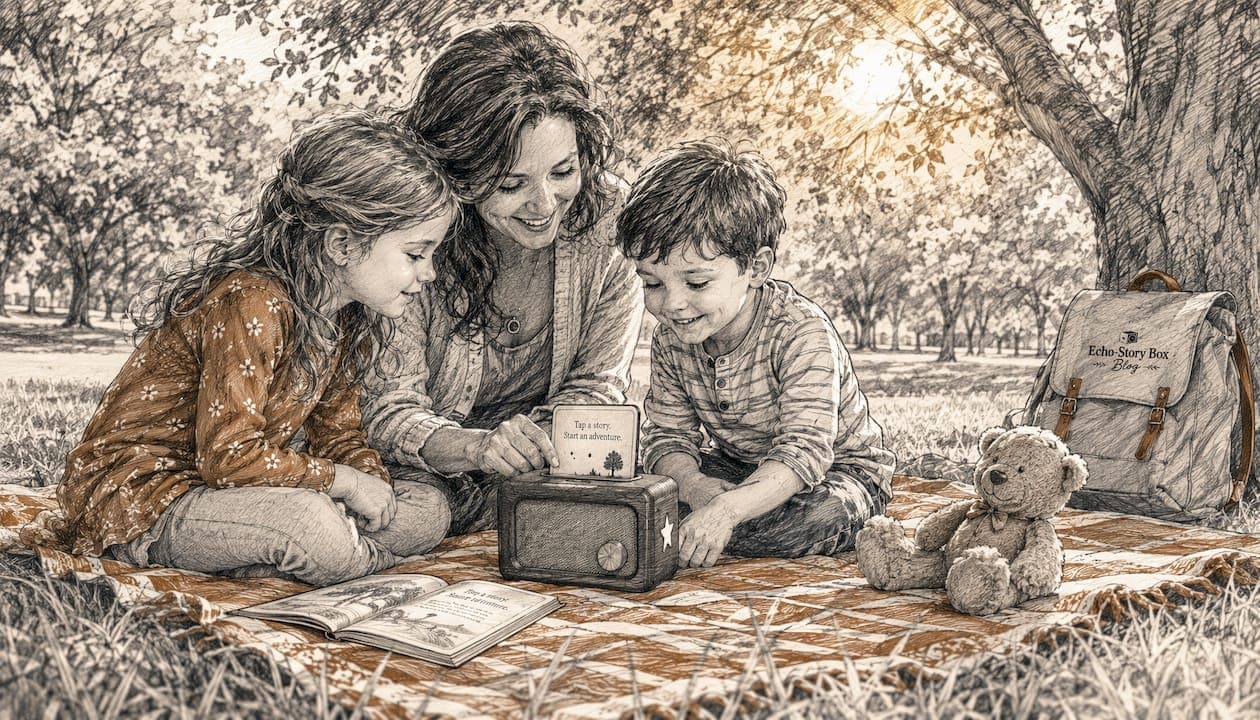
Short, regular audio story sessions followed by gentle, Socratic debriefs reliably build empathy, moral reasoning, and real-life rehearsal in children ages 4–10. Homeschool practitioner Betsy at Family Style Schooling puts it simply: the deepest moral work happens when children explore a character's fear, loyalty, or hope without being pushed toward a predetermined lesson. The Ikrhar study confirms this, finding that audio media's character impact grows significantly when an adult helps connect story themes to everyday life, and Echostory-box is built around exactly this approach.
Quick-start checklist:
- Choose stories with emotional complexity, not just tidy moral endings
- Listen 15–25 minutes, then debrief for 10 minutes with open questions
- Use Socratic prompts ("What would you have done differently?") rather than recall tests
- Track one observable behavior for two weeks to notice real change
Table of Contents
- Why does audio storytelling work for character education?
- How do you turn any audio story into a character lesson?
- A copy-ready one-week unit for ages 4–10
- How do you choose and adapt stories that actually build character?
- What makes a calm, screen-free listening environment?
- How can you observe character growth without formal tests?
- Ready prompts and activities grouped by virtue
- Key Takeaways
- What actually works in family listening routines
- Echostory-box brings this method to life, screen-free
- Useful sources and further reading
Why does audio storytelling work for character education?
Audiobooks encourage voluntary imagination and focused attention more than video, and they link to stronger language development and problem-solving skills. When a child cannot see the images, their mind builds them. That active visualization is where moral imagination begins to grow.
The research behind audio-assisted storybooks in elementary settings is encouraging. A development study of audio-assisted picture storybook media reported high feasibility (88–91%) and strong effectiveness scores (effectiveness index ~0.71–0.72), supported by non-cognitive assessments in small trials. Those numbers reflect something parents notice intuitively: children who listen regularly start applying story logic to their own choices.
The Ikrhar finding in plain terms: audio media alone is not enough. The adult's role in tying story themes to a child's real world is what multiplies the benefit.
Dr. Claire Honeycutt adds an important nuance. Morally ambiguous stories give children safer practice observing consequences and reasoning through conflict than sanitized tales with obvious lessons do. A story where the "right" answer is not obvious is actually more useful for character formation than one that spells it out. You can read more about why values-driven stories matter for children's growth on the Echostory-box blog.
How do you turn any audio story into a character lesson?
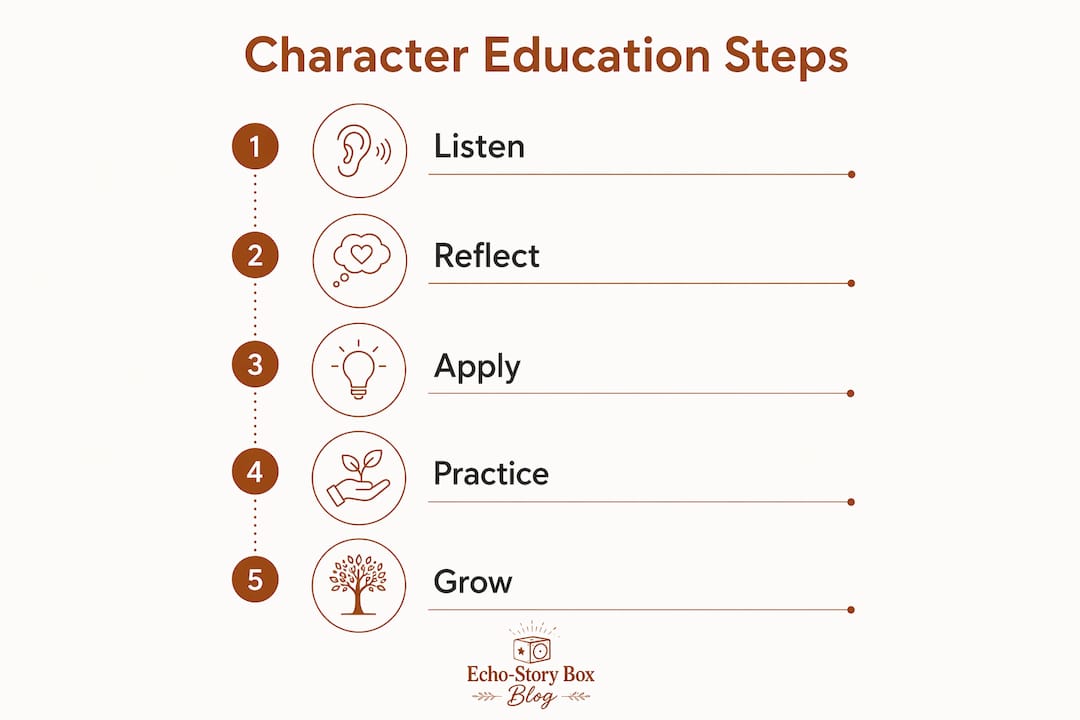
The routine is five steps: Prepare → Listen → Debrief → Practice → Notice. Keep that sequence and the whole thing takes under 40 minutes.
- Prepare (2 minutes). Before pressing play, give one simple cue: "While you listen, notice one moment where a character had to make a hard choice."
- Listen. Let the story run without interruption. Resist the urge to comment.
- Debrief (10 minutes). Ask three Socratic questions, one at a time. Wait for real answers.
- Practice. Assign one small, concrete action tied to the story's theme for the rest of the day.
- Notice. Observe without announcing it. Write one sentence in a listening log.
Sample discussion questions by virtue:
- Empathy: "How do you think the other character felt when that happened?"
- Courage: "Was there a moment the character was scared but kept going? What helped them?"
- Honesty: "What would have changed if they had told the truth earlier?"
- Responsibility: "Whose job was it to fix the problem? Did they? Why or why not?"
Pro Tip: Betsy at Family Style Schooling warns against turning debriefs into interrogations. If a child goes quiet, try "I wonder why they did that" instead of a direct question. Wondering out loud is an invitation, not a test.
Pro Tip: To measure impact without pressure, pick one specific behavior before the week starts — sharing without being asked, or saying sorry first — and simply note whether you see it. Two weeks of quiet observation tells you more than any quiz.
A copy-ready one-week unit for ages 4–10
Use this as a starting point. Adjust story length and debrief depth to your child's age band.
| Day | Ages 4–6 | Ages 7–10 | Debrief Focus | At-Home Practice |
|---|---|---|---|---|
| Monday | 10–15 min listen | 20–25 min listen | What did the character want? | Draw or act out one scene |
| Tuesday | Retell in their own words | Written or oral summary | What choice did they make? | Try the same choice in a small moment today |
| Wednesday | 10–15 min listen (new story) | 20–25 min listen | How did another character feel? | Do one kind thing without being asked |
| Thursday | Role-play a scene | Write an alternate ending | What would you do differently? | Share your alternate ending at dinner |
| Friday | Family listening together | Family listening together | What did we learn this week? | Record a family reflection (2–3 sentences) |
Session lengths: Ages 4–6 work best with 10–15 minutes of listening followed by 5–10 minutes of debrief. Ages 7–10 can sustain 20–25 minutes of listening and 10–15 minutes of guided discussion. Keep narrative listening under 30 minutes total to protect attention and leave room for reflection.
End-of-week milestones to look for: unprompted use of a virtue word ("that wasn't fair"), willingness to role-play a character's dilemma, or a spontaneous connection between the story and something that happened in real life. These are the signs the story is doing its work. For curriculum-building ideas that pair with this unit, the early learner storytelling curriculum guide on the Echostory-box blog is a practical next read.
How do you choose and adapt stories that actually build character?
Story selection matters more than most parents expect. A story with a tidy moral ending often produces less discussion than one where the character's choice is understandable but still causes harm.
Selection checklist:
- Emotional complexity: does the character feel more than one thing at once?
- Relatable stakes: would a child recognize the pressure the character is under?
- Believable consequences: does the story show what actually happens, not just what should?
- Varied perspectives: does at least one secondary character see things differently?
For ages 4–6, shorten listening sessions and add a simple role-play prompt immediately after. For ages 7–10, introduce a genuine ethical dilemma: "The character did the right thing, but someone still got hurt. Is that okay?" That question alone can carry a 15-minute conversation.
Family recordings add a layer no published story can match. When a grandparent's voice tells a story about a hard choice they made, the emotional stakes are real. Echostory-box supports family voice recordings so those stories become part of the regular listening rotation, not a one-time event. For faith-based families, the same principle applies: nuance beats preachiness. A story where a character of faith struggles and doubts teaches more than one where faith produces instant, easy answers. The narrative gospel teaching guide on the Echostory-box blog offers practical examples for families who want that approach.
What makes a calm, screen-free listening environment?
A consistent environment improves focus and reflection more than any single story choice. Children settle faster when the ritual is the same every time.
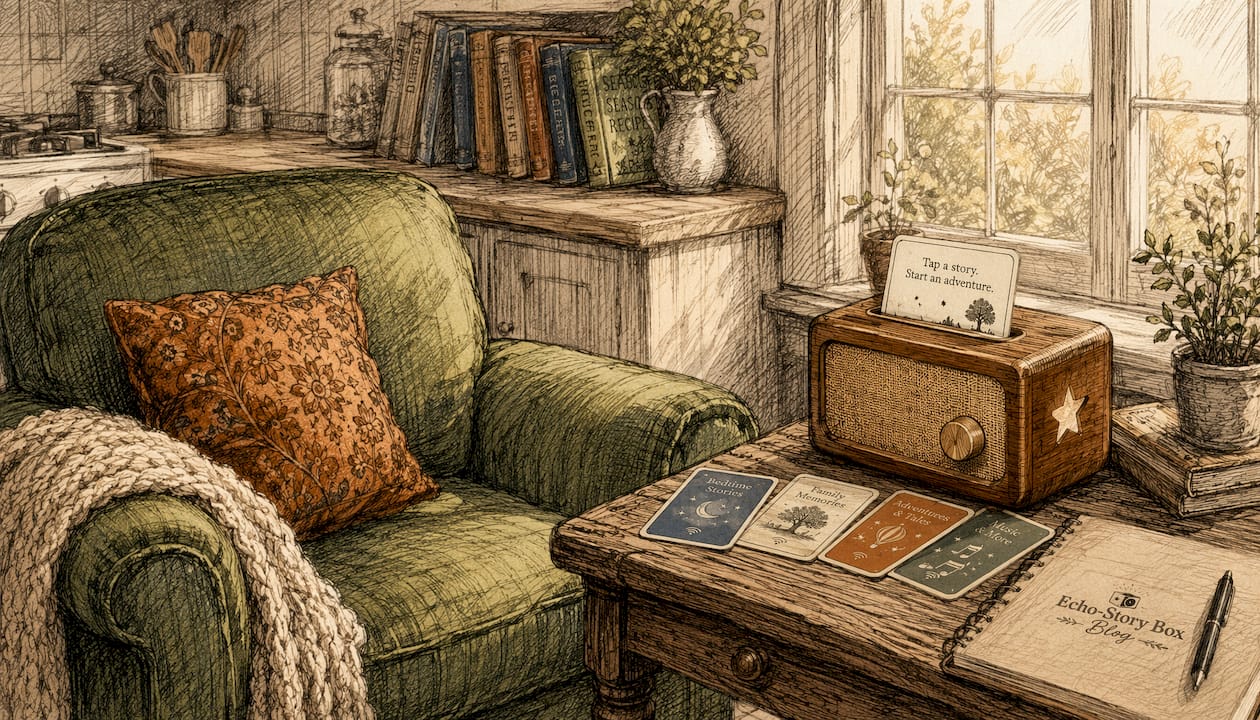
Simple setup tips: place a small speaker at ear level rather than across the room, agree on headphone rules for mixed-age sibling groups (younger children often do better without them), and download stories for offline playback so a weak Wi-Fi signal never interrupts a session.
Ritual cues help enormously. A specific lamp, a blanket, or even a cup of warm tea signal that listening time is beginning. Turn off other screens at least 10 minutes before and after the session. The types of educational storytelling formats article explains why audio fits homeschool routines better than video for this kind of focused work.
Pro Tip: If your device loses power or your internet is down, keep two or three printed story cards with a short read-aloud version of the same story. The ritual stays intact even when the technology doesn't.
How can you observe character growth without formal tests?
Track one specific behavior for two weeks rather than trying to measure "character" broadly. That focus makes observation manageable and the results meaningful.
| Virtue | Observable Indicator | — | 1 (Sometimes) | 2 (Often) | 3 (Consistently) |
|---|---|---|---|---|---|
| Empathy | Notices when someone else is upset without being told | Rarely acknowledges | Notices if pointed out | Notices independently | Responds with care unprompted |
| Honesty | Admits a mistake before being asked | Denies or deflects | Admits when pressed | Admits with gentle prompting | Admits readily |
| Responsibility | Completes a task without reminders | Needs multiple reminders | Needs one reminder | Completes most tasks | Completes independently |
Use this rubric informally during normal activities: mealtime, chores, sibling conflict. You are not grading; you are noticing. A short listening log, one sentence per session, gives you qualitative evidence over time without pressure. The Homeschool Start Guide notes that character work integrates naturally across the homeschool day through habits and narration practices, which means your observation can happen anywhere, not just during story time. If you want to align this with broader academic goals, evaluating your child's learning needs is a helpful companion read.
Ready prompts and activities grouped by virtue
These are short enough to use right after a listening session with no extra planning.
Empathy
- Ages 4–6: "Show me with your face how that character felt."
- Ages 7–10: "Write two sentences from the other character's point of view."
- One-line script: "I wonder what it felt like to be on the other side of that story."
Courage
- Ages 4–6: "Can you think of something scary you did anyway?"
- Ages 7–10: "What's one brave thing you could do today, even a small one?"
- One-line script: "Courage doesn't mean not being scared. What did the character do with their fear?"
Honesty
- Ages 4–6: "What happens in our family when we tell the truth, even when it's hard?"
- Ages 7–10: "Rewrite the ending if the character had been honest from the start."
Responsibility
- Daily micro-practice: assign one "help challenge" before dinner. One task, no reminders.
- Two-sentence dinner reflection: "What did I take care of today? What could I do better tomorrow?"
Curiosity
- Ages 4–6: "What's one question you have about the story world?"
- Ages 7–10: Pair with a story-based STEM activity to extend the story into a hands-on challenge.
Key Takeaways
Short, guided audio story sessions with low-pressure Socratic debriefs are one of the most reliable ways to build empathy, honesty, and moral reasoning in children ages 4–10 at home.
| Point | Details |
|---|---|
| Session length matters | Ages 4–6 need 10–15 min of listening; ages 7–10 can sustain 20–25 min. Keep total time under 30 min. |
| Debrief beats recall | Ask "What would you do differently?" not "What happened?" to develop moral reasoning, not memory. |
| Track one behavior | Choose one observable habit and watch for it over two weeks rather than measuring character broadly. |
| Story nuance is the goal | Morally complex stories produce richer discussion than sanitized tales with obvious lessons. |
| Echostory-box fits the method | NFC story cards, offline playback, and family voice recording support the exact screen-free, tactile routine described here. |
What actually works in family listening routines
Most parents start with the best intentions and then quietly abandon the routine by week three. The reason is almost always the same: the debrief feels like a lesson, the child senses it, and the whole thing starts to feel like school. The fix is simpler than it sounds.
Stop trying to land a point. The stories that have stayed with children in the families I've heard from are almost never the ones where a parent explained the moral afterward. They are the ones where a parent said "I wonder why she did that" and then waited. That pause is where the real formation happens.
A sustainable rhythm looks like this: one virtue focus per month, three listening sessions per week, and one family recording per season. Rotate the virtue so children do not start to predict the lesson before the story ends. When you record a grandparent's voice or your own story about a hard choice you made, you are not just adding content. You are showing your child that character formation is something adults are still working on too.
Echostory-box brings this method to life, screen-free
The method described in this article works best when the listening ritual is simple, tactile, and free from digital distraction. Echostory-box is built for exactly that. Children tap an NFC story card and the audio begins. No menus, no ads, no recommendations pulling them somewhere else.
The device supports offline playback, so sessions run reliably anywhere in your home. Family voice recordings let you add a grandparent's story or your own to the regular rotation. Virtue-themed story packs and ready-made mini-units mean you can start a character-education week without building everything from scratch. Original characters like Theo the Rabbit introduce courage, kindness, and curiosity through adventure rather than instruction.
If you are ready to give your family a calmer, more intentional listening routine, start with Echostory-box and see how a simple tap can open a whole conversation.
Useful sources and further reading
- Implementation of Character Education Through Audio Media Papuan Folk Stories — Ikrhar study on audio media and parent mediation
- Development of Audio-Assisted Picture Storybook Media Based On Character Education — DOI development study with feasibility and effectiveness data
- Want to spur your child's intellectual development? Use audiobooks instead of videos — The Conversation on audiobooks vs. video
- Why reading aloud for character formation shapes moral imagination — Betsy, Family Style Schooling
- Curating Children's Character with Classic Literature — Dr. Claire Honeycutt, The Ahimsa Mind
- Character Building Homeschool Curriculum — Homeschool Start Guide
- Benefits of Audio Stories for Children — She Narrates
- Why Values-Driven Stories Matter for Children's Growth — Echostory-box blog
- Build a Storytelling Curriculum for Early Learners — Echostory-box blog
- How Personal Narratives Shape Children's Values — Echostory-box blog