
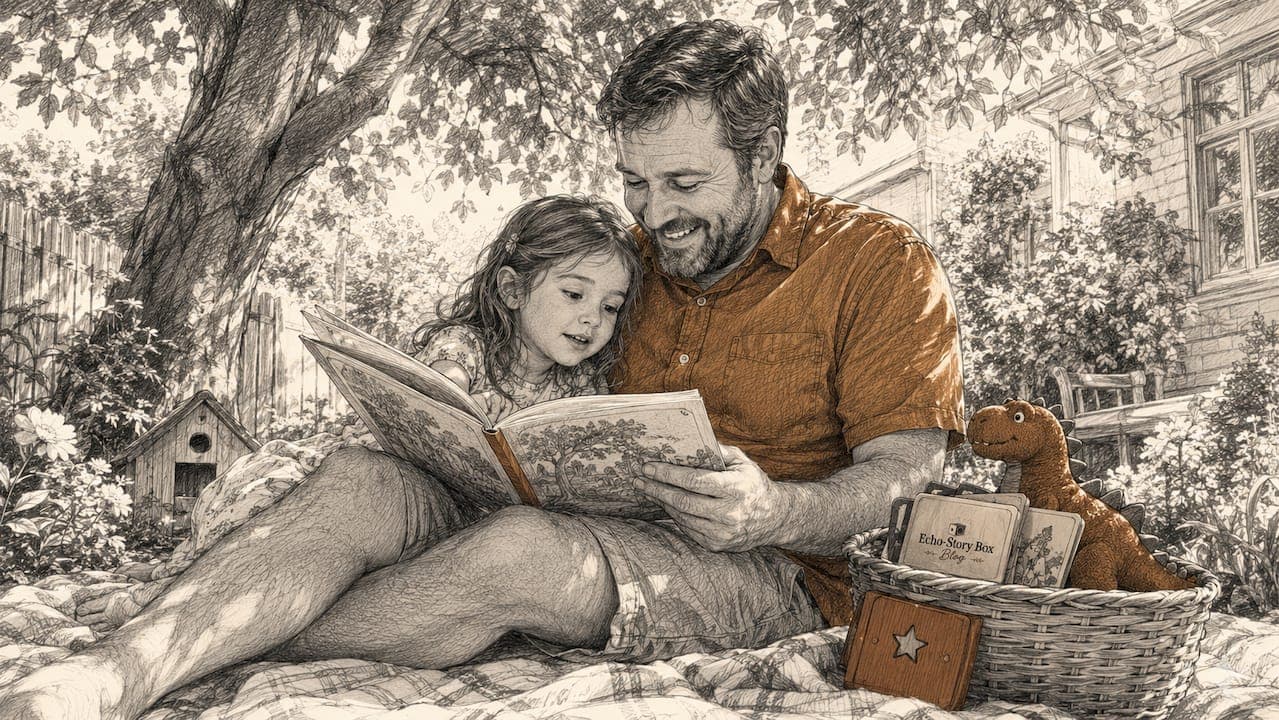
Values-driven stories are the primary vehicle through which children develop moral reasoning, empathy, and a sense of right and wrong. Research in 2026 confirms that storytelling improves moral reasoning and empathy significantly, making it one of the most powerful tools parents have. The field of children's literature has long recognized this, but recent developmental psychology research gives us a clearer picture of exactly why values in children's literature shape who kids become. Understanding why values-driven stories matter for children is the first step toward using them with real intention.
How do values-driven stories influence children's moral reasoning?
Stories give children a safe space to practice ethical thinking. When a character faces a hard choice, a child mentally steps into that situation, weighs the options, and feels the consequences. This is what researchers call a "moral sandbox." It builds judgment without real-world risk.
The psychological mechanism here is moral imagination. Scholar Vigen Guroian argues that effective moral storytelling makes virtues personally attractive rather than presenting them as abstract rules. A child who admires a brave character does not just learn that bravery is good. That child begins to want to be brave. That shift from knowing to wanting is where lasting character forms.
Stories also work because they bypass defensiveness. Storytelling as a socio-emotional scaffold integrates emotional resonance and perspective-taking, allowing children to absorb values without feeling lectured. Direct moral instruction often triggers resistance. A story about a kind rabbit who helps a lost friend does not feel like a lesson. It feels like an adventure.
The impact deepens when caregivers get involved. A 2026 study found that moral story discussion using cultural and folk traditions produced statistically significant improvements in moral reasoning scores among children aged 11–13. Passive listening helps, but guided conversation after the story multiplies the effect.
- Ask "What would you have done?" instead of "What should the character have done?"
- Invite children to retell the story from a different character's point of view.
- Connect story choices to real situations your child has faced.
- Avoid summarizing the moral at the end. Let the child name it.
Pro Tip: Resist the urge to explain the lesson after a story ends. Give your child 30 seconds of silence first. That pause is where moral thinking actually happens.
What role do stories play in building empathy and emotional intelligence?
Empathy is not a personality trait children either have or do not have. It is a skill that grows with practice. Stories are one of the most reliable ways to practice it.
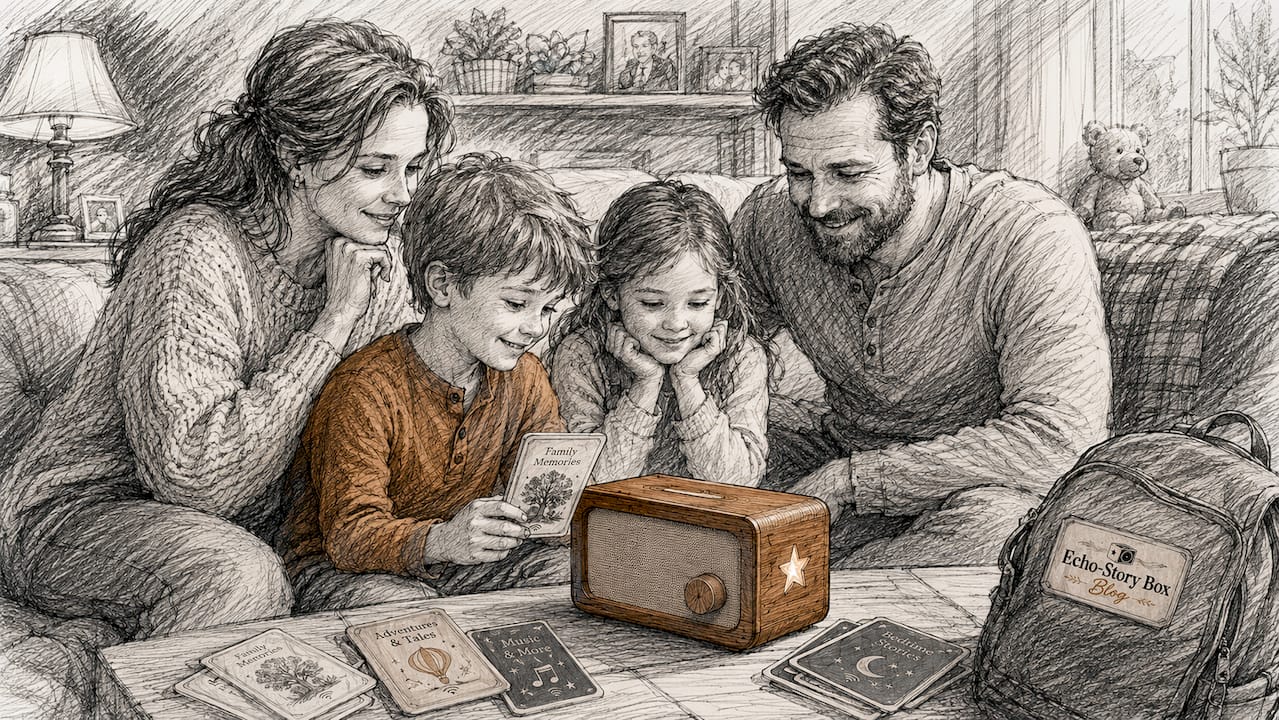
Daily reading routines improve children's empathy, and reflective storytelling enhances creative fluency more than stories read straight through. That finding matters because it tells us the how of reading is as important as the what. A story read with pauses, questions, and emotional attention does more developmental work than the same story read quickly at bedtime.
Here is a simple four-step approach to reading for emotional growth:
- Before the story: Ask your child what they notice on the cover. What do they think the character is feeling?
- During the story: Pause at emotional turning points. "How do you think she feels right now?"
- After the story: Ask your child to name one feeling the character had that they have felt too.
- Later in the day: Reference the story when a real emotion comes up. "Remember how Theo felt when he was scared? What helped him?"
Stories also give families a shared language for emotions. Research shows that stories act as shared references for conversations about characters' emotions and thoughts. When a child can say "I feel like the rabbit in that story," they are doing sophisticated emotional work. They are naming, comparing, and communicating their inner experience.
"Stories provide unique opportunities for discussing emotions, mental states, and diverse perspectives. They create a shared reference point that makes it easier for children to talk about what they feel and why."
The role of storytelling in brain development also connects directly to emotional regulation. Children who regularly hear stories with emotionally complex characters develop a richer vocabulary for their own feelings. That vocabulary becomes a tool for self-control and social connection.
What types of values-driven stories work best at each age?
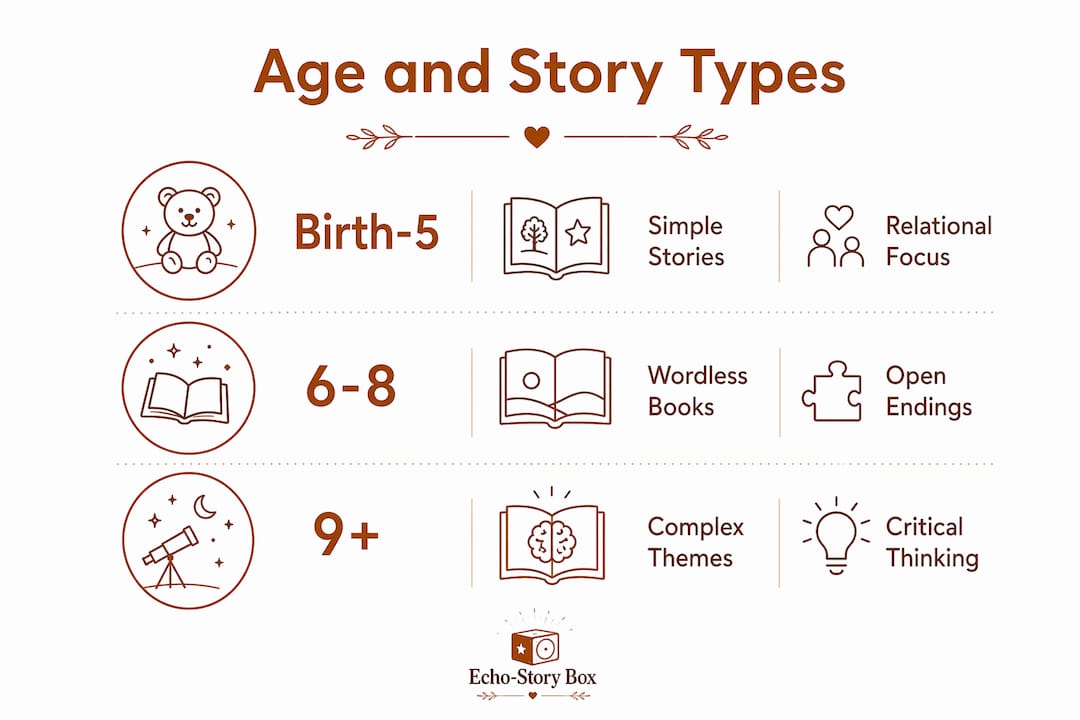
Choosing the right story for the right stage matters. A story that works beautifully for a seven-year-old may confuse a three-year-old or bore a twelve-year-old. The table below maps story types to developmental stages.
| Age range | Story type | Core values focus |
|---|---|---|
| Birth–5 | Simple relational stories, repetitive picture books | Kindness, sharing, safety, love |
| Ages 5–8 | Character-driven adventures, folk tales | Courage, honesty, fairness, friendship |
| Ages 8–11 | Open-ended narratives, cultural tales | Responsibility, empathy, justice, loyalty |
| Ages 11+ | Complex moral dilemmas, historical stories | Integrity, sacrifice, civic values, identity |
Child psychologists agree that early years from birth to age 5 are critical for shaping a child's long-term moral framework through storytelling. The stories children hear before kindergarten lay the emotional and ethical groundwork for everything that follows. Simple is not the same as shallow. A story about sharing a snack can carry real moral weight for a three-year-old.
For older children, wordless picture books and open-ended stories do something surprising. When stories avoid explicit moral framing, children negotiate complex ethical situations themselves, which builds durable decision-making skills. A story without a tidy ending asks more of a child's moral imagination than one that spells out the lesson. Folklore and cultural tales work especially well here because they often carry ambiguity and nuance.
Pro Tip: For children ages 8 and up, try stopping a story before the ending and asking your child to finish it. Their ending will tell you a great deal about their current moral thinking.
You can find practical virtue-based storytelling examples organized by age and theme to help you match the right story to the right moment.
How can parents use stories to encourage active moral learning?
The most transformative impact of stories happens during moments when children personally reflect on character choices and consequences. That reflection does not happen automatically. Parents and caregivers create the conditions for it.
The "pause technique" is the single most effective tool available. Pausing mid-story to ask open-ended empathy-building questions produces greater emotional development outcomes than continuous reading. The pause shifts a child from passive listener to active moral thinker. It is a small change with a large effect.
- Stop at a moment of conflict and ask: "What do you think she should do?"
- After a character makes a mistake, ask: "What could he have done differently?"
- When a character shows kindness, ask: "Why do you think she did that?"
- Connect the story to your child's life: "Has anything like this ever happened to you?"
Research emphasizes that caregivers who explore story content and link it to children's own experiences deepen moral learning significantly. Stories teach reasons for actions, empathy, and social values most effectively when they connect to real life. A story about honesty lands harder the week after your child told a small lie.
Storytelling also opens conversations about family, culture, and community. When you share a story from your own childhood or your family's heritage, you give your child a sense of belonging and a moral framework rooted in something personal. That connection makes values feel real, not theoretical.
Pro Tip: Keep a short list of two or three stories your child loves. Return to them when a relevant situation comes up in real life. Familiar stories feel safe, and that safety makes moral conversations easier.
Key Takeaways
Values-driven stories shape children's moral reasoning and emotional intelligence most effectively when caregivers read reflectively, pause for discussion, and connect stories to real life.
| Point | Details |
|---|---|
| Stories build moral reasoning | Interactive discussion after moral stories produces statistically significant gains in children's ethical thinking. |
| Empathy grows through reflection | Pausing mid-story to ask open-ended questions develops empathy more than reading straight through. |
| Age-appropriate stories matter | Birth to age 5 is the critical window for foundational moral development through simple relational stories. |
| Avoid explicit moral labels | Open-ended stories without tidy lessons push children to negotiate ethics themselves, building lasting skills. |
| Connect stories to real life | Caregivers who link story content to a child's own experiences deepen moral learning significantly. |
Stories changed how I see my role as a parent
I used to think reading to my kids was about vocabulary and school readiness. I was wrong. The moment I realized stories were doing something deeper was when my daughter, then six, stopped me mid-story and said, "That wasn't fair to the rabbit." She was not just following the plot. She was feeling it.
What I have learned since then is that the story itself is almost secondary. The conversation around it is where the real work happens. Parents often feel pressure to choose the "right" book with the "right" message. That pressure is understandable, but it can make storytelling feel like homework. The best moral stories do not announce their lessons. They let children find them.
The biggest mistake I see parents make is rushing to explain the moral at the end. That explanation actually short-circuits the child's own moral reasoning. When you let the story breathe, when you ask instead of tell, children surprise you with the depth of their thinking. They are more morally capable than we often give them credit for.
Why stories teach better than lectures is not just a nice idea. It is backed by how children's brains actually process experience. Stories feel real to children in a way that instructions never do. That is not a limitation to work around. It is the whole point.
— Bob
Screen-free storytelling that puts values first
Echostory-box was built for exactly this kind of intentional family storytelling. The device is simple by design: children tap a story card, and a carefully chosen audio story begins. No ads, no menus, no distractions.
The story library includes original adventures featuring characters like Theo the Rabbit, Eileen, and Eisley, each designed to spark the kind of moral conversations this article describes. Stories cover courage, kindness, honesty, and curiosity in ways that feel like adventures, not lessons. Families can also record their own voices, preserving bedtime stories and personal wisdom for years to come. If you are ready to bring screen-free storytelling into your home, Echostory-box makes it simple to start.
FAQ
Why do values-driven stories matter for young children?
Values-driven stories give children a safe way to experience moral choices and consequences before facing them in real life. Research shows storytelling acts as a socio-emotional scaffold that helps children internalize values without defensiveness.
What age should parents start reading moral stories to children?
Child psychologists identify birth to age 5 as the critical window for foundational moral development through storytelling. Simple relational stories focused on kindness, sharing, and love are appropriate from infancy.
How does pausing during a story help children's development?
Pausing mid-story to ask open-ended questions shifts children from passive listeners to active moral thinkers. Studies show this reflective approach produces greater empathy outcomes than reading a story straight through.
Do stories need an explicit moral lesson to be effective?
Stories without explicit moral framing are often more effective because they require children to negotiate ethical situations themselves. Research on wordless picture books shows this approach builds durable, context-sensitive decision-making skills.
How can caregivers connect stories to children's real-life experiences?
Ask children after a story whether they have ever felt like a character did, or faced a similar choice. Research confirms that linking story content to a child's own experiences deepens moral learning significantly.