
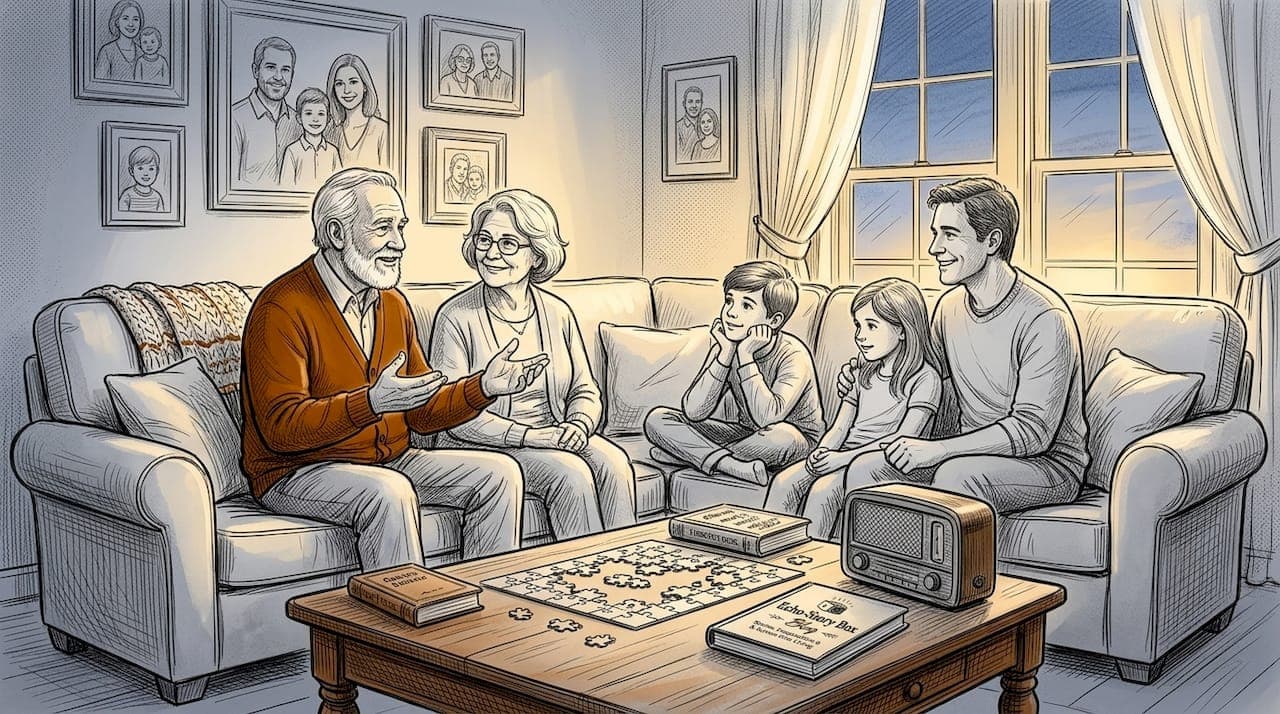
A teachable moment is defined as an unplanned or planned opportunity where a real experience opens the door to meaningful learning. When that experience comes from a personal life story, the learning sticks in a way that abstract lessons rarely do. Research confirms that emotional stories enhance memory more effectively than neutral content, making them one of the most powerful tools available to parents and educators. Understanding how life stories become teachable moments gives you a practical framework for turning everyday experiences into lasting lessons for children.
How life stories become teachable moments
A life story becomes a teachable moment when two things happen at once: the listener feels something, and that feeling is connected to a clear idea worth learning. The emotional charge is not decoration. A University of Chicago brain study found that emotional arousal causes the brain to enter a more integrated state, with stronger network cohesion that directly predicts better memory retention. This means a story about a parent's childhood mistake encodes more deeply in a child's memory than a rule written on a whiteboard.
Teacher authenticity plays an equally important role. Personal anecdotes humanize teachers, increase classroom participation, and build the kind of trust that makes children receptive to learning. When a child senses that the adult sharing the story is being genuine, their guard comes down and their attention sharpens.
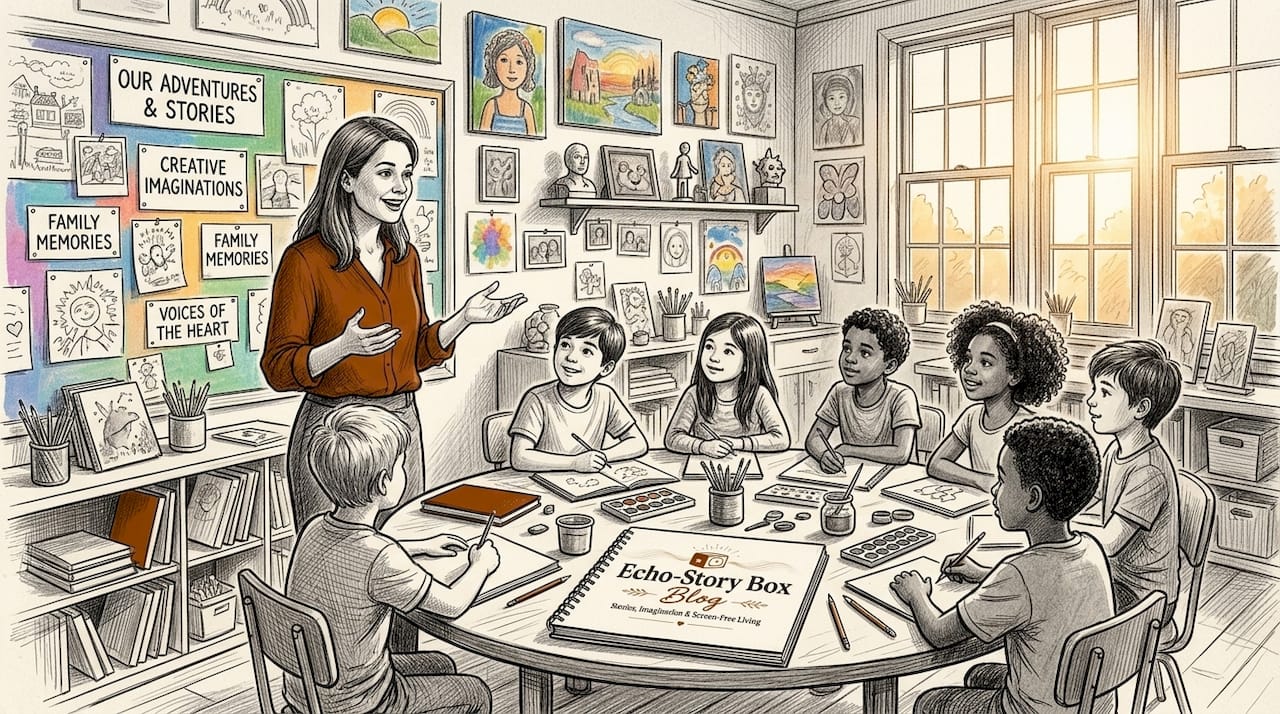
The risk, however, is letting the emotional pull of a story overshadow its purpose. A vivid story about a difficult moment can captivate a child completely while delivering no transferable lesson at all. The most effective life stories as lessons are short, specific, and tied to one clear learning objective. They use emotion as a hook, not as the main event.
Here is what separates a story that teaches from one that simply entertains:
- Clear connection to a lesson: The child can name what they learned after the story ends.
- Appropriate emotional intensity: Enough feeling to engage, not so much that it overwhelms.
- Relevance to the child's own experience: The story mirrors something the child has faced or will face.
- A moment of reflection built in: The storyteller pauses and invites the child to respond.
- Brevity: The story is concise enough that the lesson is not buried under detail.
Pro Tip: Before sharing a life story with a child, write down the one sentence you want them to walk away with. If you cannot state it clearly, the story is not ready to teach.
What boundaries and reflection look like in practice
Setting boundaries before sharing personal stories is not about limiting honesty. It is about protecting the child and keeping the learning on track. The NCTE Anne Frank Award recognizes teachers who create memoir-based projects with clear guidelines on what students share, precisely because safety boundaries make storytelling more productive, not less. When children know the rules of the space, they feel safe enough to engage deeply.
Memoir-based instruction in schools shows that the best results come from balancing freedom with guidance. English teachers who win recognition for this work do not simply tell students to write about their lives. They set parameters around content, model appropriate sharing, and guide students toward meaning-making rather than just event-recounting. The same principle applies at home. A parent sharing a story about a past failure should frame it with intention, not just unload the memory.
Timing matters more than most people realize. Pairing emotional moments with later reflection deepens learning because not all sense-making happens during the story itself. A child who hears a story about a parent's regret may need a day before they can articulate what it means to them. Giving that space is not passive. It is a deliberate part of the teaching process.
Practical boundaries to establish before story-sharing include:
- Agree on a "listening first" rule: Children hear the story fully before asking questions or reacting.
- Name the purpose upfront: "I want to tell you something that happened to me because I think it might help you."
- Limit personal detail to what serves the lesson: Oversharing can shift focus from the child's learning to the adult's experience.
- Create a re-entry moment: Return to the story the next day with one open question to deepen reflection.
Pro Tip: Build trust before the story, not during it. A child who already feels safe with you will absorb the lesson far more readily than one who is still deciding whether to trust the moment.
Parents vs. educators: how their approaches differ
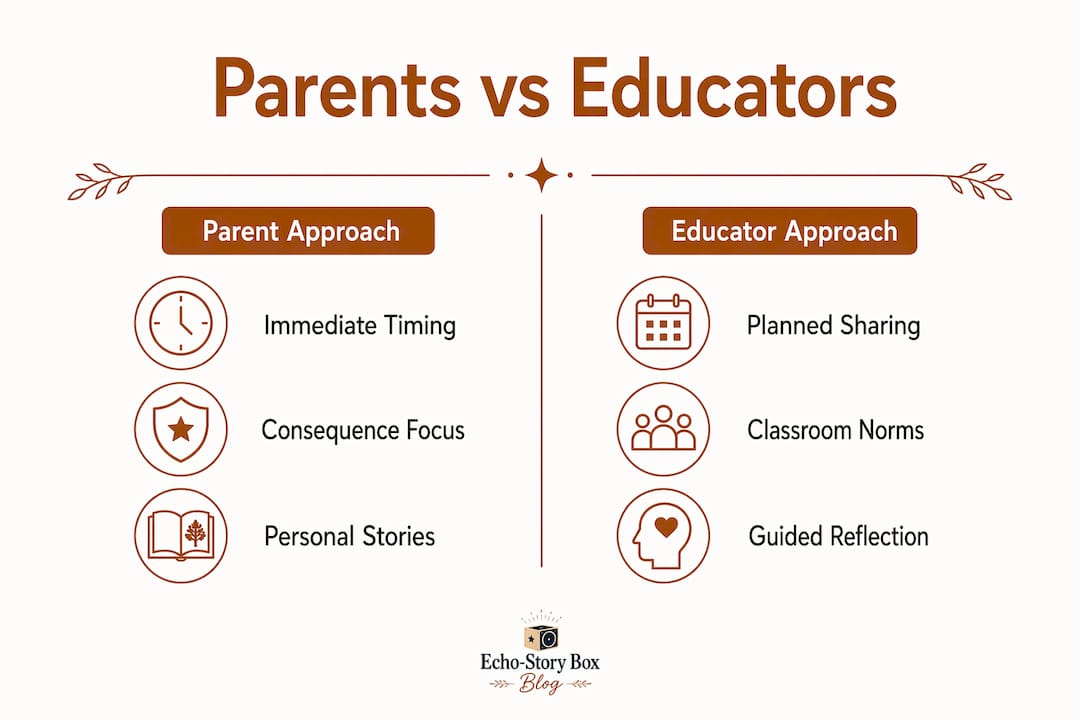
Life experiences as teaching tools work differently depending on whether you are a parent or an educator. Both roles use personal stories to teach, but the goals, timing, and follow-up look quite different. Understanding those differences helps you use the right approach in the right setting.
For parents, the most powerful teachable moments are often immediate and consequence-driven. One widely shared parenting example captures this well: a child learned to shut the toilet lid after an expensive retainer fell in and had to be retrieved with gloves. The lesson stuck because cause, consequence, and ownership were all present in the same moment. The child could not separate the story from its real-world cost. That is the defining feature of parental teachable moments. They are grounded in lived consequence, not hypothetical scenarios.
Educators work in a different environment. A classroom requires consistency and shared norms. Education Week reports that teachers who turn their own frustration into learning opportunities do so most effectively when a culture of trust and predictability already exists. Without that foundation, a personal story from a teacher can feel like a complaint or a guilt trip rather than a lesson. With it, the same story becomes a model for accountability. Tools like student-centered classrooms help educators build the relational groundwork that makes story-based teaching land well.
| Dimension | Parent approach | Educator approach |
|---|---|---|
| Timing | Often immediate, tied to a real consequence | Planned or responsive, tied to classroom norms |
| Goal | Build ownership and cause-effect thinking | Build accountability and shared values |
| Story type | Personal family experience with direct impact | Personal or observed story tied to curriculum |
| Follow-up | Conversation at home, often the same day | Structured reflection, sometimes delayed |
| Risk to manage | Oversharing or emotional overwhelm | Appearing to blame or single out students |
Pro Tip: Adapt the depth of your story to your audience. A five-year-old needs a short, concrete story with one clear consequence. A twelve-year-old can handle more nuance and a longer reflection period.
Practical strategies for turning everyday stories into lessons
Turning experiences into lessons does not require dramatic events. The most effective stories for children are often small, specific, and close to their own lives. Here is a step-by-step approach that works for both parents and educators.
-
Identify the learning objective first. Before choosing a story, name the concept you want to teach. Responsibility, empathy, perseverance, and honesty are all strong starting points. The story serves the objective, not the other way around.
-
Choose a story with a clear emotional moment. The emotion does not need to be intense. Mild surprise, gentle humor, or quiet pride all work. The goal is a feeling the child can recognize and relate to.
-
Tell it briefly and specifically. Aim for two to three minutes of storytelling. Name real details like a place, a person, or an object. Specificity makes stories feel true and memorable.
-
Pause before the lesson. After the story ends, wait. Ask one open question: "What do you think I should have done differently?" or "Has anything like that ever happened to you?" This shifts the child from listener to thinker.
-
Invite the child to narrativize their own experience. Memoir writing in education shows that students who learn to "listen" to their own stories develop stronger empathy and writing skills. The same applies at home. Ask children to tell you a story from their week and help them find its meaning.
-
Return to the story later. Mention it again in a different context. "Remember when I told you about the time I..." This repetition reinforces the lesson and shows the child that stories carry lasting value.
-
Keep the tone warm and non-judgmental. The goal is connection, not correction. A child who feels judged during a story will shut down. A child who feels included will lean in.
The importance of storytelling in teaching is not just about content delivery. It is about [connecting stories to lessons](https://blog.echostory-box.com/blog/document family stories children can replay at home) in a way that children can revisit and own over time. Stories that children hear repeatedly, especially from family members, become part of how they understand themselves and the world.
Pro Tip: End every story-based lesson with a question that puts the child at the center: "What would you do?" or "How do you think that felt?" These questions build empathy and make the lesson personal.
Key takeaways
Life stories become lasting teachable moments when emotional resonance, clear learning objectives, and structured reflection work together in a safe, trusting environment.
| Point | Details |
|---|---|
| Emotion drives memory | Emotionally engaging stories trigger stronger brain integration, making lessons more memorable for children. |
| Boundaries protect learning | Setting clear parameters before story-sharing keeps the focus on the child's growth, not the adult's experience. |
| Parents and educators differ | Parents use immediate consequences; educators rely on classroom culture and delayed reflection to teach effectively. |
| Reflection deepens the lesson | Returning to a story the next day with one open question produces more lasting understanding than a single telling. |
| Children need to tell stories too | Inviting children to narrativize their own experiences builds empathy, self-awareness, and ownership of learning. |
Why I believe every family already has the right stories
I have spent a lot of time thinking about what actually makes a child remember something. It is rarely the perfectly planned lesson. More often, it is the moment a trusted adult said, "Let me tell you what happened to me once," and meant it. The cognitive science backs this up, but honestly, most parents and teachers already know it in their gut.
What I find undervalued is the ordinary story. Families tend to think their experiences need to be dramatic or instructive to be worth sharing. They do not. A story about getting lost in a grocery store, making a bad trade on the playground, or forgetting to say thank you can carry enormous weight for a child if it is told with honesty and a moment of reflection built in.
The harder part is patience. Not every story lands the first time. Some lessons take weeks to surface. I have seen parents share a story and feel like nothing happened, only to hear their child repeat it back months later in a completely different context. That delayed return is not failure. It is how learning from personal stories actually works.
The one thing I would caution against is over-engineering the moment. If you are too focused on delivering the lesson, the story loses its warmth. Children are perceptive. They know when they are being taught at versus talked with. The best teachable moments feel like conversations, not lectures. Trust the story. Give it space. The lesson will find its way.
— Bob
Bring your family's stories to life with Echostory-box
The research is clear: stories that children hear repeatedly, especially from people they love, shape how they think and who they become. Echostory-box is built around that idea. It is a screen-free audio player that lets children tap a story card and listen to original adventures, family recordings, and personalized experiences without ads, notifications, or complicated menus.

Parents and grandparents can record their own life stories, lessons, and memories directly onto story cards, creating keepsakes children can return to for years. For educators and homeschool families, Echostory-box supports screen-free storytelling that aligns with research-backed teaching strategies. Simple, calm, and deeply human, it is the kind of tool that turns a good story into a lasting moment.
FAQ
What makes a life story an effective teachable moment?
A life story becomes an effective teachable moment when it combines emotional resonance with a clear learning objective and a structured moment of reflection. Research from the University of Chicago confirms that emotional arousal strengthens memory encoding, making story-based lessons more durable than abstract instruction.
How should parents set boundaries when sharing personal stories with children?
Parents should name the purpose of the story before telling it and limit personal detail to what directly serves the lesson. Oversharing shifts focus away from the child's learning and toward the adult's experience, which reduces the teaching impact.
How do teachable moments differ for parents versus educators?
Parents typically use immediate, consequence-driven stories that build cause-and-effect thinking, while educators rely on classroom culture and delayed reflection to turn personal stories into shared learning. Both approaches work best when trust is already established.
Can everyday, ordinary stories really teach children lasting lessons?
Yes. Small, specific stories with one clear emotional moment are often more effective than dramatic ones because children can relate to them directly. Memoir-based instruction in schools shows that students learn more from narrativizing familiar experiences than from recounting extraordinary events.
How can I encourage children to find meaning in their own stories?
Ask children to tell you a story from their week and then ask one open question: "What do you think that moment meant?" or "What would you do differently?" This practice, supported by memoir education research, builds empathy, self-awareness, and the ability to [connect personal experience](https://blog.echostory-box.com/blog/why stories teach better than lectures for kids) to broader lessons.