
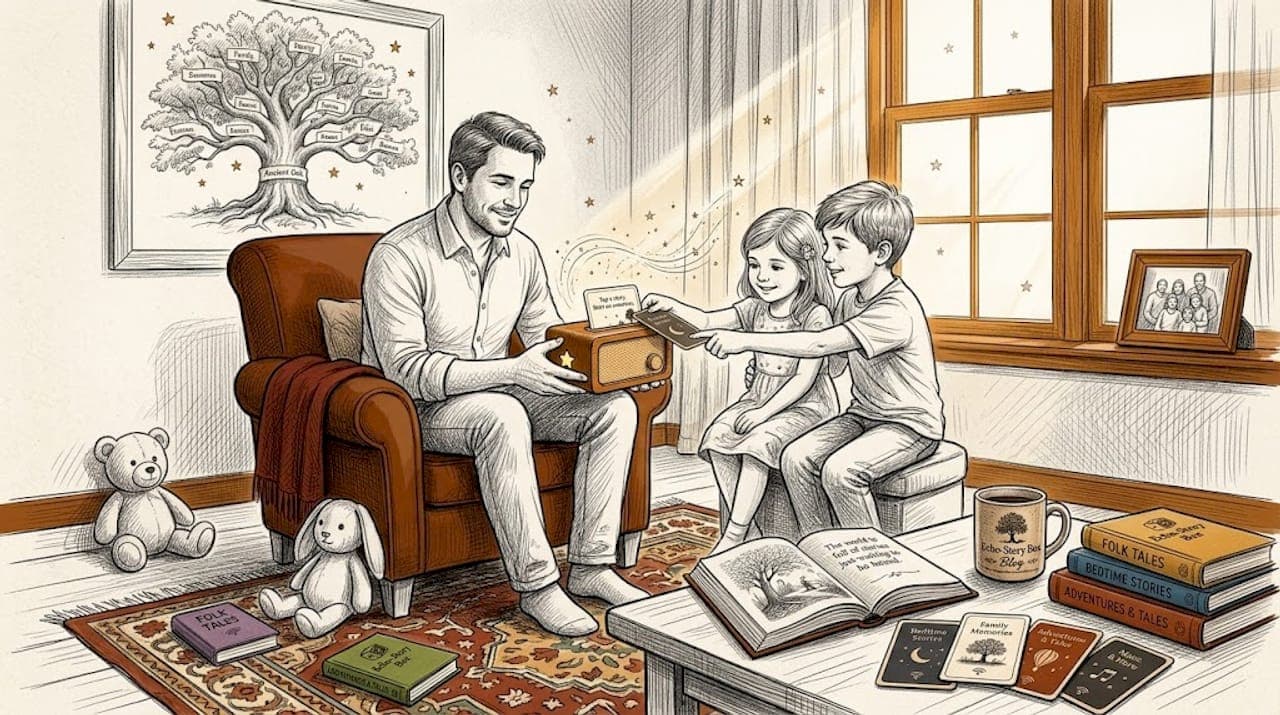
There is something powerful about a child asking to hear grandma's story again. Not because you told them to, but because they wanted it. When you document family stories children can replay on their own, you give them something no toy or streaming service can match: a living connection to the people who love them. This guide walks you through the tools, methods, and emotional rewards of preserving family memories in formats that are screen-free, simple to use, and built to be revisited for years.
Table of Contents
- Key takeaways
- What you need to document family stories children can replay
- How to document and share stories step by step
- Common challenges and how to handle them
- Why children benefit from replaying family stories
- My take on what actually works
- Bring family stories to life with Echo-Story Box
- FAQ
Key takeaways
| Point | Details |
|---|---|
| Screen-free tools work best | Physical audio players and story cards reduce overstimulation and encourage calm, independent listening. |
| Children's involvement deepens engagement | Letting kids choose photos and story details turns passive listening into a collaborative, meaningful experience. |
| Familiar voices build emotional security | Repeated listening to a grandparent's or parent's voice strengthens a child's sense of belonging and comfort. |
| Simple tech helps older relatives participate | Using tools that connect with familiar methods lowers the barrier for grandparents to share their stories. |
| Replay creates lasting rituals | Replayable family stories become bedtime or quiet-time rituals children look forward to and grow with. |
What you need to document family stories children can replay
Getting started does not require expensive equipment or technical skills. The right setup is simple, thoughtful, and within reach for most families.
Physical tools and audio players
A dedicated audio player is one of the best investments you can make for screen-free children's story replay. Devices like the Echo-Story Box use NFC story cards, so a child simply places a card on the box and the story begins. There are no menus, no scrolling, and no ads. Physical playback devices with physical cards create comforting, deliberate rituals that support independent play and avoid the overstimulation common with tablets.
Beyond a dedicated player, you will want a few other materials:
- A simple voice recorder or smartphone app for capturing family stories before formatting them
- Blank or printable NFC cards or story card sleeves for organizing individual recordings
- A small binder or keepsake box to store cards and printed photos that accompany each story
- Printed photos or hand-drawn illustrations to pair with audio recordings and give children something to hold
Setting up your recording space
The environment matters more than most parents expect. A quiet room with soft lighting puts both the storyteller and the child at ease. Turn off background noise, close windows to street sounds, and sit close enough that the recording captures a warm, natural voice rather than an echo. A thick rug or curtains help absorb sound in smaller rooms.
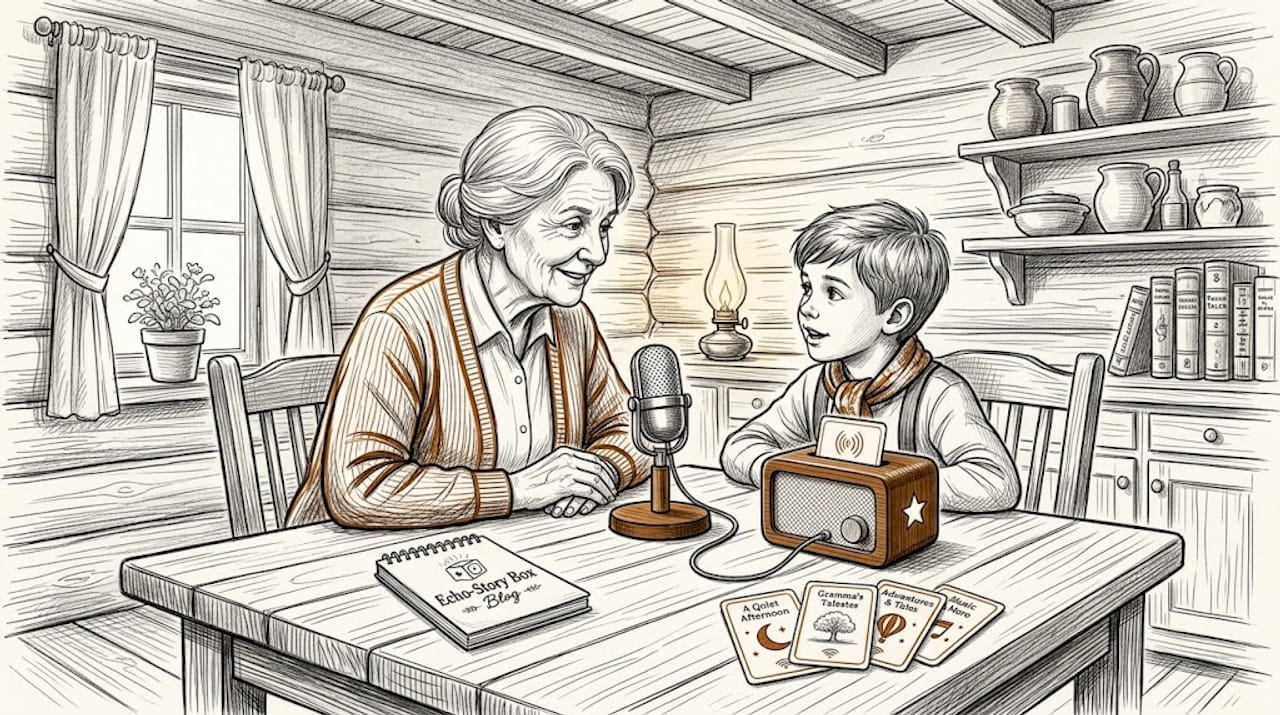
Pro Tip: Record a short test clip before your main session. Play it back to check for background hum, distant TV noise, or microphone distance issues. Two minutes of preparation saves a retake of a 20-minute story.
Organizational tools for easy access
Once you have several recordings, organization becomes important. Label each story card clearly, either with a written tag or a small printed image. Group cards by theme: holiday stories, childhood memories, faith stories, and family history. This lets your child pick a card based on what they are in the mood for, which makes the whole experience feel more personal and less like a homework assignment.
How to document and share stories step by step
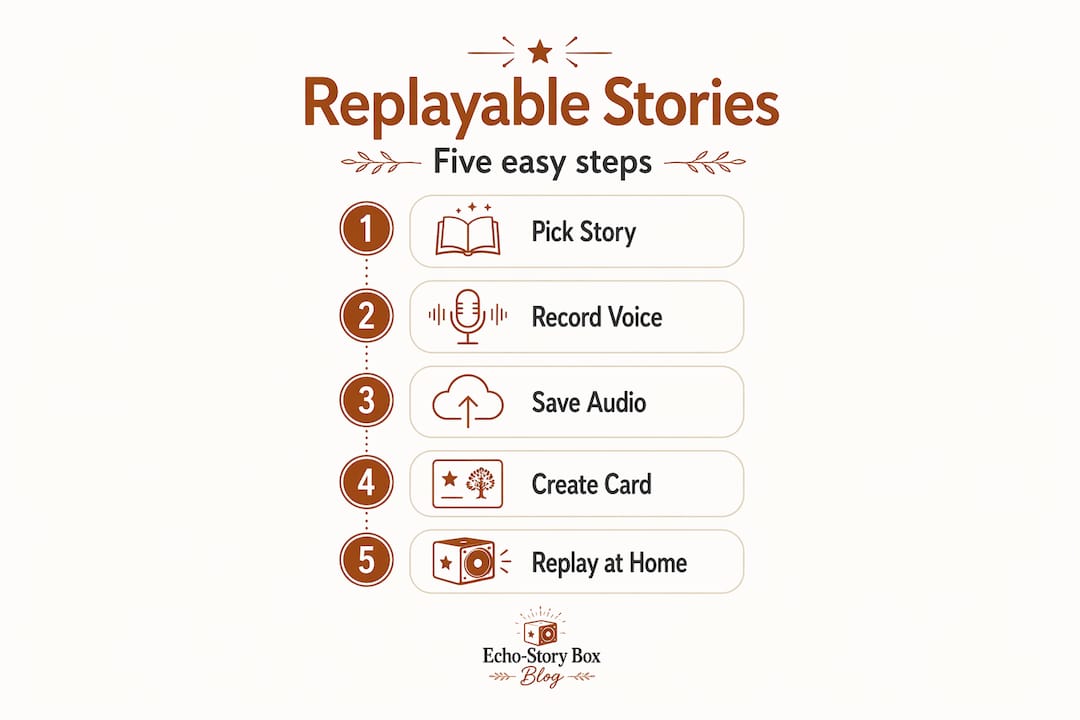
The actual process of narrating family history and turning it into replayable audio does not need to be complicated. Here is a simple approach that works across age groups and storytelling styles.
-
Choose your storyteller and topic together. Ask your child who they want to hear from and what they want to know. Questions like "What was Dad's house like when he was little?" or "What did Great-grandma cook on Sundays?" are far more engaging than open-ended prompts. Age-tailored questions help draw out richer, more vivid responses from family members across generations.
-
Conduct a relaxed interview, not a formal recording. Sit down with the storyteller over coffee or during a quiet afternoon. Ask two or three focused questions. Let the conversation flow naturally. Then record a polished version afterward, using the notes or natural dialogue from your conversation as a guide. This removes the stiffness that often comes when someone knows they are being recorded.
-
Involve your child in the creative details. Children who choose photos and narrative details for family storybooks show higher engagement and treat the experience as a collaborative project rather than passive content. Let your child pick the photo that goes on a story card, choose a title, or suggest what part of grandpa's adventure they want to hear about next.
-
Record the story in a familiar voice. The most replayable recordings use voices the child already knows and loves. Parents, grandparents, aunts, and uncles all make wonderful narrators. Some platforms even offer personalized narration with voice cloning and custom themes, though a simple recording of a real family member will always carry more emotional weight.
-
Format the story for replay. Edit the recording lightly for clarity, trim long silences, and save it to the playback format your device supports. Assign it a story card. Write a short title on the card and add a small image so your child can identify it by sight before they even press play.
-
Create a small story library over time. Aim for one new story per month rather than trying to record everything at once. Platforms like Remento help families collect year-long memories using prompts, producing books with embedded audio codes for replay. You do not need a platform to do this yourself. A consistent monthly habit builds a rich library before you realize it.
Pro Tip: Record a grandparent reading a favorite children's book aloud. Pair the audio card with the physical book. Your child gets two layers of the story: the voice they love and the pictures in their hands.
Common challenges and how to handle them
Even the most enthusiastic family storytelling project runs into real-world friction. Here is how to work through the most common ones.
Getting older relatives on board
Technology apprehension is the number one reason grandparents hesitate. The fix is to meet them where they already are. Grandparents prefer familiar platforms like WhatsApp over new apps, which means you can ask them to send a voice message, then you handle the formatting and transfer to the story card. Their job is simply to talk. Yours is to handle the technical side.
Keeping stories age-appropriate and engaging
A story that works for a ten-year-old may lose a four-year-old completely. Keep recordings for younger children short, under five minutes, with simple language and a clear beginning and end. Older children can handle longer, more detailed stories with emotional complexity. Mixing in gentle humor, funny family moments, or a touch of suspense keeps even a well-worn story fresh on the tenth replay.
Maintaining audio quality across sessions
Inconsistent recording conditions are one of the biggest obstacles to a professional-feeling story library. A few consistent habits help:
- Always record in the same quiet location when possible
- Keep the microphone about six inches from the speaker's mouth
- Avoid recording on windy days or near appliances that hum
- Use free tools like Audacity to reduce background noise after recording
"Storytelling tools must strengthen relationships, encouraging active questions and listening rather than automating content creation."
That insight, drawn from the Remento family storytelling platform, is worth holding onto. The goal is never to produce a polished podcast. It is to preserve a voice, a laugh, a memory.
Avoiding repetitive or flat recordings
Variety keeps a story library alive. Rotate between different formats: a personal childhood memory one month, a faith story the next, then a funny holiday tradition after that. Family stories and children's literature share the same core values, including responsibility, kindness, and curiosity. Letting those themes emerge naturally makes a story worth replaying rather than just worth hearing once.
Why children benefit from replaying family stories
The payoff for this kind of effort goes well beyond a nice keepsake. Regular exposure to replayable family audio produces real, measurable benefits in young children.
Emotional security. Repeated listening to familiar voices promotes emotional security in young children, particularly when delivered through screen-free physical devices that reduce behavioral fatigue and encourage independent engagement. A child who can reach for grandma's story card at bedtime has a source of comfort that does not depend on a Wi-Fi connection or a charged device.
Identity and belonging. Sharing family narratives is directly linked to children's confidence, sense of identity, and cognitive development. When a child hears the story of how their grandparents met, or what their parent was afraid of at age seven, they start to understand that they belong to something larger than themselves. That is a powerful feeling at any age, but especially between ages four and ten.
Language and literacy growth. Stories told in rich, natural language expose children to vocabulary and sentence structures they will not encounter in everyday conversation. The role of storytelling in brain development is well-documented: children who hear stories regularly show stronger comprehension, wider vocabulary, and better social reasoning than those who do not.
Independent play and calm rituals. The physical act of choosing a card and placing it on a player gives a child agency and a calm, predictable routine. This kind of tactile, self-directed activity supports the kind of focused, quiet play that screens tend to crowd out. It also creates a ritual your child will associate with safety and warmth, which is exactly what you want around bedtime or during transitions in the day.
My take on what actually works
I have seen families approach this with elaborate plans and expensive equipment. Most of them give up within a month. The ones who stick with it share one thing in common: they kept it simple.
What surprised me most is how little children care about audio quality. They care about recognizing the voice. A slightly muffled recording of great-grandpa telling a story about his first job will be replayed a hundred times. A studio-quality recording of a stranger reading a generic story gets shelved after two listens. The emotional connection is the technology. Everything else is just delivery.
I also think we underestimate what happens when a child can control the experience themselves. Watching a four-year-old carefully select a story card, place it on the player, and settle in to listen independently is genuinely moving. They are not waiting for a parent to start a video or find the right episode. They are choosing. That sense of ownership changes how they relate to the stories over time.
The grandparents' voices matter insight is real, and it is underused. Most families wait too long to record older relatives. Start now, even if the story seems ordinary. Ordinary stories become extraordinary once the voice is gone.
— Bob
Bring family stories to life with Echo-Story Box
If you are ready to turn family memories into something your child can hold and replay, Echo-Story Box was built exactly for this.
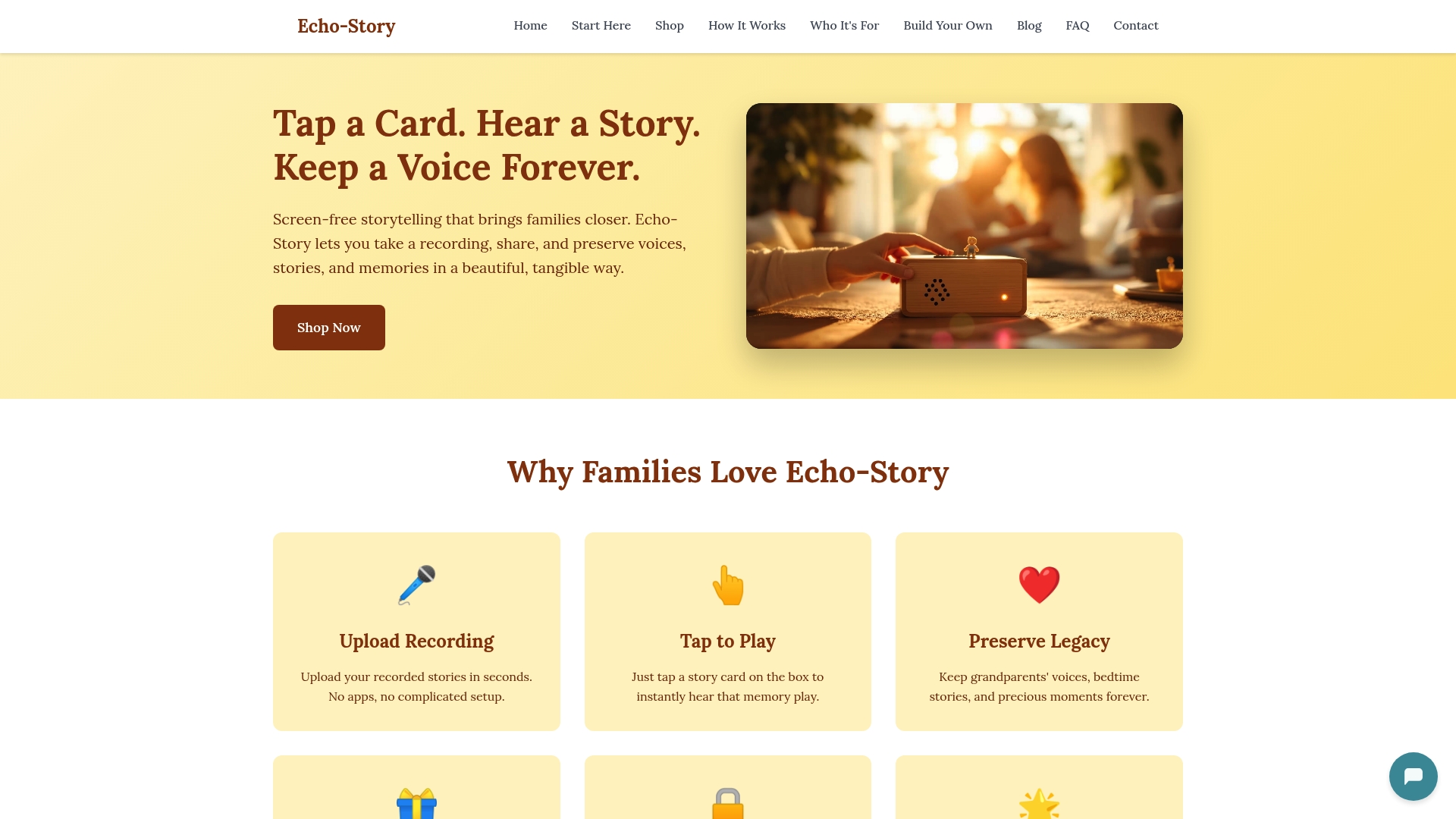
Echo-Story Box is a screen-free audio player that uses simple NFC story cards. Grandparents can record bedtime stories, family history, and personal messages. Parents can build a library of replayable memories. Children tap a card and listen, no menus, no ads, no screens. The Echo-Story Box makes interactive family stories simple enough for a four-year-old and meaningful enough to keep for a lifetime. You can also explore how it works to see how easy it is to get started today.
FAQ
What is the easiest way to document family stories for kids?
The simplest method is a voice recording paired with a physical playback device. Record a family member telling a story, save it to a story card, and let your child replay it independently whenever they want.
How long should a recorded family story be for young children?
For children ages four to six, keep recordings under five minutes with clear, simple language. Older children between seven and ten can engage comfortably with stories up to fifteen minutes long.
Can grandparents participate even if they are not tech-savvy?
Yes. Ask them to send a voice message through a familiar app like WhatsApp or a standard phone call recording. You handle the editing and transfer to the playback format. Their only job is to talk.
Do replayable family stories actually help child development?
Research confirms that family narrative sharing supports children's confidence, language development, and sense of identity. Repeated listening to familiar voices also builds emotional security, especially with screen-free physical devices.
How many stories should be in a family story library?
Start small. One story per month adds up to twelve stories in a year, which is a solid, varied library. Quality and variety matter more than volume. Rotate themes across personal memories, family history, holiday traditions, and values-based stories to keep children coming back.