
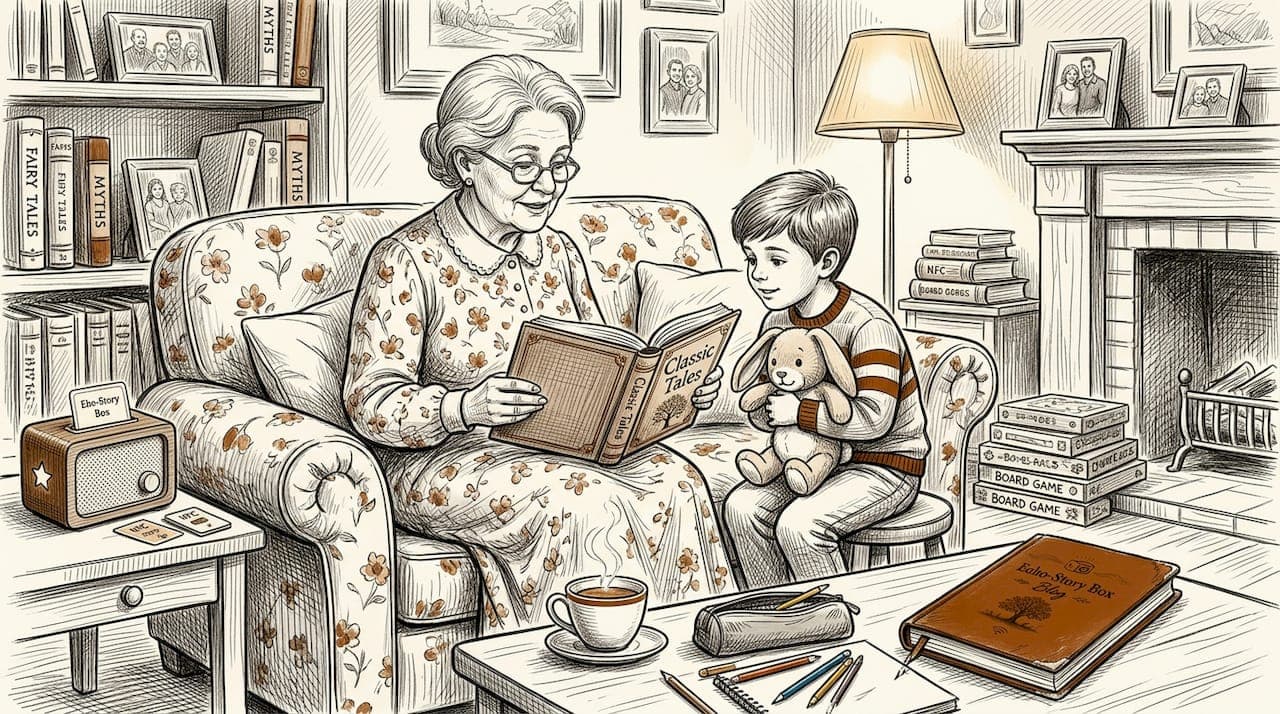
There is something about a grandparent's voice that no screen, speaker, or app can replicate. Understanding why grandparents voices matter children goes far deeper than sentiment. Recent research shows that grandparents activate unique emotional responses in children's brains, build resilience, pass down cultural identity, and even improve their own cognitive health in the process. This article walks you through what the science says, what it means for your family, and how you can make the most of these irreplaceable connections before the moments are gone.
Table of Contents
- Key takeaways
- Why grandparents' voices matter to children's emotional growth
- How grandparents' voices build resilience and social skills
- The legacy role of grandparents through storytelling
- The reciprocal benefits for grandparents
- My perspective on why these voices are irreplaceable
- Preserve grandparent voices with Echostory-box
- FAQ
Key takeaways
| Point | Details |
|---|---|
| Grandparents trigger unique empathy | Brain scans show grandmothers respond to grandchildren with deeper emotional empathy than parents typically show. |
| Voice builds resilience | Grandparent involvement reduces parenting stress and helps young children develop stronger emotional resilience. |
| Storytelling preserves identity | Oral family stories passed down by grandparents shape children's sense of belonging and cultural identity. |
| Benefits flow both ways | Grandparents who actively engage with grandchildren show better memory and verbal fluency over time. |
| Legacy recordings last forever | Capturing a grandparent's voice in audio form gives children a lasting emotional anchor they can return to for years. |
Why grandparents' voices matter to children's emotional growth
Most people assume grandparents are simply a warm bonus in a child's life. The science says something far more specific. Brain scans of 50 grandmothers revealed that grandmothers' brains activate emotional empathy regions more strongly when viewing their grandchildren than when viewing their own adult children. That is not a small distinction. Emotional empathy means feeling with someone, not just understanding them intellectually. Grandmothers appear hardwired to feel what their grandchildren feel.
This matters because children absorb emotional cues from the people around them. When a grandparent speaks with that depth of felt warmth, children register it. They feel safe. They feel seen. That sense of unconditional belonging is one of the most powerful foundations for healthy emotional development a child can have.
Pro Tip: If distance separates your family, a short voice message from a grandparent sent before bedtime can carry the same emotional weight as a physical visit. Consistency matters more than length.
The importance of grandparent's roles becomes clearest in moments of stress. When a child is anxious, a familiar grandparent's voice can calm the nervous system in ways that are similar to a parent's voice. The tone, the cadence, the specific phrases a grandparent uses become emotional anchors. Children store these sounds. They recall them. And research suggests that grandmothers show amplified love through both emotional and physical brain responses to their grandchildren's feelings, which means that warmth is not just perceived. It is neurologically real.
The impact of grandparents on kids at this emotional level is not something that happens by accident. It builds through repetition. Through the same bedtime story told the same way. Through the laugh that sounds like no one else's. Through the voice that says "I love you" and means it with every year of experience behind it.
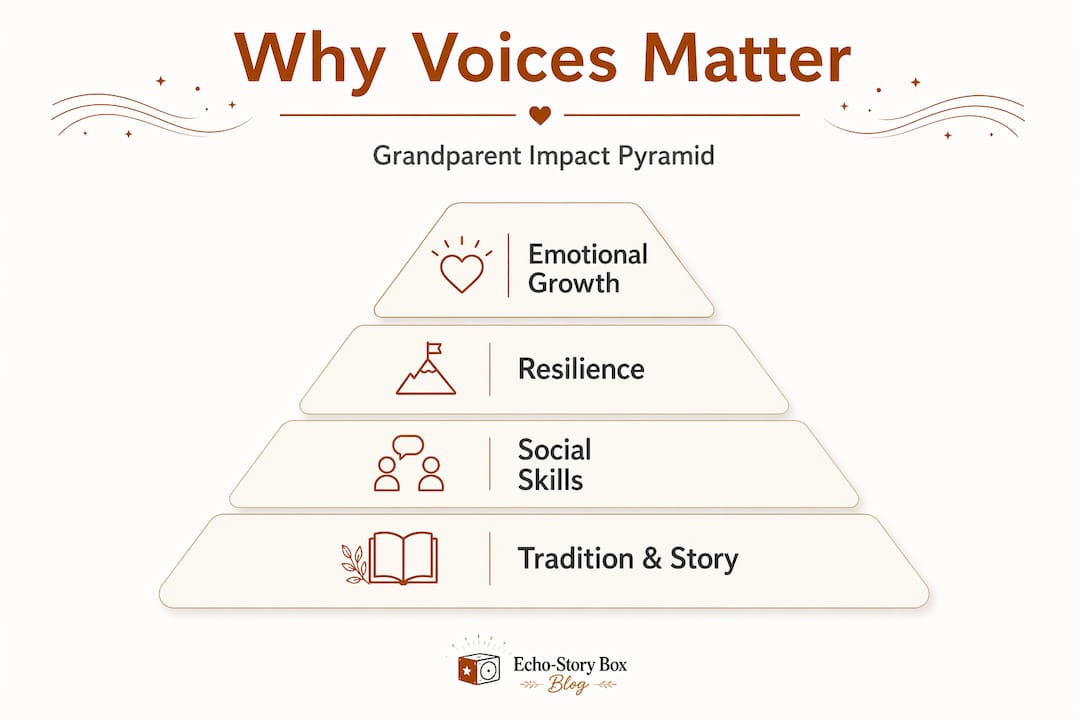
How grandparents' voices build resilience and social skills
The benefits of grandparent relationships extend well beyond comfort. A study of 919 mothers of children aged 3 to 5 in three-generation Chinese families found that grandparent involvement reduces maternal parenting stress, which in turn directly boosts young children's resilience. When a grandparent is present and engaged, the whole family system breathes easier. That calmer environment gives children more room to develop confidence and emotional strength.
The social benefits are just as striking. Research shows that positive grandparenting encourages prosocial behavior in children, including kindness, empathy, and a willingness to help others. These are not traits that come from a curriculum. They come from watching and listening to someone who models them naturally.
Here is what the research consistently shows about how grandparents influence children's social development:
- Emotional regulation. Children who have strong grandparent relationships learn to manage their feelings more effectively because they have experienced calm, patient responses from an older adult.
- Conflict navigation. A study of 3,128 adolescents aged 11 to 16 found that strong grandparent-grandchild bonds buffer the negative effects of parental conflict on adolescent mental health. When home life is difficult, a grandparent's steady presence makes a measurable difference.
- Empathy development. Grandparents as mentors for youth model patience and perspective in ways that peers simply cannot. A child who regularly hears a grandparent's stories about hardship and grace develops a broader emotional vocabulary.
- Family cohesion. Grandparents help form what researchers call a triadic family system. Their involvement improves family communication and overall child adjustment across the household.
The thread running through all of this is voice. Grandparents do not build these outcomes through passive presence. They do it by talking, sharing, listening, and telling stories. Every conversation is a small investment in a child's social and emotional future.
The legacy role of grandparents through storytelling
Grandparents are living libraries. They carry family history, cultural traditions, and personal memories that exist nowhere else. When they share these through voice and story, they give children something profound: a sense of where they come from and who they are.
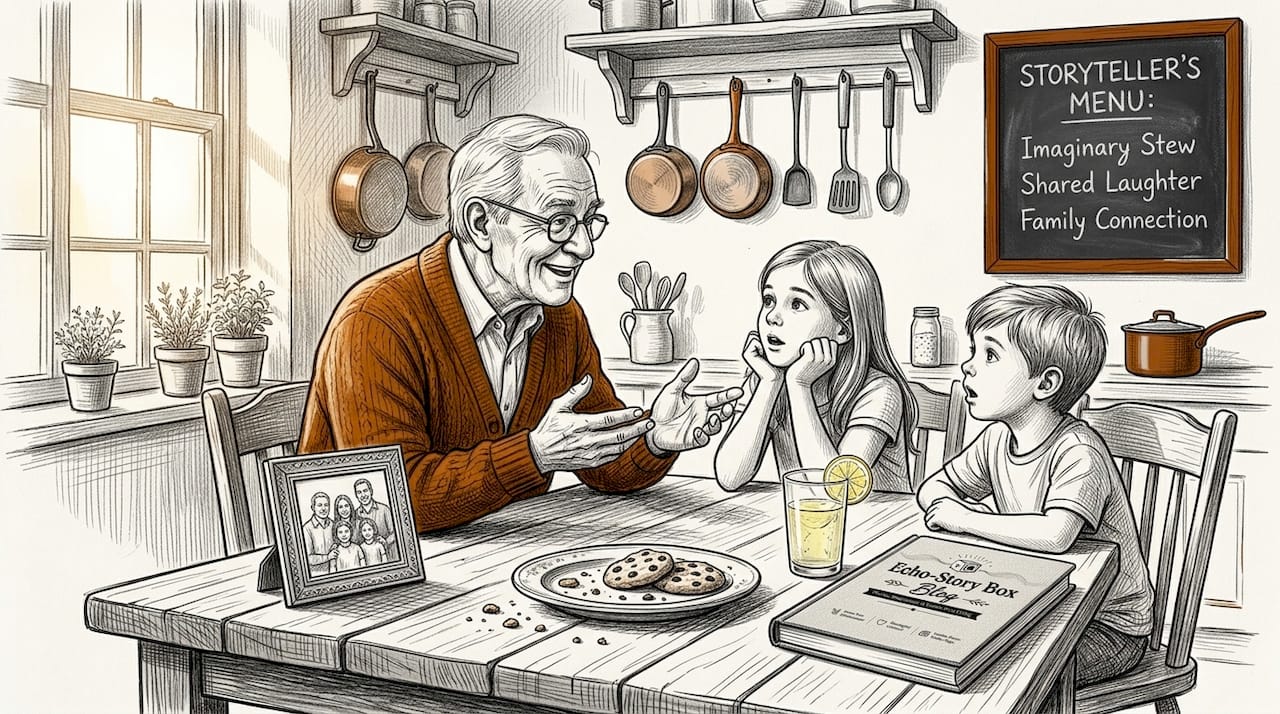
Research on intergenerational families confirms that grandparents pass down family traditions and cultural values through oral storytelling, directly shaping a child's identity and sense of belonging. This is not just nostalgia. It is identity formation. A child who knows their family's stories feels more grounded, more connected, and more capable of facing the world.
Storytelling also builds language skills and emotional intelligence in ways that stories teach more effectively than direct instruction ever could. When a grandparent tells a story about courage, a child does not receive a lesson. They experience one. That difference in how the brain processes narrative versus lecture is significant for long-term learning.
Here are practical ways to make the most of grandparents' storytelling voices:
- Schedule regular story time. Even a 15-minute phone or video call focused on a single family story creates a lasting memory.
- Ask grandparents specific questions. "What was school like for you?" or "What was the hardest thing you ever did?" unlocks stories children would never hear otherwise.
- Record the stories. Audio recordings of a grandparent's voice become irreplaceable keepsakes. The role of storytelling in brain development shows why these recordings carry genuine developmental value.
- Repeat favorite stories. Children benefit from hearing the same stories multiple times. Repetition deepens comprehension and emotional connection.
Pro Tip: Ask grandparents to record a short message for each grandchild's birthday, holiday, or milestone. Over the years, these recordings become a timeline of love that children can carry with them into adulthood.
The reciprocal benefits for grandparents
The relationship between grandparents and grandchildren is not one-sided. When grandparents use their voices actively, they benefit too. Significantly.
| Benefit for grandparents | What the research shows |
|---|---|
| Better memory | Grandparents who provide regular childcare show improved memory scores compared to those with no grandchild involvement. |
| Stronger verbal fluency | Active grandparenting is linked to higher verbal fluency, which buffers against cognitive decline over time. |
| Reduced loneliness | Grandparent presence reduces loneliness and increases a sense of purpose in older adults. |
| Emotional fulfillment | Engaged grandparents report higher levels of life satisfaction and emotional well-being. |
The analysis of nearly 2,900 grandparents' cognitive test scores showed that those who provided regular care for grandchildren performed better on memory and verbal fluency tests. That is a meaningful finding. Talking to grandchildren, telling stories, answering questions, and explaining the world keeps the mind sharp.
There is also the emotional dimension. Grandparenting offers a renewed sense of purpose that many older adults describe as one of the most fulfilling experiences of their lives. The mutual emotional exchange across generations supports mental health on both sides of the relationship. Children grow more resilient. Grandparents grow more engaged. Everyone benefits from the simple act of a grandparent's voice filling the room.
My perspective on why these voices are irreplaceable
I have spent a lot of time thinking about what gets lost when families stop making space for grandparents' voices. And I think we underestimate it badly.
Parents are busy. That is not a criticism. It is just true. What I have seen, again and again, is that grandparents fill emotional gaps that parents cannot always fill, not because parents do not care, but because grandparents carry a different kind of patience. They have already raised children. They are not anxious about the outcome. That calm is something children feel immediately.
What I find most meaningful is the legacy dimension. A parent's voice will always matter most to a young child. But a grandparent's voice carries something different: history, perspective, and a kind of love that has been tested by time. When a grandparent tells a story about their own childhood, they are giving a child a window into a world that no book or documentary can replicate. That is irreplaceable.
My honest advice to any family reading this: do not wait for the perfect moment to record a grandparent's voice. Do not assume there will be more time. Record the stories now. Play them often. Let children grow up hearing those voices as a regular part of their world. The joy in that connection, and the legacy it creates, is worth every effort it takes to make it happen.
— Bob
Preserve grandparent voices with Echostory-box

At Echostory-box, we built something specifically for this. Grandparents can record bedtime stories, life lessons, holiday messages, and personal encouragement directly into the platform. Children can then tap a simple story card on the Echo-Story Box and hear their grandparent's voice whenever they want, no screens, no scrolling, no distractions. Just the voice they love, right when they need it.
If you are looking for a way to make grandparent connections part of your child's daily routine, see how it works and explore what Echostory-box makes possible. You can also visit the Echo-Story shop to find the right option for your family. These recordings become keepsakes that children carry with them for life.
FAQ
Why do grandparents' voices matter so much to children?
Grandparents' voices carry emotional warmth, family history, and unconditional love that children register deeply. Brain research shows grandmothers activate stronger emotional empathy responses toward grandchildren than toward their own adult children.
How do grandparents help build resilience in children?
Grandparent involvement reduces maternal parenting stress, which creates a calmer home environment where children develop stronger emotional resilience. Research involving over 900 families confirms this direct connection.
Can grandparent storytelling improve a child's development?
Yes. Oral storytelling by grandparents builds language skills, emotional intelligence, and a sense of cultural identity. Children who hear family stories regularly develop a stronger sense of belonging and broader emotional vocabulary.
Do grandparents benefit from talking with grandchildren?
Absolutely. Grandparents who actively engage with grandchildren show better memory and verbal fluency over time, along with reduced loneliness and higher emotional well-being, according to cognitive research involving nearly 2,900 grandparents.
How can families preserve a grandparent's voice for children?
Families can record audio stories, messages, and personal memories using platforms like Echostory-box, which allow children to replay a grandparent's voice through a simple, screen-free audio player at any time.