
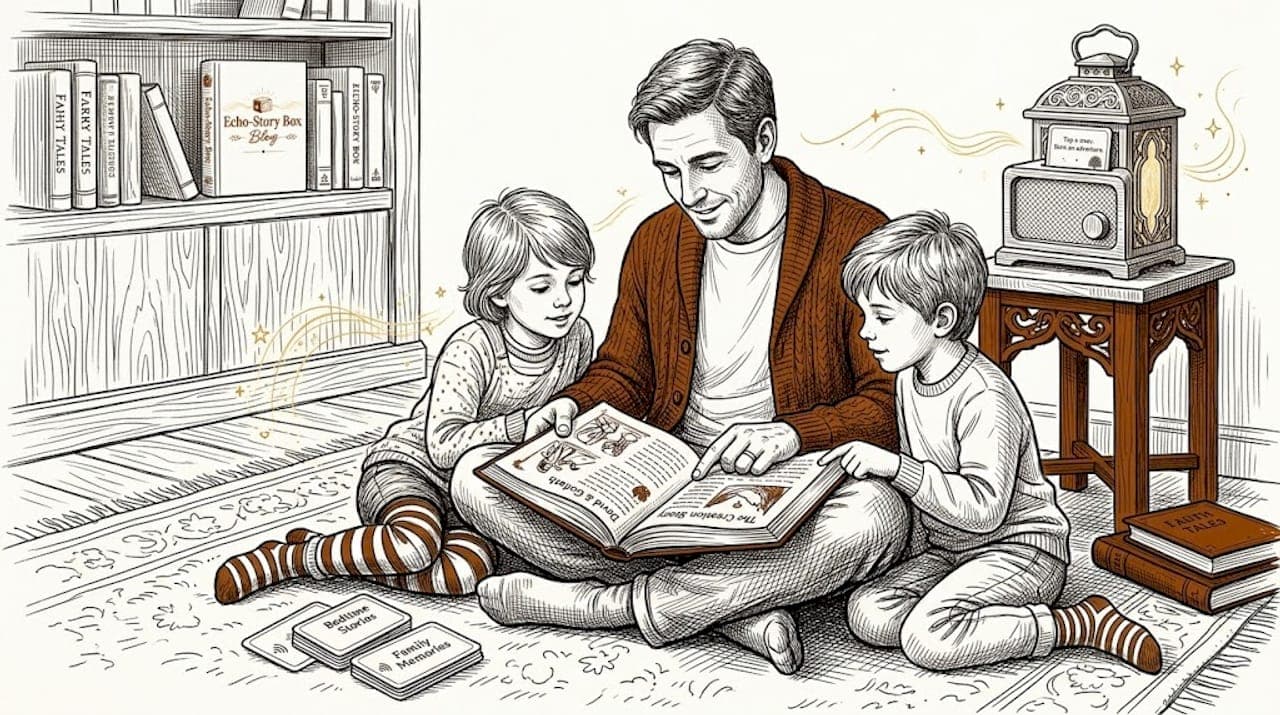
Most families tell stories. They share memories at dinner, recall funny moments on road trips, and retell how grandparents met. But the role of scripture in family storytelling goes far deeper than most families realize. When scripture becomes part of your family's narrative, something shifts. Stories stop being entertainment and start becoming formation. Faith gets passed down not through lectures, but through lived moments wrapped in God's Word. This article shows you how to make that happen, practically and consistently, in your own home.
Table of Contents
- Key takeaways
- The role of scripture in family storytelling: biblical foundations
- How scripture storytelling shapes family identity
- Practical methods for weaving scripture into stories
- Common challenges and how to overcome them
- Measuring impact and building a lasting legacy
- My honest take on scripture-centered storytelling
- Bring scripture storytelling to life with Echostory-box
- FAQ
Key takeaways
| Point | Details |
|---|---|
| Scripture has a biblical mandate | Deuteronomy 6 and Psalm 78 call parents to weave God's Word into everyday family life, not just Sunday mornings. |
| Consistency matters more than depth | Brief, regular scripture storytelling builds lasting faith far more effectively than occasional deep lessons. |
| Meet children where they are | Using visual, auditory, and kinesthetic methods keeps all ages engaged without turning story time into a sermon. |
| Vulnerability transforms storytelling | Sharing your own struggles alongside scripture makes God's Word feel real and relevant, not abstract. |
| Legacy grows through repetition | Stories children hear repeatedly become the moral compass they carry into adulthood and pass on themselves. |
The role of scripture in family storytelling: biblical foundations
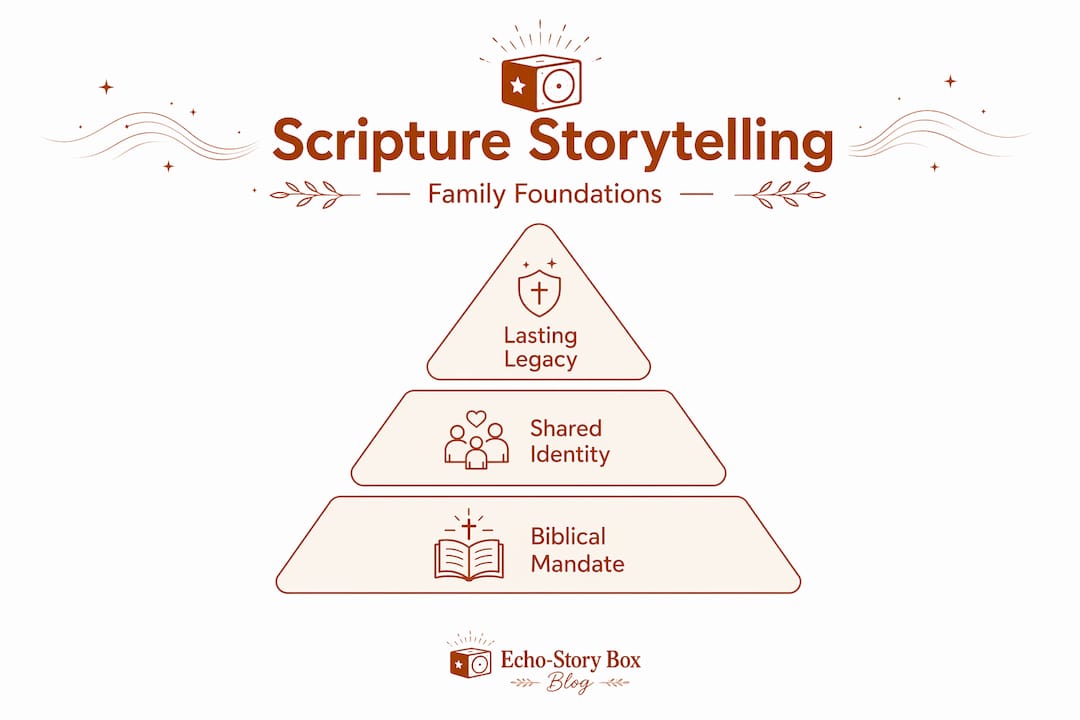
The call to tell scripture-rich stories to your children is not a modern parenting trend. It goes straight back to the Old Testament. Deuteronomy 6:6-9 mandates that God's Word be taught during sitting at home, walking, lying down, and rising up. That is not a Sunday school schedule. That is an all-day, every-day rhythm built into the fabric of family life.
Psalm 78 reinforces this with striking clarity. The passage calls each generation to proclaim God's works to the next, so that children would set their hope in God and not forget His deeds. The language is active, not passive. It calls for telling, not just knowing.
Here is what that means in practice for your family:
- Scripture is meant to be shared out loud, not read silently and filed away
- Family storytelling becomes the delivery system for passing on faith
- Daily moments, not formal settings, are the primary context God designed for this
- Children absorb faith best through story, not doctrine alone
- Parents are the primary storytellers in this model, not pastors or teachers
The Bible itself is a unified grand narrative, and when families understand that arc, individual passages connect more powerfully. You are not teaching isolated verses. You are inviting your children into a story that has been unfolding since creation.
| Biblical Text | Core Principle | Family Application |
|---|---|---|
| Deuteronomy 6:6-9 | Integrate scripture into daily rhythms | Tell a verse during a walk, meal, or bedtime |
| Psalm 78:4-7 | Proclaim God's works across generations | Share what God has done in your own life story |
| Proverbs 22:6 | Shape children through early instruction | Build scripture storytelling habits while children are young |
How scripture storytelling shapes family identity
There is a phrase worth holding onto: moral architecture. It describes what happens when scripture stories are told repeatedly in a home. Children do not just memorize verses. They build an internal structure for making decisions, responding to fear, and treating other people. That structure gets laid down one story at a time.
The ten Boom family is one of the most vivid historical examples of this. Casper ten Boom read the Bible to his family every single night for decades. The result? His daughter Corrie and her family chose to save 800 Jewish lives during the Holocaust, at great personal risk. That kind of courage does not come from a single inspiring sermon. It comes from years of scripture woven into family identity.
Another example sits in the story of Charles Spurgeon. His mother Eliza's persistent scripture reading and prayer shaped his faith so deeply that he later credited her as the primary human influence on his calling. She was not a theologian. She was a mother who told her children about God, consistently and personally.
What both families share is this: scripture did not stay on the page. It became part of how they saw themselves and the world. The importance of scripture in storytelling is not about producing perfect children. It is about building a shared family identity rooted in something bigger than any one person.
Pro Tip: Give your family a "scripture story anchor," one passage that defines who you are as a family. Revisit it at big moments: birthdays, hard seasons, milestones. Watch how it grows meaning over time.
Practical methods for weaving scripture into stories
Knowing you should tell scripture-based stories is one thing. Knowing how is another. The good news is that effective scripture storytelling does not require a seminary degree or a formal lesson plan. It requires creativity, consistency, and a willingness to meet your children where they are.
Here is a simple framework to get started:
- Match the method to the child. Visual learners love drawing a scene from a story. Auditory learners want to hear it read with expression. Kinesthetic learners want to act it out or hold something tangible. Use all three over time.
- Weave scripture into daily moments. Mealtime, bedtime, car rides, and evening walks are all open doors. A verse connected to something your child experienced that day lands far more deeply than a scheduled Bible lesson.
- Pause and invite reflection. Mid-story reflections prevent disengagement and increase relevance. Ask: "Where do you see God acting here?" or "Has anything like this ever happened to you?"
- Share your own story. Tell your children about a time when a specific verse helped you through fear, disappointment, or a hard decision. Modeling vulnerability transforms scripture from abstract rules into a living resource.
- Create tangible reminders. Scripture art, memory verse cards, or a faith hoodie around the house reinforce what you are telling in stories. Children remember what they can see and touch.
- Let children retell the story. After sharing a scripture story, ask your child to retell it in their own words. Their version will surprise you, and it cements the lesson in a way passive listening never can.
Pro Tip: Do not end every scripture story with a moral lesson. Sometimes the most powerful response is simply sitting quietly together or asking one open question. Let the story do its own work.
Stories teach children in ways that direct instruction cannot. Research consistently shows that stories teach better than lectures for kids, and scripture is the richest story source your family has access to.
Common challenges and how to overcome them
Even the most motivated families hit walls. Scripture storytelling sounds beautiful in theory, but the reality involves tired evenings, distracted kids, and the occasional feeling that you are talking to yourself. Here are the most common obstacles and practical ways through them.
- It feels like a lecture. Parents often treat family Bible time as a teaching session rather than a shared exploration. The fix is simple: ask more questions than you make statements. Position yourself as a fellow learner, not a professor.
- Different ages and attention spans. A five-year-old and a twelve-year-old cannot sit through the same format. Use shorter stories for younger children, then add depth in a separate moment with older kids. Overlap moments, like a shared verse at dinner, keep everyone connected.
- Keeping it fresh. Telling the same stories the same way leads to tune-out. Rotate formats. Tell a story one night, draw it the next, act it out on the weekend. Variety preserves curiosity.
- Balancing depth and simplicity. You do not need to explain every theological nuance to a seven-year-old. One clear, concrete truth per story is enough. Depth comes with years, not single sessions.
- Staying consistent. Nobody has a perfect schedule. The goal is not daily perfection. It is enough moments, often enough, that scripture storytelling becomes a natural part of your family culture. A consistent bedtime story ritual is one of the simplest ways to build that habit without overthinking it.
Measuring impact and building a lasting legacy
One of the hardest things about scripture storytelling is that you rarely see the results in real time. Faith formation is slow, like roots spreading underground. But those roots show up when life gets hard.
Consistency over theological depth is the biggest factor in lasting faith formation. Brief, regular exposure to scripture stories compounds over years into something your children carry for life. They may not quote the verse. But they will remember the feeling of the story, the warmth of the moment, and the truth underneath both.
Encourage your children to retell and personalize scripture stories as they grow. When a teenager recalls a story you told them at age six, that is a spiritual milestone worth celebrating. When a child applies a scripture principle to a friendship conflict without prompting, that is the moral architecture doing its work.
Notice small signs of growth. A child who begins to connect what happened at school to a story they heard at home is making the exact kind of meaning that scripture storytelling is designed to produce. These moments are quiet, but they are real.
Pro Tip: Keep a simple family story journal. Write down the scripture stories you tell and any moments when your children connect those stories to real life. Reading it back years later will encourage you more than you expect.
The goal of scriptural lessons in storytelling is not to produce a child who knows Bible facts. It is to grow a person who knows God is present in their story, and who will one day tell that story to their own children.
My honest take on scripture-centered storytelling
I have seen families approach scripture storytelling with intense ambition and burn out in two weeks. I have also seen families do five quiet minutes at bedtime for years and raise children with deep, resilient faith. The difference is almost never the content. It is the posture.
What I have learned is that the families who sustain this practice are the ones who stop trying to be perfect teachers and start being honest participants. When you share a verse that helped you through something real, and you let your kids see that vulnerability, something opens up. The story stops being yours to deliver and becomes something you all hold together.
The other thing I keep coming back to is simplicity. The best storytelling traditions in families are not elaborate. They are just consistent. A verse at dinner. A story before sleep. A question on a walk. These practices do not feel significant in the moment, but they accumulate into something irreplaceable.
Do not wait until you feel ready or qualified. The mandate in Deuteronomy was not given to theologians. It was given to parents, sitting at home, walking with their kids, living ordinary days. That is exactly where scripture belongs.
— Bob
Bring scripture storytelling to life with Echostory-box

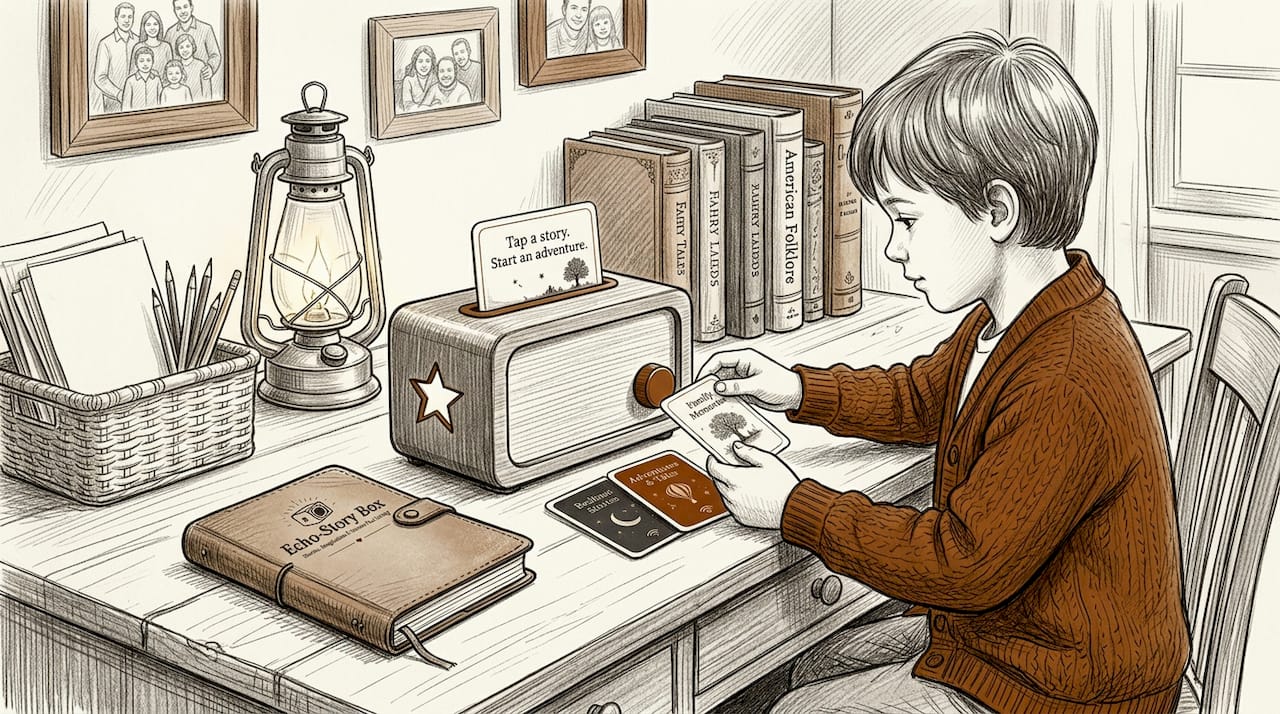
If you are looking for a simple, screen-free way to make scripture storytelling a regular part of your family's rhythm, Echostory-box was built for exactly this. Families can record their own faith testimonies, bedtime scripture stories, and personal legacy messages directly onto story cards. Children simply tap a card and listen, no screens, no distractions, just the story and the voice they love.
Echostory-box supports faith-based storytelling for families who want something calmer, more intentional, and more lasting than screen-based content. You can explore how it works and see whether it fits your family's storytelling practice. The tools are simple. The stories you create with them are not.
FAQ
What is the role of scripture in family storytelling?
Scripture provides the moral foundation and faith framework for family stories, helping children connect everyday life to God's Word. When woven into regular storytelling, it shapes values, identity, and courage over time.
How do I start using scripture in family stories without it feeling forced?
Start with a scripture story connected to something your child experienced that day, then ask one open question rather than delivering a lesson. Natural connection beats scheduled instruction every time.
How often should families tell scripture-based stories?
Brief, consistent exposure matters more than occasional deep sessions. Even five minutes at bedtime or a verse shared at dinner, practiced regularly, builds lasting faith over months and years.
What age is best to begin scripture storytelling with children?
You can begin as early as toddler age using simple, vivid stories. Meeting children developmentally with age-appropriate methods keeps scripture engaging rather than overwhelming at every stage.
Can scripture storytelling really shape a child's character long term?
Yes. Historical examples like the ten Boom family show that consistent nightly scripture practice contributed directly to extraordinary moral courage. The roots grow slowly, but they run deep.