
Getting kids to sleep without a screen is one of the most common struggles parents face. You know the scene: it's 8 p.m., everyone is tired, and somehow bedtime turns into a negotiation. When you create a bedtime story ritual every night, that chaos has a place to land. A consistent, screen-free routine gives your child something to expect, something to look forward to, and a calm signal that the day is done. This guide walks you through exactly how to build that ritual, step by step, so it actually sticks.
Table of Contents
- Why consistency matters in a bedtime story ritual
- Preparing the perfect environment and timing for your story ritual
- Step-by-step guide to creating your nightly bedtime story ritual
- Common challenges and pro tips for sustaining your bedtime story ritual
- What to expect: benefits of a nightly bedtime story ritual for your child and family
- The overlooked power of a simple, consistent story ritual
- Explore Echo-Story for screen-free storytelling success
- Frequently asked questions
Key Takeaways
| Point | Details |
|---|---|
| Consistency builds readiness | Doing calming bedtime activities in the same order each night helps your child relax and get ready for sleep. |
| Screen-free environment | Turning off devices 30–60 minutes before bed creates a calm atmosphere essential for winding down. |
| Short and focused | A 10-15 minute story ritual nightly is more effective than longer irregular sessions. |
| Interactive storytelling | Pausing during stories to ask about feelings fosters empathy and creativity. |
| Emotional connection | Simple nightly questions about the child's day promote bonding and emotional processing. |
Why consistency matters in a bedtime story ritual
Now that we understand the benefits of a bedtime story ritual, let's explore how consistency plays a vital role in making it effective.
Most parents focus on what they read. The real magic is in how reliably they do it. Bedtime routines work because doing calming activities in the same order teaches your child's brain to recognize predictability and readiness for sleep. It's not about being perfect every night. It's about the sequence being familiar.
Think of it like a signal. When bath time leads to pajamas, which leads to story time, your child's nervous system starts winding down before you even open a book. The body learns the pattern. Resistance drops. Bargaining fades.
Here's what consistency in a bedtime story routine actually looks like in practice:
- Same order every night. Bath, pajamas, story, lights out. The steps don't need to be elaborate, just predictable.
- Same general time. A window of 15 to 20 minutes works better than a strict clock, but anchoring to a time helps the body anticipate sleep.
- Same closing cue. A specific phrase, a song, or a simple "goodnight" ritual signals that story time is over and sleep begins.
"The sequence of your bedtime routine matters more than how long it takes. Children thrive when they know what comes next."
Pro Tip: If your child often stalls or resists, try using screen-free storytelling techniques as the anchor activity. A story they genuinely enjoy becomes something they move toward, not away from.
Preparing the perfect environment and timing for your story ritual
With the importance of consistency clear, let's prepare the ideal environment and timing to set your ritual up for success.

The space where you tell stories matters more than most parents realize. A screen-free sleep environment free of digital noise promotes better wind-down before bed. That means phones, tablets, and televisions out of the bedroom before the ritual begins, ideally 30 to 60 minutes before you want your child asleep.

Anchor story time to something that already happens. Bath and pajamas are the most natural trigger. Once those are done, the story begins. This kind of fixed-time routine with about 10 to 15 minutes prioritized for reading creates a reliable transition your child can count on every night.
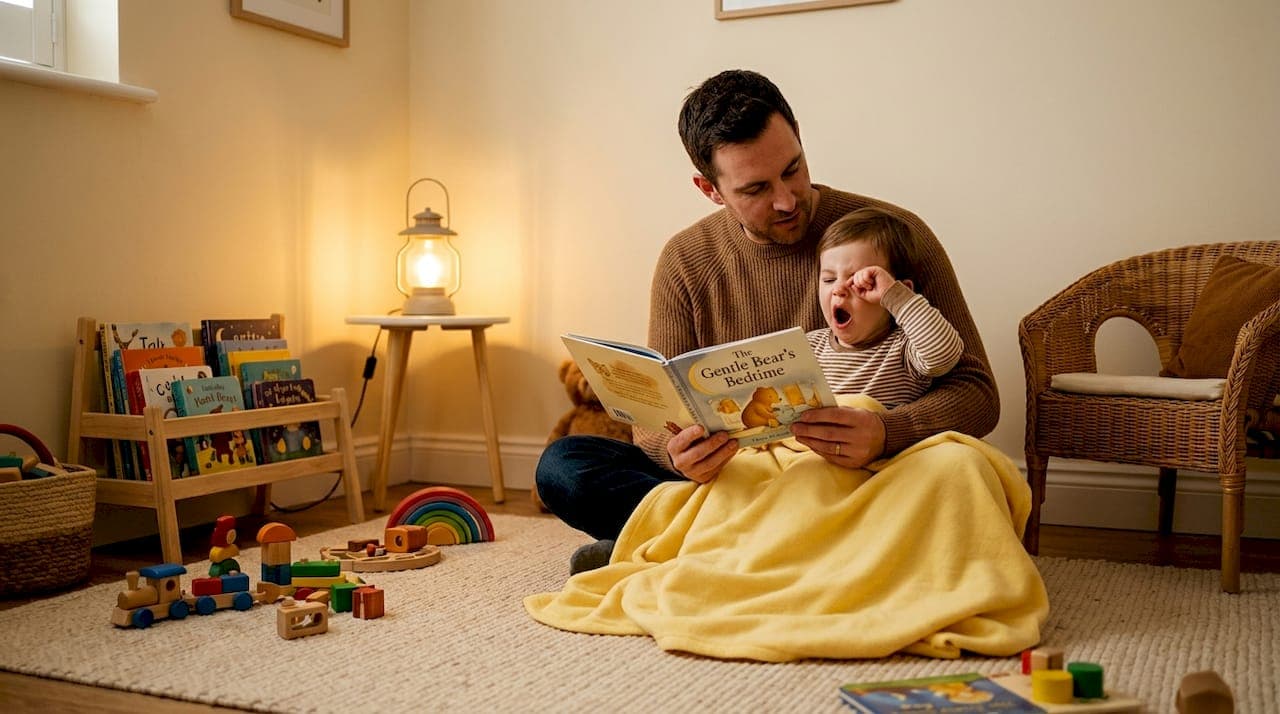
A cozy reading nook makes the ritual feel special. It doesn't need to be fancy. A soft blanket, a small lamp with warm light, and a few favorite books within reach is enough. The goal is to make this corner of the day feel different from the rest.
| Element | What to do | Why it helps |
|---|---|---|
| Screens | Power down 30 to 60 minutes before bed | Reduces mental stimulation and supports melatonin |
| Lighting | Switch to a dim, warm lamp | Signals the brain that sleep is near |
| Story space | Use the same spot each night | Builds a physical cue for winding down |
| Timing | Anchor after bath or pajamas | Creates a natural transition into story time |
| Story selection | Choose books the night before | Removes decision fatigue at bedtime |
Pro Tip: Keep a small basket of books near the reading spot. Let your child pick from that basket, not from a full shelf. Fewer choices means faster decisions and less stalling. This is one of the simplest effective bedtime reading routines you can put in place tonight.
Step-by-step guide to creating your nightly bedtime story ritual
With your environment ready and timing set, here is a clear, step-by-step approach to build your bedtime story ritual.
This is the part most guides skip. They tell you to read every night but don't show you how to structure those 15 minutes. Here's a format that works well for children aged 4 to 10.
- Set a calm cue 30 to 60 minutes before bed. A soft alarm, a dimmed light, or a simple verbal prompt like "story time in 10 minutes" gives your child time to transition. Abrupt stops to play cause more resistance than a gentle heads-up.
- Complete the pre-story steps first. Bath, teeth, pajamas. These happen before the story begins. The story is the reward at the end of the routine, not the thing squeezed in between tasks.
- Read one short story or one chapter for about 10 to 15 minutes. Keep it consistent. Chapter books work beautifully for children aged 6 and up because the "to be continued" structure gives them a reason to look forward to tomorrow night.
- Pause once during the story to ask a reflection question. Pausing at a conflict point to ask about a character's feelings enhances creativity and empathy. Something simple works well: "How do you think she felt when that happened?" or "What would you have done?"
- Close the story and ask three brief questions about your child's day. Research supports a three-question emotional check-in at bedtime: what was good today, what was hard, and what are you excited about tomorrow. This takes less than two minutes and helps your child process emotions before sleep.
- End with your closing phrase and lights out. Pick something consistent. "Sleep tight, I love you" or "Tomorrow is a new adventure." Say it the same way every night. This phrase becomes the final cue that sleep is here.
| Approach | What it looks like | Outcome |
|---|---|---|
| Passive reading | Read straight through, no interaction | Child listens but disengages quickly |
| Interactive reading | Pause once for a reflection question | Child stays engaged and builds empathy |
| Emotional check-in | Three questions after the story | Child processes the day and relaxes more easily |
| Consistent closing phrase | Same words every night | Brain learns this is the sleep signal |
Pro Tip: Use interactive storytelling techniques to keep your child genuinely curious. Ask "what do you think happens next?" before turning the page. This one small move turns a passive listener into an active participant.
Common challenges and pro tips for sustaining your bedtime story ritual
Having learned the blueprint for your ritual, let's prepare for common hurdles and ways to keep it going smoothly.
Even the best routines hit bumps. Travel, illness, late evenings, and tired parents are all real. Here's how to keep the ritual alive through the hard nights.
- Keep it short. Ten minutes nightly beats occasional long sessions for building a lasting habit. If you're exhausted, read one page. The habit matters more than the length.
- Don't punish missed nights. If you skip a night, simply start again the next evening without comment. Making a big deal of it creates pressure that works against you.
- Use personalized stories to reignite interest. When a child hears their own name in a story, or their pet, or their town, engagement jumps immediately. This is one of the most underused tools parents have.
- Keep the atmosphere calm throughout. Dim lights, quiet voices, and no sudden noises. The environment should feel like the story is wrapping the child in something warm and safe.
- Rotate story formats. Some nights read a picture book. Some nights tell a story from your own childhood. Some nights use an audio story. Variety keeps the ritual fresh without breaking the structure.
Pro Tip: If your child keeps asking for "one more story," that's a sign the ritual is working. Gently hold the boundary. One story, then the closing phrase. Building storytime consistency means honoring the structure even when it's tempting to extend it.
What to expect: benefits of a nightly bedtime story ritual for your child and family
Now that you know how to do the ritual, let's explore the wonderful benefits it brings to your child and family.
The payoff is real, and it shows up faster than most parents expect. Here's what you can look forward to when you establish a bedtime reading habit and stick with it.
- Better empathy. A two-week nightly reading routine improves children's empathy and creative fluency, especially when reflection pauses are included. Your child starts to understand other people's feelings more naturally.
- Stronger creative thinking. The pause-and-prompt moments during story time activate your child's imagination in ways that passive screen time simply does not.
- Easier emotional processing. The three-question check-in at the end of the story gives children a safe, low-pressure moment to name what they felt during the day. This helps them unwind instead of carrying tension into sleep.
- Calmer, faster sleep. Predictable bedtime routines help children relax and get ready for sleep because the body recognizes the pattern and responds to it.
- Deeper family connection. This is the benefit that sneaks up on you. After a few weeks, story time becomes something both you and your child protect. It's quiet, it's yours, and it matters.
"The nightly storytelling tradition you build now becomes the memory your child carries into adulthood. It's not just about sleep. It's about belonging."
The benefits of bedtime storytelling extend well beyond the bedroom. Children who experience consistent story rituals tend to be stronger readers, more emotionally articulate, and more comfortable with imaginative thinking across all areas of life.
The overlooked power of a simple, consistent story ritual
Most conversations about bedtime stories focus on which books to choose. That's the wrong question. The research points somewhere else entirely.
Even one structured pause during reading can meaningfully shift story time from passive listening to interactive social-emotional processing. That's a significant finding. It means the difference between a good bedtime and a great one isn't the book. It's the moment you stop and ask, "How do you think he felt?"
Here's the part most parents miss: the routine itself functions as a stimulus-control cue. That's a simple concept. It means your child's brain starts associating the sequence of events with sleep readiness. Bath, pajamas, story, closing phrase. Over time, just starting that sequence begins to calm the nervous system. You're not just reading a book. You're training a biological response.
Short and consistent always wins over long and irregular. A 10-minute ritual done every night for a month creates a stronger habit than a 45-minute story session done twice a week. Parents often feel guilty on the nights they're too tired to read for long. They shouldn't. Showing up matters more than the length of the session.
The emotional check-in at the end is where the real connection happens. Three simple questions. Less than two minutes. But that small window, when you're both quiet and close, is often when children say the things they couldn't find words for during the busy day. It's not a therapy exercise. It's just a door left open.
Enhancing family storytelling doesn't require elaborate preparation or expensive tools. It requires showing up in the same way, at the same time, with the same warmth. That's the whole thing.
Explore Echo-Story for screen-free storytelling success
After learning how to create an effective bedtime story ritual, consider how Echo-Story can help you bring these practices to life every night.
Echo-Story screen-free storytelling gives families a simple, beautiful way to make the nightly ritual feel special without adding screens to the mix. Children tap a story card and the audio begins. No menus, no ads, no distractions. Just a story and a child ready to listen.

Echo-Story Box supports personalized adventures, faith-based stories, educational history tales, and even recordings from grandparents. Whether you want ready-made stories or something made just for your family, there's a way to make it yours. It's the kind of tool that fits naturally into the ritual you've already built, making it easier to stay consistent and keep the magic going night after night.
Frequently asked questions
How long should a bedtime story ritual last?
A bedtime story ritual should last about 10 to 15 minutes nightly to build consistency without overwhelming your child or your schedule.
Why is it important to keep screens out of the bedroom before bedtime?
Screens delay winding down by keeping attention active through features like autoplay and alerts, making it harder for children to fall asleep; powering down devices 30 to 60 minutes before bed helps ease the transition.
How can I make bedtime stories more engaging for my child?
Include interactive elements like pausing for reflection questions about characters' feelings or letting your child predict what happens next to boost engagement and creativity.
What if my child resists the bedtime story ritual sometimes?
It's normal for occasional disruptions; simply resume the routine the next night without drama to reinforce positive consistency over time.
Can bedtime stories really improve my child's creativity and empathy?
Yes, nightly reading routines significantly improve children's empathy and creative fluency, especially when reflection pauses are included during reading.