
Narrative is the primary vehicle for gospel teaching in children's faith formation. The role of narrative in gospel teaching children is to transform abstract doctrines into stories that children can feel, remember, and live. Research confirms that facts inside stories are retained up to 20 times longer than isolated facts. That single finding changes how every parent and educator should approach a Sunday school lesson or a bedtime Bible reading.
Why is storytelling more effective than direct instruction for children's gospel learning?
Children's brains are built for narrative. They seek patterns, characters, and cause-and-effect sequences. When you present a gospel truth as a rule or a doctrine, a child's brain has nowhere to anchor it. When you wrap that same truth in a story, the brain lights up with recognition.
Illustrated storybook media for children ages 4–5 showed 90% effectiveness in promoting religious values, with engagement rates above 85%. Those numbers reflect something parents already sense intuitively. A child who fidgets through a lecture will sit perfectly still for a well-told story.
Storytelling in gospel education works for three clear reasons:
- Memory anchoring. Stories give facts a home. A child remembers that the Good Samaritan crossed the road because the story created a picture, not because they memorized a rule about kindness.
- Pattern engagement. Children naturally look for "what happens next." Gospel narratives satisfy that drive while embedding spiritual truth.
- Emotional connection. Acting out Bible stories creates emotional hooks that make gospel truths stick far longer than passive listening.
The importance of narrative in teaching is not a modern discovery. Jesus himself taught almost entirely through parables. The parable of the Prodigal Son, the Lost Sheep, and the Sower are not illustrations of doctrine. They are the doctrine, delivered in story form so that listeners of every age could carry them home.
Pro Tip: Read a gospel story aloud with full expression before explaining any lesson. Let the story land first. Children absorb meaning through tone and pacing before they process words.
How do gospel narratives shape children's spiritual identity?
Children form their sense of self through the stories they hear repeatedly. A child who grows up hearing the story of creation, the fall, redemption, and restoration does not just learn theology. That child begins to see themselves as a character inside that larger story.
A 52-lesson yearly narrative cycle that integrates songs, games, and crafts builds spiritual identity in children as young as two. Repetition is not redundancy here. Each pass through the same story adds a new layer of understanding as the child grows.
Gospel lessons through parables work especially well for this identity formation. Consider what specific parables teach:
| Parable | Core gospel theme | What children internalize |
|---|---|---|
| The Prodigal Son | Grace and restoration | "I am always welcome home." |
| The Good Samaritan | Neighbor love | "I can choose to help." |
| The Lost Sheep | God's pursuit | "I am worth finding." |
| The Sower | Receptivity to truth | "How I listen matters." |
Biblical narrative pedagogy invites children as active participants in the grand redemptive story. That participation shapes desires and imagination, not just knowledge. A child who inhabits the story of the Lost Sheep does not just know that God seeks the lost. That child feels sought.
Separating individual Bible stories from the overarching redemptive narrative weakens children's understanding. Connecting each story to the broader gospel themes of creation, fall, redemption, and restoration gives children a framework that holds every lesson together.
What are the best narrative techniques for teaching gospel to children?
Practical technique matters as much as content. A true story told poorly loses its power. A simple story told with skill and warmth becomes unforgettable.
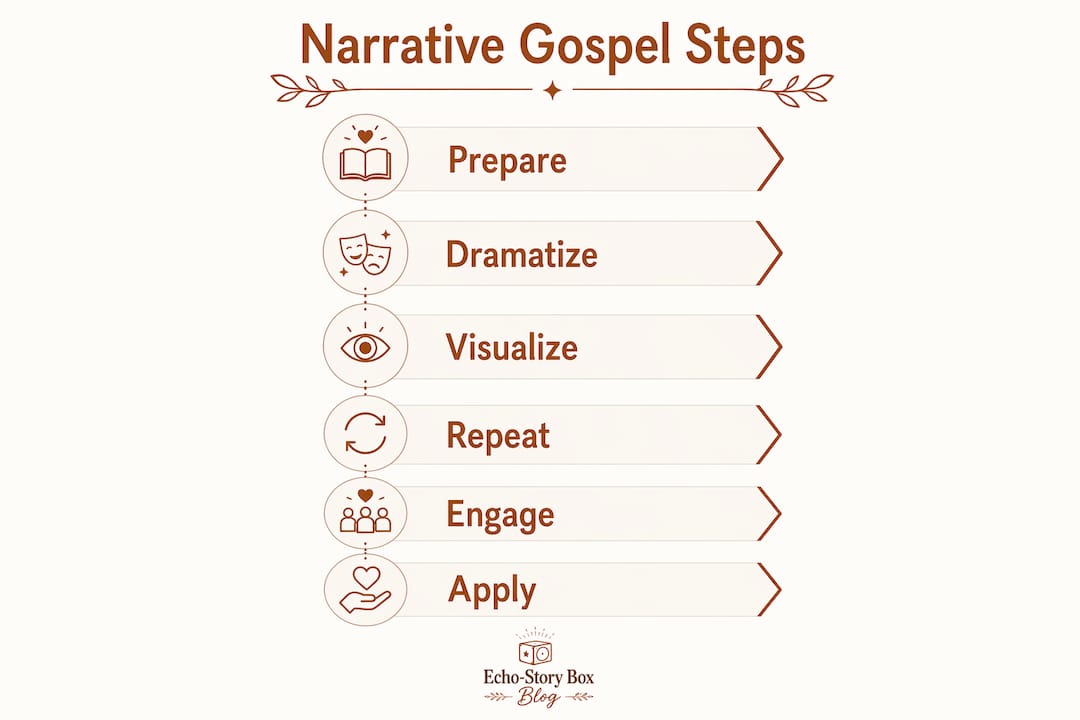
1. Dramatize the story
Have children act out the roles. Assign one child as the shepherd searching for the lost sheep. Let another hide behind a chair. The child who hides and is found will remember that story for decades. Teacher embodiment, using voice, face, and body language, bridges abstract gospel concepts to a child's lived physical experience.
2. Use visual aids and crafts
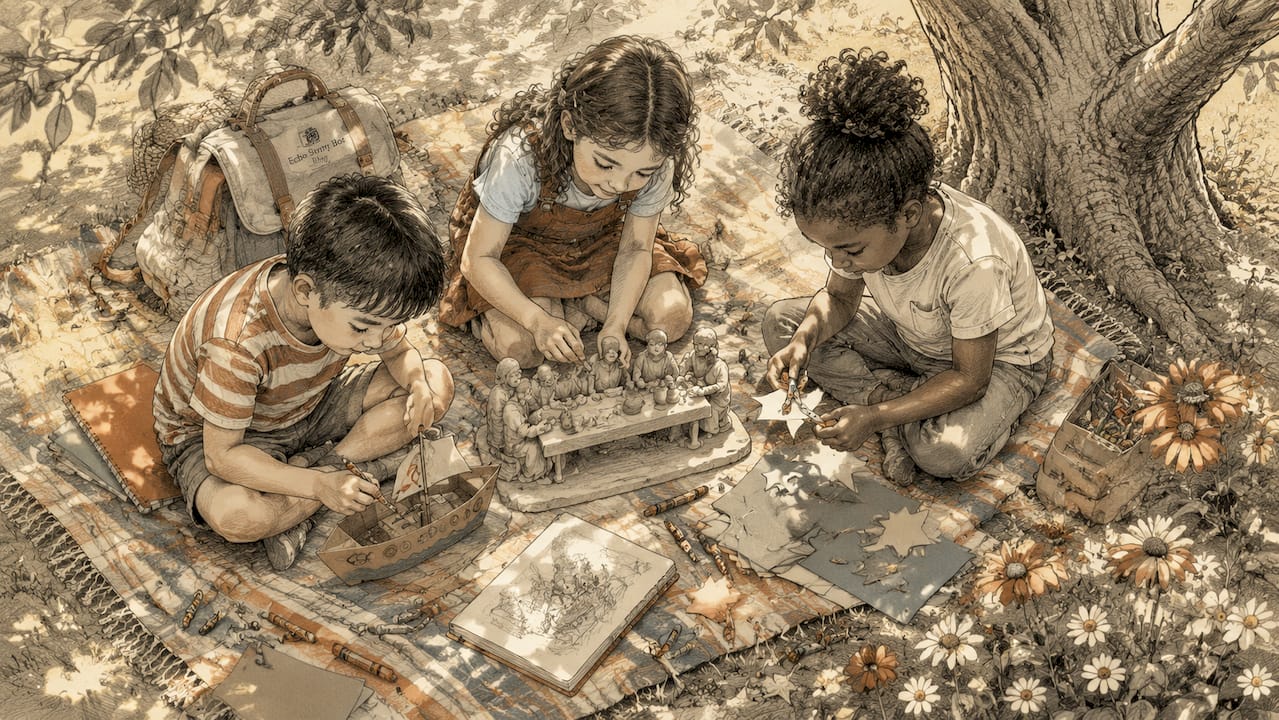
Draw the scene together. Build a simple model of the tomb with clay. Create a paper boat like the one Jesus calmed the storm from. Visual and tactile engagement deepens the memory trace that the story creates.
3. Repeat core stories in cycles
Do not teach a story once and move on. Return to the same stories each year with slightly deeper questions. A four-year-old hears the Prodigal Son as a story about coming home. A seven-year-old begins to understand the older brother's resentment. A ten-year-old starts to grasp the father's extravagant grace. The cyclical approach to gospel storytelling matches how children actually develop.
4. Ask questions that invite participation
Do not end a story with a lecture. Ask: "What do you think the shepherd felt when he found the sheep?" or "If you were the younger son, what would you say?" Cyclical feedback loops that invite children to respond deepen internalization far beyond passive listening.
5. Incorporate songs
Songs carry gospel themes into a child's memory through rhythm and melody. A child who cannot recite a scripture verse will often remember a song about that same verse years later. Songs are narrative in compressed form.
Pro Tip: After telling a gospel story, ask each child to draw one moment from it. The image they choose reveals what landed most deeply. Use that as your starting point for the next conversation.
How do you connect gospel stories to children's daily life?
Knowing a story and living by it are two different things. The goal of storytelling in gospel education is transformation, not just information. That transformation happens when children see the connection between the story and their own Monday morning.
Parents are the primary narrators of faith in a child's life. Passive screen consumption has replaced much of that critical parent-child narrative connection. Reclaiming that role means telling stories at dinner, in the car, and at bedtime, not only in a formal lesson setting.
Practical ways to connect gospel stories to daily life include:
- Reference the story in real situations. When a child sees someone being left out at school, ask: "Remember the Good Samaritan? Who needs help right now?"
- Share your own faith story. Children who hear how a parent's faith was tested and held become part of a generational faith narrative that roots them deeply.
- Model joyful storytelling. Children internalize the emotional tone of the storyteller. When you tell gospel stories with confidence and warmth, children learn that faith is something worth feeling good about.
- Use everyday moments as story prompts. A thunderstorm becomes an entry point for the story of Jesus calming the sea. A lost toy becomes a way into the parable of the Lost Coin.
Narrative theology engages imagination and desires, making children active participants rather than passive recipients of faith. That active participation is what produces lasting spiritual growth, not just correct answers on a Sunday school quiz.
Key Takeaways
Narrative is the most effective method for gospel teaching in children because it anchors truth in memory, shapes spiritual identity, and connects faith to daily life.
| Point | Details |
|---|---|
| Stories outperform facts alone | Facts embedded in stories are retained up to 20 times longer, making narrative the strongest teaching tool available. |
| Cyclical repetition builds identity | Returning to the same gospel stories each year adds depth as children grow and strengthens their sense of belonging to the faith story. |
| Active participation deepens learning | Dramatization, questions, and crafts engage multiple senses and create emotional anchors that passive listening cannot match. |
| Parents are primary faith narrators | Daily storytelling at home, not just formal lessons, is where lasting spiritual formation happens for most children. |
| Connect stories to real life | Linking gospel narratives to a child's actual experiences moves learning from knowledge to lived practice. |
Why I believe narrative is the heart of children's gospel education
I have watched children sit through carefully prepared doctrinal lessons and retain almost nothing a week later. I have also watched a child who acted out the role of the father in the Prodigal Son story spontaneously comfort a crying classmate two days later, saying, "It's okay. You can come back." That child was not reciting a lesson. That child was living one.
Incarnational pedagogy in Christian education centers on relational presence and narrative participation rather than rote learning. That framing changed how I think about every gospel lesson. The goal is not to transfer information. The goal is to invite children into a story large enough to live inside.
The parents and educators who do this best are not necessarily the most theologically trained. They are the ones who tell stories with warmth, ask good questions, and make space for children to respond. They treat storytelling as a relationship, not a performance.
You do not need a curriculum package or a classroom to do this well. You need a story, a child, and the willingness to tell it with your whole self. The research supports it. The tradition demands it. And the children in your life are waiting for it.
— Bob
Bring gospel storytelling home with Echostory-box
Echostory-box was built for exactly this kind of intentional, screen-free storytelling. It gives families a simple, tactile way to bring faith-based audio stories into daily life without the noise and distraction of screens.

Children tap a story card and the story begins. No menus, no ads, no scrolling. Just a calm, focused listening experience that supports the narrative gospel teaching you are already doing at home. Echostory-box supports faith-based storytelling with original adventures, personalized story experiences, and family voice recordings that children can return to again and again. If you want a simple tool that puts meaningful stories in your child's hands every day, Echostory-box is worth exploring.
FAQ
What is the role of narrative in gospel teaching children?
Narrative transforms abstract gospel truths into relatable stories that children can remember, feel, and apply. It is the primary method Jesus used and the most research-supported approach for early faith formation.
Why do children remember stories better than facts?
Facts embedded in stories are retained up to 20 times longer because stories engage pattern recognition, emotion, and imagination simultaneously. Isolated facts have no emotional anchor to hold them in memory.
How often should gospel stories be repeated for children?
A yearly cycle of core gospel narratives, revisited with age-appropriate depth, builds the strongest spiritual identity. Repetition is not redundancy. Each pass through a story adds a new layer of understanding as the child grows.
What are the best parables for teaching gospel lessons to young children?
The Prodigal Son, the Good Samaritan, the Lost Sheep, and the Sower are the most effective parables for early childhood because each one carries a clear, emotionally resonant gospel theme that children can inhabit through storytelling and role play.
How can parents teach gospel stories at home without a formal curriculum?
Parents can tell gospel stories at dinner, in the car, and at bedtime, connecting them to real situations the child encounters. Asking simple questions like "What would you have done?" turns any story into an interactive faith conversation.