
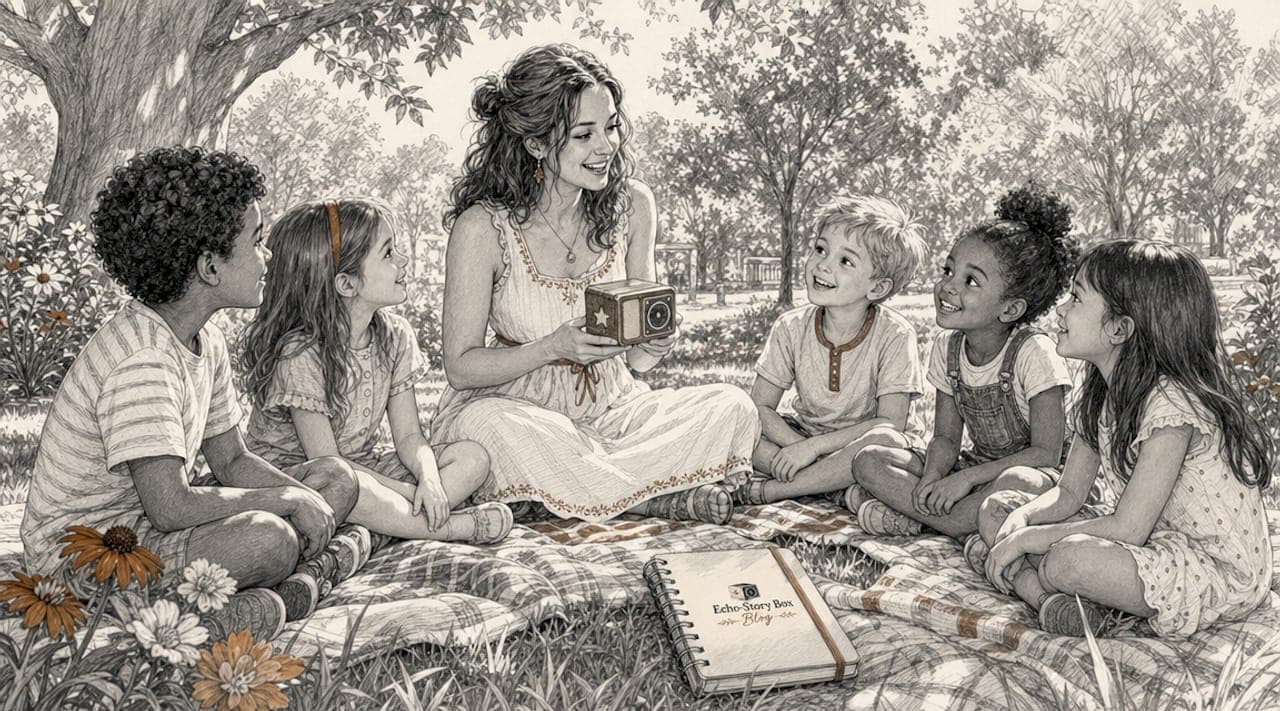
Storytelling is the primary mechanism through which children in faith communities develop shared identity, empathy, and a sense of belonging. When church leaders and parents use narrative intentionally, it does far more than entertain. It creates the social and emotional bonds that hold a children's ministry together. Understanding why storytelling builds church community in kids means looking at the research on empathy, memory, and shared meaning, and then applying those findings to how you structure your Sunday mornings and small group sessions.
Why storytelling builds church community kids
Storytelling works in church settings because it gives children a shared experience to respond to together. When a group of kids hears the same story, reacts to the same characters, and discusses the same moments, they are doing something deeply social. They are building what researchers call social capital, the web of trust and shared understanding that holds communities together. Shared storytelling networks support this social capital by enabling communities to co-create collective meaning and narrative agency. That means every story told in your children's ministry is not just a lesson. It is a thread in the fabric of your community.
Children also connect through the emotional experience of narrative. When a child hears about David facing Goliath or the prodigal son returning home, they feel something. That emotional response is shared across the group, and shared emotion is one of the fastest ways humans bond. The role of storytelling in brain development confirms that narrative engages far more of the brain than direct instruction, activating memory, emotion, and language simultaneously. This is why stories teach better than lectures, especially for children ages 4 to 10.
What are the emotional and social benefits of storytelling for kids in church?
The emotional benefits of storytelling in children's ministry are well documented and specific. Interactive group reading with open-ended, story-focused questions significantly increases children's interpersonal and literary empathy. This means children who discuss stories together do not just understand the characters better. They understand each other better. That is the direct link between narrative technique and community building.
Here is what the research shows happens when storytelling is done well in group settings:
- Empathy grows. Children who participate in dialogic reading sessions, where they respond to open-ended questions about characters and plot, show measurable increases in sensitivity toward their peers.
- Self-belief strengthens. Narrative transportation can increase children's self-efficacy expectancies by 28%, meaning kids who are drawn into a story come out believing more in their own ability to act. That confidence spills over into how they engage with their church community.
- Social bonds form. When children share a story experience, they have a common reference point. They can recall it, laugh about it, and connect over it long after the session ends.
- Faith identity deepens. Children remain engaged with theology when it is embedded in narrative, love, and community rhythms rather than abstract doctrine.
"Storytelling is a shared meaning-making practice central to building community, creating social capital, and developing collective identity." — Media and Communication Research
The key word in all of this is interactive. Passive listening produces some benefit, but empathy development is supported by interactive discussion design, not passive listening alone. When children are asked what they think a character felt, or what they would have done differently, they are practicing perspective-taking in real time. That practice builds the social skills that make a church community warm and welcoming for every child in the room.
How do repeated storytelling rhythms reinforce church community?
Consistency matters as much as content. A single powerful story creates a moment. A weekly rhythm of stories, songs, Scripture, and crafts creates a community. Weekly church rhythms that combine storytelling, Scripture, and hands-on activities help form implicit memories, leading children to embrace the church over time. Implicit memories are the ones we carry without consciously trying to. They shape how a place feels, whether it feels safe, familiar, and like home.
Jared Kennedy's work on preschool ministry makes this concrete. He argues that community bonding derives as much from repeated shared church practices as it does from inspiring stories. The craft after the story, the song before the lesson, the prayer circle at the end. These are not add-ons. They are the rituals that anchor the narrative in a child's body and memory.
Here is a simple sequence that builds this kind of rhythm in a children's ministry setting:
- Open with a familiar song or call-and-response. This signals to children that the story space is beginning. Repetition here is the point.
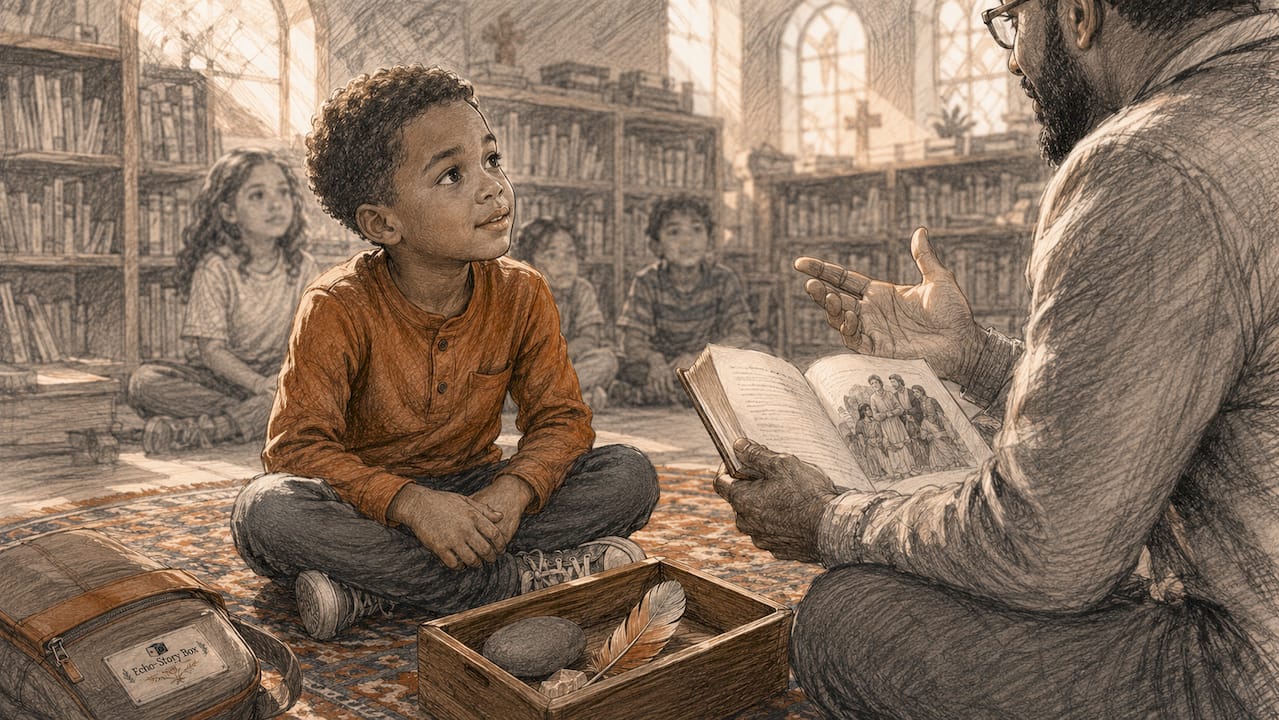
- Tell the story using tactile props or natural objects. A smooth stone for David, a small piece of cloth for the prodigal son's robe. Physical objects create sensory memory.
- Ask two or three open-ended questions. Not "What happened?" but "How do you think he felt when no one helped him?" This is where empathy and peer connection happen.
- Follow with a hands-on response. A simple craft, a drawing, or a group game that mirrors the story's theme.
- Close with a consistent ritual. A short prayer, a blessing, or a repeated phrase the children can say together.
Pro Tip: Pick one closing phrase or blessing and use it every single week. Within a month, children will say it before you do. That moment of shared anticipation is community in action.
A prayer journal for parents can extend this rhythm into the home, reinforcing the same stories and values children encounter at church. When the story follows a child from Sunday morning to bedtime, the community bond deepens.
What storytelling techniques best support comprehension and retention?
The method of delivery shapes how much children retain and how deeply they connect. Two approaches stand out in the research: using tangible visual aids and asking narrative-focused questions.
| Approach | What it does | Best used when |
|---|---|---|
| Natural objects as props | Creates sensory memory cues that outlast digital images | Telling Bible stories to children ages 4 to 8 |
| Simple drawings on a whiteboard | Builds the story visually in real time, holding attention | Small group settings with 5 to 12 children |
| Open-ended narrative questions | Activates empathy and peer discussion | After the main story has been told |
| Digital slides or video clips | Provides visual context but fades from memory faster | Supplementing, not replacing, tactile methods |
Visual aids using natural objects and simple drawings help children process and remember Bible stories more effectively than digital or print images alone. The reason is straightforward. A smooth stone a child can hold while hearing about David becomes a retrieval cue. Weeks later, that child can pick up a similar stone and recall the story in detail. A slide on a screen does not create the same anchor.
The LuDiCa dialogic reading method takes this further by structuring the questions around narrative functions. Instead of asking comprehension questions after the story, leaders ask questions during the story that require children to predict, empathize, and connect. Structured dialogic reading fosters discussion around narrative functions rather than passive listening, and this produces deeper comprehension and greater peer sensitivity. For church leaders, this means slowing down the story, pausing at key moments, and inviting children into the narrative rather than delivering it at them.
Pro Tip: Keep a small basket of natural objects near your storytelling area. Rocks, feathers, seeds, and pieces of fabric cost almost nothing and create powerful memory anchors for the stories you tell most often.
For families who want to extend scripture in family storytelling beyond Sunday, these same techniques work beautifully at home. A bedtime story told with a simple prop and one good question does more for a child's faith formation than a passive video ever will.
How does storytelling cultivate shared identity and values among church kids?
Storytelling is not just a teaching tool. It is the process by which a group of children becomes a community with a shared identity. When kids hear the same stories repeatedly, discuss them together, and respond to them through craft and prayer, they are co-creating a shared narrative about who they are and what they believe.
| Community outcome | How storytelling produces it |
|---|---|
| Shared values | Repeated stories model courage, kindness, and faith in concrete, memorable ways |
| Collective identity | Children begin to see themselves as part of the same story, not just the same group |
| Social trust | Discussing stories together builds the habit of listening and responding to peers |
| Narrative agency | Children learn they can be actors in their own faith story, not just observers |
Storytelling as shared meaning-making is central to building community, creating social capital, and developing collective identity. For children in church, this plays out when a child says "remember when we talked about the lost sheep?" and another child immediately knows exactly what they mean. That shared reference is the foundation of belonging.
Small group storytelling is particularly effective for this kind of identity formation. In a smaller group, every child has a voice. Every child's response to the story is heard. That experience of being heard within a community is one of the most powerful things a children's ministry can offer.
Key takeaways
Storytelling builds church community in kids because it creates shared emotional experiences, forms implicit memories through repeated rhythms, and gives children a collective identity rooted in faith.
| Point | Details |
|---|---|
| Interactive storytelling builds empathy | Open-ended questions during stories increase peer sensitivity and social connection. |
| Repetition creates belonging | Weekly rhythms of story, craft, and ritual form implicit memories that make church feel like home. |
| Tactile props outperform digital visuals | Natural objects and simple drawings create stronger memory anchors than slides or screens. |
| Shared stories form shared identity | Children who hear and discuss the same stories develop a collective sense of who they are together. |
| Small groups amplify the effect | Every child having a voice in the story discussion deepens their sense of belonging. |
What I've learned from watching stories build real community
I have seen children's ministries that run excellent programs and still struggle to build genuine community among kids. The programs are polished, the lessons are solid, and the children show up. But something is missing. What I have noticed, consistently, is that the missing piece is almost never the content. It is the interaction around the content.
The ministries where children genuinely connect are the ones where the story is a conversation starter, not a performance. Leaders pause mid-story and ask a child what they think will happen next. They hold up a rough stone and ask a child to describe how it feels before explaining what it represents. They close every single session with the same words, so that children finish the sentence before the leader does. These are small choices, but they change everything.
I also think we underestimate how much children need the rhythm of storytelling, not just the stories themselves. A child who has heard the same opening song for six months is not bored by it. They are anchored by it. That anchor is what makes the new story feel safe to engage with. Routine and narrative work together. One without the other produces either novelty without roots or familiarity without growth.
The practical advice I would give any parent or church leader is this: pick fewer stories and go deeper. Tell the same story three weeks in a row with different props and different questions. Watch what happens to the conversation by week three. The children will surprise you with what they have been carrying.
— Bob
Bring screen-free storytelling into your church or home

Echo-Story Box is built for exactly this kind of intentional, screen-free storytelling. Children tap a story card and the audio story begins. No scrolling, no ads, no distraction. Just the story and the listener. For churches and families who want to bring the warmth of narrative into their weekly rhythms, Echo-Story Box offers faith-based storytelling tools designed to support connection, calm, and community. Whether you are a children's ministry leader building Sunday routines or a parent looking for a screen-free bedtime ritual, you can explore how it works and find the approach that fits your family or ministry best.
FAQ
Why does storytelling build community among children in church?
Storytelling creates shared emotional experiences that give children a common reference point, building trust and belonging. When children discuss stories together, they practice empathy and form the social bonds that hold a community together.
What is dialogic reading and how does it help in children's ministry?
Dialogic reading is a structured approach where leaders ask open-ended questions during and after a story rather than simply delivering it. The LuDiCa research shows this method significantly increases both comprehension and peer empathy in children.
How often should storytelling happen in a children's ministry to build community?
Weekly repetition is the standard that research supports. Jared Kennedy's preschool ministry work shows that consistent weekly rhythms combining story, Scripture, and hands-on response form the implicit memories that make children feel at home in their church community.
Are visual aids really better than digital slides for kids?
Mission Bible Class guidance confirms that natural objects and simple drawings outperform digital visuals for long-term story retention. Tactile props become retrieval cues that children carry with them, while screen images fade quickly from memory.
How can parents reinforce church storytelling at home?
Parents can use the same story from Sunday with a simple prop and one open-ended question at bedtime. Connecting life stories to teachable moments at home reinforces the values and community identity children are building at church.