
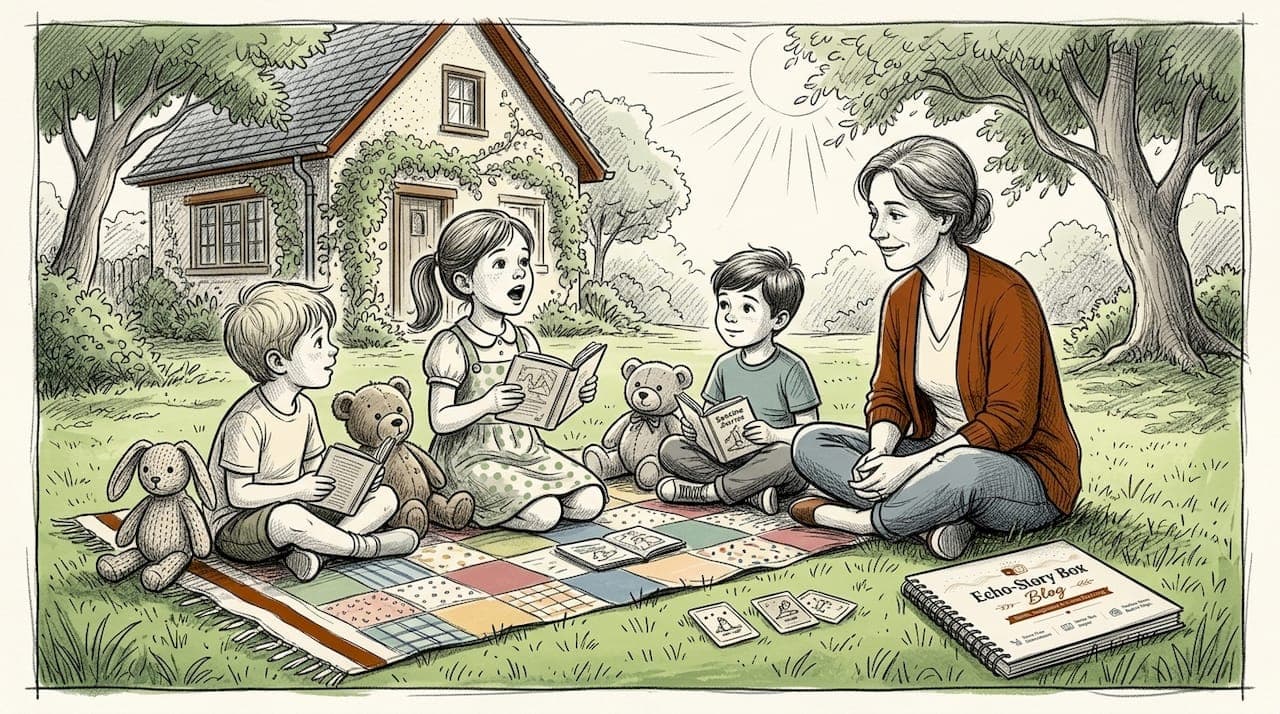
Most people picture storytelling as one adult reading to a room full of quiet kids. That image undersells what storytelling can actually do. Understanding how small group storytelling works with children reveals something more interactive, more social, and far more developmentally rich than a simple read-aloud. When children gather in a small group to build stories together, they practice negotiation, empathy, language, and imagination all at once. This article walks you through the structure, benefits, and techniques that make small group storytelling one of the most effective tools available to parents and educators today.
Table of Contents
- Key takeaways
- How small group storytelling works with children
- Social and cognitive benefits for children
- Effective techniques for facilitating storytelling sessions
- Designing sessions for real engagement
- My honest take on why this matters more than most methods
- Bring storytelling to life with Echostory-box
- FAQ
Key takeaways
| Point | Details |
|---|---|
| Ideal group size matters | Keep groups between 2 and 5 children for active participation and manageable sessions. |
| Turn-taking is a skill, not a given | Children need modeling and social scripts to share the story floor effectively. |
| Facilitation shapes outcomes | Open-ended questions and narrating positive behaviors guide without controlling the story. |
| Child agency drives engagement | Sessions where children make narrative choices produce deeper motivation and creativity. |
| Process beats perfection | Accepting every contribution enthusiastically builds inclusivity and keeps momentum alive. |
How small group storytelling works with children
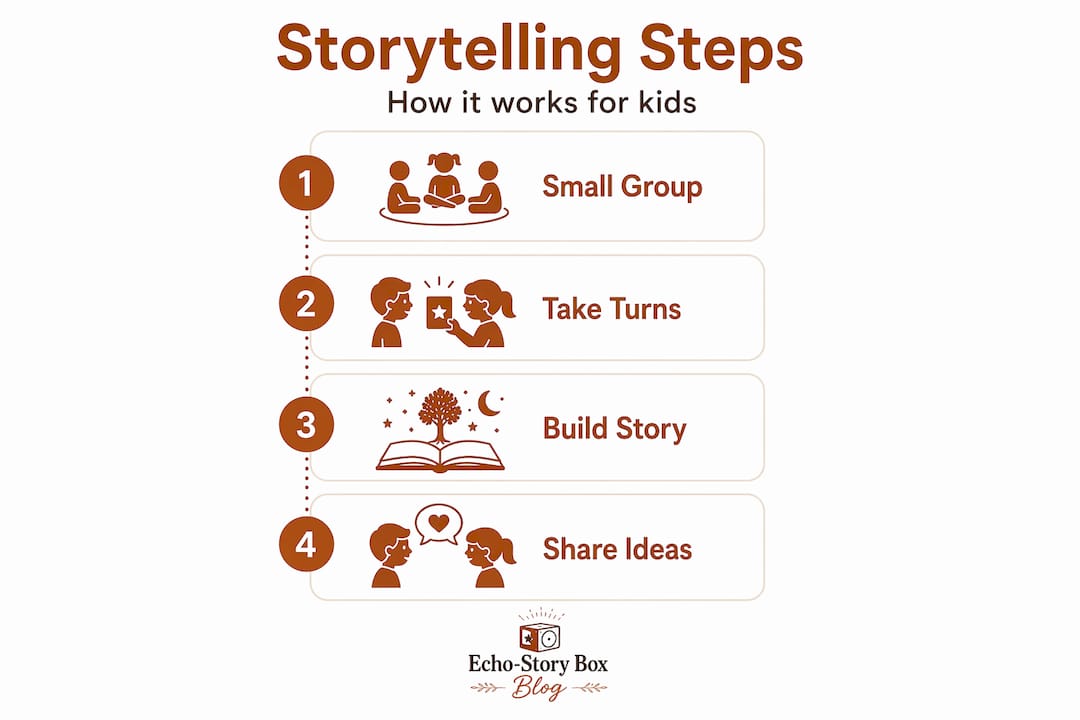
The heart of how small group storytelling works with children comes down to three things: group size, turn structure, and session pacing. Get those right, and even a group of four-year-olds can build a surprisingly imaginative story together.
Optimal small group storytelling happens with 2 to 5 children, with each child contributing one sentence per turn. That one-sentence rule is not arbitrary. It keeps every child engaged, prevents one child from dominating, and keeps the story moving at a pace that matches a young child's attention span.
Here is what a basic session structure looks like for children ages 4 to 5:
- Group size: 2 to 5 children, seated in a circle or around a low table
- Session length: 15 to 45 minutes, depending on age and energy
- Turn order: Rotate clockwise or use a story token to indicate whose turn it is
- Contribution format: One sentence per turn, with the facilitator writing or repeating each line aloud
- Opening prompt: Facilitator offers a simple starting line ("One day, a small bear found a door in the middle of the forest...")
- Closing ritual: The group titles their story and gives it a round of applause
Sessions longer than 30 minutes often lose younger children. Starting shorter and building stamina over several weeks works better than pushing through fatigue.
Pro Tip: If children start offering very short or disengaged responses, gently repeat the last sentence before their turn. Hearing the story context again helps them reconnect and contribute something meaningful.
The collaborative story building element is what separates this from solo creative writing. Each child must listen to what came before, adapt their idea, and hand the story forward. That listening requirement is one of the most underrated cognitive workouts in early childhood education.
Social and cognitive benefits for children
The developmental payoff of small group storytelling goes well beyond language skills. When children build stories cooperatively, they practice theory of mind, which is the ability to understand that other people have different thoughts, feelings, and intentions than their own. That skill underlies empathy, social problem-solving, and healthy friendship development.
Here is a closer look at what children are actually practicing during a session:
- Vocabulary growth: Hearing peers use new words in context is one of the most natural ways children absorb language. The Dialogic Reading method reinforces this by encouraging facilitators to ask open-ended questions and expand on what children say.
- Expressive language: Children learn to put thoughts into words, construct sentences, and describe characters and events.
- Emotion regulation: Waiting for a turn requires patience. Accepting a story direction you did not choose requires flexibility. Both are daily emotional workouts.
- Negotiation: When one child wants the dragon to be friendly and another wants it to be scary, they have to work something out.
"Sharing and turn-taking are not instinctive. Children need social scripts like 'Can I have a turn next?' to navigate successfully."
That quote points to something parents and educators often overlook. The social skills we expect children to "just know" are actually learned behaviors. Storytelling sessions give children a safe, low-stakes context to practice those behaviors repeatedly, with a caring adult nearby to model and guide.
The role of storytelling in brain development is well documented, and small group settings amplify those benefits because children are not passive recipients. They are co-authors. That sense of ownership changes how they engage with the material and with each other.
Effective techniques for facilitating storytelling sessions
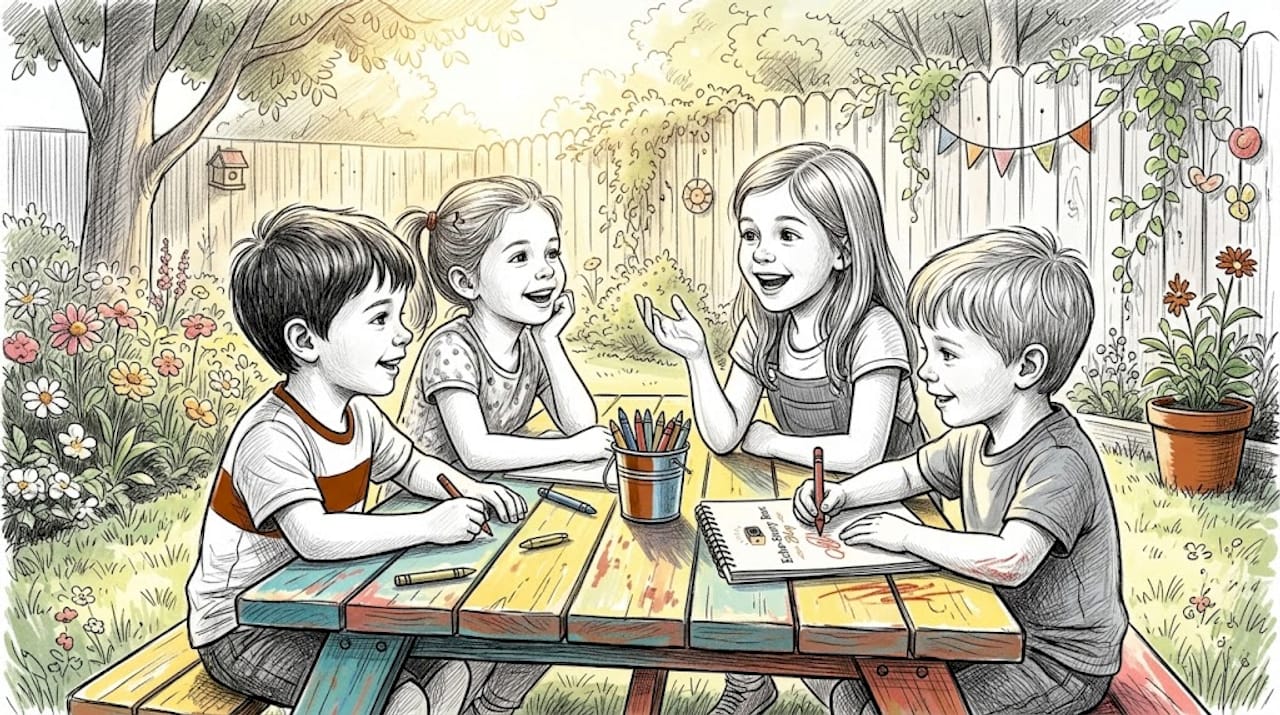
How you run the session matters as much as the session itself. These techniques will help you guide without controlling, support without overshadowing, and keep the story moving without making it feel like a lesson.
-
Start with open-ended questions. The Dialogic Reading approach suggests asking "what" questions that invite children to predict, describe, and imagine. "What do you think happens next?" or "What does the cave look like inside?" sparks genuine creative thinking rather than yes-or-no answers.
-
Use props and sensory elements. Multisensory storytelling with props significantly improves engagement, especially for children with attention challenges or sensory processing differences. A small toy animal, a fabric scrap, or a simple costume piece can anchor a child's imagination in a concrete way.
-
Narrate cooperative behavior aloud. This technique is subtle but powerful. When you say out loud, "I notice everyone is listening carefully while Mia adds to our story," you reinforce positive cooperation without issuing a command. Other children hear it, recognize themselves in it, and want to match it.
-
Read aloud as you write. If you are transcribing the story, reading aloud what you write helps children naturally slow down and think sentence by sentence. It signals to the group that their words have real weight, which builds pride and focus.
-
Let children drive the narrative. Stories where children make their own choices and face challenges they created themselves produce deeper motivation. Resist the urge to steer the story toward a tidy outcome. A bear who ends up on the moon is just as valuable as one who finds his way home.
-
Accept every contribution. The goal is engagement and enjoyment, not a polished narrative. When a child adds something unexpected or silly, accept it warmly. That acceptance tells every child in the group that their ideas are safe here.
Pro Tip: When one child tends to dominate, give each child a physical story token to hold. Once you use your token by speaking, you place it in the center. Everyone speaks before anyone speaks twice. This simple visual system does more than a verbal reminder.
Managing challenging moments is part of facilitating storytelling activities for groups. Potty humor shows up. Children go off-topic. One child goes quiet. These are not failures. They are data. A child who disengages may need a simpler prompt. A child who goes silly may need a bit of the spotlight. Stay curious rather than corrective, and the group almost always finds its way back.
Designing sessions for real engagement
Preparation matters, but it does not have to be complicated. A well-designed session flows naturally from start to finish and leaves children feeling proud of what they created together.
Here is a simple comparison of a loosely structured session versus a designed one:
| Element | Unstructured session | Designed session |
|---|---|---|
| Turn order | Random, often dominated by one child | Clear rotation with a story token |
| Opening | "Does anyone want to tell a story?" | Facilitator offers a vivid starting line |
| Contribution style | Open, length varies | One sentence per turn |
| Close | Fades out or stops abruptly | Group titles the story and celebrates |
| Follow-up | None | Drawing, recording, or retelling the story |
The follow-up step is easy to skip, but it reinforces learning in a meaningful way. When children illustrate a scene from their story or hear a recording of the session played back, they develop a stronger sense of narrative structure and personal pride in their work.
A few additional session design ideas worth considering:
- Set one or two simple rules together as a group before starting ("We listen when it's not our turn" works well)
- Keep a consistent starting ritual, like a three-count clap, to signal story time has begun
- For mixed ages, pair an older child with a younger one and invite the older child to expand on the younger child's contribution
- For shorter attention spans, aim for three-minute stories rather than open-ended sessions
Engaging children in stories is not about holding their attention by force. It is about designing conditions where they want to stay. When a child knows their sentence is next, they lean in.
My honest take on why this matters more than most methods
I've spent a lot of time watching children in storytelling sessions, and here is what I've learned. The moments that look like chaos are often the most educational ones. A child who suddenly announces the dragon is now a pizza chef is not derailing the story. That child is practicing creative risk-taking, which is one of the hardest skills for adults to reclaim once it's been schooled out of them.
What I've also learned is that child-led storytelling makes adults uncomfortable in ways they rarely admit. We're trained to correct, redirect, and shape toward an outcome. Sitting with an unpredictable story that ends somewhere unexpected requires real patience. But the children who get that freedom become better listeners, more generous collaborators, and more confident speakers over time.
The real challenge I've seen repeatedly is not disruptive children. It's facilitators who hold the story too tightly. When you genuinely release the narrative to the group, something shifts. Children sense it. They become more invested, more careful with each other's ideas, and more proud of what they made together. That shift does not happen in a worksheet or a structured lesson. It happens when someone trusts them with a story and means it.
— Bob
Bring storytelling to life with Echostory-box
If you are ready to take these techniques home or into your classroom, Echostory-box was built for exactly this purpose. Screen-free and simple to use, it gives children a way to engage with stories through touch, listening, and imagination rather than scrolling and screens.

Echostory-box supports original audio adventures, personalized stories, and even family voice recordings that children can return to again and again. Whether you are a parent looking for a calmer alternative to screens or an educator exploring new storytelling tools for families, there is something here for your situation. You can also learn more about who Echo-Story is for to see if it fits your family or classroom. Browse the Echo-Story shop to find the right starting point.
FAQ
What is the ideal group size for children's storytelling?
The ideal size is 2 to 5 children. This range keeps every child active in the story while remaining manageable for one facilitator to guide.
How long should a storytelling session last for young children?
Sessions of 15 to 30 minutes work well for children ages 4 to 5. You can extend gradually as children build focus and familiarity with the format.
How does small group storytelling help with social skills?
Children practice turn-taking, listening, negotiation, and emotional regulation in every session. These are the same skills they need in friendships and classroom settings.
What should I do when one child dominates the story?
Use a physical story token that each child holds and places in the center after speaking. Everyone contributes once before anyone speaks twice. It works better than verbal reminders.
Can small group storytelling benefit children with speech delays?
Yes. Structured social narratives and explicit turn-taking modeling help children with speech delays understand expectations and practice expressive language in a supportive setting.