
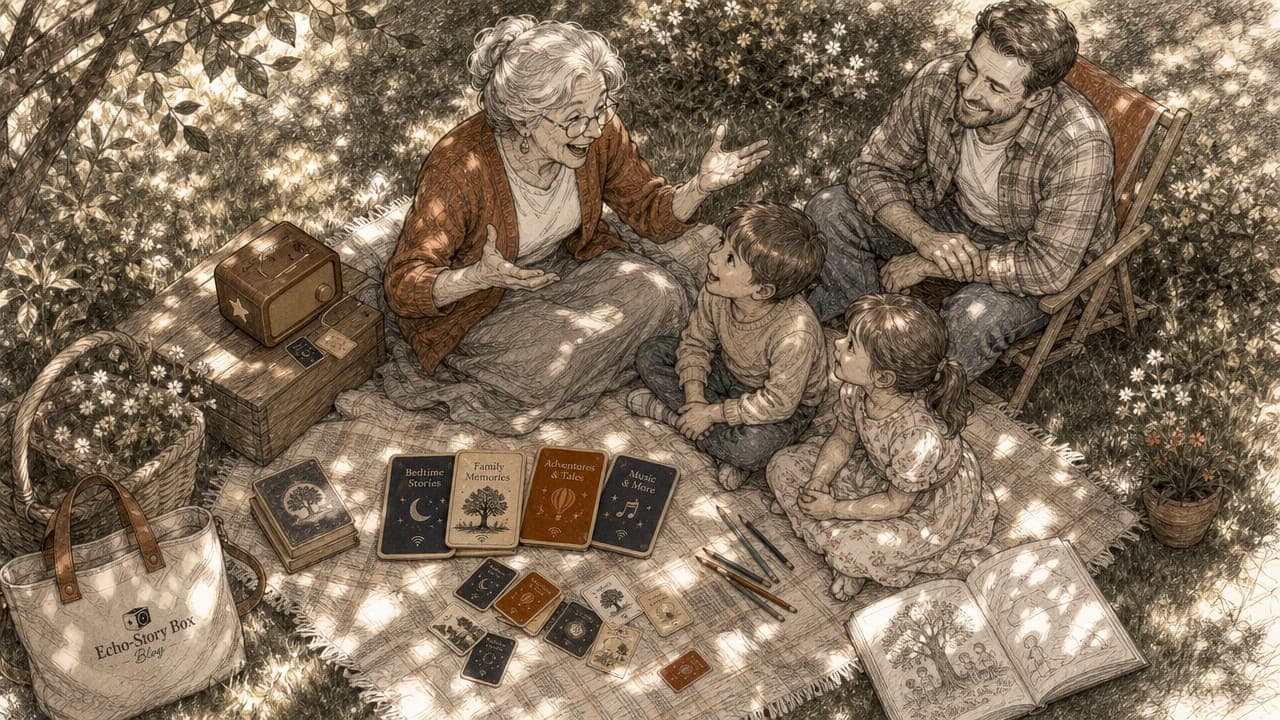
Educational storytelling formats are distinct narrative methods categorized by how stories are delivered and the level of participation they require from the learner. The four primary types of educational storytelling formats are oral, written, visual, and digital. Each one engages children differently, builds different skills, and suits different learning environments. Whether you are a parent reading aloud at bedtime, a teacher running a classroom lesson, or a storyteller creating audio adventures, understanding these formats helps you choose the right approach for the right moment.
1. Types of educational storytelling formats: the core classification
Educational storytelling formats are grouped into four main types based on delivery channel: oral, written, visual, and digital. This classification matters because delivery channel directly shapes how a child processes and retains information. A spoken story activates listening and imagination. A picture book adds visual memory. A story-based game invites decision-making. Knowing which format you are using helps you set clear learning goals before you begin.
Interactivity level is the second key variable. Passive formats, like watching an educational video without discussion, produce weaker learning outcomes than active formats where children ask questions, make predictions, or retell the story. The format you choose is only half the equation. How you use it determines the result.
2. Oral storytelling: the oldest and most powerful format
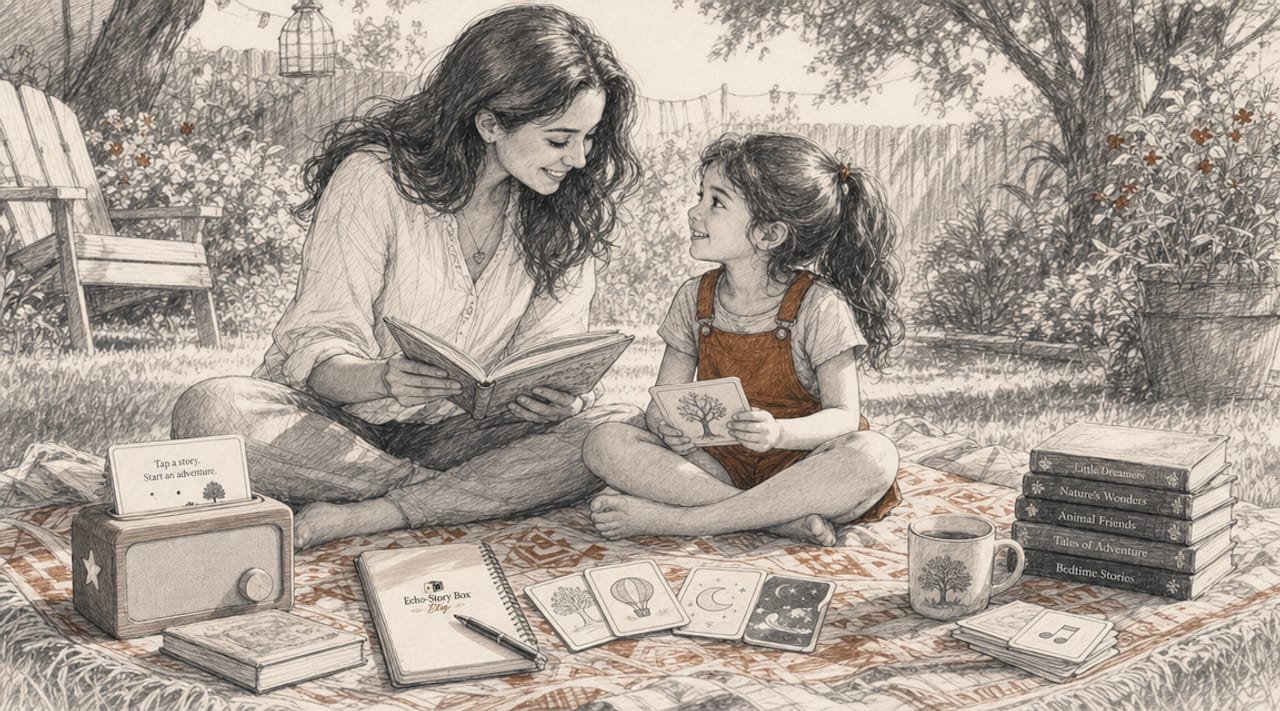
Oral storytelling is the delivery of a narrative through the spoken word, using voice modulation, gestures, pacing, and expression to carry meaning. It is the oldest educational storytelling method in human history, and research confirms it remains one of the most effective. Oral storytelling without a book actively supports vocabulary growth, grammar development, and narrative comprehension in young children. That finding is significant because it means the format itself, not just the content, drives language learning.
Oral storytelling works across a wide range of settings:
- Bedtime stories told from memory by a parent or grandparent
- Teacher-led classroom narratives with character voices
- Cultural and traditional storytelling passed down through generations
- Small group storytelling circles where children contribute to the plot
- Personalized audio stories where a child hears their own name in the adventure
The neural synchrony between teacher and learner that occurs during face-to-face oral storytelling is measurably stronger than in remote or passive listening settings. This means a grandparent telling a story in person creates a deeper learning connection than the same story played on a screen without interaction.
Pro Tip: Ask children predictive questions mid-story. "What do you think happens next?" activates comprehension and keeps attention sharp. The Victorian early childhood literacy toolkit recommends interactive storytelling techniques like this as a core practice for maximizing language development.
3. Written storytelling formats and how they build literacy
Written storytelling covers any narrative delivered through text. The formats range widely and each one serves a different educational purpose:
- Novels and chapter books build sustained reading stamina and complex vocabulary
- Short stories teach narrative structure in a compact, manageable form
- Poetry develops phonemic awareness, rhythm, and emotional expression
- Scripts and plays connect reading to performance and oral language
- Autobiographies and memoirs teach children that real lives contain meaningful stories
Written formats serve as permanent reference materials. A child can return to a passage, reread a confusing section, or copy a sentence they love. This makes written storytelling uniquely suited for building reading comprehension and writing skills simultaneously. Stories teach more effectively than lectures because they embed information inside a narrative structure the brain naturally wants to follow.
At home, written storytelling is most powerful when it goes both ways. Reading to a child builds vocabulary and comprehension. Encouraging a child to write their own short story deepens those gains further. Even a simple three-sentence story about a pet or a favorite place activates planning, sequencing, and word choice skills that direct instruction rarely matches.
Pro Tip: Keep a simple story journal for your child. Ask them to write or dictate one story per week. Over a school year, the growth in vocabulary and narrative structure is visible and motivating.
4. Visual storytelling formats and their role in engaging learners
Visual storytelling uses images, either alone or combined with text, to carry a narrative. Graphic novels, picture books, and educational videos convey meaning through visual cues that support memory and comprehension in ways that text alone cannot. A child who struggles with reading can often follow a complex story through illustrations, making visual formats especially helpful for diverse learners.
The most common visual storytelling formats in education include picture books, comic strips, graphic novels, photo essays, illustrated timelines, and educational documentary videos. Each one pairs imagery with narrative to create meaning. Comics, for example, teach children to infer what happens between panels, a skill that directly transfers to reading comprehension.
Visual formats work best when they are not used passively. Pausing a picture book to ask "What do you see in this picture?" or "Why does the character look worried?" turns a passive viewing experience into an active thinking exercise. Combining visual storytelling with oral discussion creates a multimodal learning experience that reaches more children more effectively.
Pro Tip: After reading a picture book, ask your child to draw the next page of the story. This bridges visual storytelling with creative writing and deepens engagement with the narrative.
5. Digital storytelling formats transforming education
Digital storytelling combines traditional narrative with multimedia production, including audio, video, animation, music, and interactive elements. Digital storytelling in education most commonly takes the form of narrative videos, digital comics, story-based games, and interactive apps. Each format engages learners differently, and choosing the right one depends on your learning goal.
The main digital storytelling formats used in classrooms and homes today include:
- Narrative videos that present stories through film, animation, or documentary
- Digital comics that combine visual storytelling with text in an interactive format
- Story-based games where children make choices that affect the narrative outcome
- Interactive apps that guide children through branching stories with audio and visuals
- Podcast-style audio stories that develop listening skills without screen dependency
- Student-created digital stories where children produce their own multimedia narratives
Creating digital stories builds skills across multiple domains at once, including technology literacy, research, writing, and oral communication. That breadth makes digital storytelling one of the most efficient formats for 21st-century learning when it is used with clear educational intent.
The critical caution here is that technology should serve the story, not the other way around. Digital storytelling gains educational impact when it is grounded in a clear pedagogical strategy aligned to learning goals. A child watching an animated story passively for 30 minutes learns far less than a child who spends 20 minutes creating a three-slide digital story about a historical figure.
Pro Tip: Before starting any digital storytelling activity, write the learning goal on paper first. "By the end of this story, my child will understand why Rosa Parks mattered." The technology choice follows the goal, not the other way around.
6. Comparing formats: which one fits your learning goal?
Choosing between oral, written, visual, and digital formats depends on three factors: the child's age, the learning goal, and the available resources. Transmedia storytelling, which combines formats across media, creates richer learning experiences by letting children explore the same narrative from multiple angles. A story heard aloud, then illustrated, then discussed in a group reaches more cognitive pathways than any single format alone.
| Format | Best age range | Primary skill focus | Interactivity level | Technology needed |
|---|---|---|---|---|
| Oral | Ages 2 to 10 | Vocabulary, listening, narrative structure | High (face-to-face) | None |
| Written | Ages 5 and up | Reading comprehension, writing, critical thinking | Medium | None |
| Visual | Ages 3 and up | Visual literacy, inference, memory | Medium | Optional |
| Digital | Ages 6 and up | Digital literacy, creativity, collaboration | Variable | Required |
For early childhood, oral storytelling is the most accessible and most effective starting point. For school-age children, combining written and visual formats builds literacy across multiple channels. Digital formats add the most value when children are creating content, not just consuming it. In remote or low-resource settings, oral and written formats remain the most reliable because they require no technology and no screen time.
Active participation in storytelling consistently produces stronger learning outcomes than passive listening across all four formats. This is the single most important variable to consider when selecting your approach.
Key takeaways
The most effective educational storytelling formats combine active learner participation with a delivery method matched to the child's age and the specific learning goal.
| Point | Details |
|---|---|
| Four core formats exist | Oral, written, visual, and digital formats each serve distinct educational purposes. |
| Interactivity drives outcomes | Active, scaffolded storytelling produces stronger learning gains than passive consumption in every format. |
| Oral is the strongest start | Face-to-face oral storytelling builds vocabulary, grammar, and neural connection more effectively than remote alternatives. |
| Digital needs a clear goal | Digital storytelling works best when the learning objective is defined before the technology is chosen. |
| Combining formats deepens learning | Transmedia and multimodal approaches reach more cognitive pathways than any single format alone. |
Why interactivity matters more than format choice
I have spent years watching families and educators default to the most convenient storytelling format rather than the most effective one. A tablet loaded with story apps feels like a win. It is quiet, it keeps children occupied, and it looks educational. But passive screen consumption, even with good content, rarely produces the vocabulary growth or comprehension gains that a 20-minute oral storytelling session with a present adult can achieve.
The research on neural synchrony in storytelling changed how I think about format selection entirely. The brain-to-brain connection that forms during live, interactive storytelling is not replicated by any screen. That does not mean digital formats are without value. It means they work best when they are paired with discussion, creation, or some form of active response.
My honest recommendation for most families is to start with oral storytelling as the foundation, add written and visual formats as children grow into reading, and introduce digital formats as tools for creation rather than consumption. The families I have seen get the most out of storytelling are not the ones with the most technology. They are the ones who show up, tell the story, and ask good questions afterward. That combination beats any app.
— Bob
Bring these storytelling formats to life at home
If you are looking for a simple, screen-free way to bring oral and audio storytelling into your home, Echostory-box was built for exactly that purpose.
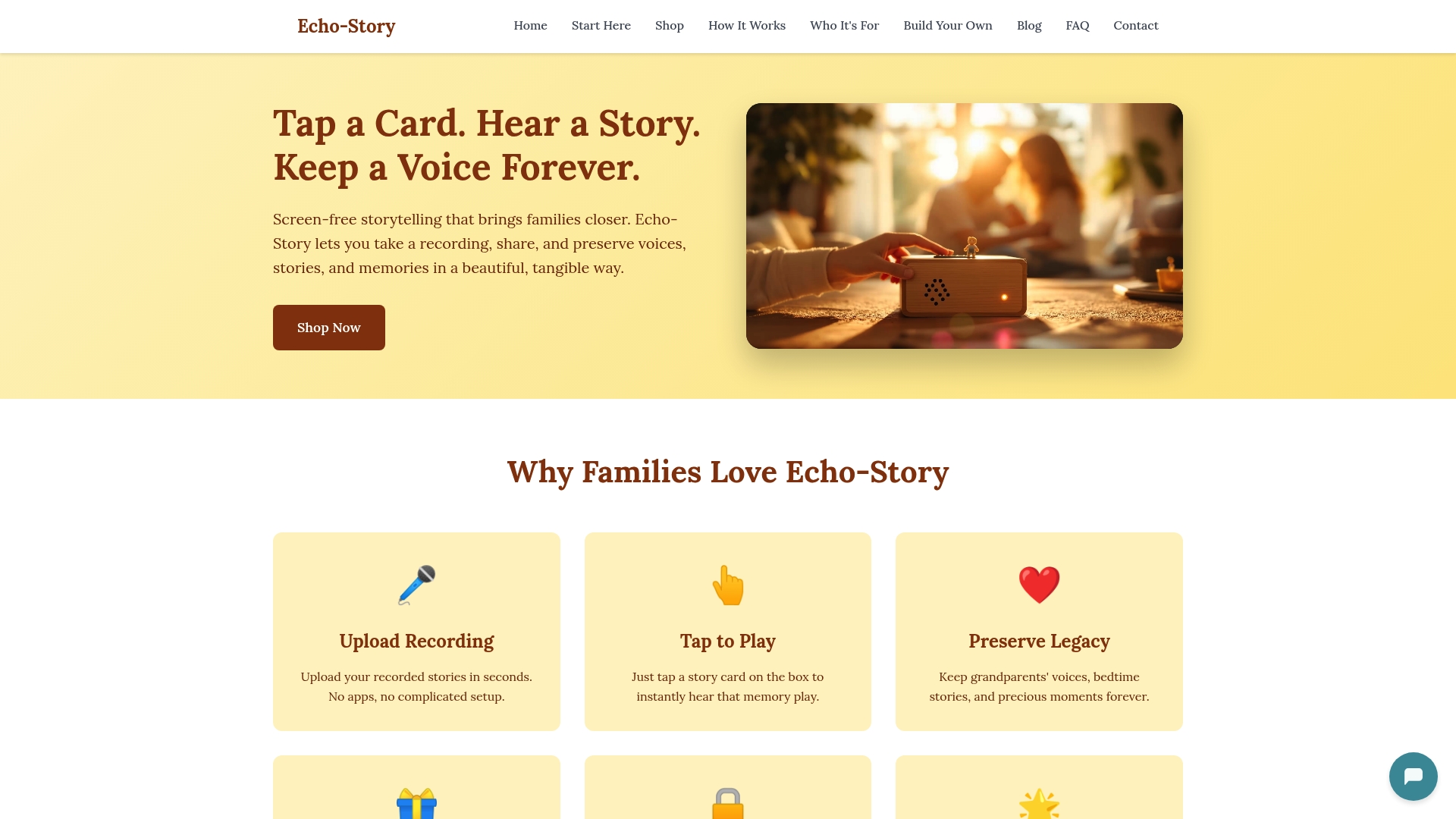
The Echo-Story Box is a tactile audio player that lets children tap a story card and hear a story begin instantly. No menus, no ads, no scrolling. Just a calm, focused listening experience that supports the kind of intentional storytelling this article describes. Echostory-box supports original adventures, personalized stories, educational history audio, and family voice recordings, making it one of the most versatile screen-free storytelling tools available for families today. Whether you are a homeschool parent, a grandparent wanting to leave a lasting voice, or an educator building a calmer story corner, Echostory-box fits naturally into the formats and practices covered here.
FAQ
What are the main types of educational storytelling formats?
The four main types are oral, written, visual, and digital. Each is defined by how the story is delivered and how much the learner participates in the experience.
Which storytelling format works best for young children?
Oral storytelling is the most effective format for children under age six. It builds vocabulary, grammar, and listening skills through voice, gesture, and direct interaction without requiring any technology.
How does digital storytelling support learning?
Digital storytelling supports motivation, digital literacy, and collaboration when children are actively creating content. Passive viewing of digital stories produces weaker outcomes than formats that require the child to respond, choose, or create.
Can you combine different storytelling formats?
Yes. Combining formats, sometimes called transmedia or multimodal storytelling, creates richer learning experiences. A story heard aloud, then illustrated, then written about reaches more cognitive pathways than any single format alone.
How do I choose the right storytelling format for my child?
Match the format to the child's age, the learning goal, and the level of interaction you can provide. For most families, oral storytelling is the simplest and most effective starting point, with written and visual formats added as children grow.