
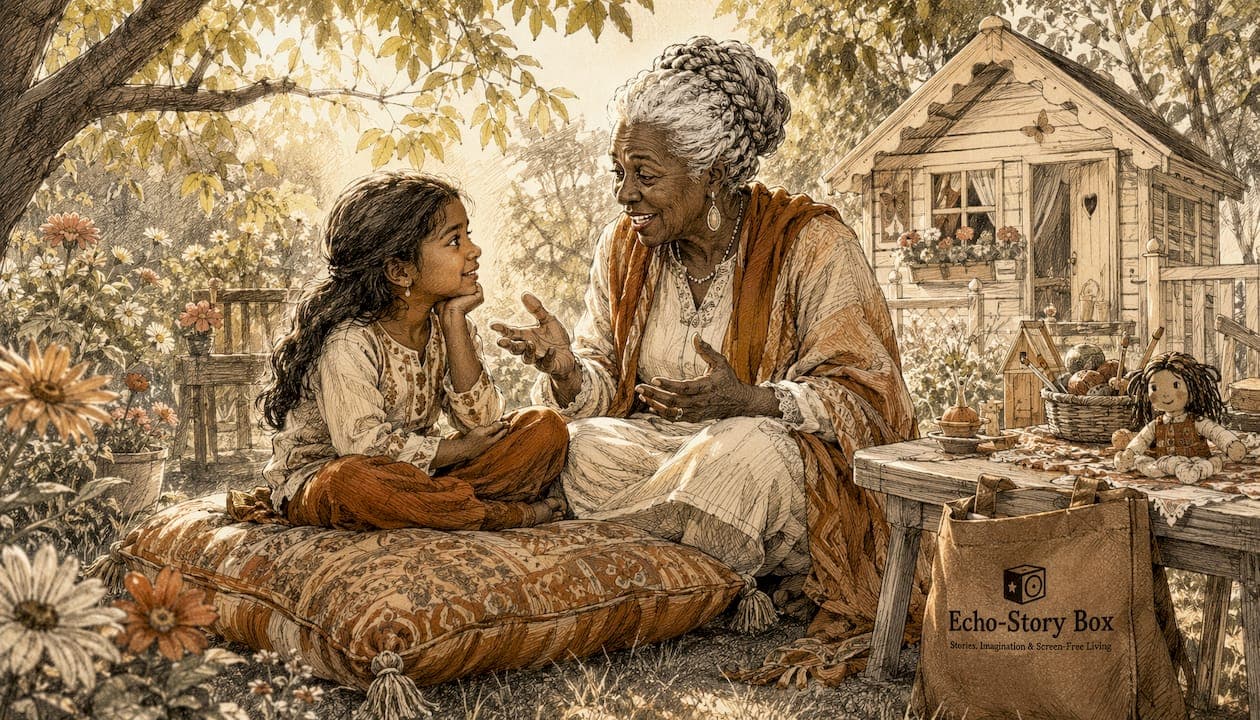
Children don't just hear stories. They step inside them. When a child is deeply engaged with a narrative, they begin to see the world through the protagonist's eyes, feel what that character feels, and quietly absorb the values that character lives by. That's how personal narratives shape children's values: not through lectures or rules, but through emotional connection and lived imagination.
The research backs this up clearly. Children adopt protagonists' traits more readily when they are highly transported into a story world, with trait adoption showing up across both explicit and implicit measures. Stories with positive moral framing, like the classic tale of George Washington and the cherry tree, produce measurably more honest behavior in children than stories that focus on punishment or negative consequences. And the effects aren't fleeting. Prolonged engagement with stories predicts stronger social cognition and prosocial behavior over time.
Here's what that means for you as a parent, educator, or caregiver:
- Children imitate the behaviors and choices of characters they identify with.
- Narrative engagement shifts self-perception, sometimes after just a single story.
- Stories build empathy by letting children safely inhabit another person's perspective.
- Positive moral framing, centered on kindness and honesty, outperforms fear-based lessons.
- Early, repeated exposure to relatable stories lays the groundwork for long-term moral reasoning.
The sections ahead unpack the psychology behind all of this, offer practical techniques, and show you how to put these insights to work at home or in the classroom.
How narratives shape values in your child's everyday world
Stories don't arrive in a vacuum. They land inside a child's existing understanding of the world, and they work by giving that understanding new shape. A child who hears a story about a character choosing honesty over convenience doesn't just receive a moral lesson. They watch a decision unfold, feel the tension, and see what follows. That experience becomes part of how they think about honesty itself.
Narratives provide models of behavior children can observe and imitate. This is different from being told what to do. When a story shows a character sharing with a friend and being welcomed warmly in return, the child sees the full arc: the choice, the action, and the social reward. Repeated exposure to stories with consistent moral themes reinforces those patterns until they feel natural, even expected.
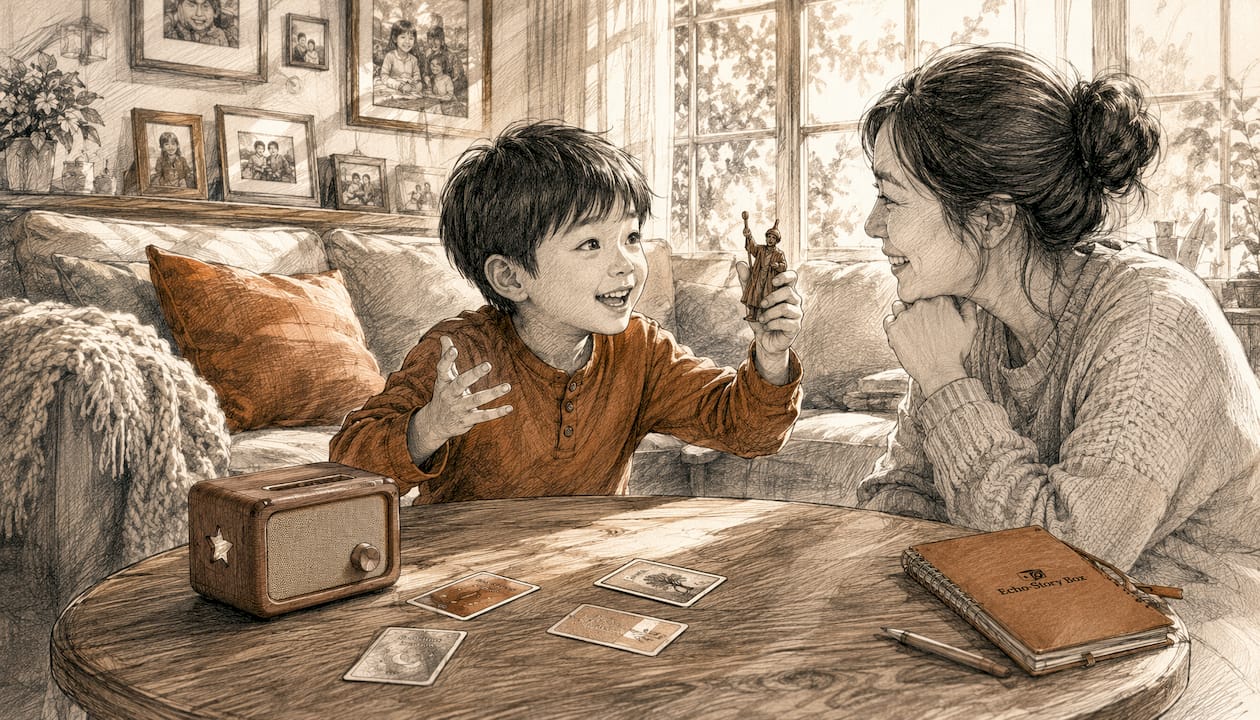
Relatable characters amplify this effect. Realistic human characters tend to produce stronger moral and altruistic responses in children than abstract or animal characters, particularly in everyday social settings. A child who sees themselves in a story's protagonist is more likely to carry that character's choices into their own life.
Stories also help children interpret social situations before they face them in real life. A narrative about a character navigating a conflict with a friend gives a child a mental script, a sense of what fairness looks like, what kindness requires, and what happens when those things are ignored. That kind of preparation builds empathy, responsibility, and social understanding in ways that direct instruction rarely can.
- Narratives model behavior through full cause-and-effect sequences, not just rules.
- Repeated story exposure reinforces value internalization over time.
- Relatable characters increase the likelihood that a child will adopt story-based lessons.
- Stories help children rehearse social situations and moral choices before encountering them.
- Storytelling builds empathy, responsibility, and social understanding through emotional engagement.
The psychology behind how narratives influence children's values
Two psychological processes sit at the heart of how stories change children. The first is identification: a child takes on a character's perspective, sharing that character's beliefs, goals, and feelings. The second is transportation: the child is imaginatively carried into the story world, so absorbed that the outside world temporarily fades. These two processes work together. Identification and transportation are synergistic, each reinforcing the other and together lowering a child's resistance to absorbing new values.
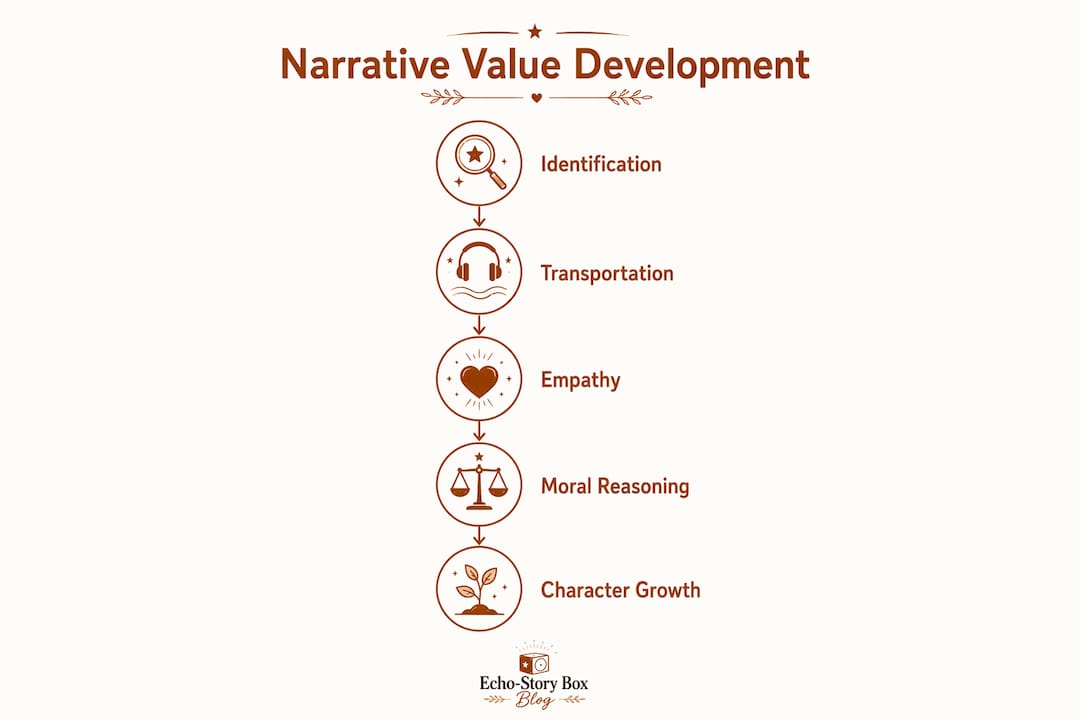
When transportation is high, the psychological distance between a child and a story character shrinks. The child doesn't observe the character from the outside. They feel what the character feels, think through what the character thinks through, and experience the consequences of the character's choices almost as their own. That immersion is what makes narrative engagement a stronger predictor of value transfer than the explicit moral content of the story itself.
Children's capacity for this kind of engagement deepens as they grow. Younger children tend to focus on observable actions: what a character did, what happened next. As they mature, they increasingly use internal mental state concepts, thinking about what a character wanted, believed, or felt, to make sense of the story. Stories that address characters' inner motivations become progressively more effective at transmitting values as children develop this capacity.
Positive emotions and relatable protagonists enhance the whole process. A child who feels warmth toward a character is more open to that character's worldview. A child who sees their own life reflected in a story is more likely to carry its lessons forward.
Research note: Trait adoption occurred across both explicit and implicit behavioral measures after high narrative engagement, suggesting that story-based value learning operates below the level of conscious awareness as well as above it.
- Identification connects a child to a protagonist's beliefs and goals.
- Transportation immerses the child, reducing resistance to new values.
- Engagement level predicts value adoption more reliably than moral content alone.
- Children shift from behavioral observation to understanding internal motivations as they mature.
- Positive emotions toward a protagonist open the door to deeper value transmission.
How storytelling builds moral reasoning in children
Stories function as what researchers call an "ethical mirror." They place children in front of moral dilemmas, let them watch characters navigate those dilemmas, and create space for reflection without any real-world risk. A child listening to a story about fairness isn't being tested. They're exploring, safely, what fairness actually means and why it matters.
This safe exploration is where empathy develops. When a child feels emotionally involved in a story, they aren't just tracking plot. They're practicing perspective-taking, asking themselves what it would feel like to be in that character's position. That practice, repeated across many stories and many years, builds the emotional architecture of moral reasoning.
Passive reading alone, though, has limits. Children often interpret story morals through their existing schemas, filtering the intended message through what they already believe. The moral a child takes away from a story isn't always the one the author intended. This is why dialogue matters so much. When a parent or teacher asks, "Why do you think the character made that choice?" or "How do you think the other person felt?", they push the child to reason more carefully, to consider multiple perspectives, and to articulate moral justifications rather than simply absorbing impressions.
A 2026 randomized trial with 704 children found that small-group discussions about narrative fiction produced a 1.67 times increase in moral justifications and a shift toward higher-level moral reasoning compared to individual reading alone. The children who discussed stories didn't just understand them better. They reasoned about them more deeply.
Key finding: Discussion groups in the 2026 trial also showed increases in student questions, reasons, and challenges during conversation, with unreasoned claims dropping significantly.
Talking about stories teaches children to think about them.
Repeated storytelling, especially when paired with conversation, can shape a child's moral self-concept over time. A child who grows up hearing stories about courage, generosity, and honesty begins to see those qualities as part of who they are, not just as rules to follow.
How stories build character and emotional strength in children
Character isn't built through a single lesson. It grows through repeated encounters with situations that call for courage, kindness, or honesty, and stories provide exactly that kind of repeated encounter in a form children actually enjoy. The research on framing is particularly clear here: stories emphasizing positive honesty outcomes produce more truth-telling behavior in children than stories focused on the negative consequences of lying. Children respond to the pull of a good example more readily than the push of a warning.
This has real practical implications. When you choose a story for a child, the framing matters as much as the topic. A story that shows a character experiencing genuine connection and warmth after being honest will do more for that child's honesty than a cautionary tale about getting caught in a lie.
Stories also teach emotional regulation. When a character faces fear, disappointment, or frustration and finds a way through, children learn that those feelings are manageable. They see what it looks like to pause, to think, and to choose a response rather than simply react. That kind of emotional learning is hard to teach directly but comes naturally through narrative.
Pro Tip: When selecting stories to build specific virtues, look for narratives where the character actively chooses the virtue, not just stumbles into it. A character who decides to be generous, even when it costs them something, models the virtue more powerfully than one who is simply kind by nature.
- Positive framing of moral behaviors is more effective than negative consequence framing.
- Stories model emotional responses, helping children learn to regulate their own feelings.
- Character-building narratives influence generosity, kindness, and integrity through repeated exposure.
- Relatable characters increase the likelihood that children will imitate the behaviors they observe.
- Parents and educators can intentionally select stories to cultivate specific virtues in children.
For practical examples of how to pair stories with specific character goals, virtue-based storytelling examples offer a helpful starting point for families.
Techniques for using emotional storytelling to teach values
The most effective storytelling isn't just about choosing the right story. It's about how you tell it and what you do afterward. A few specific techniques make a meaningful difference in how deeply children absorb moral lessons from narratives.
Use vivid, relatable characters. The more a child can see themselves in a protagonist, the more powerfully identification and transportation work. Characters who face recognizable situations, like navigating a friendship conflict or deciding whether to tell the truth, pull children in more effectively than abstract heroes facing fantastical challenges.
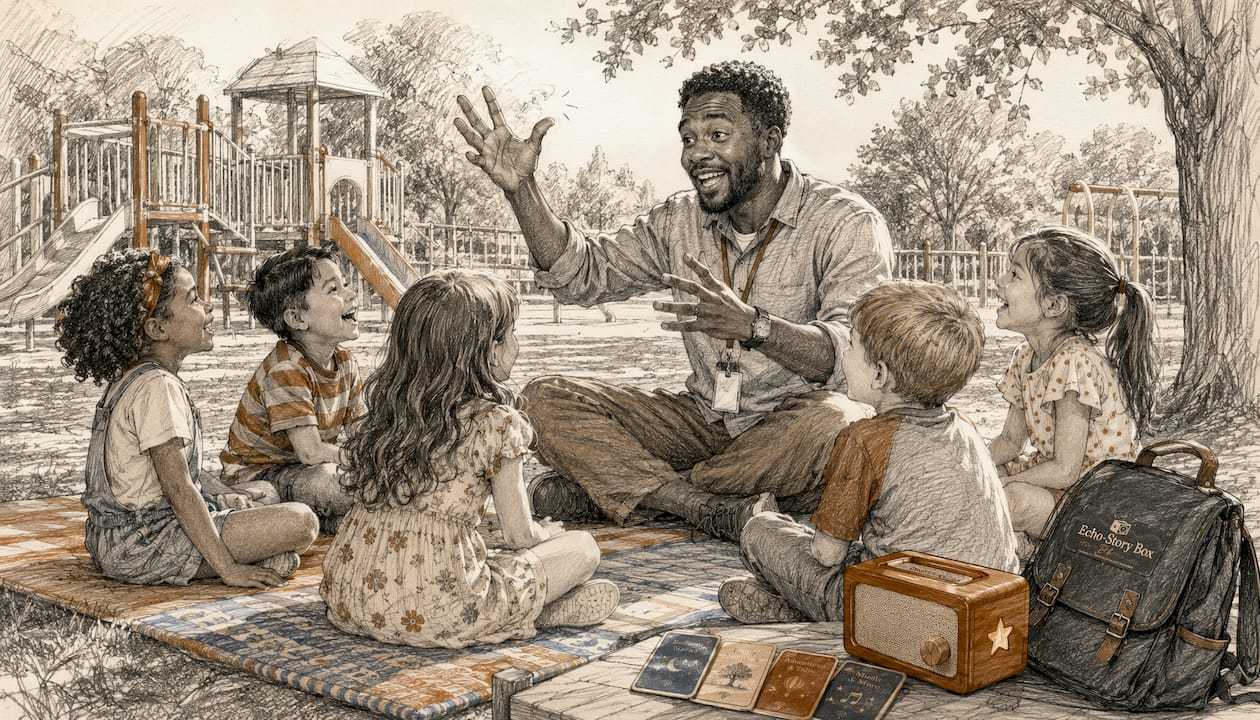
Incorporate emotional highs and lows. Stories that move between tension and resolution keep children engaged and make the moral stakes feel real. A story where everything goes smoothly teaches very little. A story where a character struggles, makes a hard choice, and experiences genuine consequences gives children something to think about long after the story ends.
Frame moral lessons with positive outcomes. As the research on honesty stories shows, children respond more strongly to the rewards of virtue than to the penalties of vice. Build stories around what becomes possible when a character chooses well, not just what goes wrong when they don't.
Ask questions during and after the story. Dialogic engagement, pausing to ask what a character might be feeling or why they made a particular choice, transforms passive listening into active moral reasoning. This is one of the most powerful tools available to parents and educators, and it costs nothing.
Pro Tip: Match the depth of your storytelling to your child's developmental stage. Younger children respond best to clear, action-based narratives with simple moral choices. Older children can engage with stories that explore a character's inner conflict, competing loyalties, or ambiguous outcomes.
- Vivid, relatable characters deepen identification and transportation.
- Emotional tension followed by resolution makes moral stakes feel real and memorable.
- Positive outcome framing outperforms punishment-focused framing for value transmission.
- Dialogic questioning turns listening into active moral reasoning.
- Matching story complexity to developmental stage maximizes engagement and value absorption.
For a deeper look at the methods behind emotional learning through stories, families will find practical guidance on using narrative for emotional growth and self-regulation.
Modern examples of how narratives shape children's values today
The principles behind narrative-based value learning are timeless, but the ways families and educators apply them keep evolving. Some of the most effective contemporary approaches combine old storytelling wisdom with thoughtful use of modern tools.
Personalized stories are among the most powerful applications. When a story includes a child's own name, mentions their family members, or reflects their real-life environment, the identification process accelerates. The child isn't just watching a protagonist. They are the protagonist. Echostory-box builds this directly into its platform, allowing stories to incorporate a child's name, family members, and favorite places, creating a connection that generic content simply can't replicate.
Screen-free audio storytelling creates the conditions for deep engagement. Without visual stimulation competing for attention, children listen more carefully and imagine more actively. That focused, calm listening is where transportation happens most naturally. Echostory-box's tap-to-play NFC card system keeps the experience tactile and simple, so children can access stories independently without navigating menus or encountering ads.
Family legacy stories carry a particular kind of moral weight. When a grandparent records a story about a hard choice they made, or a parent shares a memory about learning to be honest, the child receives both a narrative and a living example. These generational family stories reinforce cultural and family values in a way that published stories rarely can, because the storyteller is someone the child already loves and trusts.
Community and classroom storytelling rounds out the picture. The 2026 trial referenced earlier found that small-group discussions about narrative fiction produced a 1.67 times increase in moral justifications among children. Teachers who build story discussion into their classrooms aren't just teaching literacy. They're building moral reasoning capacity.
- Personalized stories accelerate identification by placing the child inside the narrative.
- Screen-free audio environments support focused, imaginative listening.
- Family legacy recordings transmit values with the added weight of personal relationship.
- Community storytelling and classroom discussion amplify the moral reasoning benefits of narrative.
- Modern platforms can preserve family voices as lasting keepsakes children return to for years.
Why parents and teachers should make storytelling a priority
Stories teach things that direct instruction simply can't. You can tell a child to be kind, but a story that lets them feel what unkindness costs, and what kindness gives back, reaches somewhere deeper. Leisure reading and story exposure predict enhanced social cognition and prosocial behavior in both children and adults, with effects that grow stronger through prolonged engagement.
Stories also nurture imagination and critical thinking in ways that screens and passive entertainment rarely do. When a child listens to a story without accompanying visuals, they build the mental images themselves. That active construction is cognitive work, and it pays dividends in creativity, focus, and the ability to think through hypothetical situations. These are exactly the capacities that support moral reasoning.
For parents navigating screen overload, storytelling offers a calm, screen-free alternative that children genuinely enjoy. The key is involvement. When parents and educators engage with stories alongside children, asking questions, sharing reactions, and connecting story events to real life, the impact multiplies. A child who processes a story alone gets something valuable. A child who processes it with a trusted adult gets something lasting.
- Stories promote empathy, social cognition, and moral self-concept through emotional engagement.
- Narrative learning reaches beyond what direct instruction can achieve.
- Storytelling nurtures imagination, critical thinking, and emotional intelligence simultaneously.
- Screen-free story experiences reduce distraction and support focused, calm engagement.
- Parental and educator involvement amplifies the moral and emotional impact of every story.
For a broader look at why stories teach better than direct instruction, the research on narrative versus lecture-based learning is worth exploring.
How immersive and personalized storytelling deepens value learning
The relationship between engagement and value learning isn't linear. It has a threshold. Below a certain level of engagement, a story washes over a child without leaving much behind. Above that threshold, something different happens: the child begins to adopt the protagonist's traits, not just remember the plot. High narrative engagement produces trait adoption across both explicit and implicit behavioral measures, meaning the learning shows up in what children say and in what they actually do.
Personalization pushes engagement past that threshold more reliably than almost anything else. When a child hears their own name in a story, when the family in the narrative resembles their own family, or when the setting feels familiar, the psychological distance between listener and character collapses. The child isn't observing someone else's moral journey. They're living it. Echostory-box's personalized storytelling platform is built around exactly this principle, allowing families to create stories that include the child's name, family members, and personal details, alongside faith-based content, educational adventures, and grandparent voice recordings.
The trial data reinforces the value of structured engagement. Discussion groups produced a notable increase in moral justifications compared to individual reading, and children shifted to higher justification levels, including more dual-domain responses that weighed both personal and social considerations.
| Storytelling approach | Effect on children |
|---|---|
| High narrative engagement | Trait adoption across explicit and implicit measures |
| Positive moral framing | Increased truth-telling behavior compared to negative framing |
| Small-group story discussion | 1.67 times increase in moral justifications |
| Personalized story content | Deeper emotional and cognitive connection to narrative |
| Screen-free audio listening | Calmer, more focused engagement with story content |
Effective storytelling links realism, emotional resonance, and clear moral framing. When all three are present, and when a trusted adult is part of the experience, the conditions for lasting value transmission are in place.
Strategies for sharing personal narratives effectively with children
Knowing that stories shape values is one thing. Knowing how to share them well is another. A few practical strategies make a consistent difference.
Start with your own stories. Children are naturally curious about the people they love. A parent or grandparent sharing a genuine memory, a time they felt afraid and chose to be brave anyway, or a moment when honesty cost them something but felt right, carries enormous weight. These personal narratives connect values to real people and real lives, not just fictional characters.
Keep it age-appropriate and concrete. Young children need stories with clear, observable choices and straightforward consequences. A five-year-old doesn't need moral ambiguity. They need to see a character choose kindness and experience something good as a result. As children grow, you can introduce more complexity, competing loyalties, imperfect choices, and outcomes that aren't entirely happy.
Repeat stories that matter. Repetition isn't boring to children the way it can feel to adults. Hearing the same story multiple times deepens familiarity with the characters and reinforces the values embedded in the narrative. The child who has heard a story about courage ten times has had ten opportunities to internalize what courage looks like.
Invite the child into the story. Ask what they would have done in the character's situation. Ask how they think the other characters felt. These questions don't just check comprehension. They build the habit of moral perspective-taking, which is one of the most transferable skills' storytelling can develop.
Connect stories to real life. When a situation arises at home or school that echoes something from a story the child knows, name the connection. "Remember how Theo the Rabbit felt when he had to tell the truth even though it was hard? You're in a moment like that right now." That bridge between narrative and lived experience is where the deepest learning happens.
Responding thoughtfully to children's moral moments, including how you frame your own reactions, shapes the narrative context they grow up in. Effective coparenting habits that emphasize consistent, positive responses reinforce the same values that good stories teach.
How personal narratives and fictional stories differ in transmitting values
Both personal narratives and fictional stories shape children's values, but they work through different mechanisms and carry different kinds of authority.
Personal narratives come from real people the child knows and trusts. When a parent shares a story from their own childhood, the child receives not just a moral lesson but evidence that the lesson applies to real life. The storyteller is living proof that the value matters. This gives personal narratives a credibility that even the most beautifully crafted fiction can't fully replicate. They also tend to be specific and concrete, grounded in actual places, real relationships, and genuine emotions, which makes them easier for children to connect to their own experience.
Fictional stories offer something different: freedom. Because the characters and situations aren't real, children can engage with moral dilemmas that would be too frightening or too complex to process if they were happening to someone they love. A story about a character facing betrayal or loss gives a child a safe space to explore those emotions and think through what they would mean. Fictional narratives also allow for a wider range of moral scenarios than any one person's life can provide.
The most effective approach for parents and educators isn't choosing between the two. It's using both deliberately. Personal narratives build trust and demonstrate that values are lived, not just taught. Fictional stories expand the moral imagination and provide safe rehearsal space for complex situations. Together, they give children a rich, layered foundation for moral reasoning.
One practical note: the source of a story matters less than the quality of engagement around it. A fictional story discussed thoughtfully with a parent will do more for a child's moral development than a personal narrative shared without any follow-up conversation. The story opens the door. The relationship and the dialogue are what carry the child through it.
Key Takeaways
Personal narratives shape children's values most powerfully when engagement is high, framing is positive, and a trusted adult joins the conversation.
| Point | Details |
|---|---|
| Engagement drives value transfer | Children adopt protagonists' traits most readily when highly transported into the story world. |
| Positive framing outperforms punishment | Stories emphasizing honest outcomes increase truth-telling more than stories focused on negative consequences. |
| Discussion multiplies moral reasoning | Small-group story discussions produced a 1.67 times increase in moral justifications in a 2026 trial of 704 children. |
| Personalization deepens connection | Stories that include a child's name and family details collapse the distance between listener and character. |
| Personal and fictional stories work together | Personal narratives build trust and credibility; fictional stories expand moral imagination and safe rehearsal space. |
Bring these stories home with Echostory-box

The research is clear: children learn values most deeply through stories they feel, not rules they're told. Echostory-box was built for exactly this. With a simple tap of an NFC story card, your child enters a screen-free world of personalized adventures, family voice recordings, faith-based narratives, and educational stories featuring characters like Theo the Rabbit, Eileen, and Eisley.
You can record your own voice, preserve a grandparent's stories, and create personalized narratives that include your child's name and family. No ads, no scrolling, no notifications. Just calm, focused listening that builds imagination, empathy, and the values you want your family to carry forward.
Start your family's story with Echostory-box today.