
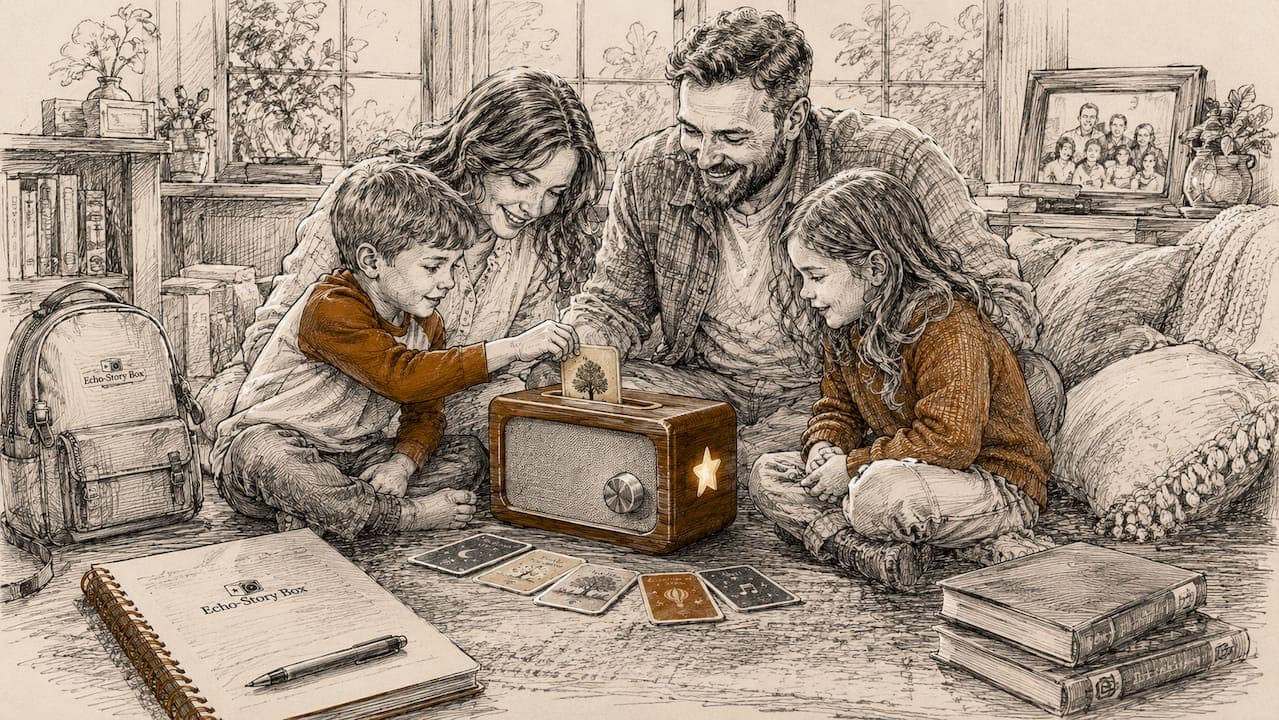
Emotional learning through children's stories is the process where narratives help children develop social-emotional skills by experiencing and reflecting on feelings through storytelling. Researchers and educators recognize five core competencies at the heart of this work: self-awareness, social awareness, responsible decision-making, self-management, and relationship skills. These skills are most receptive to development between ages 4 and 12. The formal term for this field is social-emotional learning, or SEL. Stories are one of its most natural and effective delivery tools, especially when children engage actively rather than just listen passively.
1. How emotional learning through children's stories actually works
Stories give children a safe container to feel big emotions without real-world consequences. A child who hears a character feel jealous, scared, or left out can process that emotion at a comfortable distance. This is why narrative therapy techniques use fictional characters to help children explore feelings they struggle to name directly. The story becomes a mirror, not a lesson.
The key difference between passive entertainment and genuine emotional learning is reflection. A child who hears a story and then talks about how the character felt is building emotional vocabulary. A child who only watches or listens without discussion misses that growth step entirely.
2. Which story types best support social-emotional skills in children
Not all children's books deliver the same emotional depth. The most effective stories for SEL share specific features:
- Rich emotional vocabulary. Stories that name feelings precisely, such as "frustrated," "nervous," or "proud," give children words to use in real life.
- Relatable characters. Children empathize most with characters close to their own age, family structure, or daily experiences.
- Authentic conflict. Stories that show characters struggling, failing, and recovering teach emotional resilience better than tidy happy endings.
- Culturally grounded narratives. Folklore and traditional stories carry values and emotional concepts embedded in community context, which deepens meaning.
- Discussion-ready structure. Stories with clear emotional turning points give adults natural pause points for conversation.
Current children's literature often underrepresents negative emotions like anxiety and anger. That gap matters. Children who only encounter positive emotions in stories are not prepared to recognize or manage distress in real life.
Pro Tip: Balance familiar, comforting stories with ones that introduce new emotional challenges. Comfort builds trust; challenge builds resilience.
3. How interactive storytelling enhances emotional growth
Interactive storytelling produces stronger emotional outcomes than passive reading. A 2026 study found that expressive reading with body language increases children's positive emotional engagement and social attention significantly more than instructional reading. That means how you read matters as much as what you read.
The four methods that make storytelling interactive are:
- Expressive reading. Use vocal tone, facial expressions, and pacing to convey character emotions. Children mirror adult expressions and internalize the emotional content more deeply.
- Emotional discussion. Pause during or after the story to ask open questions. "How do you think she felt when that happened?" builds perspective-taking and empathy.
- Role-playing. Let children act out scenes or take on character roles. Physical embodiment of emotions strengthens recognition and regulation.
- Summary and connection. Ask children to retell the story in their own words and connect it to something in their own life. This step anchors the learning.
Research shows a 45-minute structured session combining these four phases optimizes emotional regulation development in preschool-age children. That is a practical, repeatable format for both home and classroom use.
Pro Tip: Create a simple ritual around story time, such as a specific chair, a soft light, or a consistent opening phrase. Rituals signal safety, and safety is what allows emotional processing to happen.
4. The role parents and educators play in storytelling for emotional growth
Adults are not just readers. They are emotional scaffolds. CASEL advocates for adults to model emotional reflection during storytelling, naming their own reactions to characters and events. When a parent says, "I felt sad when the rabbit lost his friend," they show a child that emotions are normal and worth talking about.
Effective adult involvement includes:
- Asking feeling questions. "Why do you think he made that choice?" builds responsible decision-making skills.
- Building a feelings vocabulary. Introduce specific emotion words before, during, and after reading. Children cannot regulate emotions they cannot name.
- Co-regulation. NAEYC research confirms that a trusted adult's calm, secure presence during storytelling helps children manage their nervous systems. The adult's steadiness becomes the child's anchor.
- Bridging story to life. Connect character experiences to the child's own day. "Remember when you felt nervous before your first day of school? That's how Theo felt."
- Using indirect storytelling. For children who resist direct emotional conversations, a character's struggle gives them permission to engage without feeling exposed.
Educators often undervalue emotional intelligence compared to literacy, though SEL is equally foundational for school readiness. A child who cannot manage frustration or read social cues will struggle academically regardless of reading level.
5. How to select stories for teaching empathy and emotional regulation
Choosing the right story is a skill. Use these criteria when selecting books or audio stories for emotional learning:
- Emotion range. Does the story include both positive and negative emotions? Avoid collections that only show happiness and kindness.
- Character depth. Are characters shown making mistakes and learning? Flat, perfect characters teach nothing about emotional growth.
- Cultural diversity. Exposure to characters from different backgrounds builds social awareness and broadens empathy.
- Age alignment. Younger children (ages 4–6) benefit most from simple, concrete emotional situations. Older children (ages 7–12) can handle more complex moral dilemmas and relationship dynamics.
- Discussion potential. Does the story raise questions worth exploring? A good story for SEL should leave something unresolved enough to talk about.
Shared book reading paired with journaling improves emotion regulation skills more than either method alone. Adding a simple drawing or writing activity after story time extends the emotional reflection and builds vocabulary. You do not need a formal curriculum. A notebook and a question are enough.
The table below shows how different story formats perform across key emotional competencies.
| Story format | Best emotional competency supported |
|---|---|
| Picture books with expressive art | Self-awareness and emotion recognition |
| Folklore and traditional tales | Social awareness and values |
| Audio stories with expressive narration | Emotional regulation and focused listening |
| Role-play based narratives | Relationship skills and perspective-taking |
| Journaling-paired reading | Responsible decision-making and reflection |
Pro Tip: For children who struggle with direct emotional expression, choose stories where the main character faces a challenge indirectly. Indirect storytelling gives them interpretive space and emotional agency without pressure.
6. Why screen-free storytelling deepens children's emotional connection
Screen-based media competes for attention. Notifications, autoplay, and visual overload pull children away from the reflective state that emotional learning requires. Screen-free storytelling removes those distractions and creates focused, calm listening conditions.
Audio stories calm children by engaging imagination without visual input. When children picture a character in their own mind, they personalize the emotional experience. That personalization makes empathy more natural and retention stronger.
Families who build ritualized, screen-free storytelling habits create consistent emotional learning opportunities. The regularity matters. One story a week builds a habit. A nightly story builds a relationship.
7. How vocabulary development supports emotional intelligence in children
Children cannot regulate emotions they cannot name. Storytelling expands emotional vocabulary by exposing children to precise feeling words in context. Hearing "devastated" in a story is more memorable than reading a definition.
The connection between vocabulary and emotional regulation is direct. A child who can say "I feel overwhelmed" instead of acting out has already taken the first step toward self-management. Stories provide the words, and conversation after the story gives children practice using them.
Parents and educators can reinforce this by keeping a simple "feelings word wall" near the reading space. Add new words from each story. Children enjoy the collection, and the visual reminder prompts them to use the words in daily life.
8. Using stories to build responsible decision-making skills
Stories are natural ethics classrooms. Every plot contains a choice, a consequence, and a reflection. Children who discuss those choices with an adult practice the exact thinking process behind responsible decision-making.
The most effective approach is to pause at the moment of decision in a story and ask, "What would you do?" This is not a test. It is a rehearsal. Children who practice decision-making in the safe space of fiction are better prepared to make thoughtful choices in real situations.
Building a storytelling curriculum around SEL competencies gives educators a structured way to cover all five core skills across a school year. Each story can target a specific competency while still feeling like pure enjoyment to the child.
9. How small-group storytelling amplifies emotional learning
Individual story time is valuable. Small-group storytelling adds a social dimension that individual reading cannot replicate. Children hear how peers interpret the same story differently. That exposure builds social awareness and teaches them that emotions are personal and varied.
Small-group story activities work best when the group is small enough for every child to speak. Three to five children is ideal. The adult's role shifts from reader to facilitator, guiding discussion without directing conclusions.
Group role-playing after a story is particularly powerful. Children negotiate character roles, navigate disagreement, and practice relationship skills in real time. The story provides the structure; the children provide the emotional content.
Key Takeaways
Emotional learning through children's stories works best when adults actively engage children with diverse emotions, structured discussion, and screen-free, ritualized storytelling habits.
| Point | Details |
|---|---|
| SEL has five core competencies | Self-awareness, social awareness, self-management, relationship skills, and responsible decision-making are all teachable through stories. |
| Negative emotions belong in stories | Stories that include anxiety, anger, and distress build emotional resilience that positive-only narratives cannot. |
| Interactive sessions outperform passive reading | A 45-minute session with expressive reading, discussion, role-play, and summary produces the strongest emotional outcomes. |
| Adults are emotional scaffolds | Co-regulation, feeling questions, and bridging story to life are the adult's core tools during storytelling. |
| Journaling extends the learning | Pairing shared reading with drawing or writing improves emotion regulation more than reading alone. |
What I've learned from watching stories change children
I have spent years watching children respond to stories, and the pattern that surprises most parents is this: the stories that create the deepest emotional growth are rarely the cheerful ones. A child who hears a character feel genuinely afraid, or make a choice they regret, leans in. Their body language changes. They get quiet in a different way.
The mistake I see most often is adults rushing past the hard moment in a story to get to the resolution. That pause, right at the point of discomfort, is where the learning lives. Sitting with a child in that moment and asking a simple question teaches them that difficult feelings are survivable. That is not a small lesson.
Screen-free storytelling is not nostalgia. It is a deliberate choice to give children an experience that requires their imagination and their attention at the same time. When there is no screen to watch, children listen differently. They picture the characters themselves. They bring their own emotional experience to the story. That is what makes the empathy real.
The families I have seen build consistent storytelling rituals, even just 15 minutes at bedtime, report calmer children, richer conversations, and a closeness that screen time simply does not produce. The tool matters less than the habit. But the right tool makes the habit easier to keep.
— Bob
Stories that move children, delivered screen-free
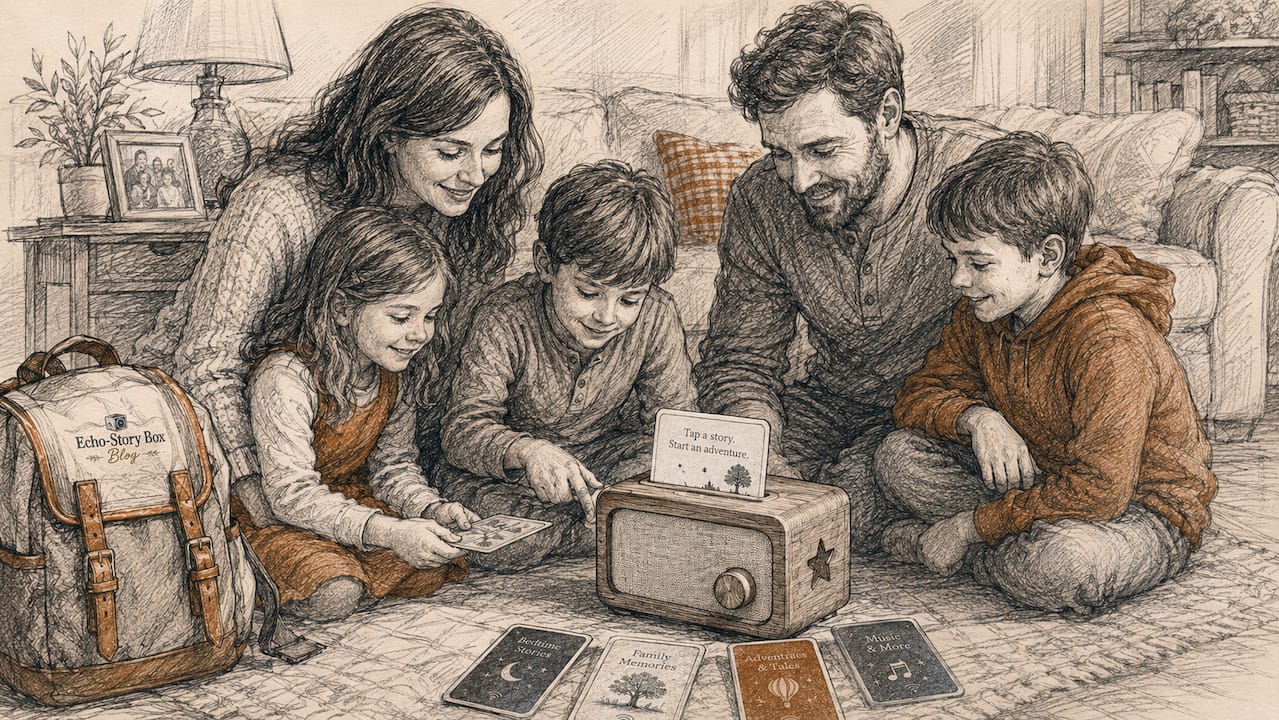
Echostory-box was built for exactly this kind of intentional storytelling. Children tap a story card on the box and the story begins. No menus, no ads, no autoplay. Just a voice, a story, and a child's imagination doing the rest.

Original adventures featuring characters like Theo the Rabbit introduce children to courage, kindness, and real emotional situations in a format designed for ages 4–10. Parents and grandparents can also record their own voices directly onto story cards, turning personal memories into lasting emotional keepsakes. Whether you are building a home storytelling habit or looking for a screen-free classroom tool, Echostory-box gives you a simple, warm way to make it happen. See how it works at the how-it-works page.
FAQ
What is emotional learning through children's stories?
Emotional learning through children's stories is the process where narratives help children develop social-emotional skills by experiencing and reflecting on feelings through characters and plot. It targets five core SEL competencies: self-awareness, social awareness, self-management, relationship skills, and responsible decision-making.
What age group benefits most from story-based SEL?
Children ages 4–12 are in the most receptive period for social-emotional development, making this the ideal window for consistent, story-based emotional learning.
Do stories need to include negative emotions to be effective?
Research confirms that stories including anxiety and anger build emotional resilience that positive-only narratives cannot. Exposure to a full range of emotions prepares children to recognize and manage distress in real life.
How long should a storytelling session be for emotional learning?
A structured 45-minute session combining expressive reading, emotional discussion, role-play, and a summary activity produces the strongest emotional regulation outcomes for preschool-age children.
Can audio stories support emotional learning without pictures?
Audio stories support emotional learning by engaging imagination directly. Expressive narration conveys emotion through tone and pacing, and children who picture characters themselves build a more personal empathic connection than passive screen viewing produces.