
Most parents and educators assume vocabulary grows best through flashcards, word lists, and repetitive drills. Research tells a very different story. Vocabulary development through storytelling explained simply means this: facts in a story are 20 times more memorable than isolated facts. That single finding should change how you approach word learning with children. Instead of memorizing definitions out of context, children who hear stories absorb new words naturally, emotionally, and deeply. This guide breaks down exactly why that happens and gives you practical tools to make storytelling a regular part of your child's language growth.
Table of Contents
- Key takeaways
- The science behind storytelling and vocabulary acquisition
- How storytelling techniques enhance retention
- Practical strategies for parents and educators
- Different formats of storytelling to consider
- Common pitfalls to watch for
- My honest take on storytelling's power
- Bring storytelling home with Echostory-box
- FAQ
Key takeaways
| Point | Details |
|---|---|
| Stories beat memorization | Children retain vocabulary 20 times more effectively through narrative than through isolated word drills. |
| Neural synchrony matters | Face-to-face storytelling synchronizes brain activity between speaker and listener, producing stronger vocabulary gains. |
| Focus on 5-6 words per session | Selecting a small number of keystone vocabulary words per story keeps learning focused without overwhelming the child. |
| Story banks build fluency | Repeating beloved stories helps children internalize language patterns and eventually create their own tales. |
| Format and consistency count | Combining oral, audio, and group storytelling formats while maintaining a regular routine produces the best results. |
The science behind storytelling and vocabulary acquisition
When a child hears a well-told story, something remarkable happens in the brain. Neural synchrony is the term researchers use to describe the brain activity alignment that occurs between a storyteller and a listener. The higher the synchrony, the better the learning outcomes. This isn't a subtle effect. It's one of the core reasons storytelling acts as scaffolding, pulling children forward in language development through active, engaged participation rather than passive reception.
Scaffolding in storytelling means the adult or educator builds a temporary structure of support around new words. A child hears an unfamiliar word inside a sentence that makes emotional sense. The surrounding story gives the word meaning before the child has even consciously noticed it. Over time, that word becomes familiar because it was experienced, not just seen on a page.
Research also confirms that storytelling enhances vocabulary and oral language development through repeated, context-rich language exposure. This benefit spans a wide range of studies from 2004 to 2026, confirming storytelling is not a passing trend but a dependable method.
| Storytelling method | Neural synchrony level | Vocabulary retention benefit |
|---|---|---|
| Face-to-face oral storytelling | High | Strongest gains |
| Audio stories (podcasts, recordings) | Moderate | Solid support, especially for repeated listening |
| Digital storytelling (video) | Moderate | Significant improvement in retention scores |
| Remote or passive listening | Lower | Reduced synchrony, weaker gains |
Pro Tip: Read aloud in a calm, expressive voice rather than a flat, even tone. Vocal variation raises engagement and directly increases the neural synchrony that drives word learning.
How storytelling techniques enhance retention
The reason a story makes vocabulary stick is not magic. It is a combination of three specific forces working together: emotion, visualization, and repetition. When a child feels something during a story, that emotional signal tells the brain the content matters. Emotion and visualization anchor new words in meaningful context, making them far easier to recall later.
Think about the difference between telling a child that "reluctant" means unwilling, versus reading them a story where a shy rabbit named Theo stands at the edge of a dark forest, feeling reluctant to take even one step forward. The child feels Theo's hesitation. They see that forest. The word "reluctant" now has a home in their mind.
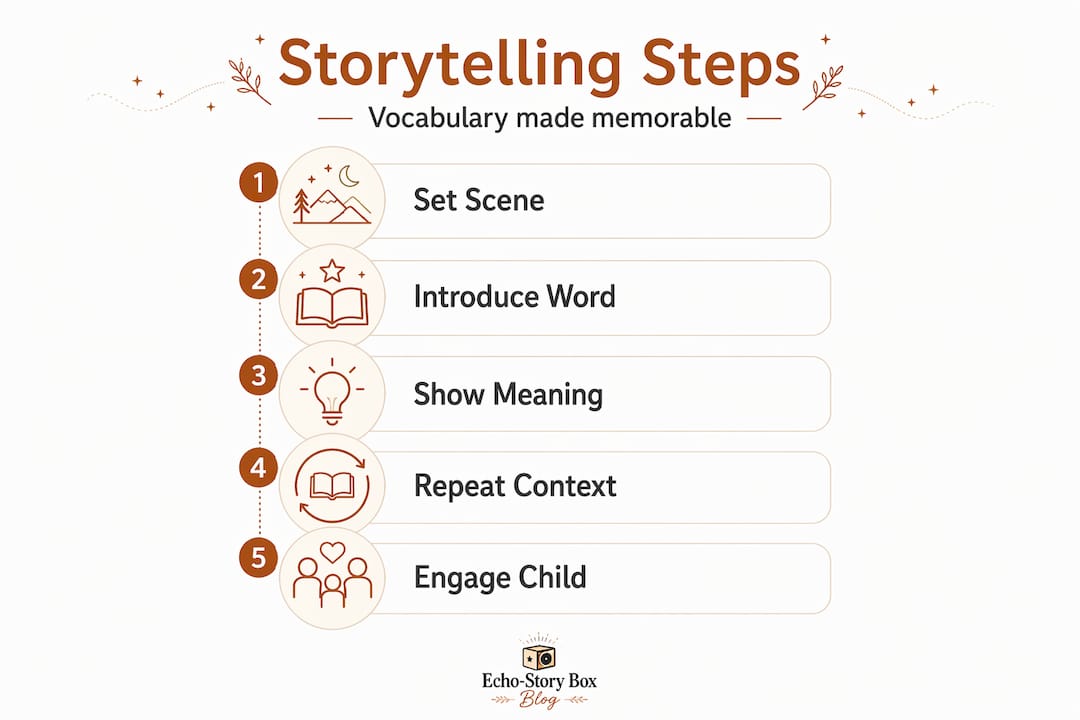
Story structure plays a supporting role here too. The classic arc of beginning, conflict, and resolution does more than entertain. It creates predictable emotional peaks where new vocabulary naturally lands and stays. Words introduced during a moment of conflict or discovery carry more weight than words on a list.
Here are the key storytelling techniques that actively build vocabulary:
- Keystone vocabulary: Choose 5-6 central words that carry the story's meaning. These get deeper attention and natural repetition throughout the narrative.
- Bridging vocabulary: Briefly explain supporting words without interrupting the story's flow, keeping comprehension alive without losing momentum.
- Visualization cues: Use descriptive language that invites children to picture the scene. The more vivid the mental image, the stronger the word memory.
- Emotional peaks: Place new vocabulary at moments of tension or joy in the story. Emotional context dramatically increases retention.
- Repetition across stories: Revisit the same words across multiple stories over time. Spaced repetition through narrative feels natural, not tedious.
Pro Tip: After finishing a story, pause and ask the child to describe one scene using their own words. This simple step shifts them from passive listener to active language producer, which deepens word learning considerably.
Practical strategies for parents and educators
Knowing the theory is one thing. Applying it at home or in the classroom is another. Here is a step-by-step approach that works whether you are a parent reading at bedtime or a teacher guiding a group through a lesson.
-
Build a story bank. A collection of repeated, familiar stories helps children internalize language patterns over time. Keep a short list of five to ten stories your child loves and return to them regularly. Familiarity is not boring to children. It is comforting, and it deepens their ability to absorb the language inside each tale.
-
Select age-appropriate stories with a slight stretch. The best stories for vocabulary growth sit just above the child's current language level, not so far above that they feel lost, but challenging enough to introduce new words naturally. Think of it as a gentle linguistic reach.
-
Pre-teach two or three key words before you begin. Spend sixty seconds on the most unfamiliar words before starting the story. A quick, friendly explanation followed by the story itself plants a seed before the word appears in context.
-
Focus each session on 5-6 keystone vocabulary terms. Resist the temptation to stop and define every new word. Too many interruptions break the spell of the story. Identify your core words in advance and let bridging words pass with a quick, light explanation.
-
Invite retelling. After the story, ask the child to tell it back to you in their own words. Even a rough retelling builds narrative structure, practices new vocabulary, and grows speaking confidence simultaneously.
-
Encourage original storytelling. Once children are comfortable retelling, nudge them toward creating their own stories. Provide a simple prompt: "What if Theo the Rabbit found a mysterious door?" Their invented stories will naturally use words they have absorbed from listening.
-
Connect storytelling to other activities. Draw a scene from the story. Act out a character. Write a short journal entry from a character's point of view. Each activity reinforces the same vocabulary through a different channel, making retention stronger.
Different formats of storytelling to consider
Not all storytelling looks the same, and each format brings its own strengths to vocabulary learning. Understanding the differences helps you choose the right tool for the right moment.
Face-to-face storytelling remains the gold standard. Live interaction produces the highest neural synchrony and gives children the benefit of a real person responding to their reactions, adjusting pacing, and offering gentle explanations in the moment. Nothing replaces it.
Audio stories occupy a special place, particularly for repeated listening. Audio storytelling supports multilingual learners by building confidence and active listening skills over time. When a child hears the same audio story several times, they pick up new vocabulary on each pass. The benefits of audio stories at bedtime are especially well documented for calm, focused language absorption before sleep.
Group storytelling is another powerful format. When children collaborate to build a story together, they negotiate meaning, take turns, and naturally use new vocabulary to communicate their ideas to peers. The social pressure to be understood motivates clearer, more precise language use.
Digital storytelling with video can supplement the others. Research shows a mean improvement of 8 points in vocabulary retention scores among students exposed to digital storytelling interventions. However, the neural synchrony benefits drop compared to live interaction, so digital formats work best as a complement rather than a primary tool.
Common pitfalls to watch for
Even the best intentions can undermine storytelling's vocabulary benefits if a few key mistakes go unchecked.
- Overloading with new words. Introducing too many unfamiliar terms in a single session overwhelms children and reduces retention for all of them. Stick to your five or six keystone words and let the rest of the story breathe.
- Choosing stories without cultural relevance. Children disengage from stories that feel distant from their experience. When a story reflects something familiar, either in setting, character, or family values, attention stays higher and vocabulary lands more effectively.
- Letting complexity outpace comprehension. A story that is too difficult creates frustration rather than growth. Watch for signs of disengagement and adjust the complexity of your story selection accordingly.
- Skipping regular routines. One storytelling session a week produces modest results. A consistent daily or near-daily routine is where the real language gains accumulate. Even ten minutes of storytelling each evening compounds quickly over weeks and months.
Consistency is the ingredient that transforms storytelling from a nice activity into a genuine vocabulary-building practice.
My honest take on storytelling's power
I have spent years thinking about how children learn language, and the single thing that surprised me most was how little formal vocabulary instruction actually sticks. Children can define a word on a test and then fail to use it in conversation two weeks later. That gap between knowing a word and owning it is where storytelling does its best work.
What I have learned from working with parents and educators is that most people underestimate the emotional component. They focus on picking the right books or finding the right word lists. What actually matters more is the quality of the experience around the story. A child who feels safe, calm, and engaged during storytime is in the ideal state for language acquisition. The role of storytelling in brain development goes far beyond vocabulary. It shapes how children think, connect, and communicate.
My honest advice: stop treating storytime as a supplement to learning. It is the learning. The vocabulary, the grammar, the narrative structure, and the emotional intelligence all grow together inside a good story. When you sit down with a child and tell a tale with genuine care and expression, you are giving them something no worksheet can replicate.
Embrace it as a joyful practice, not an academic exercise. The results will follow.
— Bob
Bring storytelling home with Echostory-box
If this guide has you thinking about how to build a stronger storytelling routine at home, Echostory-box was created exactly for families like yours.

Echostory-box is a screen-free storytelling player designed for children ages 4 to 10. Children tap a simple story card onto the box and a carefully crafted audio story begins. No scrolling, no ads, no complicated menus. Just a calm, focused listening experience that supports imagination and vocabulary growth naturally. Stories feature original characters, personalized adventures, and even family voice recordings you can create yourself. If you are a parent or educator looking for a practical tool that puts vocabulary development through storytelling into daily practice, see how it works and find out whether Echostory-box is the right fit for your family.
FAQ
Can storytelling really boost a child's vocabulary?
Yes. Facts presented in stories are 20 times more memorable than isolated facts, meaning children retain new words far more effectively through narrative than through drills or flashcards.
How many new words should I introduce per storytelling session?
Research recommends focusing on 5-6 keystone vocabulary words per session. This keeps the story's flow intact and prevents cognitive overload while maximizing retention.
Is audio storytelling as effective as reading aloud?
Audio storytelling is highly effective for repeated listening and builds active listening skills, though face-to-face storytelling produces stronger neural synchrony and slightly greater vocabulary gains. Use audio as a consistent complement to live read-alouds.
How often should we practice storytelling for vocabulary growth?
Daily or near-daily sessions produce the best results. Even ten minutes of storytelling each evening accumulates into significant vocabulary growth over weeks, making routine more important than session length.
What age group benefits most from storytelling for vocabulary?
Children ages 4 to 10 are in a particularly receptive window for vocabulary and oral language development through storytelling, though the benefits extend across all early childhood years and into middle school.