
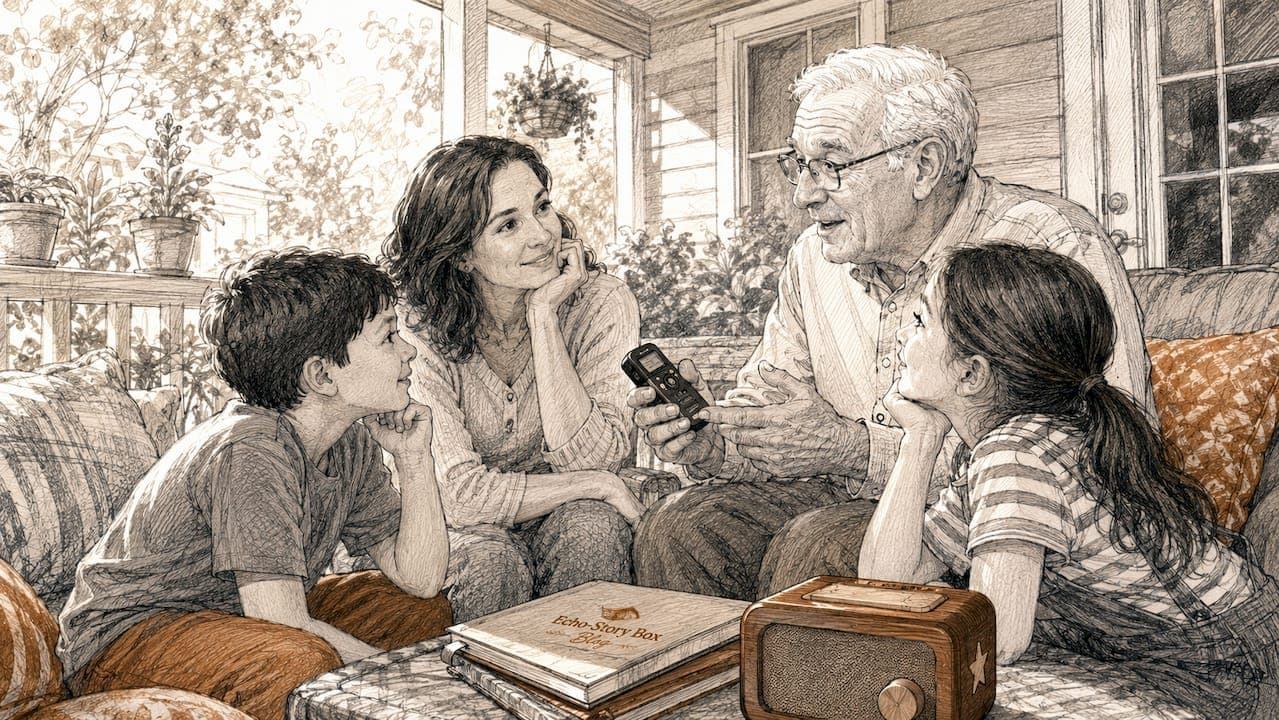
Recording family oral history is the most direct way to preserve your family's authentic voices, stories, and identity for generations who will never meet the people behind them. Psychologists describe family stories as the invisible architecture of identity, giving children a map for navigating life's hardest moments. Research from 2026 reaffirms that adolescents who know their family's stories show measurably higher self-esteem and lower anxiety. The good news: a single afternoon is often enough to capture something lasting. You do not need expensive equipment or a perfect script. You just need to start.
1. What are the core benefits of recording family oral history?
Recording family oral history preserves more than facts. It captures tone, humor, pauses, and personality. A written account of your grandmother's immigration story tells you what happened. A recording tells you how she felt telling it.
The three core benefits are emotional connection, psychological resilience for children, and cultural preservation. Each one compounds over time. A story recorded today becomes a resource your grandchildren will reach for when they face their own hard seasons.
2. How recorded stories strengthen family identity
Family stories build what psychologists call narrative identity, a coherent sense of who you are based on where you come from. Children who understand their family's history feel anchored. They know they belong to something larger than themselves.
Recording adds a layer that written history cannot. Audio recordings carry expressive qualities that text simply cannot replicate. The warmth in a grandfather's voice, the laugh before a punchline, the catch in someone's throat when they describe a loss. These details create emotional continuity across generations.
Repeated stories also work quietly over time. Intergenerational sharing embeds family narratives even when listeners seem disengaged. That teenager rolling their eyes at the dinner table is still absorbing the story. The message lands, even without acknowledgment.
- Recordings preserve voice, tone, and personality beyond what text can hold
- Shared stories create a collective family memory that individuals draw on separately
- Narrative identity gives children emotional security during transitions like divorce, loss, or relocation
- Repeated exposure to family stories builds a shared mental record across generations
Pro Tip: Record the same story from two different family members. The differences in detail and emphasis reveal as much about your family as the story itself.
3. Psychological benefits for children and adolescents
Knowing family stories directly improves youth mental health. Adolescents who know family stories show higher self-esteem, less anxiety, and greater resilience. That connection is not accidental. It is the result of having a usable model for how people in their family have handled difficulty before.
The most useful stories are not the polished success stories. Children gain deeper resilience from hearing about ordinary struggles and failures. A story about your father losing his job and rebuilding is more useful to a struggling teenager than a story about his promotion. Struggle followed by recovery is the template that actually helps.
Stories also serve as an emotional anchor during transitions, providing children with continuity and a sense of belonging when their world shifts. Moving to a new school, losing a grandparent, or facing a family change all feel less isolating when a child knows their family has faced hard things before.
"Knowing family history provides a map for children to handle life's challenges rather than building identity from scratch. Stories of struggle and recovery provide realistic templates that build resilience better than polished success stories."
- Hearing about family struggles builds realistic coping models
- Knowing the family's recovery stories reduces anxiety about personal setbacks
- Storytelling and emotional regulation are directly linked in adolescent development
- Early and ongoing exposure supports healthy identity formation over time
4. Practical tips for recording meaningful family oral histories
A recording session does not require a studio or a script. Recording sessions are accessible and low-barrier activities that yield lasting keepsakes. One afternoon, a quiet room, and a willing family member are enough to start.
The goal is conversation, not performance. Conversational storytelling sessions prioritize relaxed settings over technical perfection. A phone propped on a kitchen table captures more authentic material than a formal interview setup with a nervous subject.
Here is a simple process to follow:
- Choose one person and one era. Do not try to capture everything at once. Ask your grandmother about her childhood neighborhood, not her entire life.
- Prepare three open questions. "What did your family do on Sundays?" works better than "Tell me about your childhood." Specific prompts unlock specific memories.
- Let silences breathe. Pauses often precede the most honest answers. Do not rush to fill them.
- Record the ordinary moments. Ask about daily routines, favorite meals, and small frustrations. These details make the story feel real to future listeners.
- Review and record again. Early and iterative recording prevents loss of authentic memories. One session is a start, not a finish.
Pro Tip: Ask "What do you wish someone had told you at my age?" This question reliably produces the most emotionally honest answers in any family recording session.
5. Preserving cultural heritage for future generations
Recorded oral histories create archives that outlast the people in them. A grandparent's voice describing a holiday tradition from their home country carries cultural weight that no encyclopedia entry can match. That recording becomes a resource for grandchildren and great-grandchildren who never had the chance to ask those questions themselves.
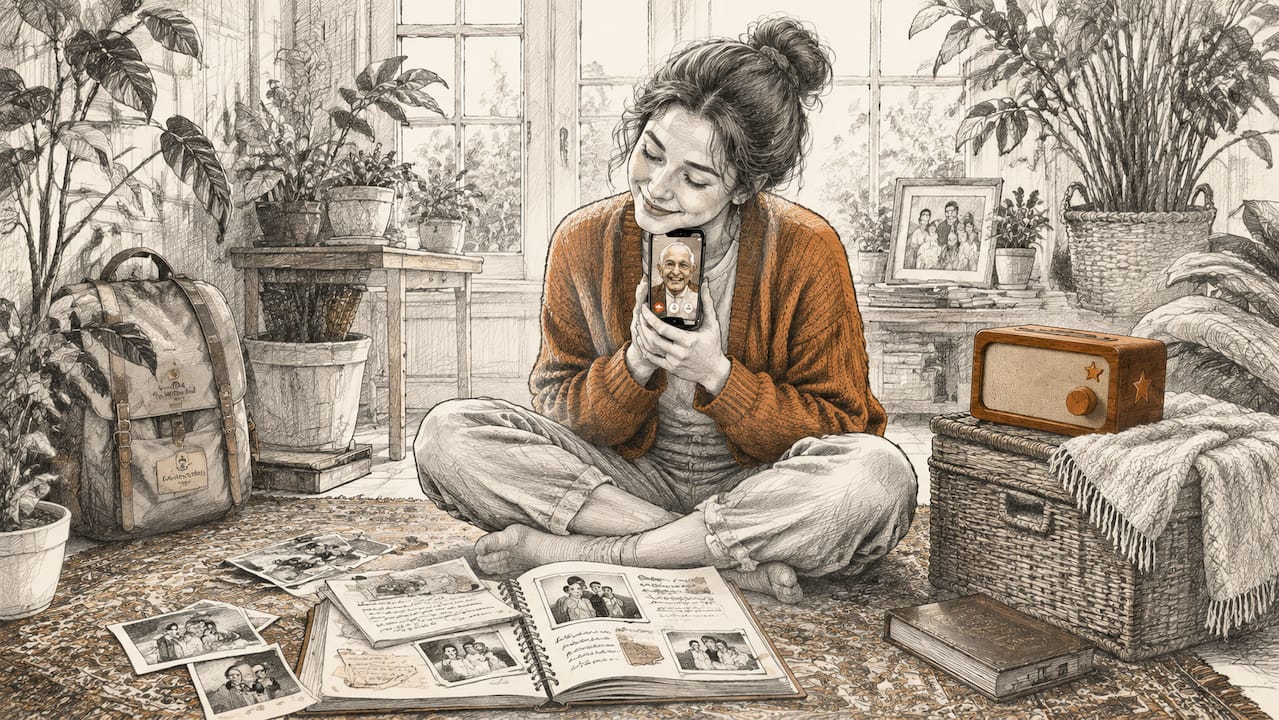
Families with geographic mobility face a specific challenge. When relatives live across time zones and countries, shared cultural practices erode quickly. Recordings preserve the texture of those traditions, the songs, the recipes explained out loud, the reasons behind the rituals, in a form that travels easily and replays on demand.
The table below shows the types of content most worth capturing and why each one matters for long-term family history documentation.
| Story Type | Why It Matters |
|---|---|
| Immigration and migration stories | Preserves context for family identity and cultural roots |
| Childhood routines and daily life | Captures the texture of an era future generations cannot access |
| Faith and values stories | Passes down the beliefs that shaped family decisions |
| Struggle and recovery accounts | Provides resilience models for younger generations |
| Holiday and tradition explanations | Keeps cultural practices alive across geographic distance |
Recording grandparent wisdom is especially time-sensitive. The window for capturing these stories closes without warning. Starting now, even imperfectly, is always better than waiting for the right moment.
6. Using recorded stories at family gatherings
Recorded oral histories are not just archives. They are living resources that families can use at reunions, holiday dinners, and milestone celebrations. Playing a recording of a late grandparent telling a favorite story at a family gathering changes the emotional tone of the room in a way that a photograph cannot.
These recordings also give children a role in family history. When a child hears their great-grandmother's voice describing what school was like in 1955, history stops being abstract. It becomes personal. That shift in perspective is one of the most underrated values of family traditions built around storytelling.
Families can organize recordings by theme, by person, or by era. A simple folder structure on a shared drive works. So does a dedicated audio player that children can access without a screen. The format matters less than the habit of returning to the recordings regularly.
7. Why effective family narratives require honesty
Effective parenting through oral history requires intentionality and honesty. Sanitized stories that skip the hard parts are less useful to children than honest accounts that include failure, regret, and recovery. Children are perceptive. They sense when a story has been edited for comfort, and they trust it less.
Careful narrative sharing also means avoiding negative comparisons. Telling a child "your grandfather never complained" is not a story. It is a standard. Stories that celebrate gratitude for elders and acknowledge their full humanity build a positive self-concept in children. They model how to be human, not how to be perfect.
The most memorable family stories are the ones that feel true. Messy, specific, and real. Those are the recordings that future generations will replay.
Key Takeaways
Recording family oral history is the most direct way to preserve authentic voices, build resilience in children, and create a lasting cultural archive that no written document can fully replace.
| Point | Details |
|---|---|
| Recordings outlast memory | Audio preserves voice, tone, and personality that text cannot capture. |
| Stories build resilience | Children who know family struggles show higher self-esteem and lower anxiety. |
| Start before it's too late | Iterative, early recording prevents permanent loss of authentic memories. |
| Honesty matters most | Stories that include struggle and recovery are more useful to children than polished accounts. |
| One afternoon is enough | A single relaxed session with open questions yields lasting, meaningful material. |
Why I think most families wait too long
I have watched families put off recording their elders' stories for years, always waiting for the right occasion or the right equipment. Then the occasion arrives and the person is gone. What remains is a photograph and a vague memory of something they once said at Thanksgiving.
The families I have seen do this well share one habit: they start before they feel ready. They record an imperfect conversation on a phone in a noisy kitchen, and that recording becomes the most treasured thing in the family. Not because the audio quality is good, but because the voice is real and the moment was caught.
The research supports what those families already know. Family stories teach better than any lecture, and the stories that stick are the honest ones. You do not need a perfect narrative. You need a willing person, a quiet room, and the courage to press record.
Do not wait for a reunion or a milestone. Record the ordinary Tuesday afternoon conversation. That is where the real history lives.
— Bob
Echostory-box makes family recording simple and screen-free
Echostory-box was built for exactly this kind of family storytelling. Parents and grandparents can record bedtime stories, life lessons, holiday traditions, and personal messages directly onto story cards. Children access those recordings by tapping a card onto the Echostory-box player, no screens, no menus, no distractions.

The experience is tactile and calm. A child can replay a grandparent's voice telling a favorite story as many times as they want, on their own terms. Echostory-box supports screen-free family storytelling that preserves the voices and memories your family will reach for long after the moment has passed. If you are ready to see how it works, the full process is simple and takes just minutes to set up.
FAQ
What are the main benefits of recording family oral history?
Recording family oral history preserves authentic voices, strengthens family identity, and gives children resilience models drawn from real family experiences. Research links knowing family stories to higher self-esteem and lower anxiety in adolescents.
How long does a family oral history recording session take?
A single recording session typically takes one afternoon. Practitioners recommend starting with one person and one era rather than trying to capture an entire life story at once.
What kinds of stories should I record first?
Prioritize stories of struggle and recovery, immigration or migration experiences, and daily life details from earlier eras. These story types provide the most useful emotional and cultural material for future generations.
Do I need special equipment to record family stories?
No special equipment is required. A smartphone in a quiet room captures enough audio quality to preserve authentic stories. Comfort and conversation matter far more than production quality.
How do recorded family stories help children specifically?
Children who hear family stories, especially accounts of challenges and recovery, develop stronger coping skills and a clearer sense of identity. Stories act as an emotional anchor during transitions like loss, relocation, or major life changes.