
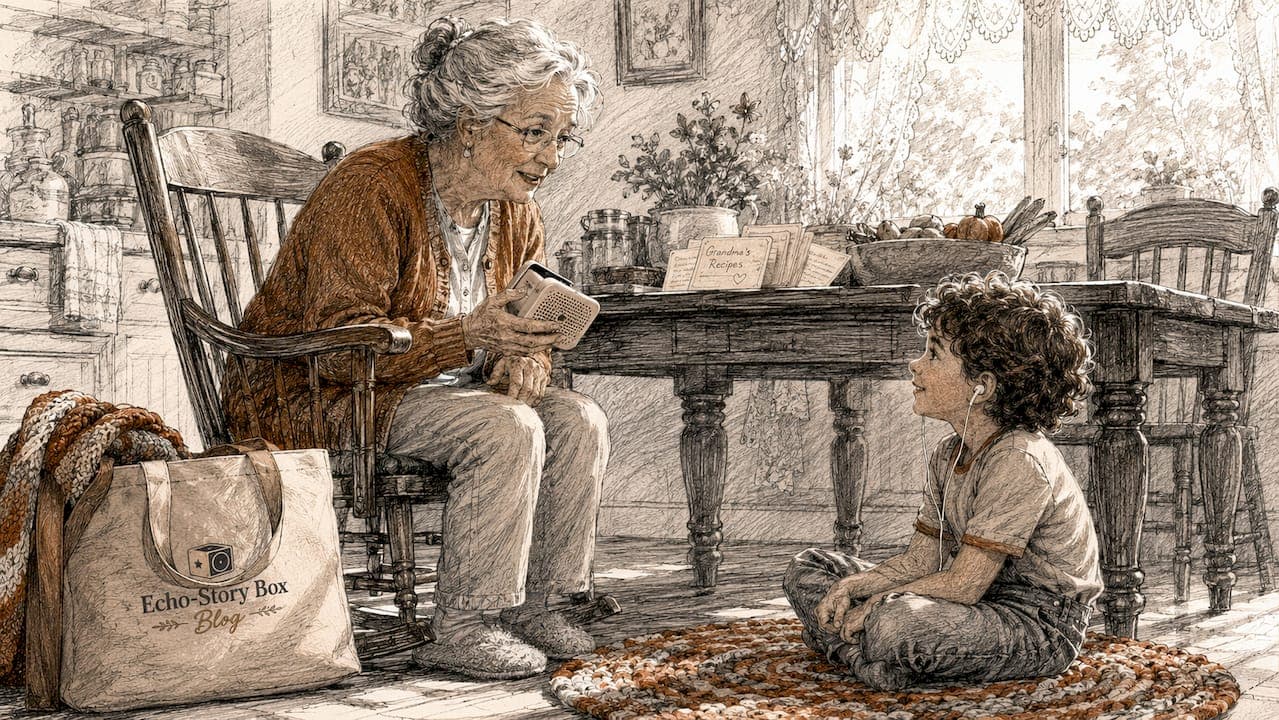
Intergenerational audio is defined as the practice of sharing voice recordings, spoken stories, and oral histories between different generations of a family. It connects families in ways that video calls and text messages simply cannot replicate, because a recorded voice carries emotional weight that a typed word never will. The Oral History Association recognizes para-linguistic cues such as cadence, pauses, and tone as essential to preserving emotional and historical truth. Research from 2026 confirms that asynchronous audio lowers barriers and builds empathy across fragmented daily schedules. For families seeking real connection without adding more screen time, audio storytelling is the clearest path forward.
Why intergenerational audio connects families differently than other media
Audio does something no photo album or video call can do. It places a familiar voice directly in a child's ear, activating emotional and relational brain circuits in a way that images and text do not. Voice recordings activate these circuits uniquely, making the experience feel vivid and comforting rather than passive or distant.
The reason comes down to what researchers call para-linguistic data. Every voice carries information beyond the words themselves. A grandmother's slight pause before she says "I love you," a grandfather's chuckle mid-sentence, the warmth in a father's voice at bedtime. These details tell the true story. Para-linguistic cues provide emotional context that transcripts miss entirely. A written version of the same story loses the message that lives in the delivery.
Audio also removes a barrier that video quietly creates. When a camera is on, people perform. They sit up straighter, choose words more carefully, and edit themselves in real time. Studies show that camera awareness leads to guarded speech and less authentic storytelling. Remove the camera, and people speak more freely. Grandparents share memories they would never recite on a video call. Parents say things they would otherwise leave unsaid.
- Voice carries emotion. Tone and cadence communicate what words alone cannot.
- Audio removes performance pressure. Speakers are more natural without a camera watching.
- Recordings are repeatable. A child can listen to the same story fifty times and feel the same comfort each time.
- No screen required. Audio fits into play, bedtime, and car rides without demanding visual attention.
Pro Tip: Record a short, two-minute voice message instead of sending a text the next time you want to check in with a grandparent or grandchild. The difference in emotional impact is immediate.
How asynchronous audio storytelling bridges distance and busy schedules
Most families do not live in the same house, or even the same state. Coordinating a live video call across time zones, school schedules, and work hours is genuinely hard. Asynchronous audio solves this problem because it does not require everyone to be present at the same time.
A grandparent can record a bedtime story on a Tuesday afternoon. A grandchild in a different city can listen to it that same night, or the following week, or a year from now. Audio recordings enable repeatable engagement that video calls cannot, because a call disappears the moment it ends. A recording stays. That permanence changes the emotional weight of the exchange entirely.
The benefits extend well beyond convenience. Over 27% of adults aged 60 and over live alone in the United States. That statistic represents millions of grandparents and great-grandparents who go days without meaningful conversation. Regular voice recordings from family members give older adults a sense of purpose and social engagement that directly combats isolation. Older adults who contribute stories report feeling valued and cognitively engaged, which supports mental health in measurable ways.
For children, the effect is equally real. Hearing a grandparent's voice repeatedly builds a sense of family presence even across distance. The familiarity of a known voice is genuinely comforting, especially for young children who process emotion through sound and repetition. Here is a simple way to build this habit into your family's routine:
- Start with one recording per week. A two-minute story or update is enough to maintain connection.
- Assign a listening time. Bedtime or a car ride works well for young children.
- Rotate who records. Let children record messages back to grandparents. The exchange matters as much as the content.
- Save every recording. Even casual check-ins become meaningful over time.
Does audio outperform video and text for family connection?
The honest answer is yes, for most intergenerational communication purposes. Each format has a role, but audio holds specific advantages that video and text cannot match.
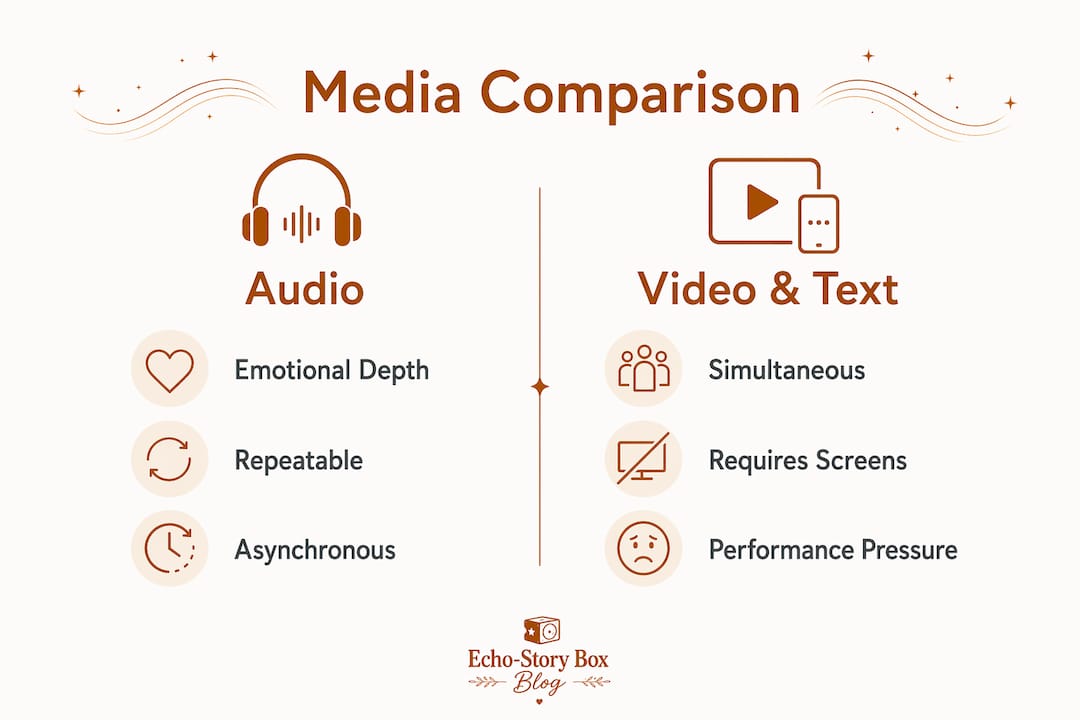
Video calls require simultaneous presence, a stable connection, and a camera-ready environment. They are valuable, but they are also effortful. Text messages are fast and convenient, but they carry no emotional tone. A typed "I'm proud of you" lands differently than a spoken one. Screen-free audio reduces overstimulation and allows children to engage with stories while playing, drawing, or resting. That flexibility is something neither video nor text can offer.
| Method | Emotional depth | Screen required | Repeatable | Asynchronous |
|---|---|---|---|---|
| Audio recording | High | No | Yes | Yes |
| Video call | Medium | Yes | Rarely | No |
| Text message | Low | Yes | Yes | Yes |
| Social media post | Low | Yes | Yes | Yes |
The table above shows why audio holds a practical edge for family bonding through audio across generations. It delivers emotional depth without requiring a screen or a scheduled time slot.
Pro Tip: If a grandparent is hesitant about technology, a simple voice memo app on any smartphone is all they need. No account, no login, no learning curve. Just press record and talk.
Practical ways to build audio storytelling into family life
The biggest mistake families make is treating audio storytelling as a project. Projects have start dates, end dates, and pressure. A living family audio practice is none of those things. It is a habit, and habits work best when they are low friction.
Low-friction, spontaneous recordings yield higher family engagement than formal interview setups. A grandparent who records a two-minute memory while sitting in the kitchen will do it far more often than one who feels they need to prepare a proper story. Spontaneity is the point. The imperfect, unscripted moments are exactly what families treasure most.
- Use what you already have. A smartphone voice memo app requires no new equipment or accounts.
- Record around natural moments. Holiday mornings, after church, during a walk. These contexts produce the richest stories.
- Create a shared folder. A simple cloud folder that all family members can access keeps recordings organized and accessible.
- Let children lead sometimes. A child narrating their day to a grandparent creates a two-way archive, not a one-sided one.
- Mark anniversaries and milestones. A birthday recording from a grandparent becomes a gift that lasts far longer than any physical present.
Consistent voice journals build a layered family history over time. The recordings you make this year will mean something entirely different in ten years. That is the real value of audio storytelling. It is not just connection in the present. It is a living archive that future generations will return to long after the people in the recordings are gone. Families who want to go deeper can explore intergenerational storytelling traditions for inspiration on how other families have built this practice across cultures and decades.
Pro Tip: Ask open-ended questions to prompt better stories. "What did your neighborhood smell like when you were eight?" produces a far richer recording than "Tell me about your childhood."
Key Takeaways
Intergenerational audio connects families because it preserves authentic voice, removes performance pressure, and creates repeatable emotional experiences that neither video nor text can replicate.
| Point | Details |
|---|---|
| Audio captures emotional truth | Para-linguistic cues like tone and pauses carry meaning that transcripts and photos miss. |
| Asynchronous format removes barriers | Recordings work across time zones and schedules without requiring simultaneous presence. |
| Seniors benefit as much as children | Older adults who share stories report reduced isolation and stronger cognitive engagement. |
| Low friction drives consistency | Spontaneous, short recordings build richer family archives than formal interview projects. |
| Screen-free audio fits family life | Children can listen during play or bedtime without the overstimulation that screens create. |
Why I believe audio is the most underrated family tool we have
I have spent years watching families try to stay connected through group chats, social media posts, and scheduled video calls. Most of those efforts fade within a few months. The group chat goes quiet. The video calls become less frequent. The posts get fewer comments.
Audio is different, and I think the reason is simple. A voice is irreplaceable. When you hear someone you love speak, your brain responds in a way it does not respond to a photo or a text. That response is not sentimental. It is neurological. Audio storytelling benefits run in both directions. Children gain history and emotional grounding. Older adults gain a meaningful social role and a sense that their stories matter.
The technical hurdle is smaller than most families think. You do not need special equipment. You do not need an app subscription. You need a phone, five minutes, and something worth saying. The families I have seen build strong audio archives all started the same way: one recording, made without overthinking it.
The emotional hurdle is the real one. Many grandparents feel their stories are ordinary. They are not. The ordinary details of a life lived are exactly what grandchildren will want to hear in twenty years. Start before you feel ready. The recordings you make imperfectly today will be the ones your family holds closest.
— Bob
How Echostory-box supports screen-free family storytelling
Echostory-box is built for exactly this kind of connection. It gives families a simple, screen-free way to share and replay audio stories without apps, accounts, or complicated menus.
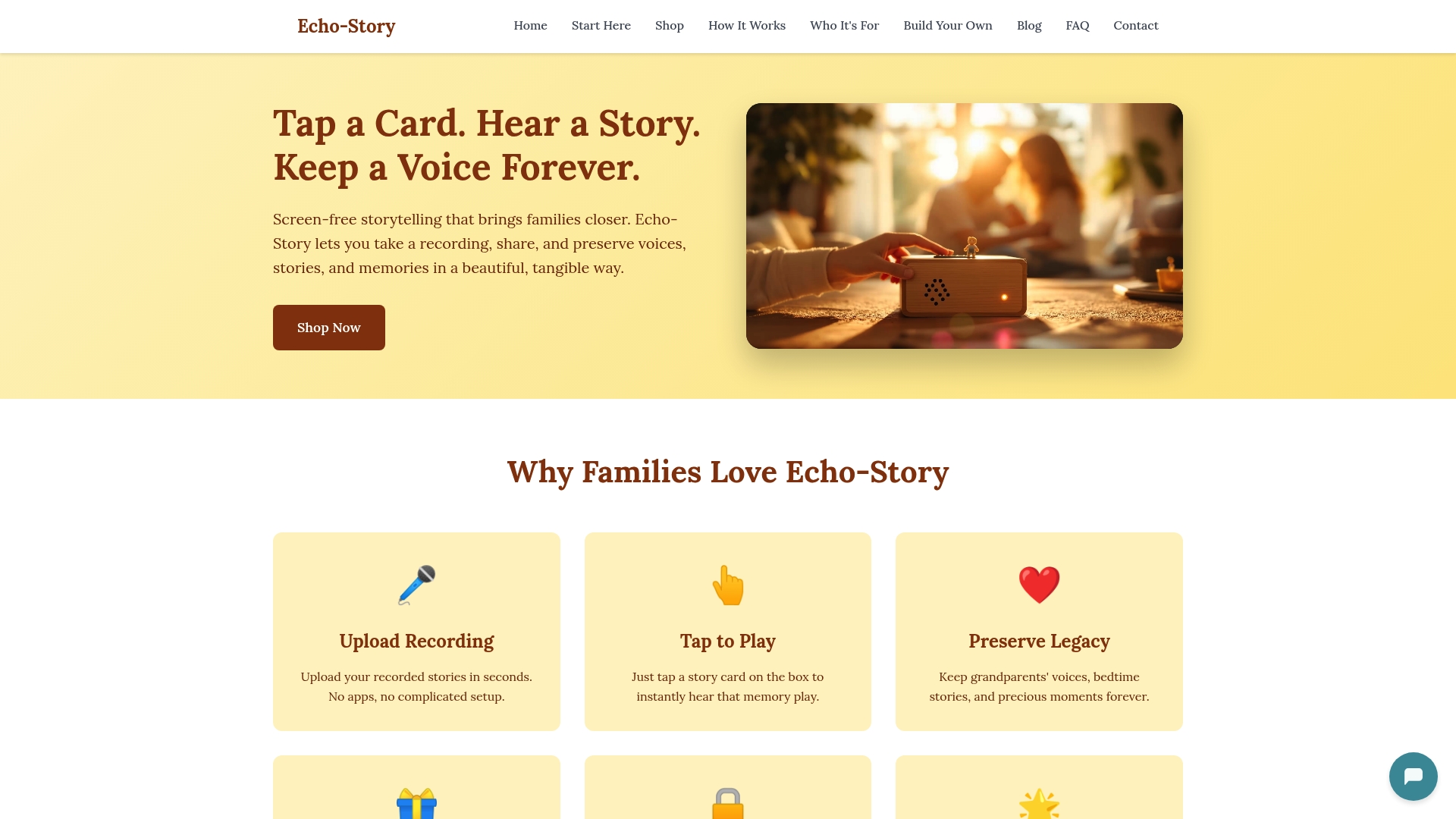
Children tap a story card onto the Echostory-box player and the story begins. Grandparents can record messages that live on a card a grandchild holds in their hands. The experience is tactile, calm, and repeatable. Families who want to preserve grandparent voices for their children will find Echostory-box designed precisely for that purpose. No scrolling, no ads, no distractions. Just the voice of someone who loves them. Visit Echostory-box to see how families are using it to build audio archives that last.
FAQ
Why does audio connect generations better than video calls?
Audio removes camera awareness, allowing speakers to share stories more naturally and authentically. Recordings are also repeatable and asynchronous, meaning families can listen at any time without scheduling a live call.
What is para-linguistic data in audio storytelling?
Para-linguistic data refers to the non-word elements of speech, including tone, cadence, pauses, and emphasis. These cues carry emotional context that written transcripts and photos cannot preserve.
How often should families record audio stories?
One short recording per week is enough to build a meaningful archive over time. Consistency matters more than length or production quality.
Can audio storytelling benefit older adults, not just children?
Yes. Older adults who contribute stories to a family archive report feeling valued and cognitively engaged. Regular participation in intergenerational storytelling reduces isolation and supports mental health.
Do families need special equipment to start?
No special equipment is needed. A smartphone voice memo app is sufficient for most families. Tools like Echostory-box add a screen-free, tactile listening experience for young children, but any recording method works to begin.