
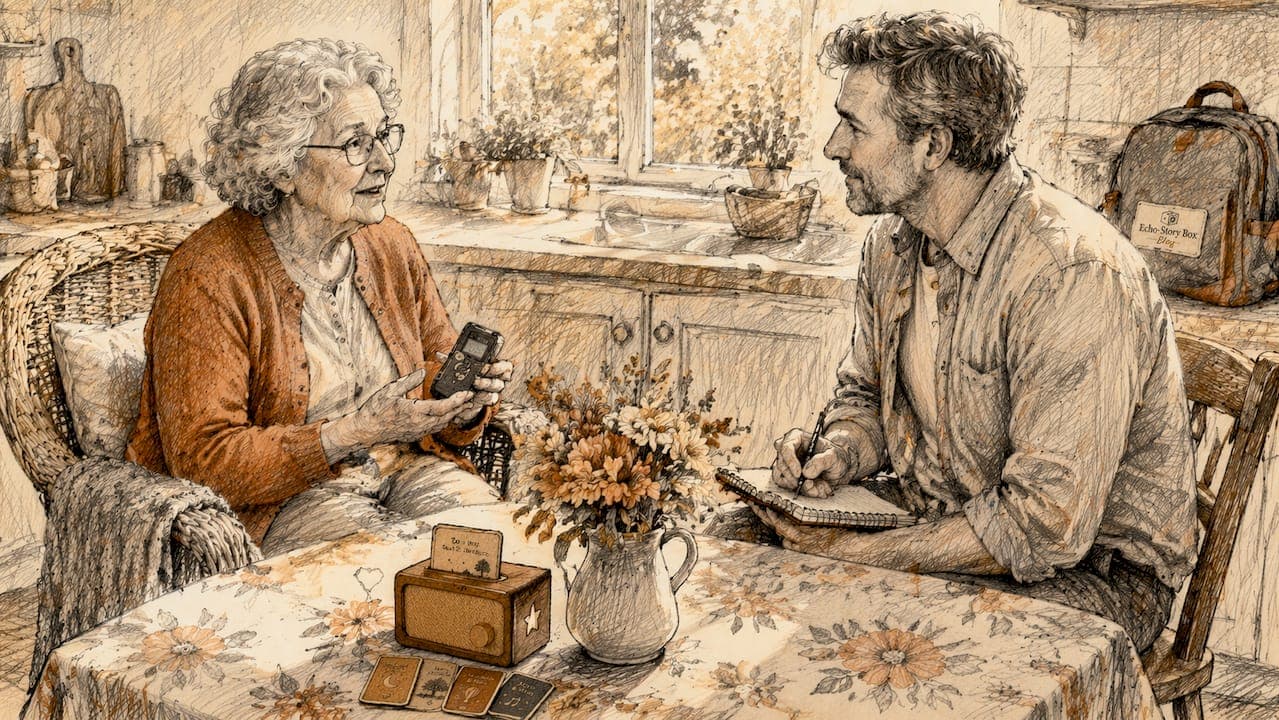
Recorded stories are treasures because they preserve not just facts, but the emotions, voices, and identities that hold families together across time. A grandmother's laugh, a grandfather's war memory told in his own words, a parent's bedtime story recorded for a child who will one day be grown — these are not simply audio files. They are living pieces of a person. Research in 2026 confirms what families have always felt: storytelling carries measurable psychological and social benefits that go far beyond nostalgia. Tools like Memorial Merits, Remento, and Echo-Story Box now make capturing these moments more accessible than ever.
Why recorded stories become treasures: the emotional and cognitive science
Storytelling functions as a wellbeing intervention by activating memory and reward networks in the brain. When someone recalls and shares a meaningful story, the brain does not simply retrieve information. It re-experiences emotion, reinforces identity, and strengthens the neural pathways tied to self-worth and belonging. That is why listening to a recorded story from a loved one feels so different from reading a transcript of the same words.
The clinical evidence is striking. A meta-analysis of 24 randomized controlled trials found that reminiscence therapy improves quality of life with a mean difference of 4.32 and reduces depressive symptoms with a standardized mean difference of 0.88 (p<0.001). This means structured storytelling is not just comforting. It is a proven tool for reducing depression and improving life satisfaction in older adults.
The same research found that repeated storytelling sessions produce the greatest cognitive gains, particularly for adults between ages 60 and 70 who participate in 12 to 16 guided sessions. Single recordings have value, but a series of conversations builds something richer. Each session adds depth, context, and emotional texture that a one-time recording simply cannot capture.
Oral history recording also serves a social function. Projects involving 150 or more participants demonstrated that participatory storytelling creates spaces where people feel heard, recognized, and validated. For older adults especially, being asked to share their story communicates that their life matters. That recognition alone carries real therapeutic weight.
Pro Tip: Ask one specific question per session rather than a broad prompt like "tell me about your life." Questions like "What was the hardest decision you ever made?" or "What do you want your grandchildren to know about you?" produce far richer, more emotionally resonant recordings.
How stories preserve family legacy across generations
Recorded family stories function as living libraries of values, identity, and history that no photograph or document can fully replicate. A photo shows a face. A recording carries a voice, a cadence, a sense of humor. That difference is not small. It is the difference between knowing someone existed and feeling like you actually knew them.
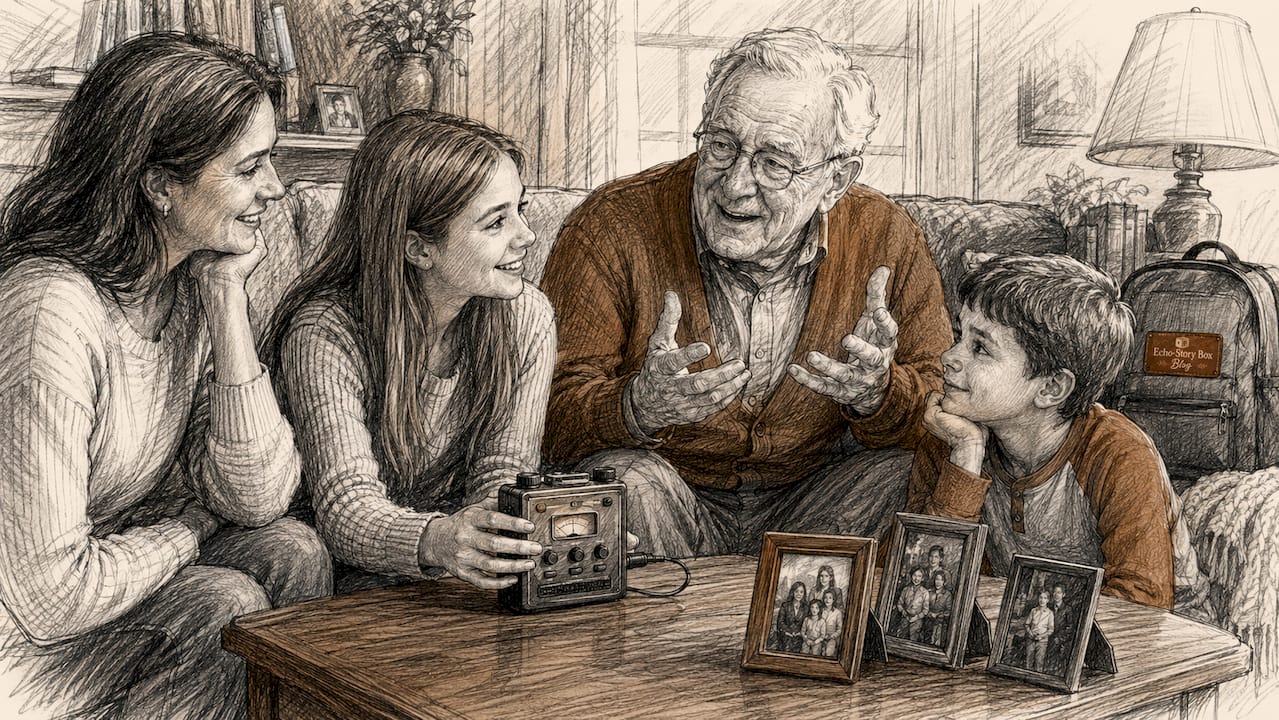
Geographic distance and generational gaps create real risks of lost connection. When grandparents and grandchildren live in different states or countries, the natural transmission of family stories slows or stops entirely. Without deliberate recording, those stories disappear when the storyteller does. Research confirms that intergenerational emotional support improves older adults' subjective wellbeing, with community environment and filial expectations acting as amplifiers of that effect. In plain terms: when families actively engage with and honor their elders' stories, everyone benefits.
Here is what recorded family stories can preserve that other formats cannot:
- Voice and tone. The way someone says a word, pauses before a difficult memory, or laughs at their own joke is irreplaceable. Recorded voices preserve emotional cues like cadence and laughter that written records simply cannot hold.
- Cultural identity. Recipes, sayings, faith traditions, and family customs embedded in stories carry cultural richness that strengthens a child's sense of where they come from.
- Continuity through cognitive decline. Families dealing with a loved one's dementia often find that recorded stories made earlier become irreplaceable. The recording holds what memory can no longer keep.
- Emotional connection across distance. A child who grows up hearing a grandparent's recorded stories develops a relationship with that person even if they rarely meet in person.
Learning more about recording grandparent wisdom shows just how much a single recording session can mean to the generations that follow.
Audio, video, or written: which format captures the most?
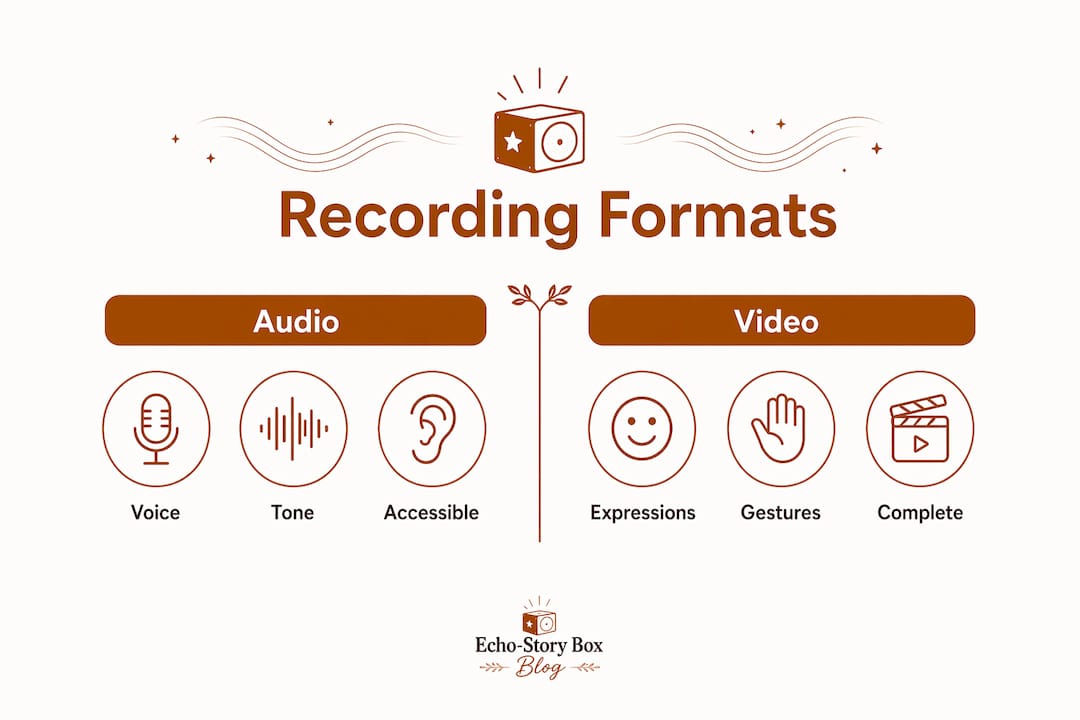
Each recording format preserves a different dimension of a person's story, and the best approach often combines more than one. Understanding the strengths of each helps you choose where to start and how to build a lasting archive.
| Format | Key strength | Best use case |
|---|---|---|
| Audio | Captures voice, tone, and cadence naturally | Bedtime stories, personal messages, oral histories |
| Video | Preserves face, expression, and gesture | Life story interviews, holiday messages, legacy recordings |
| Written | Searchable, shareable, and easy to archive | Transcripts, letters, family history documents |
| Hybrid | Combines emotional and archival value | Full legacy projects combining audio, video, and printed keepsakes |
Video recordings are widely considered the most complete format because they capture a person's face, expressions, and gestures alongside their words. Many families describe video recordings as the format they treasure most for long-term legacy. That said, audio recordings are often easier to start with and far more likely to actually happen. A perfect video project that never gets made is worth nothing compared to a simple phone recording made today.
Memorial Merits and Remento both offer structured approaches to life story recording, with guided prompts and archiving tools. Echo-Story Box takes a different path, focusing on screen-free audio playback so that children can hear family recordings in a calm, tactile way without a screen in hand.
Pro Tip: Use multiple shorter sessions of around 45 minutes rather than one long recording. Shorter sessions reduce fatigue, allow for reflection between conversations, and consistently produce richer, more emotionally detailed stories.
Always back up recordings in more than one place. Cloud storage and family sharing protect against device failure and ensure that recordings remain accessible to future generations, not just the person who made them.
Practical steps to start recording your family stories today
Starting feels harder than it is. Most families who have done it say the first session was the most meaningful conversation they had in years. Here is a simple path to get started.
- Start with your phone. A smartphone in a quiet room produces perfectly usable audio and video. You do not need professional equipment. A familiar, comfortable setting matters far more than technical quality.
- Choose one legacy question to open with. Try "What is something you want your grandchildren to know about your life?" or "What was the moment that changed everything for you?" One good question opens a conversation that can last an hour.
- Plan for at least three sessions. The first session warms everyone up. The second goes deeper. The third often produces the stories the storyteller has never told anyone before. Depth builds over time.
- Record audio first, then consider video. Audio is less intimidating and easier to arrange. Once the storyteller is comfortable, adding a camera becomes a natural next step.
- Include the small details. Ask about favorite recipes, old sayings, childhood smells, and daily routines. These personal memorabilia details add cultural richness and make recordings feel alive rather than formal.
- Back up immediately. Upload recordings to a cloud service like Google Drive or iCloud and share copies with at least two family members the same day. Do not wait.
- Frame the request with love, not obligation. Tell your parent or grandparent that you want to remember their voice and their stories. That framing removes pressure and communicates genuine care, which makes the storyteller more open and expressive.
You can also document family stories in formats that children can replay at home, turning recordings into something the whole family returns to again and again.
Key takeaways
Recorded stories become treasures because they preserve voice, emotion, and identity in ways that sustain family bonds and personal wellbeing across generations.
| Point | Details |
|---|---|
| Storytelling reduces depression | Reminiscence therapy shows a standardized mean difference of 0.88 in depression reduction across 24 clinical trials. |
| Repeated sessions build depth | Twelve to sixteen guided sessions produce the greatest cognitive and emotional benefits for adults aged 60 to 70. |
| Voice is irreplaceable | Audio and video recordings capture tone, cadence, and laughter that written records cannot preserve. |
| Backup protects legacy | Cloud storage and family sharing prevent loss and keep recordings accessible for future generations. |
| Start simple | A smartphone in a quiet room is enough to begin. The first session is the most important step. |
Why I believe every family has a story worth recording
I have sat with families who put off recording their parents' stories for years, always thinking there would be more time. The ones who finally did it, even with a simple phone propped against a coffee mug, describe those recordings as among the most precious things they own. The ones who waited too long describe a different kind of feeling entirely.
What strikes me most is how the act of recording changes the storyteller, not just the listener. When someone is asked to share their life with intention, they often discover meaning in experiences they had long dismissed as ordinary. A woman who raised five children while working two jobs does not think of herself as remarkable. But when her grandchild asks her how she did it, and the answer is recorded, something shifts. She hears herself. She realizes what she carried.
The research on familiar stories comforting aging parents reinforces what families already sense: hearing a known voice in a known story is genuinely calming and grounding. That is not sentiment. That is neuroscience.
My honest advice is this: do not wait for the right equipment, the right occasion, or the right words. Ask one question. Press record. The treasure is already there. You are just giving it a place to live.
— Bob
Preserve your family's voice with Echo-Story Box
Echo-Story Box was built for exactly this. It gives families a screen-free way to record, store, and replay the stories that matter most.
Parents and grandparents can record bedtime stories, life lessons, and personal messages that children can access by simply tapping a story card on the box. No scrolling, no ads, no complicated menus. Just a voice and a story, ready whenever a child wants to hear it. If you are ready to turn your family's recordings into something children can hold and return to for years, explore Echo-Story Box and see how simple preserving a legacy can be. You can also visit the who it's for page to find the right fit for your family.
FAQ
Why do recorded stories become treasures over time?
Recorded stories become treasures because they preserve the voice, emotion, and identity of a person in a way that no photograph or written document can replicate. Over time, as the storyteller ages or passes, the recording becomes the closest thing a family has to their presence.
How does storytelling improve mental health in older adults?
A meta-analysis of 24 randomized controlled trials found that reminiscence therapy reduces depressive symptoms with a standardized mean difference of 0.88 and improves quality of life significantly. Structured storytelling activates memory and reward networks in the brain, producing measurable cognitive and emotional benefits.
What is the best format for recording family stories?
Video is considered the most complete format because it captures facial expressions and gestures alongside voice. Audio recordings are easier to start with and still preserve the tone, cadence, and laughter that make a recording feel personal and irreplaceable.
How many recording sessions does a family story project need?
Best practices recommend multiple sessions of around 45 minutes each rather than a single long recording. Research shows that 12 to 16 guided sessions produce the greatest cognitive and emotional benefits, with each session building depth and trust.
How do I get a reluctant parent or grandparent to agree to be recorded?
Frame the request around love and memory rather than history or legacy projects. Tell them you want to remember their voice and the stories only they can tell. That personal framing removes pressure and consistently produces more open, expressive conversations.