
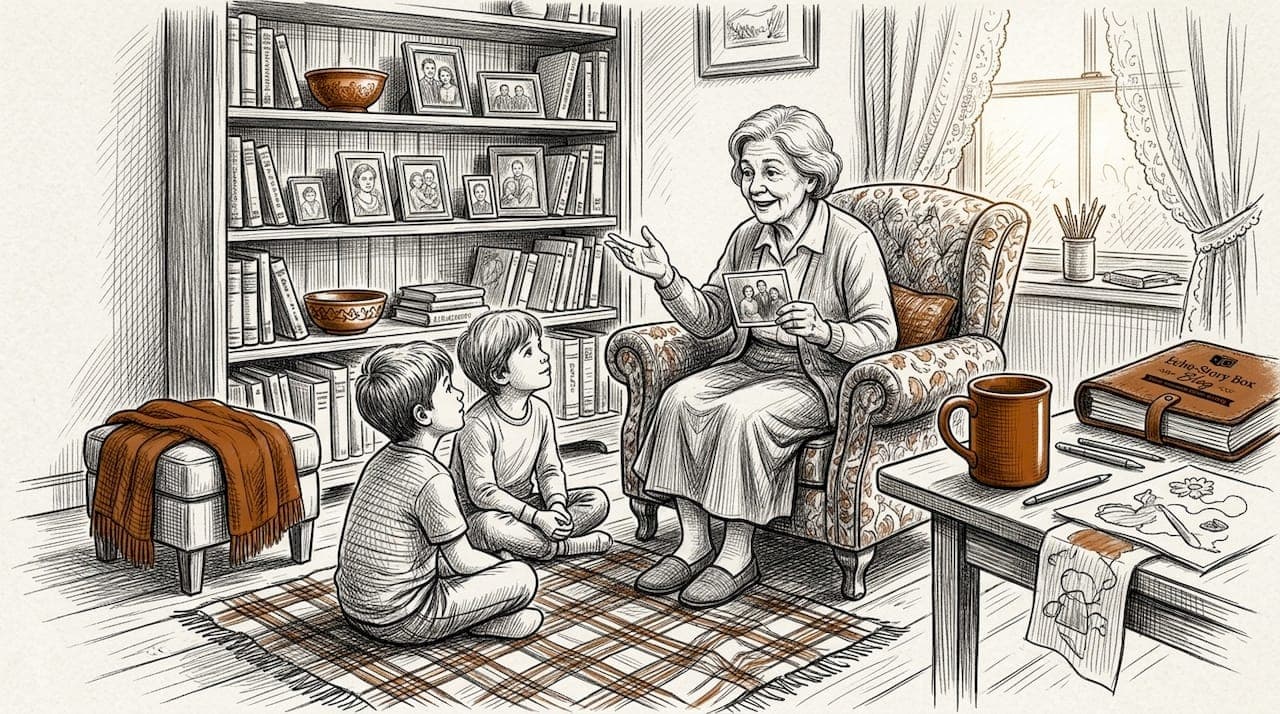
Every family carries stories worth keeping, yet without the examples of intergenerational storytelling traditions to follow, those stories quietly disappear. This is what families face right now. Grandparents hold decades of lived history. Children have curiosity and imagination. But the bridge between them, the actual practice of passing stories from one generation to the next, often goes unbuilt. This article gives you real examples from cultures around the world, a clear picture of what makes these traditions work, and gentle guidance on how to start or strengthen one in your own family.
Table of Contents
- Key Takeaways
- 1. What makes an intergenerational storytelling tradition truly work
- 2. Global examples of intergenerational storytelling traditions
- 3. Comparing storytelling traditions by format, setting, and purpose
- 4. How to start or adapt a storytelling tradition in your family
- My take: the small stories are the ones that matter most
- Bring your family's stories to life with Echostory-box
- FAQ
Key Takeaways
| Point | Details |
|---|---|
| Small details spark big stories | Asking about a childhood smell or nickname opens richer conversations than asking for "family history." |
| Storytelling works best embedded in daily life | Traditions woven into meals, drives, or cooking feel natural and last longer than formal sessions. |
| Global cultures offer ready-made models | From West African griots to Greek Easter gatherings, diverse traditions offer practical inspiration. |
| Active listening deepens the bond | When youth retell an elder's story in first person, both sides gain empathy and stronger connection. |
| Recording preserves what memory cannot | Simple audio or written documentation ensures stories survive for generations who haven't been born yet. |
1. What makes an intergenerational storytelling tradition truly work
Before exploring specific examples, it helps to understand what intergenerational storytelling actually means. At its core, the practice, often called oral history or family narrative tradition in academic and community settings, is the deliberate sharing of personal and cultural stories between people of different generations. It can happen between grandparents and grandchildren, elders and youth in a community program, or parents and teenagers.
What separates a meaningful tradition from a one-time conversation comes down to a few qualities.
- Emotional resonance. The story connects to something the listener can feel, whether that is pride, humor, grief, or wonder.
- Cultural preservation. The story carries information about identity, values, or history that would otherwise be lost.
- Accessibility. It works across ages and does not require any special skill or setting to participate.
- Repetition and ritual. It happens again and again, in the same season or around the same activity, so it becomes expected and loved.
- Mutual engagement. Both teller and listener play an active role. Storytelling across generations works best as a conversation, not a lecture.
Intergenerational folklore acts as a living system. When these traditions fade, families and communities lose more than stories. They lose the cultural knowledge and practices carried inside them.
Pro Tip: Don't wait for the "right moment" to start. The most durable traditions begin as something small and repeated, like a question asked every Sunday dinner.
2. Global examples of intergenerational storytelling traditions
This is where inspiration gets real. The world is full of cultures that have been passing stories down for generations, and each tradition offers something families can learn from or adapt.
Greek Easter storytelling around food preparation
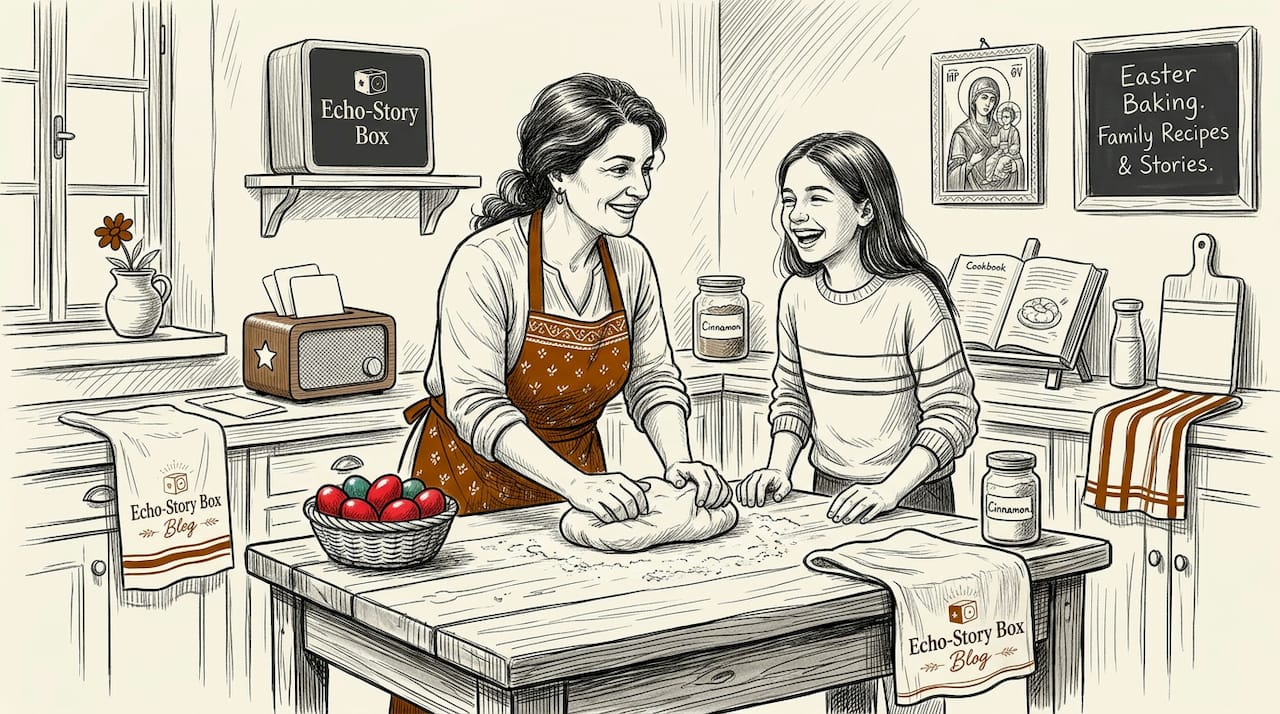
In many Greek households, Easter is not just a religious observance. It is a full week of story. Grandmothers and mothers prepare tsoureki bread, lamb, and kokoretsi together, and the kitchen becomes a space for memory. Stories about past celebrations, family members who have passed, and village life back in Greece move naturally between hands kneading dough and voices sharing laughter. The food is the prompt. The stories follow without pressure.
West African griot tradition
In many West African cultures, the griot is a trained keeper of community memory. These oral tradition keepers preserve genealogy, history, and cultural identity through performance, song, and spoken narrative. The griot does not simply recite facts. The performance brings ancestors and history alive for the audience. This tradition strengthens community unity and acts as resistance against cultural erasure.
What families can take from this: designating someone in the family, even informally, as the keeper of stories creates accountability and honor around the practice.
South African indigenous oral documentation projects
Community-based heritage projects in South Africa archive 10 or more stories per community using professional recordings and digital preservation. These projects are designed to prevent the extinction of oral traditions that exist only in the memories of elders. They pair youth with elders as part of the recording process, creating a learning relationship alongside the archive.
Family cooking traditions
Across many Asian, Latin American, and Mediterranean cultures, recipes are never just recipes. A grandmother teaching her granddaughter to make bibimbap or mole is also teaching history, survival, identity, and love. Storytelling integrated into cooking reduces performance pressure and increases authenticity because the story is a secondary layer to an activity already underway. The hands are busy, the guard is down, and the memories come naturally.
Community programs pairing seniors and youth
Structured programs that bring seniors and young people together for story-sharing sessions have measurable benefits. Intergenerational storytelling programs lead to increased mutual respect, reduced isolation in elders, and stronger emotional well-being on both sides. Many programs extend into collaborative art or digital recording projects, giving the stories a tangible form children can hold and revisit.
"Empathy built through storytelling breaks stereotypes, strengthening emotional bonds and sense of belonging between youth and elders." — R U OK?
Immigrant family narrative traditions
For families navigating life between two cultures, storytelling becomes especially meaningful. Family stories about hardship transform into collective strength for immigrant youth, anchoring identity and promoting emotional resilience across cultural divides. A parent sharing what it felt like to arrive in a new country with nothing teaches courage in a way no textbook can.
3. Comparing storytelling traditions by format, setting, and purpose
Not all family storytelling traditions look the same, and that is a good thing. Here is a clear comparison to help you identify what fits your family or community best.
| Format | Setting | Primary Purpose | Examples |
|---|---|---|---|
| Oral, spontaneous | Kitchen, car, dinner table | Emotional bonding | Greek Easter cooking, immigrant family stories |
| Oral, formal performance | Community gatherings, ceremonies | Cultural preservation and identity | West African griot tradition |
| Recorded, digital | Home or community program | Long-term archiving | South African heritage projects, legacy audio |
| Collaborative with art or craft | School, community center | Empathy and mutual respect | Intergenerational programs with storytelling and art |
| Written or memory book | Home, family reunions | Personal history preservation | Recipe books with stories, handwritten memory journals |
Oral traditions feel the most natural to start. They require nothing except time and a willingness to listen. Recorded traditions carry stories further into the future. And collaborative formats, where youth and elders create something together, tend to produce the deepest mutual understanding.
Technology can support any of these formats without replacing the human element. Simple audio recording preserves not just the words but the voice, the laugh, and the pauses. Those details carry enormous emotional weight for children who will listen years later.
4. How to start or adapt a storytelling tradition in your family
You don't need a formal program or a trained griot. You just need a starting point. Here are practical steps for building a tradition that actually sticks.
-
Start with a sensory question. Ask "What did your grandmother's house smell like?" or "What was your childhood nickname and where did it come from?" Small sensory memories open stories far more gently than asking someone to summarize their life.
-
Attach storytelling to an existing ritual. Use a meal, a holiday preparation, or a regular drive as the container. Storytelling as a secondary activity to something already happening feels less like a performance and more like a conversation.
-
Try the first-person retelling technique. After an elder shares a story, invite a child or young person to retell it in their own words, as if it happened to them. This active listener reflection validates the storyteller and builds genuine empathy in the listener.
-
Record something simple. A voice memo on a phone, a short video, or a handwritten note tucked into a recipe book counts. The goal is not a polished production. The goal is preservation. Grandparents' voices carry weight that transcends the words themselves.
-
Invite youth to contribute their own stories too. Intergenerational storytelling works in both directions. When elders ask children about their experiences and listen with genuine interest, the exchange becomes a relationship rather than a history lesson.
-
Repeat it. Once is a conversation. Twice is a memory. Three times is a tradition. Commit to the same question or format at the same occasion each year, and watch it become something the whole family looks forward to.
Pro Tip: Create a simple "story prompt jar." Write questions on slips of paper and pull one out at dinner or during a holiday gathering. The randomness takes the pressure off, and children often become the ones most excited to draw the next prompt.
My take: the small stories are the ones that matter most
I've seen families spend years waiting for the right occasion to record Grandpa's stories. They imagine a proper interview, good lighting, a meaningful afternoon set aside. That afternoon rarely comes.
What I've found is that the stories worth keeping almost never arrive in polished form. They show up in the middle of making biscuits. They come out when someone mentions a song on the radio. They surface when a grandchild asks an off-hand question that turns into an hour of memory.
The common mistake is expecting storytelling to feel significant in the moment. It usually doesn't. It feels ordinary, even a little rambling. The significance arrives later, when a child grows up and realizes they know exactly how their grandmother felt the day she left her hometown, because she told that story every Thanksgiving while rolling out pie crust.
Stories teach things that facts and lectures cannot. Not because they are dramatic, but because they are personal. The small details, the smells, the nicknames, the embarrassing moments, are what make a story true. And truth is what travels across generations.
Don't wait for the grand narrative. Start with the small one. Then let it grow.
— Bob
Bring your family's stories to life with Echostory-box

Echostory-box was built for exactly this. Families who want to preserve voices, share memories, and create storytelling traditions without the distraction of screens now have a simple, tactile tool to make it happen. Grandparents can record bedtime stories, life lessons, and holiday memories that children can access by simply tapping a card. No scrolling, no ads, no noise.
Whether you are inspired by the griot tradition or just want to capture a grandmother's voice for the grandchildren who haven't been born yet, Echostory-box makes it gentle and approachable. Explore how it works and see how your family's stories can become something children return to for years.
FAQ
What does intergenerational storytelling mean?
Intergenerational storytelling is the practice of sharing personal, cultural, or family stories between people of different age groups, typically elders and youth. It preserves heritage, builds identity, and strengthens emotional bonds across generations.
What are some simple examples of intergenerational storytelling traditions?
Common examples include cooking together while sharing family memories, holiday storytelling rituals, grandparents recording audio stories for grandchildren, and community programs pairing seniors with youth for collaborative story-sharing sessions.
Why is storytelling across generations important?
Family storytelling builds resilience, anchors cultural identity, and reduces isolation in elders while promoting empathy and emotional well-being in younger generations. Research consistently shows mutual benefits for both age groups.
How do I get an elder to open up and share stories?
Ask about specific sensory memories rather than broad history. Questions like "What did your first home smell like?" or "What was your favorite meal as a child?" are far more effective than asking someone to share their life story.
Can storytelling traditions work for modern, busy families?
Yes. The most sustainable traditions are attached to activities families already do, like cooking, driving, or holiday preparations. When storytelling is a natural part of an existing routine, it requires no extra time and feels less like a task.