
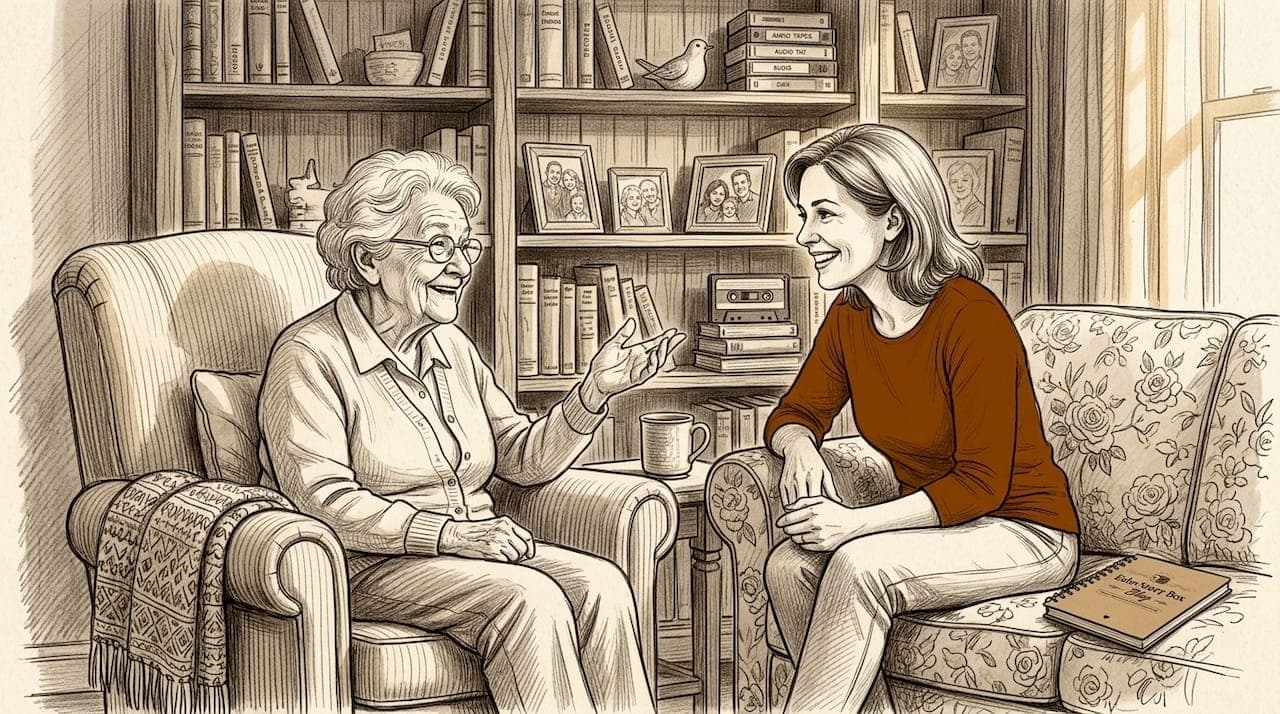
There is something that happens when an aging parent settles into a well-worn story. Their shoulders relax. Their voice softens. The tension drains. Understanding why familiar stories comfort aging parents goes deeper than simple nostalgia. It touches on brain science, emotional safety, and the very human need to feel known. When your mom tells you about the summer she met your dad for the fifth time this year, she is not just repeating herself. She is doing something profoundly important for her mind and heart. This article explains what that is, and how you can honor it.
Table of Contents
- Key takeaways
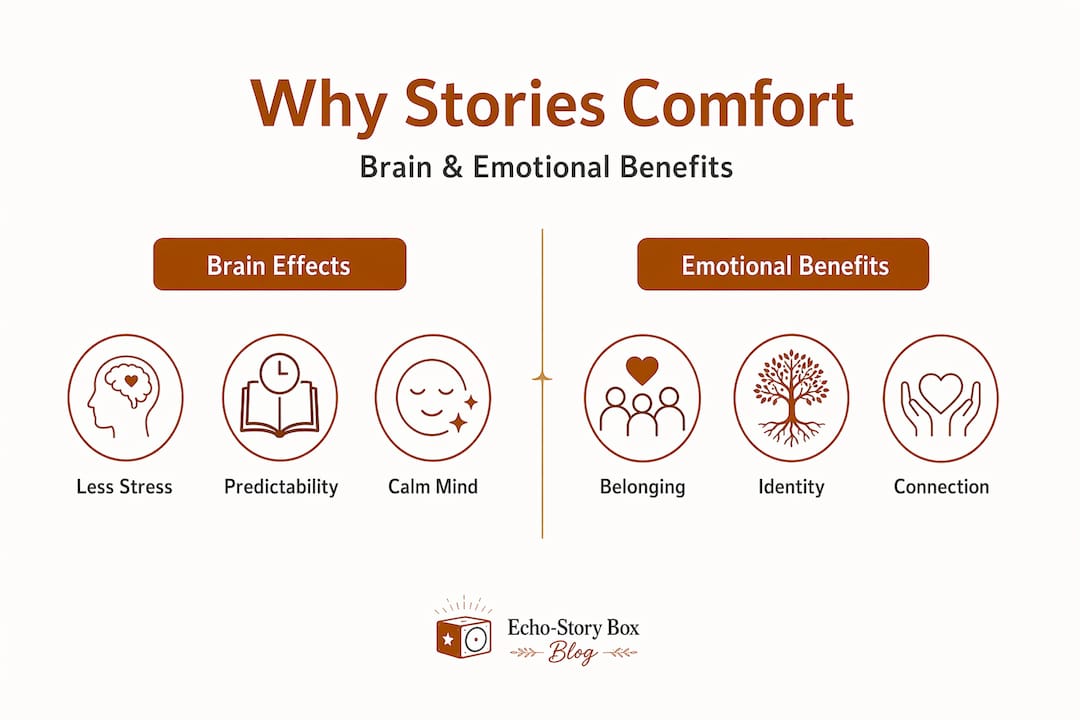
- Why familiar stories comfort aging parents: the neuroscience
- Emotional and psychological benefits of storytelling for seniors
- Common misconceptions about repeated stories
- Practical ways to engage aging parents through stories
- A personal reflection on familiar stories and what they gave me
- Bring family stories to life with Echo-Story Box
- FAQ
Key takeaways
| Point | Details |
|---|---|
| Familiar stories reduce brain stress | Predictable narratives calm the amygdala and lower cognitive demand for aging adults. |
| Repetition signals legacy-building | When seniors retell the same stories, they are preserving identity and passing down meaning. |
| Listening closely reveals more | Small shifts in detail or emphasis show what seniors most want understood and remembered. |
| Sensory cues unlock memory | Music, photographs, and familiar objects powerfully trigger storytelling and emotional connection. |
| Screen-free tools support engagement | Simple, tactile storytelling tools help seniors participate with dignity and without frustration. |
Why familiar stories comfort aging parents: the neuroscience
Your brain works hard every moment of every day, processing new information, managing uncertainty, and scanning for threats. As we age, that mental workload grows heavier. So the brain looks for shortcuts. And familiar stories are one of the best shortcuts it has ever found.
When you already know how a story ends, your prefrontal cortex gets to rest. Predictability reduces prefrontal activity, lowering the mental energy needed to process information and creating a real sense of emotional safety. For an aging parent managing health changes, shifting routines, and the grief of loss, that rest is not a luxury. It is relief.
There is also what happens in the amygdala, the brain's threat-detection center. Knowing story outcomes relaxes this system and shifts the body toward a calm, rest-and-digest state. It is why your father can watch the same film every Sunday and feel genuinely soothed each time. The story is not boring to him. It is medicine.
Researchers also point to what is called the "reminiscence bump." This is the well-documented phenomenon where memories from ages 15 to 30 are encoded more deeply than memories from any other life period. Stories tied to that window carry extra emotional weight for seniors. When your mother talks about her first job or her childhood neighborhood, she is tapping into some of the most vivid memories her brain holds.
Here is what this means practically for aging parents:
- Familiar stories act as cognitive offloading, freeing mental resources for emotional engagement rather than information processing.
- Returning to familiar content reactivates neural patterns tied to positive past emotional states, a process researchers call "emotional scaffolding."
- Stories from the reminiscence bump period are especially potent triggers for joy, identity, and connection.
- Emotional regulation improves when aging adults engage with stories they know well, reducing anxiety without the need for any intervention.
"Familiar narratives let the brain exhale. For an older adult carrying the weight of change and loss, that exhale is not small. It is everything." — The Neuroscience of Nostalgia
Emotional and psychological benefits of storytelling for seniors
The science explains the comfort. But the emotional benefits of storytelling go further than brain chemistry. They reach into identity, dignity, and purpose.
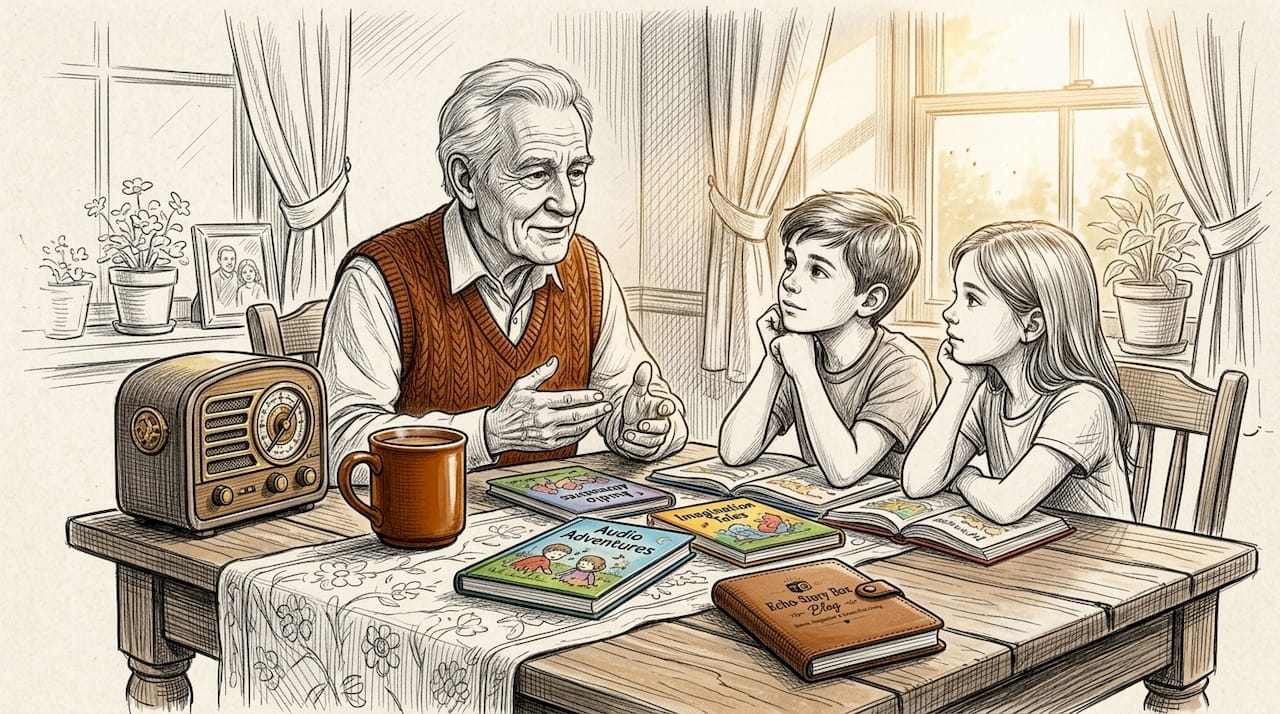
When your aging parent tells you a story you have heard before, they are doing something deliberate, even if they do not realize it consciously. Older adults often repeat stories because they have forgotten who they have already told, yes. But those repeated stories are almost never random. They are the stories your parent is most afraid the world will forget. They are the parts of a life being handed forward.
This is legacy curation in its most human form. No archive, no photo album, no journal does quite what a spoken story does. A story carries tone, emotion, humor, and weight in ways that written records cannot fully capture.
Here is how storytelling supports the emotional lives of aging parents, step by step:
- It restores a sense of control. Reminiscing links directly to improved well-being, happiness, and life satisfaction. When seniors shape their own narratives, they reclaim authorship over a life that may otherwise feel increasingly out of their hands.
- It reinforces identity. Familiar stories remind aging adults who they are, where they came from, and what they stood for. This is not trivial. Identity anchors mental health.
- It builds emotional bonds across generations. Sitting with an aging parent as they tell a familiar story is one of the quietest, most meaningful forms of social engagement for seniors. You are not just listening. You are affirming that their life mattered.
- It regulates difficult emotions. Comfort through shared memories helps aging adults process grief, fear, and uncertainty without confronting those feelings directly. The story holds the weight so the person does not have to hold it alone.
Pro Tip: Ask your aging parent one open question after a familiar story, something like "What was the hardest part of that?" or "What do you want me to remember about that?" Those questions often open doors that years of conversation never did.
Common misconceptions about repeated stories
One of the most misunderstood moments in caregiving happens when a parent tells the same story again. Many family members feel impatient. Some quietly assume cognitive decline. Others worry that something is wrong. Most of the time, they are misreading a deeply meaningful act.
Story repetition is not primarily about memory loss. It is about preservation. The stories being repeated are the ones that matter most. Listening for what shifts in those stories, a new detail here, a different emphasis there, is where you discover what your parent most needs you to understand.
That said, noticing changes in story patterns can sometimes point to subtle emotional or cognitive shifts worth discussing with a care professional. There is a difference between intentional repetition for legacy purposes and repetition driven by confusion. Paying close attention helps you tell the difference.
Here are some practical ways to respond when stories repeat:
- Listen as if it is new. Your parent is not testing your patience. They are sharing something they love. Receiving it warmly is a genuine act of care.
- Notice the details that change. Each retelling can reveal something different about what your parent values, fears, or hopes you will carry forward.
- Record the story. Even a simple voice recording on a phone preserves not just the words but the voice, the pauses, and the feeling. That recording becomes priceless.
- Ask follow-up questions. A single gentle question can transform a familiar story into a richer conversation. "Did that ever happen again?" opens surprising new chapters.
- Avoid correcting the narrative. If a detail is slightly different from your memory, let it go. The emotional truth of a story matters more than the factual accuracy of its details.
The importance of nostalgia for elderly adults is often underestimated by the very people closest to them. Reframing story repetition as a gift rather than a burden changes everything about how you show up.
Practical ways to engage aging parents through stories
Knowing that familiar stories soothe seniors is one thing. Creating the conditions where those stories can flow freely is another. The good news is that the tools and techniques are simple.
Creating the right environment
Calm and unhurried settings produce the best storytelling. Turn off the TV. Sit close. Make eye contact. Those small shifts communicate that you have time and that what your parent says matters. Assisted living approaches that center storytelling in family visits consistently report stronger emotional bonds and reduced isolation among residents.
Sensory cues are among the most powerful storytelling catalysts. Using music, photographs, and familiar objects to trigger memories has been shown to improve emotional well-being and social connection, even in adults experiencing significant cognitive changes. A favorite song from the 1960s can open a conversation that an hour of direct questioning never could.
Screen-free vs. screen-based storytelling
| Approach | What it offers | What it limits |
|---|---|---|
| Screen-based (TV, tablet) | Passive, low effort | No personal interaction, often overwhelming |
| Group storytelling sessions | Connection, shared memory, dignity | Requires facilitation and time |
| Recorded family audio | Preserves voice and emotion | Needs setup and playback tools |
| Screen-free audio tools | Simple, tactile, calm, no tech overwhelm | Limited to available story content |
Screen-free storytelling tools are especially worth considering. Physical story materials and group sessions encourage participation and autonomy in ways that screens rarely achieve. There are no menus to navigate, no notifications to interrupt, and no distractions pulling attention away from the story itself.
Pro Tip: Create a small "memory basket" with a few meaningful objects from your parent's past. A postcard, a photo, a small keepsake. Bring it out during visits and watch how quickly stories begin to flow.
Connecting with elderly through tales does not require elaborate planning. It requires presence, patience, and a willingness to let the story matter.
A personal reflection on familiar stories and what they gave me
I spent years half-listening when my grandmother told her stories. I had heard them all. The summer she left home at seventeen. The winter her mother taught her to bake bread. The afternoon she met my grandfather on a streetcar. I thought I knew those stories by heart.
What I did not realize is that I was missing the point. The stories were not for my information. They were for her identity. She was not telling me what happened. She was telling me who she was.
When I finally started listening differently, asking small questions, sitting with the silences, recording a few conversations on my phone, everything shifted. I discovered that her streetcar story had a detail I had never caught before. A small kindness from a stranger that she had carried with her for sixty years. That detail told me more about her values than anything she had ever said directly.
I have seen this pattern in families again and again. The patience to sit with a familiar story is almost always rewarded. The story you think you already know is often the one that has the most left to give. If your aging parent has a story they return to, treat it as an invitation. Lean in closer next time. You may be surprised by what you find waiting there.
— Bob
Bring family stories to life with Echo-Story Box
If you are looking for a simple, gentle way to support storytelling with the aging parent or grandparent in your life, Echo-Story Box was built for exactly this.

Echo-Story Box is a screen-free audio storytelling tool designed to make meaningful listening as easy as placing a card on a small wooden player. No menus, no scrolling, no notifications. Families can record personal messages, preserve grandparent voices, and create lasting audio keepsakes that children and seniors can return to again and again. It is warm, simple technology that puts human stories at the center. Whether you want to capture your parent's voice before time takes it or simply create a calmer, more connected storytelling experience at home, Echo-Story Box makes it possible.
FAQ
Why do aging parents keep telling the same stories?
Repeated stories are usually a form of legacy preservation, not memory failure. Seniors often retell the stories they most want their families to remember, especially those tied to identity and core life values.
How do familiar stories help aging parents emotionally?
Familiar narratives calm the amygdala and reduce cognitive load, providing genuine emotional relief. They also reinforce identity, restore a sense of control, and support emotional regulation during stressful periods of aging.
What is the reminiscence bump and why does it matter for seniors?
The reminiscence bump refers to the tendency for memories formed between ages 15 and 30 to be encoded more deeply than other life memories. Stories from that period carry extra emotional weight for aging adults and are especially comforting to revisit.
Is it okay to record an aging parent's stories?
Recording a parent's stories is one of the most meaningful things a family can do. Even a simple voice recording captures tone, humor, and emotion that no written record can fully replace.
How can I encourage my aging parent to share more stories?
Bring familiar sensory cues like photographs, music, or small keepsakes from their past. Ask open-ended questions, listen without correcting, and create unhurried, calm settings where stories can flow naturally.