
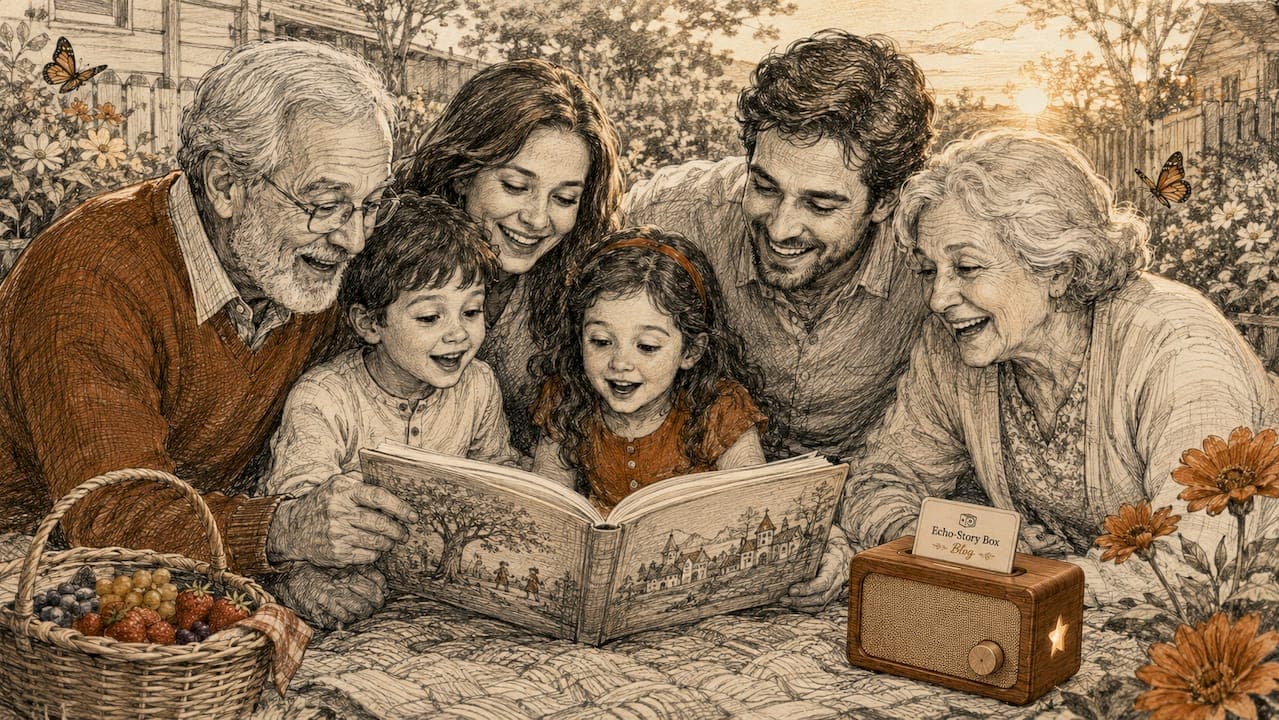
Narrative identity in families is the shared, evolving life story that defines who a family is together and who each member is within it. Psychologist Dan P. McAdams frames narrative identity as the highest level of personality, built from personal myths, self-defining memories, and life chapters that answer the question "Who are you?" In families, this story is never created alone. It forms through conversations at the dinner table, bedtime stories, and the way grandparents describe the past. Cultural context, relational history, and the audience listening all shape the story as it grows. Understanding how this works gives families a real tool for building connection, resilience, and a sense of belonging that lasts across generations.
What is narrative identity in families, and why does it matter?
Family narrative identity is the internalized, co-authored story that a family builds together over time. It integrates the reconstructed past, the perceived present, and the anticipated future into a coherent whole. This is not simply nostalgia or memory. It is an active, living framework that shapes how family members see themselves and each other.
McAdams describes three levels of personality: broad traits, personal goals, and narrative identity. The third level is where meaning lives. It is where a child learns whether their family is the kind that perseveres through hardship or the kind that avoids talking about it. Those early lessons stick.
Storytelling begins shaping identity from early childhood. The way parents narrate daily events, explain family history, and describe relatives gives children their first map of who they are. Cultural and relational influences layer onto that map as children grow. A family's stories about immigration, faith, loss, or triumph all become part of the child's own self-concept.
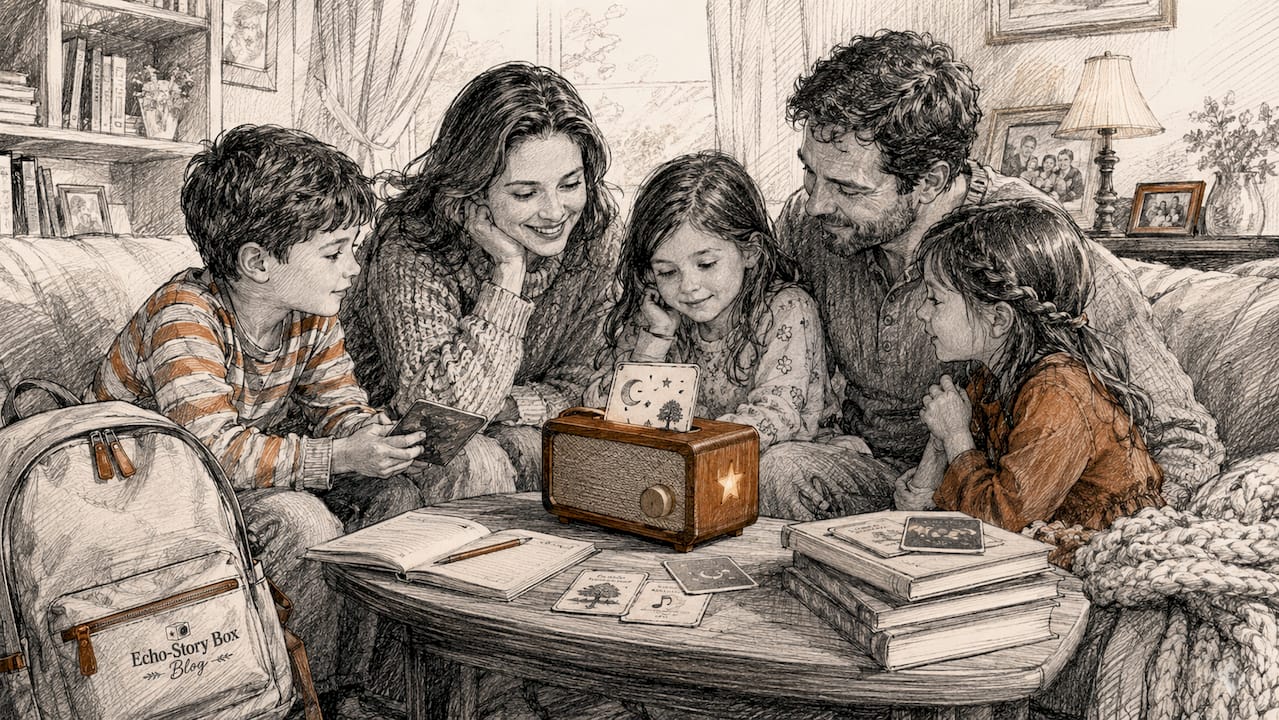
The importance of narrative identity reaches beyond individual development. Families that share stories regularly build stronger emotional bonds and a clearer sense of shared values. Family lore across generations carries those values forward in a way that rules and lectures rarely can.
What are the primary functions of family narrative identity?
Family stories serve four distinct functions, according to research on intergenerational storytelling in diverse emerging adult women. Those functions are expressing familism values, providing perspective on others, modeling relationship positions, and creating shared meaning. Each one anchors individuals within their familial and cultural context.
Here is what each function looks like in practice:
- Expressing familism values. A grandmother's story about sacrificing comfort for her children teaches loyalty and collective responsibility without a single lecture.
- Providing perspective on others. Stories about a difficult uncle or a generous neighbor help children develop empathy and nuance in how they read people.
- Modeling relationship positions. Narratives show children what it means to be a parent, a sibling, or a spouse within this specific family's culture.
- Creating shared meaning. Stories about hardship reframed as growth give the whole family a shared lens for interpreting challenges.
"Narrativity as a social practice means family identity is negotiated in both telling and listening, emphasizing relational dynamics." — Narrative Identity
This concept connects directly to what researchers call Communicated Narrative Sense-Making, or CNSM. CNSM describes the process by which families collectively construct meaning through storytelling. The key insight is that the story does not just reflect reality. It actively shapes how family members interpret and respond to events. A family that tells stories of overcoming difficulty will approach new challenges differently than one that tells stories of victimhood.
How does narrative identity develop across generations?
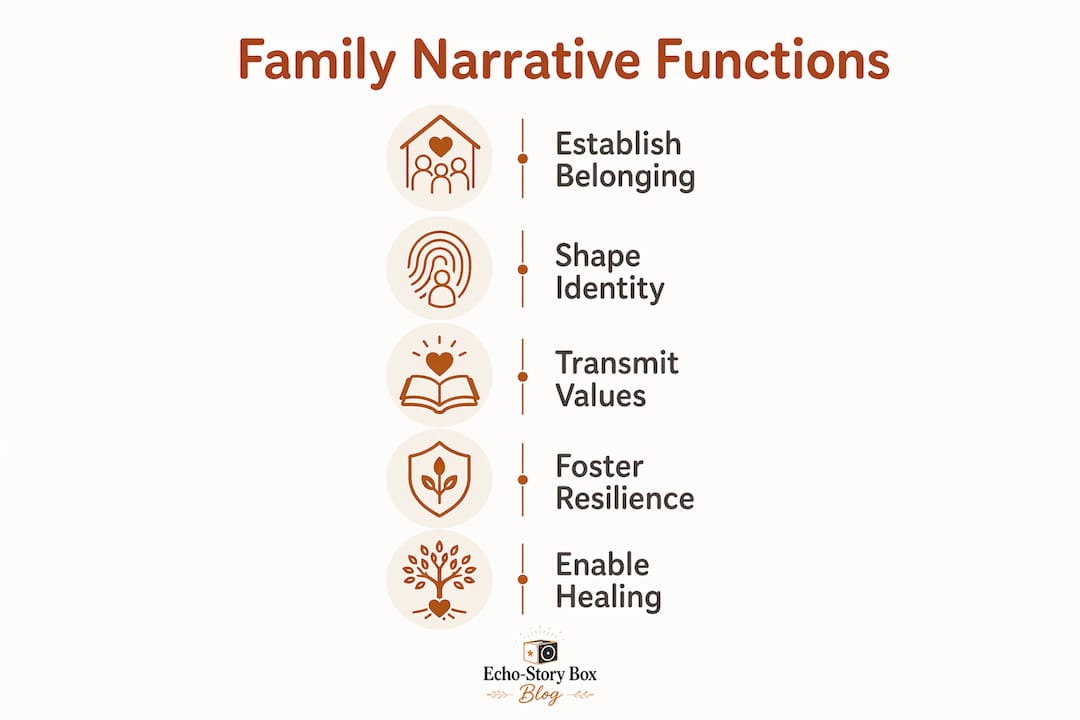
Narrative identity is not fixed at birth or even in childhood. It is dialogical and co-constructed, meaning it develops through ongoing conversation between family members, cultural influences, and the broader social world. McAdams and researcher Guo both emphasize that self-defining memories reveal identity themes and can be rewritten over time for greater resilience.
The developmental progression moves from simple to complex. Young children absorb family stories passively. Adolescents begin to question and reinterpret them. Adults integrate those stories into a personal life narrative that makes sense of their choices and relationships. Older adults often return to those stories to find coherence and meaning.
Pro Tip: Ask your child open-ended questions about family stories you have shared. "What do you think Grandpa felt when that happened?" invites them to co-author the narrative rather than just receive it.
Intergenerational transmission is the mechanism by which family stories travel across time. A parent who shares stories about their own parents passes down not just facts but values, emotional tones, and identity frameworks. Research shows that collaborative storytelling that includes children's questions and contributions supports identity development more positively than authoritative storytelling where adults simply deliver a finished account.
| Storytelling style | Child's role | Identity outcome |
|---|---|---|
| Authoritative | Passive listener | Absorbs fixed narrative |
| Collaborative | Active contributor | Develops flexible, resilient identity |
| Absent or avoided | No role | Identity gaps and confusion |
Private and public narratives also shape identity differently. A family may tell one story in public and hold a more complicated version privately. That gap often produces anxiety. Closing it through honest, shared storytelling builds authenticity and deeper connection.
How can narrative reframing help families heal from trauma?
Narrative reframing is the process of retelling a painful family story in a way that shifts its meaning without erasing its truth. A qualitative study published in the Applied Family Therapy Journal identified three core themes in families that successfully used this approach: emotional reconstruction, relational transformation, and identity and future orientation.
Narrative reframing does not mean forcing a happy ending. The research is clear that premature resolution is one of the most common failures in this process. Healing requires holding space for both grief and gratitude at the same time. A family that lost a parent too early can honor that loss while also building a story of how that loss shaped their strength.
Practical steps families can take to begin reframing:
- Name the story you are currently telling. Write it down or say it aloud. Identify the emotional tone it carries.
- Ask what the story leaves out. Pain-focused narratives often omit moments of support, courage, or growth.
- Invite multiple family members to share their version. Different perspectives add texture and reduce the grip of a single painful account.
- Identify a shift in identity. Move from "we are people this happened to" toward "we are people who responded to this."
- Anchor the new story in specific memories. Vague resilience is less powerful than a concrete moment of someone choosing to keep going.
Cultural and spiritual frameworks play a significant role here. Families with strong faith traditions or cultural stories of endurance often find it easier to locate their personal trauma within a larger narrative of meaning. That larger frame does not minimize the pain. It gives it a place to live without defining the whole family.
Pro Tip: Storytelling and emotional regulation are closely linked. If a family story still produces intense distress, working with a family therapist before attempting reframing on your own is a sound choice. You can also explore storytelling for emotional healing as a starting point.
What are practical ways to nurture a positive family narrative identity?
Families build healthy narrative identities through consistent, intentional storytelling practices. Anchoring children in family history gives them a sense of place and security. Research on parenting literature confirms that celebrating milestones and avoiding negative comparisons supports healthy identity development in children.
Here are the most effective practices:
- Tell stories collaboratively. Invite every family member to contribute, ask questions, and offer their perspective. The process matters more than the accuracy of every detail.
- Celebrate milestones out loud. Name what a child did well and connect it to a family value. "You helped your sister without being asked. That is what our family does."
- Identify recurring themes. Notice what stories your family tells most often. Those themes reveal your shared identity. If they are mostly negative, that is worth addressing directly.
- Integrate cultural and faith values intentionally. Stories that connect children to their heritage give them roots. Those roots support resilience when life gets hard.
- Record stories for the future. A grandparent's voice telling a story about their childhood is irreplaceable. Recording it gives children something to return to for years.
| Approach | Effect on identity |
|---|---|
| Collaborative storytelling | Builds flexible, inclusive self-concept |
| Milestone celebration | Reinforces positive identity anchors |
| Negative comparisons | Erodes self-concept and belonging |
| Static, rigid narratives | Limits growth and adaptation |
One caution: rigid narratives that never evolve can trap families in outdated roles. A child labeled "the difficult one" in early family stories may carry that identity long past the point where it fits. Families that revisit and update their stories give members room to grow. You can find more guidance on using life stories as teachable moments to keep narratives constructive and forward-looking.
Key Takeaways
Family narrative identity is the shared, evolving story that shapes values, relationships, and resilience across generations, built through collaborative storytelling rather than any single telling.
| Point | Details |
|---|---|
| Narrative identity is co-authored | Family stories are shaped by every member, the audience, and cultural context together. |
| Four core functions anchor identity | Stories express values, build empathy, model relationships, and create shared meaning. |
| Collaborative style outperforms authoritative | Inviting children to contribute builds a more flexible and resilient identity than passive listening. |
| Reframing heals without erasing pain | Effective narrative reframing holds grief and growth together rather than forcing resolution. |
| Recording stories preserves identity | Capturing grandparent voices and family memories gives children a lasting identity anchor. |
Why listening matters as much as telling
Most conversations about family storytelling focus on the teller. I think that misses half the picture. The listener shapes the story just as much as the speaker does. When a child asks "Why did Grandma do that?" they are not just seeking information. They are co-authoring the narrative in real time. The questions we allow, the emotions we validate, and the details we choose to include all determine what kind of story gets built.
The families I have seen struggle most with narrative identity are not the ones with painful histories. They are the ones with rigid stories. A story that cannot be questioned cannot grow. When families treat their shared narrative as a fixed document rather than a living conversation, members start to feel like characters rather than authors. That is when private stories diverge sharply from public ones, and that gap produces real anxiety.
The gap between private and public narratives is one of the most underappreciated sources of family tension. Therapy and family coaching can help close that gap. But so can something as simple as a regular family conversation where everyone gets to say what they actually remember and feel. Complexity is not a threat to family identity. Simplification is.
— Bob
How Echostory-box helps families build their story together
Families understand the value of shared stories. The harder part is creating the space and the habit to tell them. Echostory-box is built for exactly that. It is a screen-free audio storytelling tool that lets children tap a story card and listen to original adventures, grandparent recordings, and personalized family narratives without ads, notifications, or distractions.
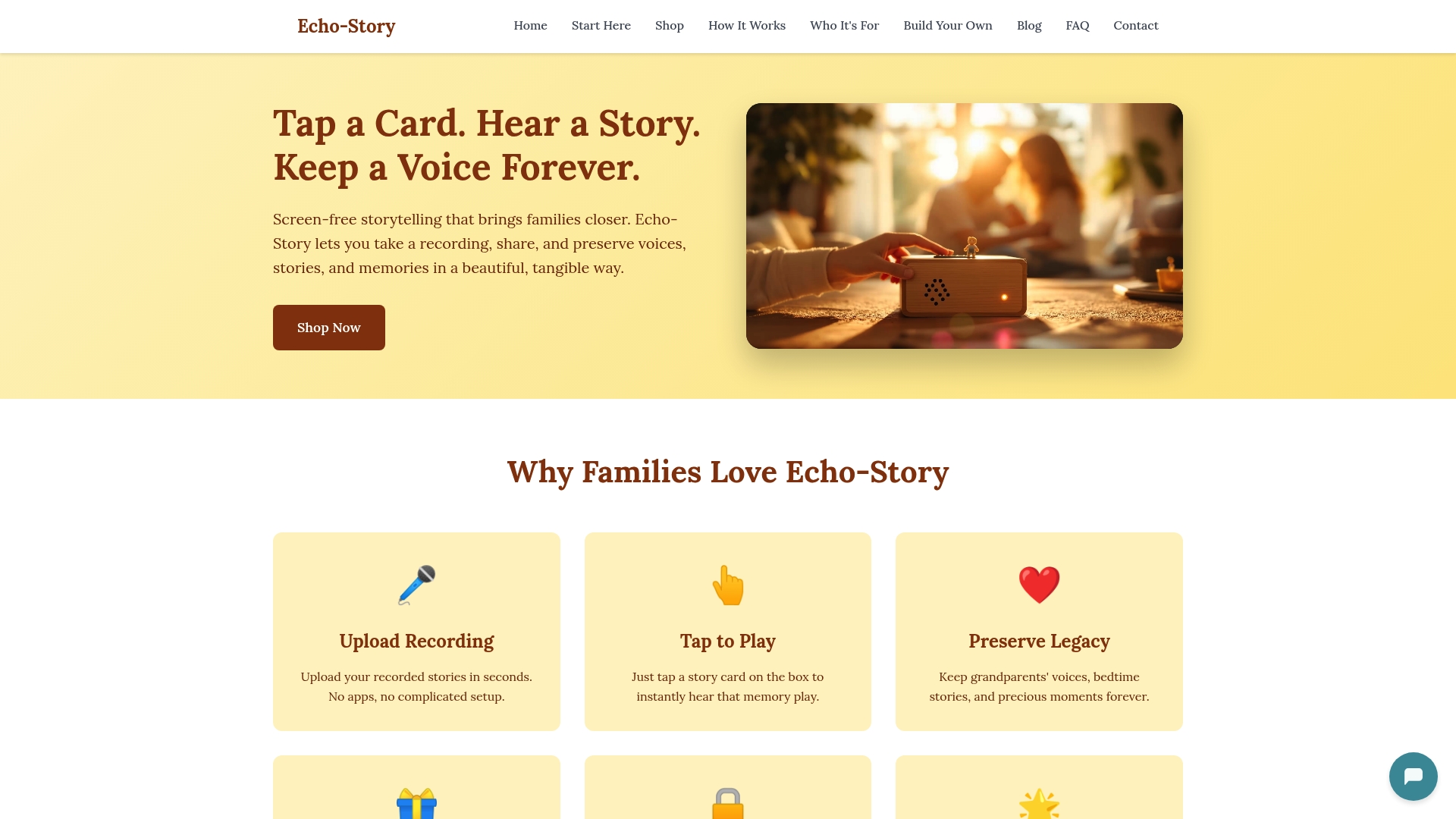
Parents and grandparents can record their own voices directly onto story cards, creating keepsakes that children can replay for years. That kind of screen-free family storytelling turns narrative identity from a concept into a daily practice. Whether you want to preserve a grandparent's voice, share a faith story, or simply give your child a calm, imaginative listening experience, Echostory-box gives your family a simple way to make it happen.
FAQ
What is narrative identity in simple terms?
Narrative identity is the personal and shared life story that answers "Who are you?" It integrates past experiences, present relationships, and future hopes into a coherent sense of self.
How does family storytelling shape a child's identity?
Family stories give children their first framework for understanding who they are and where they belong. Research shows that collaborative storytelling, where children contribute and ask questions, builds a more resilient identity than passive listening.
Can family stories be changed or rewritten?
Yes. Narrative identity is not static. Families can reframe painful stories to shift from a victim identity to a survivor identity, integrating grief with gratitude rather than erasing the difficulty.
What is the difference between private and public family narratives?
A public narrative is the story a family tells the world. A private narrative is the more complex version held internally. When these two diverge significantly, anxiety and disconnection often follow. Aligning them through honest storytelling builds authenticity.
How can grandparents contribute to family narrative identity?
Grandparents carry stories that no one else holds. Their accounts of family history, cultural roots, and personal hardship give grandchildren a sense of depth and continuity. Recording those voices preserves that identity for future generations.