
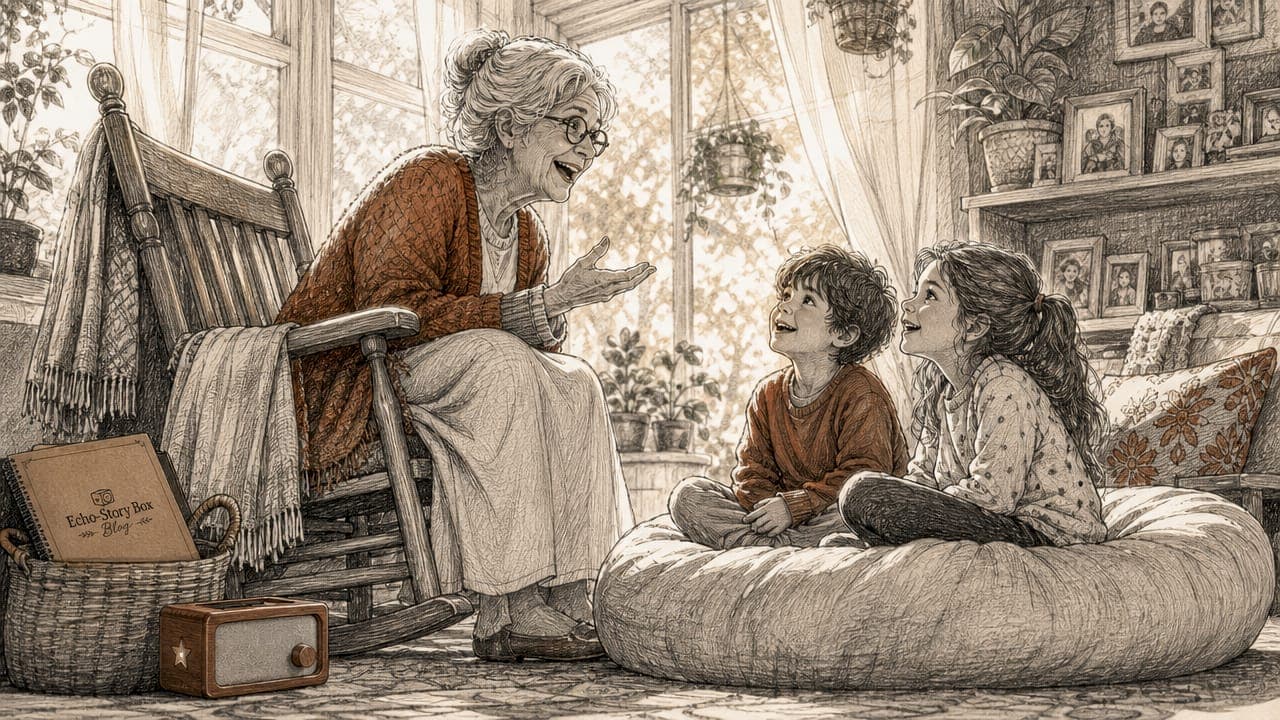
The role of stories in grandparent identity is the active process through which grandparents build their sense of self, transmit values, and deepen family bonds by sharing emotionally rich, culturally grounded narratives. Psychologists call this process autobiographical narrative integration, the way people organize life experiences into coherent stories that define who they are. Research from Frontiers in Developmental Psychology and the University of Arizona confirms that grandparents are uniquely positioned to do this work, drawing on vivid, socially focused memories that grow richer with age. The stories you tell your grandchildren are not just entertainment. They are the living record of your identity.
How storytelling shapes grandparent identity through memory and values
Family narratives function as meaning-making frameworks that organize experience, convey values, and transmit identity across generations. This is the core mechanism behind grandparent identity through stories. A story about surviving a hard winter is not just a weather report from the past. It teaches resilience, resourcefulness, and what your family stands for.
A 2026 MDPI review shows that narrative coherence, specifically the emphasis on meaning and lessons rather than bare facts, strengthens autobiographical memory and grandparent identity. This means the how and why of a story matter far more than getting every detail exactly right. When you explain what a moment meant to you, you give your grandchild something they can carry forward.
Cultural and ethnic variations shape how grandparents tell stories, too. Frontiers research highlights how grandmothers across diverse ethnic groups serve as emotional mentors and cultural transmitters through storytelling. A grandmother in a Mexican American family may weave stories around faith and sacrifice. A grandmother in a Korean American family may center stories on perseverance and collective honor. Both are doing the same essential work: passing identity through narrative.
Here are the kinds of values most commonly transmitted through grandparent stories:
- Resilience and perseverance through accounts of hardship overcome
- Moral guidance through stories of choices made and lessons learned
- Cultural pride through descriptions of traditions, food, language, and community
- Relational wisdom through stories about marriage, friendship, and forgiveness
- Faith and purpose through narratives grounded in spiritual experience
Pro Tip: Lead your stories with the lesson or feeling first, then fill in the details. Saying "I want to tell you about the time I learned what real courage looks like" draws a grandchild in far more effectively than starting with dates and places.
Does retelling stories change how they feel over time?
Yes, and that change is a feature, not a flaw. A 2026 Nature Communications Psychology study found that repeated event narrations transform internal experiences and preserve emotional meaning, even when specific details shift. Retelling a story does not dilute it. It reshapes it in ways that keep it alive and personally relevant.
This has real implications for grandparents who worry about fading memory. The emotional core of a story, the feeling of pride, the sense of loss, the warmth of belonging, survives even when names, dates, or sequences blur. Your grandchildren are not fact-checking your autobiography. They are absorbing your emotional truth.
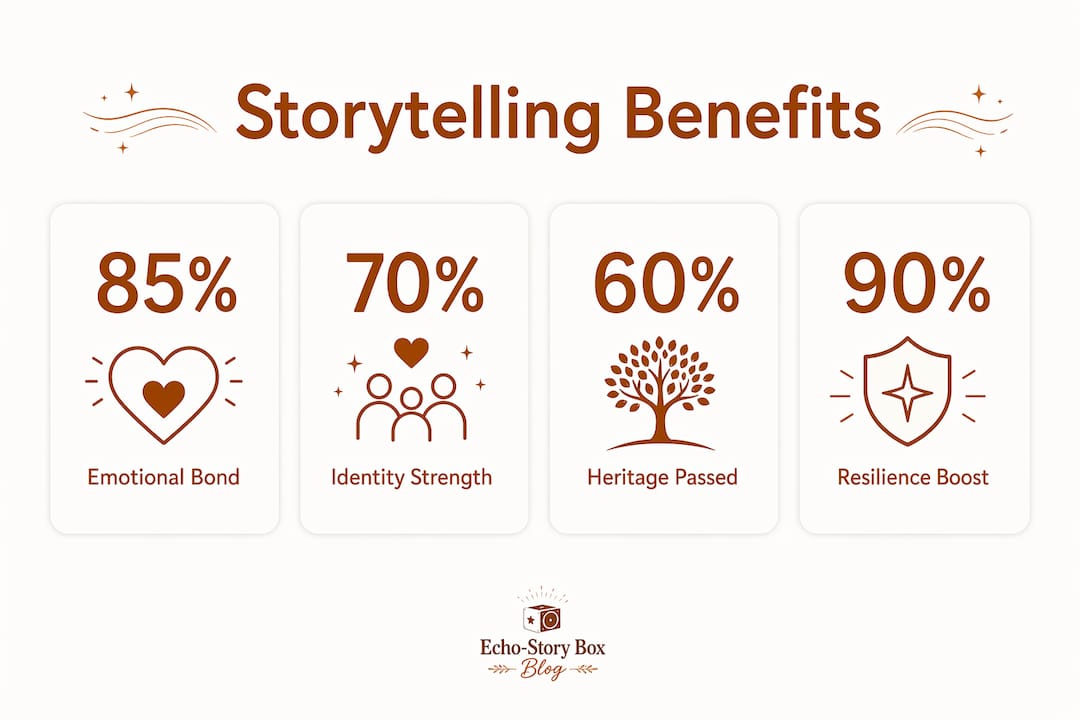
The social context of storytelling also matters. The MDPI 2026 review emphasizes that empathic, psychologically safe contexts support narrative reconstruction and help grandparents update their self-narratives over time. In plain terms: when a grandchild listens with genuine curiosity, it helps you tell a better story and feel more connected to your own life.
Here is how repeated storytelling deepens identity and connection over time:
- First telling: The story is raw and detailed, close to the original memory.
- Second telling: You notice which parts your grandchild responds to and naturally emphasize those.
- Third telling: The story gains a cleaner shape, with a clearer emotional arc and stronger lesson.
- Later tellings: The story becomes a shared family reference point, something both you and your grandchild can recall together.
- Grandchild retelling: Your grandchild begins to tell the story themselves, carrying your identity forward in their own voice.
This progression is what researchers mean when they describe family narratives as anchors that build empathy, shared values, and emotional resilience within family systems.
When and where to share stories with grandchildren
The best storytelling moments are rarely planned. University of Arizona research finds that grandparents naturally recall vivid, socially focused memories during everyday life, which means the richest stories surface in ordinary moments, not formal sit-downs. A walk to the park, a shared meal, a drive to the grocery store: these are the settings where grandparent storytelling works best.
Low-pressure contexts remove the performance anxiety that can make storytelling feel forced. When you are doing something side by side with a grandchild, a story can begin naturally without anyone feeling put on the spot. The grandchild is more relaxed, more receptive, and more likely to ask questions that deepen the exchange. You can find more practical approaches in this guide on sharing life lessons with grandchildren.
Structuring your stories well makes a real difference. Stories built around a clear theme, a specific memory, and a genuine emotion land more powerfully than general recollections. Think of a single afternoon rather than "my whole childhood." Think of one conversation rather than "what my mother always said."
Here are storytelling contexts that work especially well for grandparents:
- Meals together: Food memories are vivid and sensory, making them natural story starters.
- Looking at old photos: Images unlock specific memories and give grandchildren a visual anchor.
- Doing a task together: Gardening, baking, or building something creates a calm, side-by-side atmosphere.
- Bedtime routines: The quiet before sleep is one of the most receptive times for a child's imagination.
- Holiday preparations: Traditions carry built-in story prompts about why your family does things a certain way.
Pro Tip: Ask your grandchild a question in the middle of your story, such as "What do you think I did next?" This turns a monologue into a conversation and keeps them genuinely engaged.
How storytelling builds family cohesion, heritage, and belonging
Family folklore and narratives are major resources for unified family identity, promoting cohesion and belonging even across geographic distance. This matters especially for families spread across cities, states, or countries. A grandchild who grows up hearing your stories feels connected to you even when you are not in the same room.
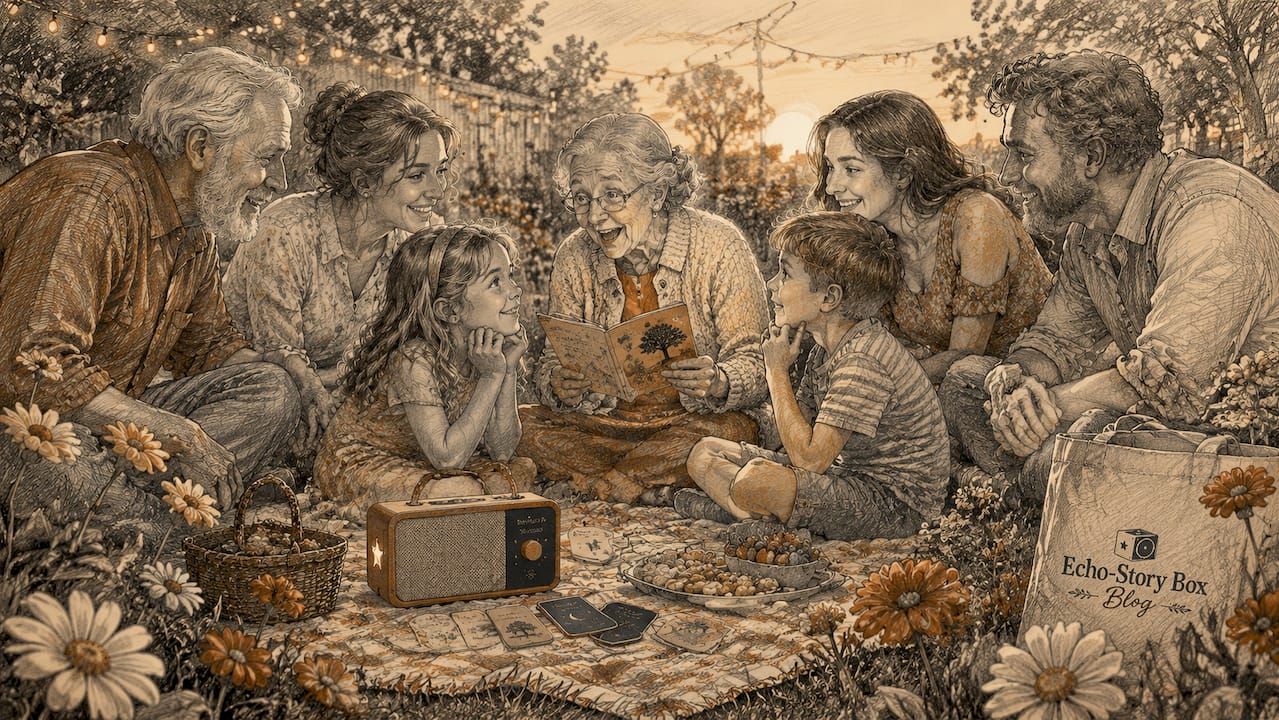
The psychological benefits for grandchildren are well documented. Children who know their family's stories show stronger senses of belonging, greater emotional resilience, and better ability to handle stress. They have a framework for understanding who they are and where they come from. That framework comes directly from you. Learning to preserve family stories for grandkids is one of the most lasting gifts a grandparent can give.
The table below shows how storytelling affects different dimensions of family life:
| Dimension | Without storytelling | With active grandparent storytelling |
|---|---|---|
| Cultural heritage | Fades within one generation | Preserved through specific, lived examples |
| Family identity | Vague or abstract | Grounded in real people and real events |
| Grandchild resilience | Built from peer and media influences | Reinforced by family history and shared values |
| Grandparent identity | Defined by current role only | Integrated across a full life narrative |
| Geographic connection | Weakened by distance | Maintained through shared stories and memory |
Cultural stories in grandparenthood carry a particular weight. Grandparents who share stories rooted in their ethnic or racial heritage give grandchildren tools for navigating identity in a complex world. A story about your grandmother's immigration, your family's faith practice, or the neighborhood where you grew up does more than entertain. It tells a grandchild: this is who we are, and you belong here.
Why I believe storytelling is the most underrated part of being a grandparent
Most conversations about grandparenting focus on presence: showing up, being available, spending time. Those things matter. But after years of watching families use storytelling to build real, lasting connection, I am convinced that the stories grandparents tell are the most durable part of their legacy.
Here is what I have observed: grandparents who worry most about their fading memory are often the ones who tell the most powerful stories. That is because they have stopped trying to be accurate and started trying to be honest. They lead with feeling. They say "I don't remember exactly when, but I remember how it felt." That kind of storytelling lands harder than a perfectly recalled timeline.
The grandparents who struggle are usually the ones waiting for the right moment, the right setting, or the right story. There is no right story. There is only the one you tell today. A reflection journal, like the Prayer Journal for Grandparents by Julie and Jeffrey McDonnell, can help you surface stories you did not know you still had. Writing them down first often makes them easier to speak aloud.
Your identity as a grandparent is not just about what you do. It is about what you pass on. And stories are the most direct, most human way to do that.
— Bob
How Echostory-box helps grandparents share and preserve their stories
Echostory-box was built for exactly this kind of connection. The screen-free storytelling platform lets grandparents record their own voice, their own stories, and their own messages directly onto story cards that grandchildren can replay at home, anytime, without a screen in sight.

A grandchild taps a card and hears your voice telling the story of the summer you spent at your grandmother's farm, or the lesson your father taught you about honesty. That moment is preserved. It can be replayed at bedtime, during a quiet afternoon, or years from now when you are no longer there to tell it in person. Echostory-box makes the importance of storytelling for grandparents something you can hold in your hands and pass down through generations.
Key takeaways
Stories shape grandparent identity by organizing lived experience into emotionally coherent narratives that transmit values, preserve culture, and build lasting bonds with grandchildren.
| Point | Details |
|---|---|
| Stories build identity, not just memory | Grandparents form and reinforce their sense of self through repeated, emotionally grounded storytelling. |
| Emotional truth outlasts factual detail | Changing story details do not weaken a narrative; the emotional core preserves its meaning and impact. |
| Everyday moments are the best settings | Walks, meals, and shared tasks create the low-pressure contexts where grandparent stories land most naturally. |
| Cultural stories strengthen belonging | Narratives rooted in ethnic and family heritage give grandchildren resilience and a clear sense of identity. |
| Preservation extends the legacy | Recording and replaying grandparent stories keeps family identity alive across distance and generations. |
FAQ
What is the role of stories in grandparent identity?
Stories are the primary tool through which grandparents integrate their life experiences into a coherent sense of self and pass that identity to grandchildren. Research from Frontiers in Developmental Psychology confirms that family narratives function as meaning-making frameworks, not just accounts of events.
Does it matter if a grandparent's story details change over time?
No. A 2026 Nature Communications Psychology study shows that repeated narrations transform internal experiences while preserving emotional meaning. The feeling and lesson of a story remain intact even when specific details shift.
When is the best time for grandparents to share stories?
Everyday, low-pressure settings work best. University of Arizona research finds that older adults naturally recall vivid, emotionally rich memories during daily activities like meals, walks, and shared tasks.
How do grandparent stories benefit grandchildren?
Children who grow up hearing family stories show stronger belonging, greater emotional resilience, and clearer personal identity. Psychology Today research describes family narratives as anchors that build empathy and shared values across generations.
How can grandparents preserve their stories for the future?
Recording stories in audio format, writing them in a journal, or using a platform like Echostory-box allows grandparents to create lasting keepsakes that grandchildren can revisit long after the original telling.