

You already have something no parenting book can replicate. You have lived experience, real stories, and a love for your grandchildren that shapes who they become. Yet many grandparents find themselves unsure of how grandparents share life lessons with kids in ways that actually stick. The challenge is not having wisdom to offer. The challenge is finding the right moment, the right method, and the right tone so that wisdom lands gently instead of feeling like a lecture. This guide gives you practical, tested ways to do exactly that.
Table of Contents
- Key Takeaways
- How grandparents share life lessons with kids that truly last
- What to prepare before you begin
- Techniques that make lessons memorable
- Common mistakes to avoid
- Knowing when your lessons are taking root
- My honest take on this
- A simple tool to help your stories live on
- FAQ
Key Takeaways
| Point | Details |
|---|---|
| Storytelling beats lecturing | Sharing personal stories with feelings and moral moments transfers values far more effectively than giving direct advice. |
| Follow the child's lead | Letting grandchildren guide activities creates natural openings for lessons without pressure or forced teaching. |
| Consistency builds connection | Regular contact, including video calls and audio messages, keeps relationships warm and lessons alive over time. |
| Respect the parent's role | Supporting parents rather than overriding them keeps family dynamics healthy and your influence lasting. |
| Record your stories | Capturing your voice and memories creates keepsakes grandchildren can return to for years. |
How grandparents share life lessons with kids that truly last
Intergenerational wisdom transfer is the formal term for what grandparents have always done naturally. It simply means passing knowledge, values, and lived experience from one generation to the next. And research confirms it works. Grandmothers use narratives that combine emotional, moral, and cultural elements to transmit values effectively across generations. The stories you tell are not just entertainment. They are shaping how your grandchildren understand the world.
Still, the method matters as much as the message. A heartfelt story told at the right moment can stay with a child for decades. The same lesson delivered as a speech on a car ride home rarely survives the week.
What to prepare before you begin
Being ready makes every conversation go more smoothly. You do not need a curriculum or a lesson plan. But a little preparation helps you show up with confidence and calm.
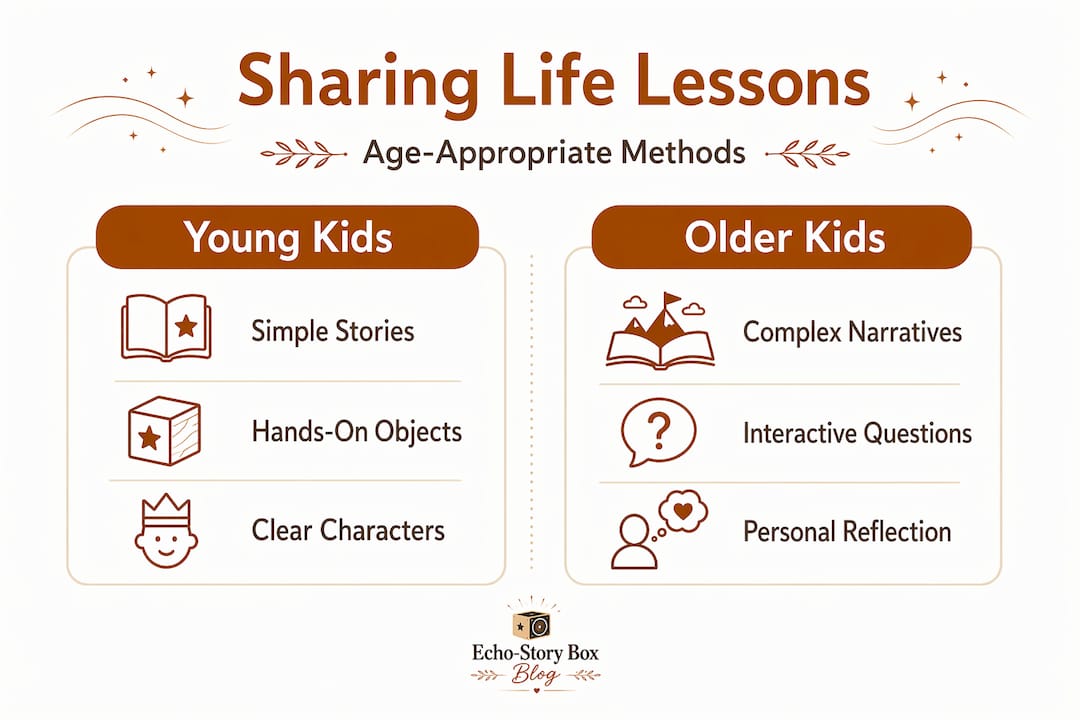
Know where the child is developmentally. A five-year-old needs simple, short stories with clear characters. A twelve-year-old can handle nuance, moral complexity, and real family history. Matching your approach to the child's stage makes your stories feel relevant rather than confusing.
Gather your materials. Old photographs, letters, small keepsakes, or a short handwritten note can all anchor a story in something tangible. Children respond strongly to physical objects. Holding something that belonged to a great-grandparent makes history feel real.
Here is a simple way to organize what you already have:
| Material type | Example | Best use |
|---|---|---|
| Photographs | Old family photos | Spark curiosity about relatives and history |
| Personal objects | A worn recipe card, a medal | Connect children to family identity |
| Written stories | Letters or a simple journal | Share values and life moments in your own words |
| Audio recordings | Voice messages or recorded stories | Allow children to revisit your voice anytime |
Think about timing and setting. Lessons shared during calm, unhurried moments land much better than those squeezed into a busy schedule. A quiet evening, a slow walk, or time in the kitchen together creates the right atmosphere naturally.
Grandparents today communicate more with grandchildren than prior generations, thanks to technology. Video calls, voice messages, and audio stories mean you do not need to be in the same room to share something meaningful.
Pro Tip: Write down three or four stories from your own life before your next visit. You do not need to read them aloud. Just having them in mind means you are ready when the moment appears.
Techniques that make lessons memorable
The most effective grandparent teaching techniques have one thing in common. They feel like connection, not instruction.
-
Tell stories that include feelings. Embedding lessons in stories that include what happened, what you felt, and what you learned afterward helps children absorb lessons emotionally, not just intellectually. "I was scared, but I decided to try anyway" is far more memorable than "always be brave."
-
Use visual aids and hands-on activities. Interactive storytelling with visual aids raised children's cultural recognition scores from 55% to 82.74% in one study. Showing a map where you grew up, cooking a family recipe together, or looking at photos while you talk all deepen engagement significantly.
-
Follow the child's curiosity. One psychologist and grandmother of six advises grandparents to follow the child's interests during outings rather than steering every moment toward a lesson. If a grandchild stops to look at something, that is the lesson. You can reflect on the experience together afterward.
-
Use modern tools for distance sharing. Video calls, voice notes, and recorded audio stories let you maintain regular, meaningful contact. Quality contact through digital communication benefits both grandparents and grandchildren by keeping lesson-sharing alive between visits.
-
Revisit stories more than once. Repeated storytelling cycles with interactive elements deepen children's recognition of values over time. You do not need to worry about telling the same story twice. That repetition is part of how lessons take root.
Here is a quick comparison of two common approaches:
| Approach | What it feels like to the child | Long-term impact |
|---|---|---|
| Lecture or speech | Obligation, mild resistance | Often forgotten quickly |
| Story with feeling and reflection | Conversation, curiosity, warmth | More likely to be remembered and repeated |
Pro Tip: After an outing or shared activity, try asking "What was your favorite part?" before offering any lesson. Their answer often opens the door naturally.
You can read more about why stories teach better than lectures if you want to explore the research behind this approach.
Common mistakes to avoid
Even with the best intentions, a few patterns quietly undermine the impact of what you share.
-
Turning lessons into speeches. Mandatory speeches about values almost always backfire. When a child senses a lecture coming, they mentally check out. Keep it conversational.
-
Overriding the parent's role. Effective grandparenting supports the parent's role rather than replacing it. When you and the parents are aligned, your influence is much stronger. When there is conflict, children notice and feel caught in the middle.
-
Not listening enough. Some of the most powerful moments happen when you ask a question and then simply wait. Children share a great deal when they feel heard rather than guided.
-
Managing screens without a plan. Intergenerational co-parenting can influence children's screen habits in ways that create friction with parents. Agree on screen routines with the parents beforehand so everyone is consistent.
-
Letting guilt or urgency push too hard. You do not need to pass down every lesson in one visit. Relationships built on warmth and patience carry wisdom naturally over time.
"The goal is not to be the most informative grandparent in the room. The goal is to be the most connected one." This single shift in thinking changes everything about how your lessons land.
Knowing when your lessons are taking root
You will not always see immediate results, and that is perfectly normal. Wisdom from the importance of grandparents in childhood often shows up years later, when a grandchild quotes you back to a friend or makes a decision that reflects something you modeled.
Here are some gentle signals that your connection is deepening:
- Your grandchild asks follow-up questions about something you shared weeks earlier
- They retell your stories to siblings or parents
- They bring up a value you discussed when facing a real situation
- They initiate conversations rather than waiting for you to start them
Strong grandparent-grandchild relationships have been shown to buffer the negative effects of family stress on adolescent mental health. That alone speaks to the quiet, lasting power of what you are building together.
Keep adapting as your grandchild grows. What worked at age six may need to shift by age ten. Stay curious about who they are becoming, and your methods will naturally grow with them. Maintaining regular contact, whether in person, by phone, or through recorded stories, keeps the relationship warm and the lessons accessible.
My honest take on this
I have watched grandparents wrestle with this more than almost any other parenting-adjacent challenge. The frustration is real. You carry decades of hard-won experience, and it can feel like none of it is landing. But here is what I have come to believe, having seen this from many angles.
The grandparents who have the most lasting influence are rarely the ones with the best stories. They are the ones who show up consistently, listen generously, and resist the urge to teach at every moment. The lessons slip in sideways, tucked into a recipe, a walk, a bedtime story, a quiet car ride where nobody is trying to say anything important.
What surprises most grandparents is how much their grandchildren are watching even when no lesson is being offered. The way you respond to frustration, the way you talk about neighbors, the way you approach a hard day. Those moments are teaching too.
One thing I recommend without hesitation is recording your voice. Not for posterity in some abstract sense, but because children return to familiar voices in ways that are deeply comforting. A recorded story from you, played on a quiet evening, carries warmth in a way that no screen can replicate. You can explore how recording grandparent wisdom makes that kind of lasting impact possible.
Embrace the imperfect moments. The stumbled story, the tangent that went nowhere, the afternoon where you just watched birds together without saying much. Those count. They count a lot.
— Bob
A simple tool to help your stories live on
If you are looking for a gentle, practical way to bring your stories to your grandchildren, Echostory-box was made for exactly this. It is a screen-free audio player where children tap a story card and your voice begins. No scrolling, no ads, no complicated menus.

You can record bedtime stories, life lessons, family memories, or simple encouragement messages. Grandchildren can return to those recordings anytime, whether you are across town or across the country. It is one of the simplest ways to keep your voice present in their everyday lives. Visit the Echostory-box shop to explore storytelling kits designed for families like yours, or learn more about how it works before you decide.
FAQ
How do grandparents share life lessons without lecturing?
The most effective approach is embedding lessons in personal stories that include feelings and real moments, rather than offering direct advice. Following the child's curiosity and reflecting together afterward keeps things feeling like a conversation, not a lesson.
What are the best grandparent teaching techniques for young children?
For younger children, short stories with simple characters, hands-on activities, and familiar objects work best. Interactive storytelling with visual aids has been shown to significantly improve children's engagement and recognition of values.
Why are grandparents important in a child's childhood?
Strong grandparent-grandchild relationships provide emotional security and can buffer the effects of family stress on a child's mental health. Grandparents offer a unique combination of unconditional love, lived experience, and cultural knowledge that parents alone cannot replicate.
How can grandparents share stories with grandchildren who live far away?
Video calls, voice messages, and recorded audio stories are all effective ways to share life lessons and family narratives across distance. Research shows that regular digital contact benefits both grandparents and grandchildren by maintaining warm, ongoing connection.
How do I know if my grandchild is absorbing the lessons I share?
Watch for follow-up questions, retelling of your stories, or decisions that reflect something you discussed. Children often show the impact of life lessons from grandparents weeks or months later, not immediately after a conversation.