
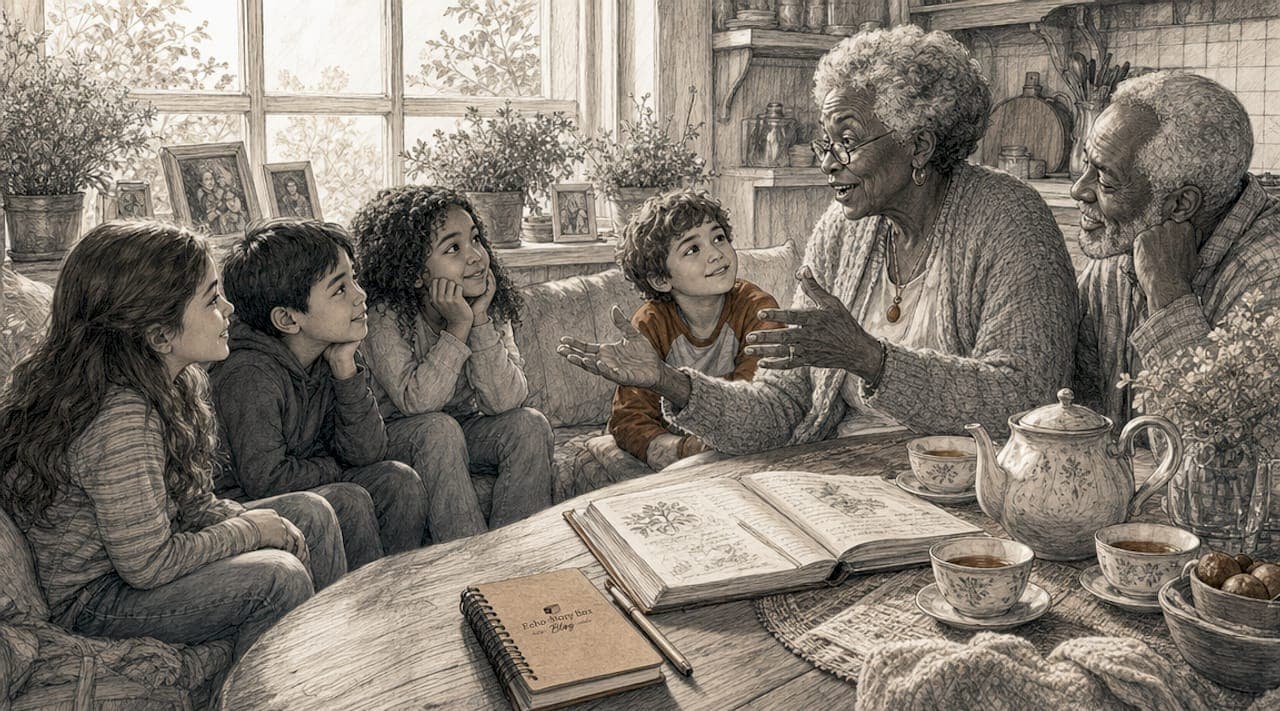
Family lore is the storytelling tradition that conveys values, identity, and resilience across generations, fundamentally shaping how future family members understand themselves and navigate life. Psychologists now call this "narrative identity," the process by which people build a coherent sense of self from the stories they inherit and retell. Research by Robyn Fivush, Marshall Duke, and colleagues at Emory University confirms that children who know their family's stories show measurably better mental health, stronger self-esteem, and greater emotional resilience. Understanding why family lore shapes future generations is not just an interesting question. It is one of the most practical things a parent or grandparent can act on today.
Why family lore shapes future generations through identity and resilience
The psychological case for family storytelling is clear and well-documented. Adolescents who know more intergenerational family stories show better self-esteem, stronger identity exploration, and lower rates of anxiety and depression. That finding means the stories you share at the dinner table or on a long drive are doing real psychological work, not just filling time.
The mechanism behind this is what researchers call narrative identity. When children hear how their grandmother survived a difficult move, or how their grandfather rebuilt after losing a job, they absorb a mental model for handling adversity. They learn that hard things happen and that people in their family get through them. That pattern becomes part of how they see themselves.
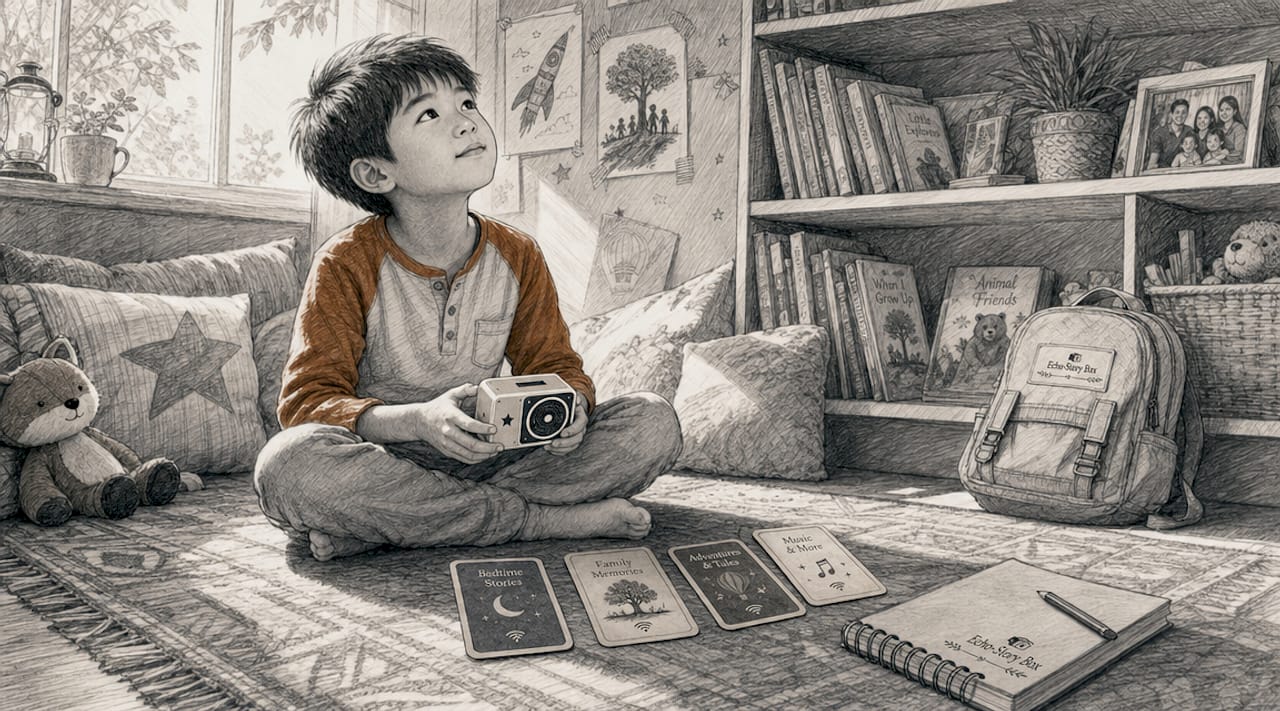
Autobiographical memory is plastic and socially embedded, meaning the stories we hear about our family literally reshape how we understand our own place in the world. A 2026 MDPI integrative review found that empathic narrative retelling helps update self-identity and psychological stability. This is why the way a story is told matters as much as the story itself.
The impact of family stories on emotional regulation starts early. Parents' elaborative reminiscing style, which uses open-ended questions and emotional reflection during storytelling, supports children's emotional development from toddlerhood onward. A parent who asks "How do you think Grandpa felt when that happened?" is teaching emotional literacy alongside family history.
Key psychological benefits linked to family storytelling include:
- Stronger self-esteem rooted in a sense of belonging to something larger than oneself
- Lower anxiety and depression in adolescents with high family story knowledge
- Better emotional regulation developed through elaborative parent-child conversations
- Greater resilience when children understand that their family has faced and overcome difficulty
- Clearer identity built from a coherent narrative about where they come from
Pro Tip: Ask your child one open-ended question about a family story each week, such as "What do you think it was like for Grandma growing up?" This small habit builds the elaborative reminiscing style that research links to emotional growth.
How the tone and framing of family stories shape transmitted values
Not all family stories work the same way. Family narratives act as meaning-making frameworks that convey values and identity across cultures, not just factual histories. A story about your great-uncle's immigration is not just a record of events. It is a lesson about courage, sacrifice, and what your family stands for.
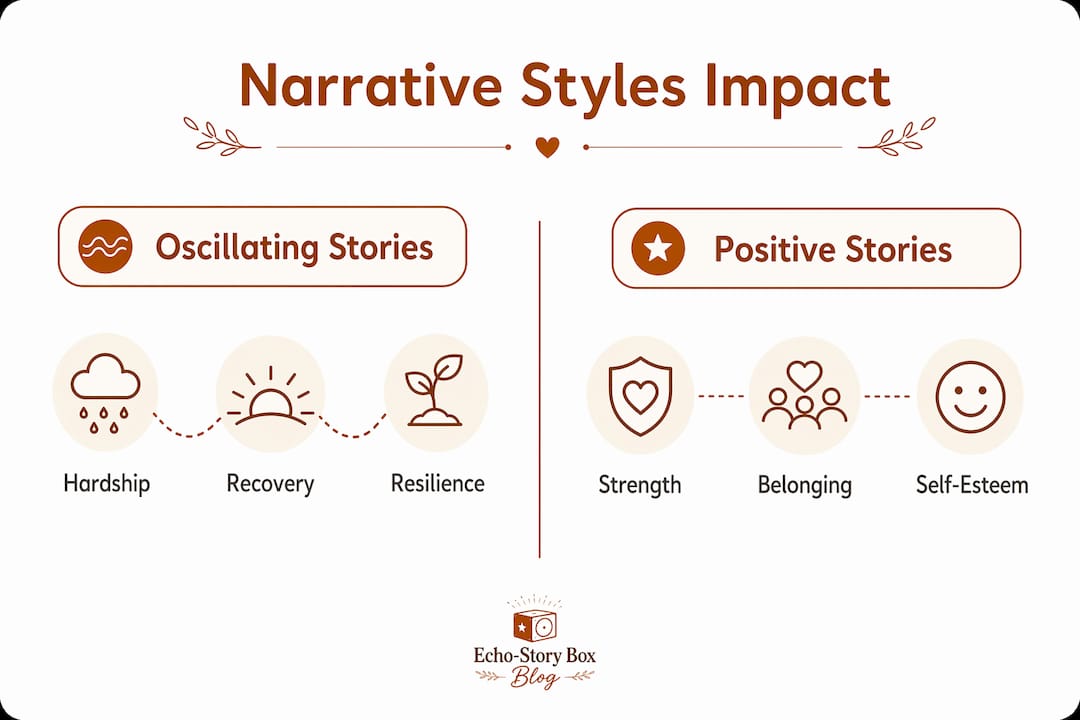
The tone and emotional content of a story shape what children actually absorb. Researchers describe "oscillating narratives" as stories that move between hardship and recovery, struggle and strength. These are the most powerful for building resilience because they model the full arc of human experience rather than a sanitized highlight reel. A story that only celebrates success teaches children that difficulty is shameful. A story that honestly includes struggle and recovery teaches them that difficulty is survivable.
Cultural framing also plays a significant role. Grandmothers' narratives convey cultural values and emotion socialization, shaping grandchildren's emotional competence and identity in ways that parents alone often cannot. Grandparents carry a longer view of family history and a different emotional register. Their stories connect children to a timeline that stretches well beyond their own memory.
The table below shows how different narrative styles typically affect children's identity and resilience outcomes.
| Narrative style | Typical outcome for children |
|---|---|
| Oscillating (hardship and recovery) | Stronger resilience and realistic coping skills |
| Celebratory only (successes highlighted) | Higher self-esteem but lower tolerance for failure |
| Avoidant (difficulties glossed over) | Reduced emotional vocabulary and weaker coping |
| Empathic and conversational | Deeper identity coherence and emotional regulation |
| Didactic or lecture-style | Lower engagement and weaker narrative retention |
Pro Tip: When sharing a difficult family story, include what the person felt and how they moved forward. That emotional arc is what children remember and draw on when they face their own hard moments.
How families can actively preserve and share lore across generations
Family storytelling infrastructure has declined significantly since the 1950s, largely because geographic mobility has separated extended families. Cousins no longer grow up down the street. Grandparents may live across the country. Intentional preservation is now the only reliable way to pass stories down.
The good news is that preservation does not require expensive tools or formal projects. It requires consistency and a conversational approach. Stories elicited in conversational styles with empathic dialogue produce stronger identity outcomes than stories delivered as lectures. That means a relaxed conversation over dinner is more effective than a formal "family history presentation."
Timing matters too. Children between ages 4 and 10 are in a prime window for absorbing family stories. They are old enough to follow a narrative and young enough to be genuinely captivated by it. Stories shared during calm, connected moments, like bedtime, car rides, or cooking together, tend to stick far better than those shared during structured activities.
You can also explore intergenerational storytelling traditions from other cultures for inspiration. Many families around the world have developed rich practices for passing stories down, and borrowing from those traditions can give your own family a meaningful framework.
Practical ways to preserve and share family lore:
- Record grandparent voices telling stories, even on a phone, so children can replay them for years
- Create story cards tied to specific family memories that children can revisit independently
- Use mealtimes as a regular space for one family story per week
- Write short letters from parents or grandparents describing a formative life moment
- Build a simple family timeline with photos and a one-sentence story attached to each event
- Let children ask questions rather than delivering stories as monologues
Pro Tip: Recording a grandparent's voice telling a bedtime story or life lesson is one of the most lasting gifts a family can create. Children who grow up hearing those recordings carry that voice with them long after the grandparent is gone.
Common myths about family lore that reduce its impact
The most common mistake families make is treating family history as a collection of facts rather than a living source of meaning. Dates, names, and places are useful, but focusing on family lore as meaning-making rather than just factual content leads to more durable intergenerational psychological effects. A child who knows their great-grandmother's birth year learns a fact. A child who knows she walked three miles to school every day and still loved learning carries a value.
Here are the most common myths that limit the impact of family storytelling:
-
"Children are too young to understand difficult stories." Research by Marin, Bohanek, and Fivush shows that sharing difficult stories honestly helps children develop resilience and emotional maturity. Age-appropriate honesty builds coping skills. Avoidance builds fragility.
-
"Stories only matter if they are dramatic or historically significant." Everyday stories about how your family handled a move, a job change, or a disagreement carry just as much identity value as major historical events. Children learn from the texture of ordinary life.
-
"One telling is enough." Stories need to be revisited. Children absorb different layers of meaning at different ages. A story told at age six lands differently at age twelve. Repetition is not redundancy. It is depth.
-
"The facts have to be perfectly accurate." Narrative identity research consistently shows that emotional truth matters more than factual precision. The feeling of the story, what it meant to the people in it, is what shapes identity.
-
"Technology and screens are the best way to preserve family history." Digital archives are useful, but passive screen consumption does not build the same connection as a shared listening experience or a face-to-face conversation. The medium shapes the message.
Key takeaways
Family lore shapes future generations because it gives children a narrative identity rooted in belonging, resilience, and values that no classroom or screen can replicate.
| Point | Details |
|---|---|
| Narrative identity is the core mechanism | Children build self-concept from family stories, not just facts or formal education. |
| Tone and framing determine what children absorb | Oscillating stories of hardship and recovery build stronger resilience than celebratory-only narratives. |
| Grandparents are irreplaceable storytellers | Grandmothers' narratives specifically transmit cultural values and emotional competence across generations. |
| Conversational style outperforms lectures | Stories shared through open-ended dialogue produce deeper identity outcomes than formal presentations. |
| Intentional preservation is now necessary | Geographic mobility has reduced ambient storytelling, making active recording and sharing a family responsibility. |
Why I believe family stories are the most underused parenting tool
I have spent years reading the research on family storytelling and watching families either lean into it or let it slip away. The science is consistent and the conclusion is simple: the families who tell their stories raise children who know who they are. That is not a small thing. It is the foundation of mental health, resilience, and belonging.
What surprises me most is how little effort it actually takes. You do not need a formal project or a genealogy subscription. You need fifteen minutes and a willingness to be honest. The psychological benefits of family storytelling depend on emotionally safe, empathically responsive contexts. That means a calm conversation where a child feels free to ask questions is more powerful than any documentary or scrapbook.
I also think we underestimate grandparents. They are not just sources of nostalgia. They are the living link between a child and a history that would otherwise disappear. Every year that passes without recording those voices is a year of irreplaceable stories lost. The families I have seen prioritize this, even imperfectly, give their children something that lasts a lifetime. Start small. Start now. The stories are already there.
— Bob
Bring your family's stories to life with Echostory-box
Echostory-box was built for exactly this purpose. It gives families a simple, screen-free way to record, preserve, and share the stories that matter most. Grandparents can record a bedtime story or a life lesson. Parents can create personalized audio experiences that children return to again and again. There are no ads, no notifications, and no complicated menus. Just a story card and a listening child.

If you are ready to turn your family's lore into something your children can hold and replay for years, Echostory-box makes it simple and meaningful. You can also explore who it's designed for to see if it fits your family's needs. The voices and stories you preserve today become the identity your grandchildren carry forward.
FAQ
What is family lore and why does it matter?
Family lore is the collection of stories, traditions, and values passed down through generations through conversation and retelling. Research by Marshall Duke and Robyn Fivush shows that children who know more family stories score higher on measures of emotional health and resilience, regardless of family income or structure.
How do family stories influence kids' mental health?
Children with greater family story knowledge show lower anxiety, lower depression, and stronger self-esteem. The effect is linked to the sense of belonging and coherent identity that family narratives provide.
What is the best age to start sharing family stories with children?
Children between ages 4 and 10 are in a strong developmental window for absorbing family narratives. Starting with simple, emotionally honest stories during calm moments like bedtime or car rides builds the foundation for narrative identity early.
Do family stories need to be positive to be helpful?
No. Research by Marin, Bohanek, and Fivush confirms that sharing difficult stories honestly supports emotional maturity and resilience. Stories that include struggle and recovery are more powerful than those that only highlight success.
How can families preserve stories when relatives live far apart?
Recording grandparent voices, creating audio story cards, and using tools like Echostory-box for family recordings allow children to access family stories independently, even across long distances.