

What is a nighttime ritual, and why does it matter for your child?
A nighttime ritual is a consistent, calming set of activities performed in the same order every evening, typically in the half hour to an hour before sleep. Think of it as a gentle countdown your child's brain learns to trust. Each repeated step signals that rest is coming, making it easier for little ones to settle, feel safe, and actually sleep.
The research behind this is clear and encouraging. Clinical studies show that a simple, consistent bedtime routine produces measurable improvements in sleep onset, night wakings, and sleep duration, with meaningful changes visible within the first three nights. That is not weeks of effort before you see results. Three nights.
The importance of bedtime rituals goes beyond sleep alone. Research confirms that consistent routines support emotional regulation, language development, parent-child attachment, and a child's overall sense of security. When your child knows what comes next, they feel safe. And a child who feels safe falls asleep more easily.
Key benefits families can expect from a consistent nightly routine:
- Earlier, more predictable bedtimes
- Reduced time to fall asleep
- Fewer nighttime awakenings
- Longer total sleep duration
- Stronger emotional connection between parent and child
- Improved mood for both children and parents the following morning
What should you include in a nighttime routine?
Effective bedtime rituals draw from four core areas. Pediatric research identifies these as hygiene, nutrition, communication, and physical contact. You do not need all four every night, but a routine that touches most of them consistently gives children the richest wind-down experience.
Hygiene anchors the ritual. A warm bath is particularly powerful: the body's core temperature rises during the bath, then drops as your child dries off, and that cooling phase triggers a natural sleep response. Teeth brushing follows naturally and adds a clear, repeatable cue.

Communication is where the magic of connection lives. Reading aloud, singing a lullaby, or listening to a calm audio story all count. This is also where a screen-free audio storytelling tool like Echostory-box fits beautifully, offering a quiet, focused listening experience that replaces the glow of a tablet with the warmth of a story.
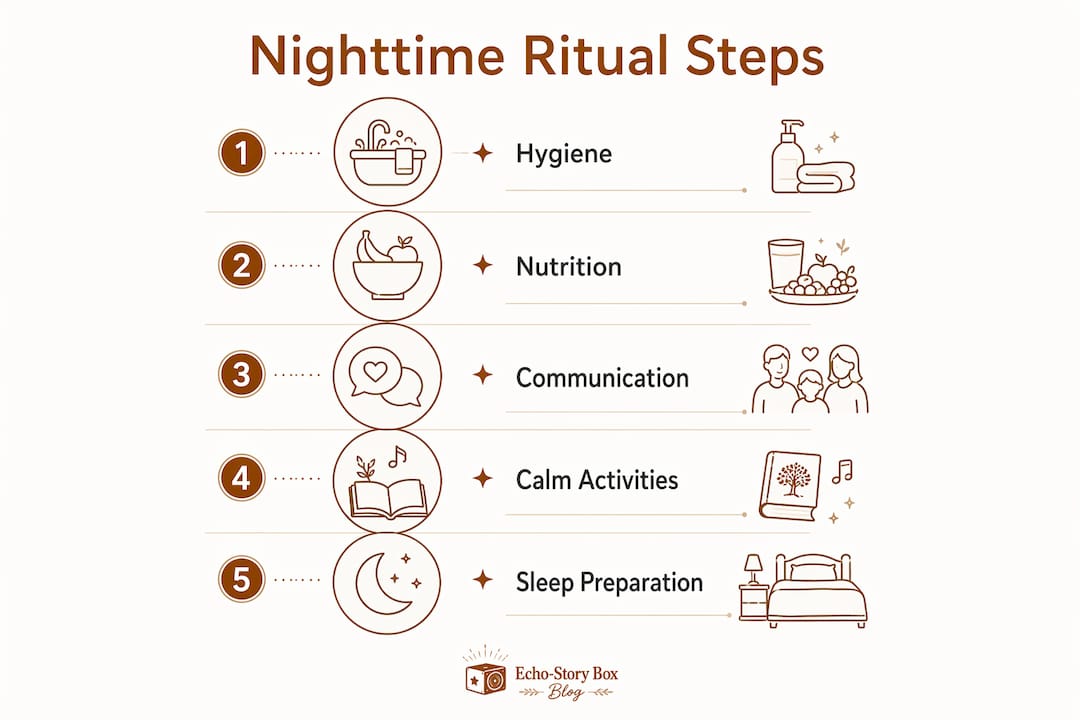
Physical contact wraps the routine in comfort. Cuddling, a gentle back rub, or a simple goodnight hug tells your child's nervous system that the day is done and they are safe.
A few practical elements worth keeping in mind:
- Keep the order the same every night. Predictability is the point.
- Aim for about half an hour to an hour total, adjusting for your child's age.
- A light snack before brushing teeth can settle hunger without overstimulating.
- Simple routines you can sustain on a tired Tuesday matter more than elaborate ones you abandon by Thursday.
Why screen-free bedtimes make such a real difference
Screens before bed are not just a distraction. They actively work against sleep. Blue light from tablets, phones, and televisions suppresses melatonin production and delays the brain's sleep signal, meaning your child is physiologically less ready for sleep even when they look tired.
Pediatric and sleep hygiene guidelines recommend turning off all electronic screens at least an hour before bed. The difference that one change makes is well documented. A University of Bath study, working with numerous families of toddlers aged approximately 1 to 2.5 years, found that replacing screens with calm activities for one hour before bed led to faster sleep onset, fewer night wakings, and more restful sleep after just seven weeks.
The shift that works: Families who replaced screen time with a "Bedtime Box" of books, soft toys, and quiet puzzles saw toddlers fall asleep faster and wake less often, all within seven weeks of a simple routine change.
The key is having something ready before the screen goes off. A child who moves from a tablet to a puzzle, a story card, or a quiet book has genuinely transitioned. A child who moves from a tablet to nothing has not, and will say so immediately. Audio players that replace screens at bedtime are one of the most practical tools families reach for, precisely because they give children something absorbing without any of the stimulation.
How bedtime rituals change as your child grows
The need for a bedtime ritual does not fade as children get older. What changes is the shape of it. Sleep Foundation guidance confirms that rituals remain vital for emotional regulation and bonding well into the preteen years, even as the activities themselves shift.
Here is how the ritual typically evolves:
- Ages 1–3: Structured, physical routines work best. Bath, massage, a short song or story, and a consistent goodnight. The repetition itself is the comfort.
- Ages 4–6: Children can begin choosing elements, like picking the story or the pajamas. This small sense of control reduces resistance and builds buy-in.
- Ages 7–10: Connection matters more than structure at this stage. A longer story, a quiet conversation about the day, or listening together to an audio adventure replaces the more physical elements of earlier years.
- Ages 11 and up: The ritual becomes lighter but should not disappear. A consistent wind-down window, dimmed lights, and a calm activity before lights-out still support sleep quality and emotional security.
The goal across every age is the same: calm, connection, and a predictable path to sleep. Explore slow bedtime routines that work at different stages if you want practical examples tailored to your child's age.
How to build a bedtime ritual your family will actually keep
The best bedtime ritual is the one you can do consistently. Family health experts are clear on this: simple, repeatable routines carried out on most nights per week deliver the most benefit. Complexity is the enemy of consistency.
Practical steps to get started:
- Notice when your child naturally gets tired and start the wind-down about an hour before that point.
- Choose three or four repeatable steps and commit to the same order every night.
- Dim the lights and lower your voice as the routine begins. Environment cues matter.
- Have your screen-free activity ready before screens go off, not after. Transition battles happen in the gap.
- Involve your child in choosing one element of the routine. It builds cooperation without surrendering structure.
Pro Tip: Think of bedtime as a one to one-and-a-half hour process, not a single moment. The families who struggle least are the ones who begin winding down the whole household, not just the child, well before lights-out.
Common challenges and simple fixes:
- Resistance at screen-off time: Have the next activity already visible and inviting before you turn the screen off.
- Inconsistency on busy nights: A shorter version of the routine beats skipping it entirely. Even two steps done consistently signal sleep.
- Child keeps asking for "one more thing": Build one optional choice into the routine so the boundary is clear afterward.
How Echostory-box fits into your family's nighttime ritual
Echostory-box was built for exactly this moment in the evening. It is a tactile, NFC-powered audio player that works simply: your child taps a story card onto the box, and the story begins. No menus, no ads, no notifications, no screen.
That simplicity is the point. The communication element of a bedtime ritual, the part where a story or a song creates connection and calm, does not require a glowing device. Echostory-box replaces the screen with something your child can hold, choose, and listen to with their eyes closed.
What makes it particularly well-suited to nighttime rituals:
- Personalized stories can include your child's name, family members, and favorite places, creating a deeper emotional connection than any generic platform.
- Legacy recordings let grandparents and parents record their own voices, so a grandparent's bedtime story can play every night even from across the country.
- Educational adventures featuring characters like Theo the Rabbit teach kindness, courage, and curiosity through calm, story-driven listening.
- No digital rabbit holes. The story ends, and that is it. No autoplay, no recommendations pulling your child further from sleep.
| Feature | What it means for your nighttime ritual |
|---|---|
| NFC tap-to-play | Child chooses and starts the story independently, no adult setup needed |
| No ads or notifications | Zero interruptions during the wind-down window |
| Personalized story content | Deeper engagement and emotional connection at bedtime |
| Family voice recordings | Grandparent stories play every night, preserving real voices |
| Educational story characters | Learning woven into calm, screen-free listening |
| Ready-made and DIY options | Accessible for all families, from beginners to makers |
Audio stories at bedtime calm children by giving their imagination something gentle to hold onto as they drift off. Echostory-box makes that experience tactile, personal, and entirely screen-free.
Key Takeaways
A consistent, screen-free nighttime ritual built around hygiene, calm communication, and physical connection produces measurable improvements in children's sleep and emotional wellbeing within just a few nights.
| Point | Details |
|---|---|
| Results come quickly | Clinical research shows meaningful sleep improvements within approximately three nights of a consistent routine. |
| Four core domains | Effective rituals include hygiene, nutrition, communication, and physical contact in a repeatable order. |
| Screens delay sleep | Blue light suppresses melatonin; turning off screens 60 minutes before bed supports faster, deeper sleep. |
| Consistency beats complexity | Routines done at least five nights per week deliver the most benefit, even when kept simple. |
| Rituals grow with your child | The structure shifts from physical routines in toddlerhood to connection-focused wind-downs in older years. |