

Audio players are a proven, screen-free alternative to bedtime devices that help children fall asleep faster by removing blue light exposure and engaging their imagination through sound. Pediatric sleep research and guidelines from the American Academy of Pediatrics now support audio listening as one of the most effective tools parents can use to build calmer, healthier bedtime routines. Understanding how audio players replace bedtime screens gives you a practical path forward, one grounded in real science and simple family habits.
Why removing screens before bed harms children's sleep
Evening screen use directly disrupts children's sleep. The blue light emitted by tablets, phones, and televisions suppresses melatonin production, the hormone that signals the body it is time to sleep. When melatonin is delayed, children take longer to fall asleep and experience more nighttime disturbances.
A JAMA Pediatrics meta-analysis of 25 studies found that media use near bedtime is associated with over twice the odds of insufficient sleep duration and a 1.5-times greater risk of poor sleep quality. That means a child who watches a show before bed is statistically far more likely to sleep too little and wake during the night.
The American Academy of Pediatrics recommends a minimum 60-minute screen-free buffer before bedtime to improve sleep onset and reduce disturbances. Evening screen use specifically leads to later sleep onset compared to daytime use. The timing matters as much as the total amount.
Consistent bedtime schedules also play a measurable role. Research shows that regular sleep schedules carry an adjusted odds ratio of 0.39 for avoiding short sleep duration, even when screen time is present. A predictable routine protects children's sleep in ways that willpower alone cannot.
Key reasons evening screens harm children's sleep:
- Blue light suppresses melatonin and delays the body's natural sleep signal
- Stimulating content keeps the brain alert when it needs to wind down
- Notifications and interactive features create arousal, not calm
- Screen use pushes back sleep onset, reducing total sleep time on school nights
How audio players stimulate imagination without a screen
Audio players do more than remove harmful light. They actively build children's cognitive and emotional skills in ways that passive screen viewing does not.
A March 2026 study found that audiobooks improve vocabulary and narrative comprehension significantly, especially when combined with active engagement from a caregiver. Children who listen to stories regularly encounter complex sentence structures and rich vocabulary that everyday conversation rarely provides. That language exposure is critical for reading development.
"Audio formats expose children to complex language patterns and narrative structures beyond everyday conversation, critical for reading development. Children engage cognitively and emotionally, preparing stories in the mind, unlike passive screen viewing." — Expert perspective on audiobooks as literacy gateways
When a child listens to a story, their brain does real work. They must visualize characters, infer emotions, and predict outcomes. That mental effort builds empathy, inference skills, and creative thinking. A screen delivers those images ready-made. Audio requires active imagination, which is exactly the kind of gentle mental engagement that supports healthy sleep onset.
The benefits of audio listening for children include:
- Vocabulary growth through exposure to rich, narrative language
- Stronger narrative comprehension and story sequencing skills
- Empathy development through character-driven storytelling
- Visualization practice that builds creative and spatial thinking
- Focused listening skills that transfer to classroom learning
Echostory-box builds on these benefits directly. Characters like Theo the Rabbit, Eileen, and Eisley guide children through historical adventures and values-driven stories, giving each listening session both entertainment and meaning.
How to use audio for bedtime: a practical routine

Replacing screens with audio works best when you treat it as a gradual, intentional shift rather than an abrupt rule change. Children resist sudden loss of something familiar. A thoughtful transition makes the difference between a power struggle and a peaceful habit.
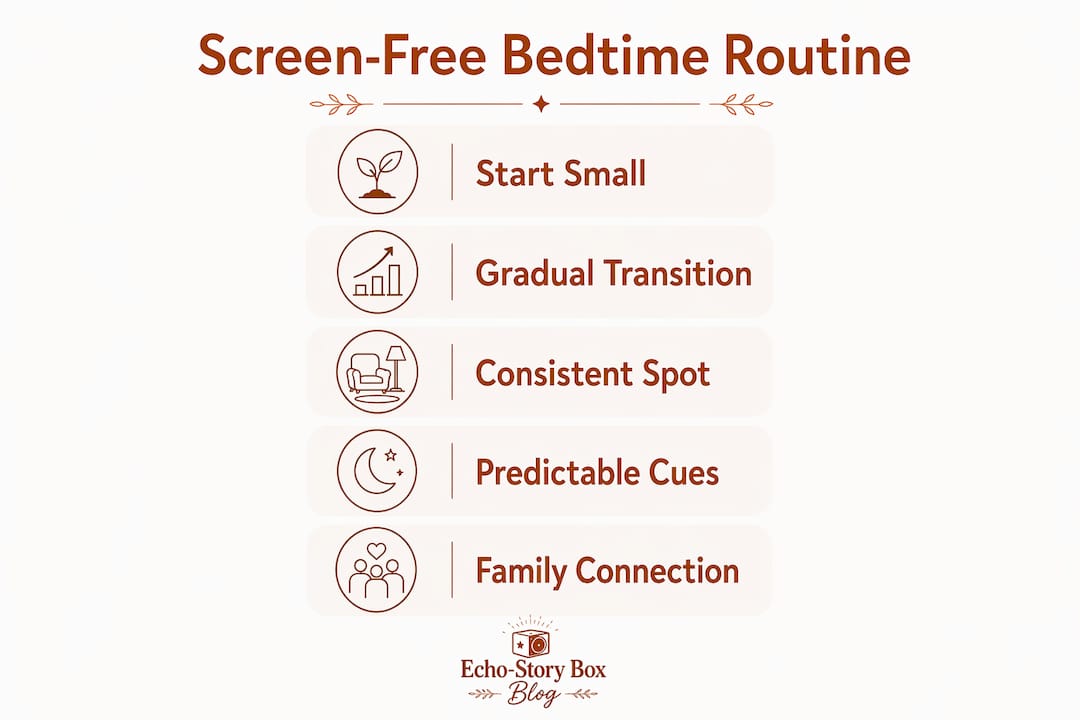
A BMJ systematic review found that 60-minute screen-free sessions paired with a specific calming activity produce the best sleep outcomes. The key word is "specific." Silence is not a substitute for screens. A child who loses their tablet and gets nothing in return will protest. A child who gets an absorbing audio story barely notices the screen is gone.
Follow these steps to build the routine:
- Start audio before screens go off. Play a story or audiobook while your child is still winding down. Let audio become familiar before it becomes the only option.
- Extend screen-free time gradually. Increase the screen-free window by 15–30 minutes each week until you reach a full 60-minute buffer before lights out.
- Pick the same story series each night. Predictable, recurring characters create anticipation. Children look forward to what happens next, which makes bedtime something they want rather than dread.
- Pair audio with a calm physical activity. Puzzles, drawing, or simple tactile play alongside audio storytelling keeps hands busy and minds calm.
- Remove screens from the bedroom permanently. Research identifies this as the single highest-impact intervention for improving children's sleep within one week.
Pro Tip: Set the audio player in the same spot every night. Physical consistency, like a story card placed on the Echostory-box, becomes a ritual cue that tells your child's brain: sleep is coming.
Routine consistency matters more than routine complexity. Predictable cues such as a recurring audio series or a simple phrase like "story time" lower resistance and help children relax faster than elaborate multi-step routines.
How does audio listening strengthen family connection at bedtime?
Shared audio listening creates something screens rarely do: genuine togetherness. When a family listens to the same story, they share the same mental experience without a device between them.
Family involvement in discussing audio stories enhances child engagement and builds emotional connection. Shared listening prompts conversation, eye contact, and co-creation of narratives. A parent who asks "What do you think Theo will do next?" turns a passive moment into a real exchange.
Screen-free bedtime routines also reduce the distraction that devices bring into the room. Without notifications, autoplay, and bright visuals competing for attention, parents and children are simply present with each other. That presence is what children remember.
Ways audio builds family connection at bedtime:
- Shared listening gives everyone the same story to talk about
- Caregiver questions during or after audio deepen comprehension and emotional bonding
- Recurring characters become shared family references, inside jokes, and conversation starters
- Recording grandparent voices or family stories onto audio cards creates lasting keepsakes
Pro Tip: After the story ends, ask one open question before lights out. "What was your favorite part?" takes 60 seconds and turns a listening session into a meaningful bedtime conversation your child will carry into sleep.
Echostory-box supports this connection directly. Parents and grandparents can record their own voices, family stories, and encouragement messages onto story cards. Those recordings become something children can return to for years.
Key Takeaways
Audio players replace bedtime screens most effectively when paired with consistent routines, gradual transitions, and caregiver involvement that turns listening into a shared family experience.
| Point | Details |
|---|---|
| Screen-free buffer matters | A 60-minute screen-free window before bed improves sleep onset and reduces nighttime disturbances. |
| Audio builds real skills | Listening to stories builds vocabulary, empathy, and visualization skills that passive screen viewing does not. |
| Gradual transitions work | Increasing screen-free time by 15–30 minutes weekly reduces resistance and builds lasting habits. |
| Bedroom screens out | Removing screens from the bedroom permanently is the single highest-impact sleep intervention for children. |
| Family listening deepens bonds | Shared audio stories prompt conversation and eye contact, strengthening family connection at bedtime. |
What I've learned from watching families make this switch
Most parents I talk with expect the hardest part to be convincing their child. It rarely is. The hardest part is convincing themselves that something as simple as a story playing in the dark is enough.
We have been trained to think that more stimulation equals more value. Screens feel productive because they are busy and bright. Audio feels quiet by comparison. But that quietness is exactly the point. A child whose brain is gently working through a story is not bored. They are building something.
The families who make this transition stick are not the ones with the most elaborate routines. They are the ones who pick one consistent audio series and play it at the same time every night without negotiating. Consistency beats creativity every time when it comes to sleep.
Child resistance is real and normal. It usually peaks in the first week and fades by the third. Parents who expect it and hold the line calmly find that their children adapt faster than expected. The audio player becomes the new normal, and screens at bedtime start to feel out of place.
The deeper shift I have observed is this: audio listening gives children back their imagination. Screens hand them a finished picture. Audio hands them the materials and trusts them to build it. That trust changes how children relate to stories, and to themselves.
— Bob
A screen-free bedtime tool worth knowing about
If you are ready to make the switch from screens to audio, Echostory-box was built for exactly this moment.

Echostory-box is a simple, tactile audio player for children ages 4–10. Children tap an NFC story card onto the box, and the story begins. No menus, no ads, no scrolling. Just a calm voice and a good story. The library includes original adventures, faith-based storytelling, educational history, and personalized experiences where your child's name becomes part of the tale. You can even record your own voice for a grandparent message or a family bedtime story. Visit the Echostory-box home page to see the full story card library and find the right fit for your family's bedtime routine.
FAQ
How do audio players replace bedtime screens?
Audio players provide an absorbing, screen-free alternative that removes blue light exposure and engages children's imagination through sound. The American Academy of Pediatrics recommends a 60-minute screen-free buffer before bed, and audio listening fills that window naturally.
What are the benefits of audio players for sleep?
Audio players eliminate melatonin-disrupting blue light, calm the nervous system through storytelling, and support consistent bedtime routines. Research links consistent screen-free bedtime habits to significantly lower risk of short sleep duration in children.
How do I start a screen-free bedtime routine with audio?
Start by playing audio while screens are still present, then gradually extend the screen-free period by 15–30 minutes each week. Pair the audio with a calm activity and keep the same story series each night to build a predictable ritual.
Are audiobooks and audio stories good for children's development?
A 2026 study confirms that audiobooks improve vocabulary and narrative comprehension, especially with caregiver involvement. Audio storytelling also builds empathy, visualization, and inference skills that passive screen viewing does not develop.
What age is best for bedtime audio storytelling?
Children ages 4–10 respond especially well to audio storytelling at bedtime. Younger children benefit from simple, character-driven stories, while older children engage with longer adventures, educational content, and recurring series.