
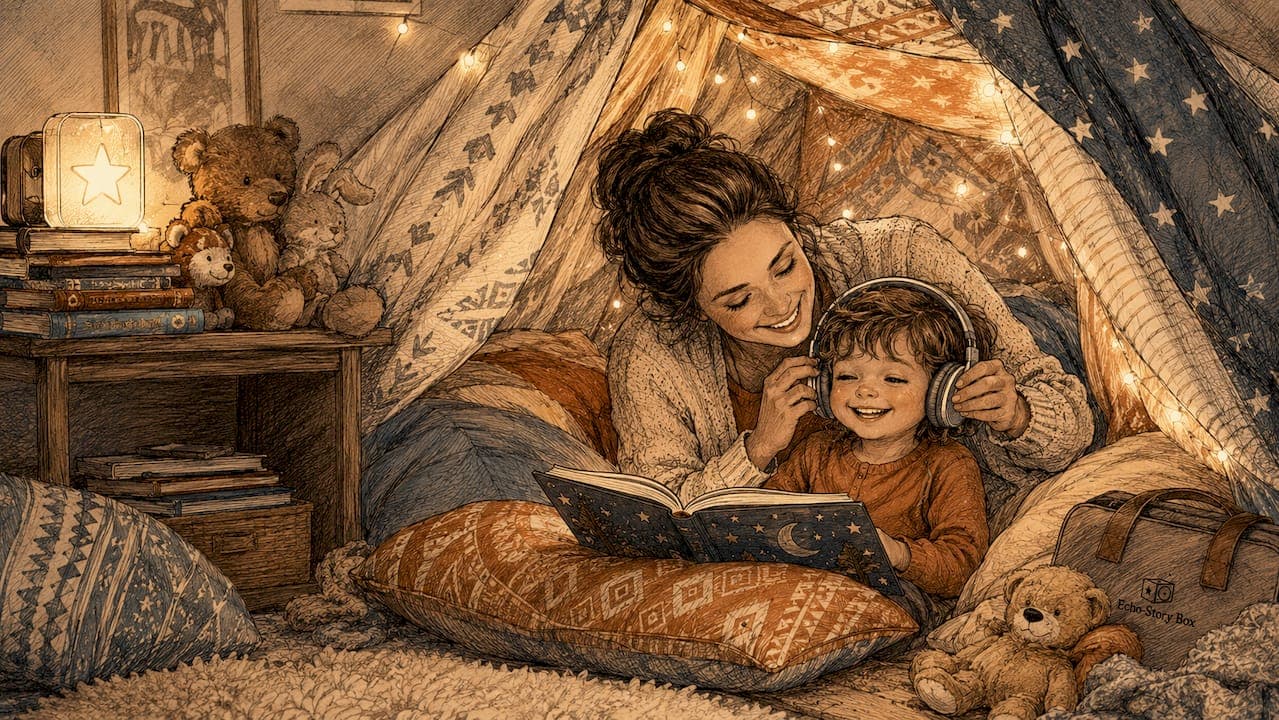
Audio stories calm children by activating the parasympathetic nervous system, the body's natural rest response, within minutes of listening. This is not a parenting theory. It is a measurable biological process backed by brain imaging research and sleep science. Parents and caregivers who understand the mechanism behind this effect can use audio stories with far more confidence and consistency. This article breaks down the neuroscience, the emotional benefits, and the practical steps to make audio stories a reliable part of your child's bedtime routine.
Why audio stories calm children: the brain and body science
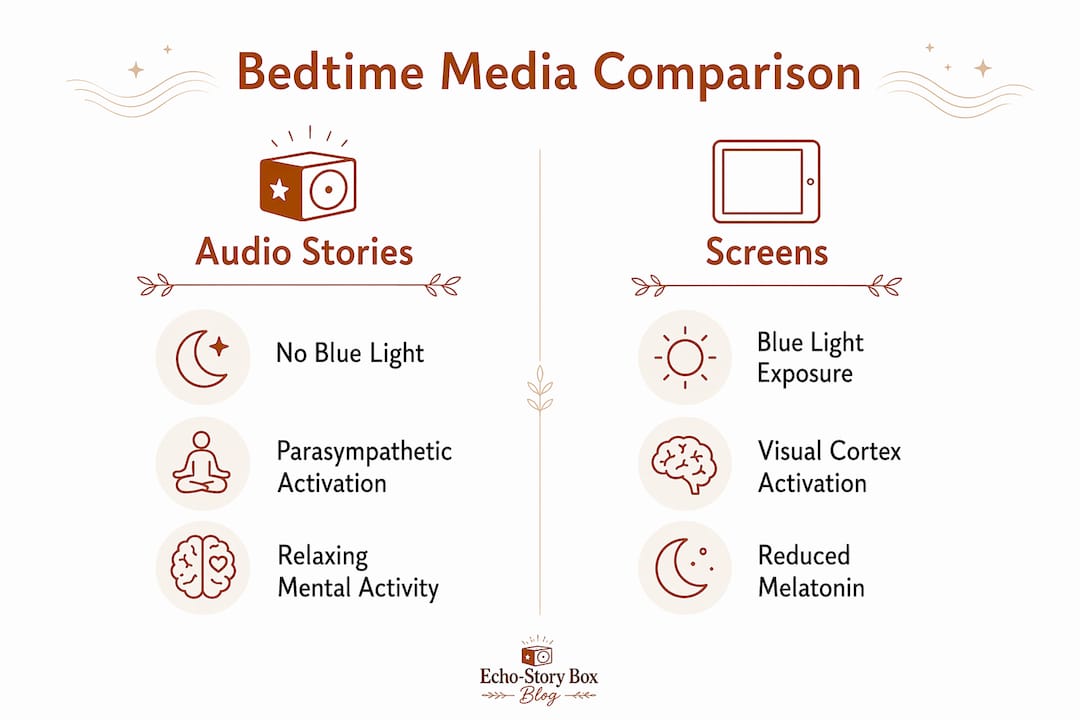
The core reason audio stories calm children is physiological. Listening to stories reduces cortisol and activates the parasympathetic nervous system, creating the opposite neurological effect of screen time before bed. That shift can happen within 10–20 minutes of listening, which is exactly the window most parents are working with at bedtime.
A landmark 2018 fMRI study from Cincinnati Children's Hospital coined the term "Goldilocks Effect" to describe how different media formats activate children's brains. Animated video overstimulates the visual cortex. Illustrated books engage it at a moderate level. Audio-only stories sit at the far end of the spectrum, requiring the brain to build its own mental imagery. That internal construction keeps the mind occupied without flooding it with sensory input.
"Audio-only listening involves cognitive construction where children build mental imagery actively, a mechanism that helps prevent rumination and promotes relaxation." — Bedtime Stories Blog, citing the Cincinnati Children's Hospital research
This matters because rumination, the mental replay of worries and the day's events, is one of the biggest barriers to sleep in children ages 4–10. Audio stories give the brain a gentle task to focus on. The mind builds pictures of meadows, friendly animals, or quiet adventures, and in doing so, it stops cycling through anxious thoughts.
The Moshi app, a popular children's sleep audio platform, has built its entire product around this principle. Its sleep stories use rhythmic, repetitive language that matches a child's wind-down cycle, allowing eyes to close without any blue light exposure. That combination of narrative rhythm and darkness is what makes audio stories so effective compared to other bedtime media.
How audio stories support emotional regulation in children
Audio stories do more than slow the body down. They give children a safe space to process big feelings. Emotional scaffolding through audio stories allows children to identify with characters facing fears, setbacks, and uncertainty, without any direct pressure from an adult to talk about their own feelings.
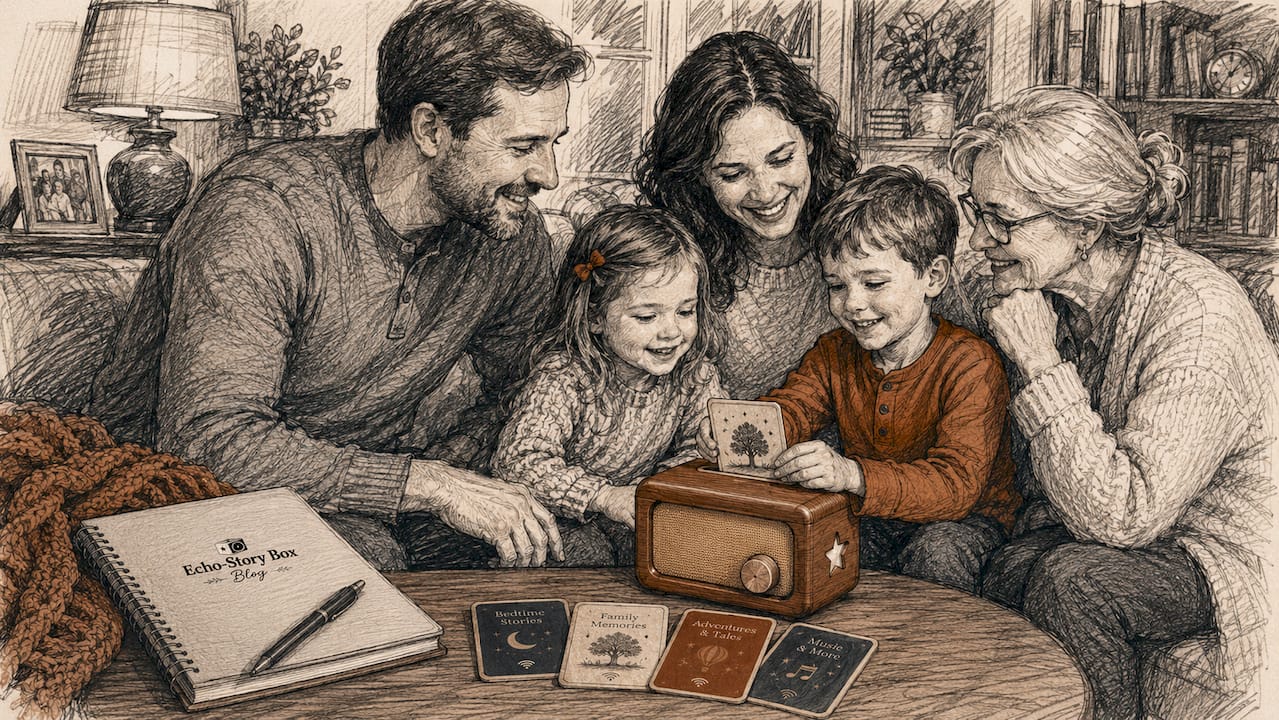
This is the core principle behind bibliotherapy, a practice used by child psychologists where stories are used as therapeutic tools. When a child hears a character work through a fear of the dark or a hard day at school, they process their own parallel emotions through the narrative. The distance of fiction makes it feel safe.
Personalized stories take this effect further. Research shows that children who are story protagonists request to revisit those stories more often, and that repeated engagement correlates with measurable anxiety reduction. When a child hears their own name, their pet's name, or their favorite place woven into a story, the emotional connection deepens significantly.
Here is how to use audio stories specifically for emotional support:
- Choose stories where the main character faces a challenge similar to your child's current worry, such as starting school, making friends, or sleeping alone.
- Listen together the first time so you can talk briefly about the character's feelings afterward, without making it feel like a therapy session.
- Let your child request the same story repeatedly. Repetition is not boredom. It is emotional processing.
- Introduce personalized stories when your child is going through a transition. The familiar details create comfort during unfamiliar times.
Pro Tip: If your child resists bedtime, try framing the audio story as something they get to choose, not something you are doing to them. Giving them control over the story card or the play button reduces resistance and increases buy-in.
Audio stories vs. screens and books: which format actually helps kids sleep?
Not all bedtime media is equal. The format you choose in the 30–60 minutes before sleep has a direct impact on how quickly your child falls asleep and how well they sleep through the night.
| Format | Blue light exposure | Visual cortex activation | Eyes-open required | Melatonin impact | Best for sleep? |
|---|---|---|---|---|---|
| Screens (TV, tablet) | High | Overstimulated | Yes | Suppressed | No |
| Illustrated books | None | Moderate | Yes | Neutral | Partial |
| Read-aloud by parent | None | Low | Optional | Neutral to positive | Yes |
| Audio stories | None | Minimal | No | Supported | Yes |
Screens are the clearest problem. Blue light suppresses melatonin production, the hormone that signals the body it is time to sleep. The visual cortex stays highly active, and the content is typically designed to keep children watching, not to wind them down.
Illustrated books are better, but they still require visual attention and upright posture. A child cannot fully relax their body while tracking pictures on a page. Read-alouds by a parent are excellent, but they require a parent to be present, alert, and available every single night without exception.
Audio stories solve the practical gap. Brain activation patterns for audio and read-aloud stories are similar, which means children get comparable cognitive and emotional benefits even when a parent is not in the room. A child can lie flat, close their eyes, and let the story carry them toward sleep. That physical posture alone supports faster sleep onset.
Audio stories help children relax faster than screens by slowing mental activity and reducing sensory overload. That effect directly reduces bedtime battles, which is one of the most common sources of evening stress for families.
Practical tips for choosing and using audio stories at bedtime
The right story matters as much as the format itself. High-conflict plots or cliffhanger endings can increase alertness rather than reduce it, which defeats the purpose entirely. A story that ends on a tense note leaves a child's nervous system activated, not settled.
The most effective sleep stories share these qualities:
- Slow pacing. Sentences are short. Pauses are frequent. The narrator speaks at a pace that feels almost slower than normal conversation.
- Low-stakes plots. The character goes on a gentle walk, visits a quiet farm, or floats on a calm river. Nothing is at risk.
- Nature imagery. Forests, meadows, rain, and starry skies are common settings because they are universally calming and easy to picture.
- Gentle repetition. Repeated phrases or sounds mirror the rhythm of breathing and help the brain settle into a predictable pattern.
- A gradual fade. The best sleep stories do not end abruptly. The narration slows, the music softens, and the story simply drifts away.
Pairing audio stories with a consistent pre-sleep sequence multiplies the calming effect. Integrating audio stories with activities like bath time and pajamas enhances sleep signaling because the brain begins associating the entire sequence with rest. The story becomes the final cue in a chain of cues that all say "it is time to sleep."
Pro Tip: Dim the lights and keep the room quiet before starting the story. The audio story works best when it is the only sensory input. A bright room or background noise competes with the story and slows the calming effect.
A quiet, consistent environment also helps children build a bedtime story ritual that they look forward to rather than resist. Predictability is calming in itself. When children know exactly what comes next, their nervous system relaxes before the story even begins.
Consistent audio story routines signal safety to the amygdala, the brain's threat-detection center, lowering cortisol and improving emotional regulation in children ages 4–8. That is not a small benefit. Reduced cortisol at bedtime means better sleep quality, fewer night wakings, and a calmer child the following morning.
Key Takeaways
Audio stories calm children through a combination of parasympathetic activation, cognitive engagement, and consistent routine, making them one of the most effective screen-free tools for bedtime.
| Point | Details |
|---|---|
| Parasympathetic activation | Listening to stories lowers cortisol and heart rate within 10–20 minutes, supporting natural sleep onset. |
| Cognitive construction | Audio-only listening keeps the brain gently occupied with mental imagery, preventing anxious rumination. |
| Emotional processing | Stories let children work through fears and big feelings safely, without direct adult pressure. |
| Format advantage | Audio stories require no visual attention and support melatonin production, unlike screens or illustrated books. |
| Routine consistency | Pairing audio stories with bath time and pajamas trains the brain to associate the sequence with sleep. |
What I have learned from watching families use audio stories
I have spent years watching parents try to solve the bedtime battle, and the pattern is almost always the same. They try screens first because screens are easy. Then they try stricter rules. Then they try longer read-alouds that leave them exhausted. Audio stories rarely come up early in that process, and I think that is a real missed opportunity.
The families who get the most out of audio stories are not the ones who use them occasionally. They are the ones who build them into a sequence. Bath, pajamas, dim lights, story. Every night. The consistency is what trains the nervous system. The story is the signal, not just the entertainment.
What surprises most parents is how quickly children stop fighting bedtime once the routine is established. The audio story becomes something they want, not something imposed on them. I have seen children as young as four ask for their story card before a parent even mentions bedtime. That shift in attitude is the real win.
One common mistake is choosing stories that are too exciting. Parents pick adventure stories because their child loves them during the day. But a thrilling chase scene at 8 p.m. is not going to help anyone sleep. The content has to match the goal. Calm, slow, and low-stakes every time.
Personalization is the other factor most parents underestimate. When a child hears their own name in a story, something shifts. They lean in. They stay quieter. They ask to hear it again. That engagement is not just cute. It is the mechanism that makes the emotional benefits of storytelling and emotional regulation actually stick.
— Bob
Echostory-box brings calm, screen-free stories to your family's evenings
Echostory-box was built for exactly this kind of bedtime routine. It is a screen-free audio player that children operate by tapping a story card, no scrolling, no ads, and no bright screens competing with the dark room you just created.
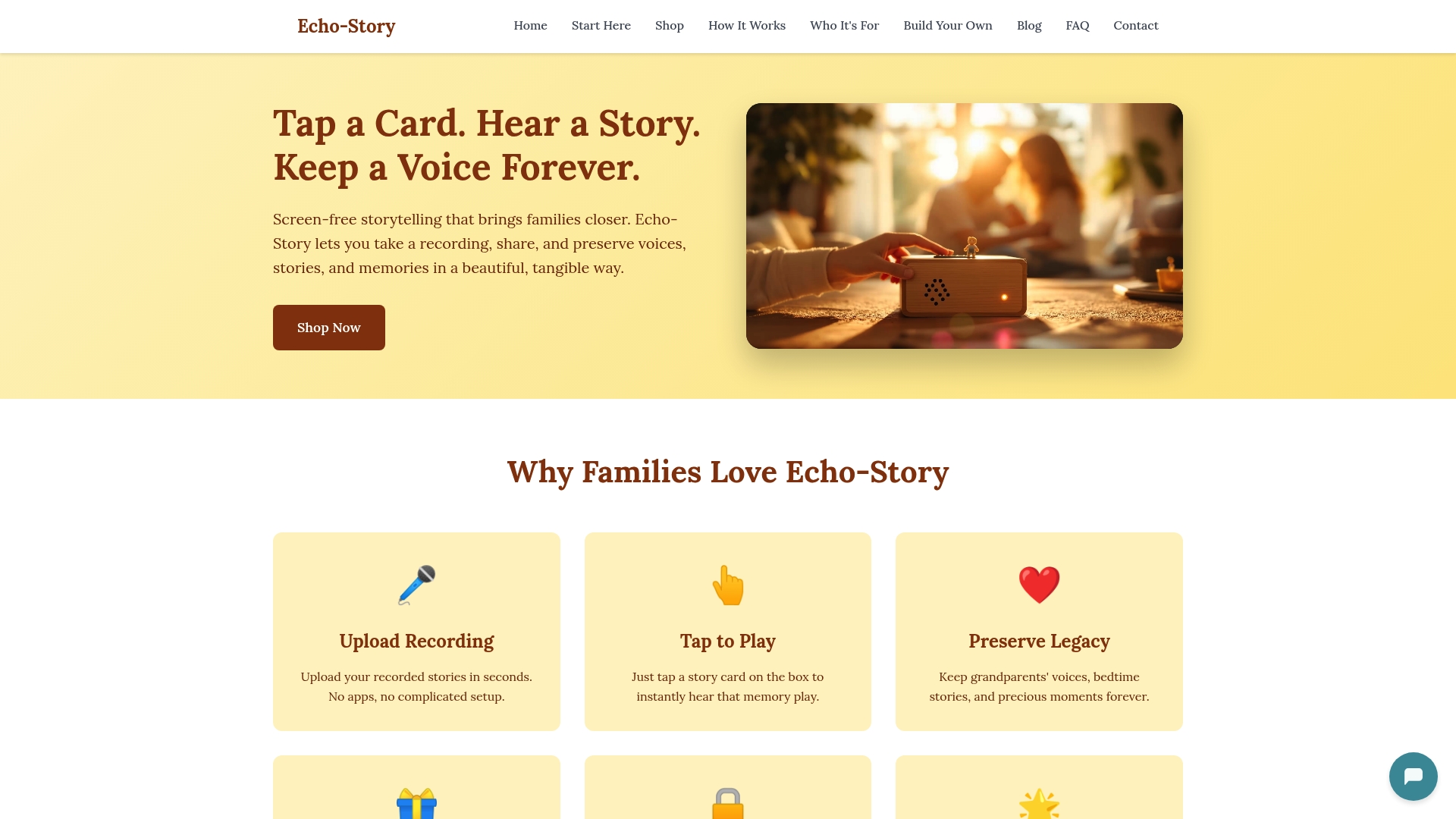
Stories on Echostory-box are designed with the same principles covered here: slow pacing, gentle imagery, and gradual fades that ease children toward sleep. You can also record your own voice, so grandparents and parents become part of the story library. Personalized stories, family voices, and faith-based content are all available in one simple device. If you are ready to make bedtime calmer and more consistent, screen-free storytelling for families is where Echostory-box starts.
FAQ
Why do audio stories calm children faster than screens?
Audio stories reduce sensory overload and avoid blue light, which suppresses melatonin. Screens keep the visual cortex active and delay sleep onset, while audio allows eyes to close and the body to settle.
What age group benefits most from audio stories at bedtime?
Research consistently focuses on children ages 4–8, where consistent audio story routines show the strongest improvements in sleep quality and emotional regulation. Older children also benefit, particularly when stories match their emotional or social challenges.
How long should a bedtime audio story be?
Most effective sleep stories run 15–25 minutes. That window aligns with the 10–20 minute window for parasympathetic activation and gives the story time to build imagery and fade gradually without keeping a child awake too long.
Can audio stories replace a parent reading aloud?
Audio stories are a high-quality alternative to read-alouds when a parent is unavailable, with similar brain activation patterns. They do not replace the unique bonding of a parent's voice, but they deliver comparable cognitive and calming benefits.
Does the content of the story really matter for sleep?
Content matters significantly. Stories with high conflict, cliffhangers, or unresolved tension can increase alertness rather than reduce it. The best sleep stories use slow pacing, nature settings, and a gradual fade to guide children toward rest.