
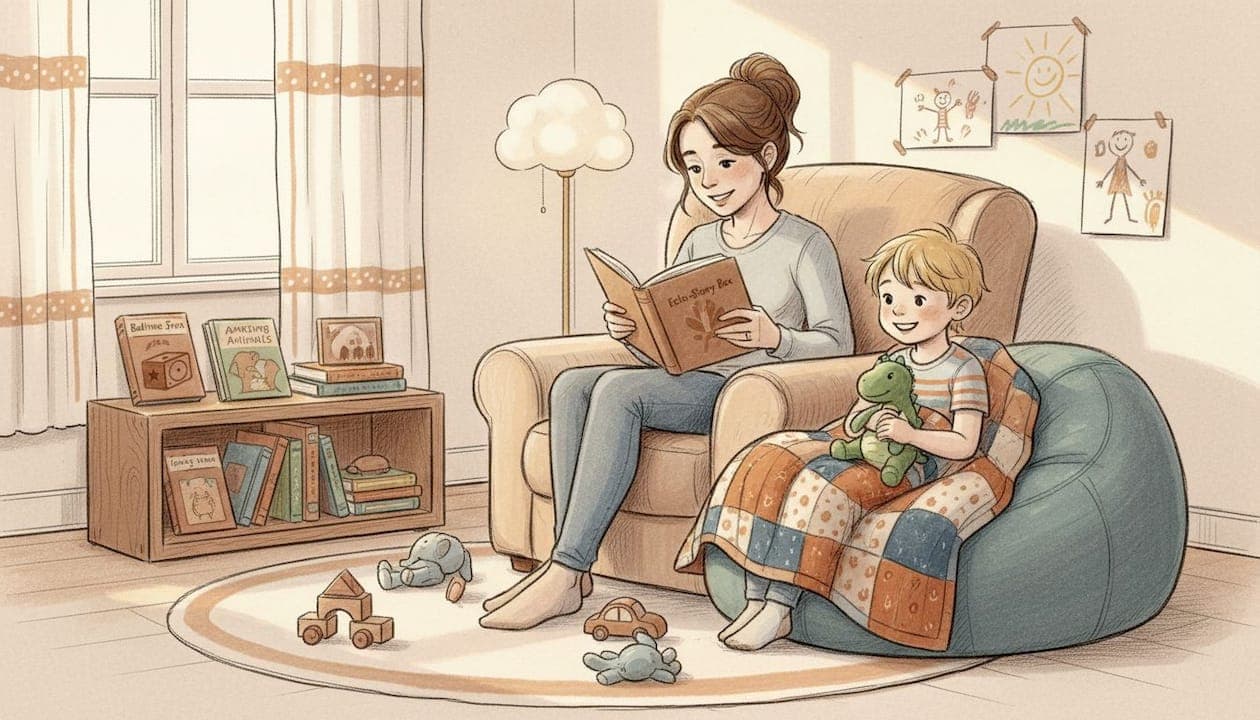
Bedtime stories are not just a sweet tradition. They are one of the most practical tools you have for helping an anxious child settle down and feel safe. Understanding why bedtime stories reduce child anxiety can change the way you approach the whole evening routine. Most parents assume stories simply distract kids until they fall asleep. The truth runs much deeper than that. Stories trigger real physiological changes in your child's body, create emotional security through repetition, and give kids a structured way to process the worries they carry into bed with them.
Table of Contents
- Key Takeaways
- Why bedtime stories reduce child anxiety: the science
- How routines and rituals create security at bedtime
- Choosing stories that actually calm anxious children
- Combining worry time with bedtime stories
- My honest take on storytelling and anxious kids
- A screen-free way to make story time work every night
- FAQ
Key Takeaways
| Point | Details |
|---|---|
| Stories change body chemistry | Bedtime storytelling lowers cortisol and releases oxytocin, producing measurable calm in children. |
| Routine matters as much as content | Consistent nightly story rituals signal the brain to wind down, reducing fear of the unknown at bedtime. |
| Story selection affects anxiety levels | Gentle, slow-paced narratives in peaceful settings lower cortisol better than high-action plots. |
| Worry time protects bedtime | Moving anxiety conversations to earlier in the day keeps storytelling calm and connection-focused. |
| Children benefit from participating | Inviting your child to shape the story actively reduces rumination and builds emotional resilience. |
Why bedtime stories reduce child anxiety: the science
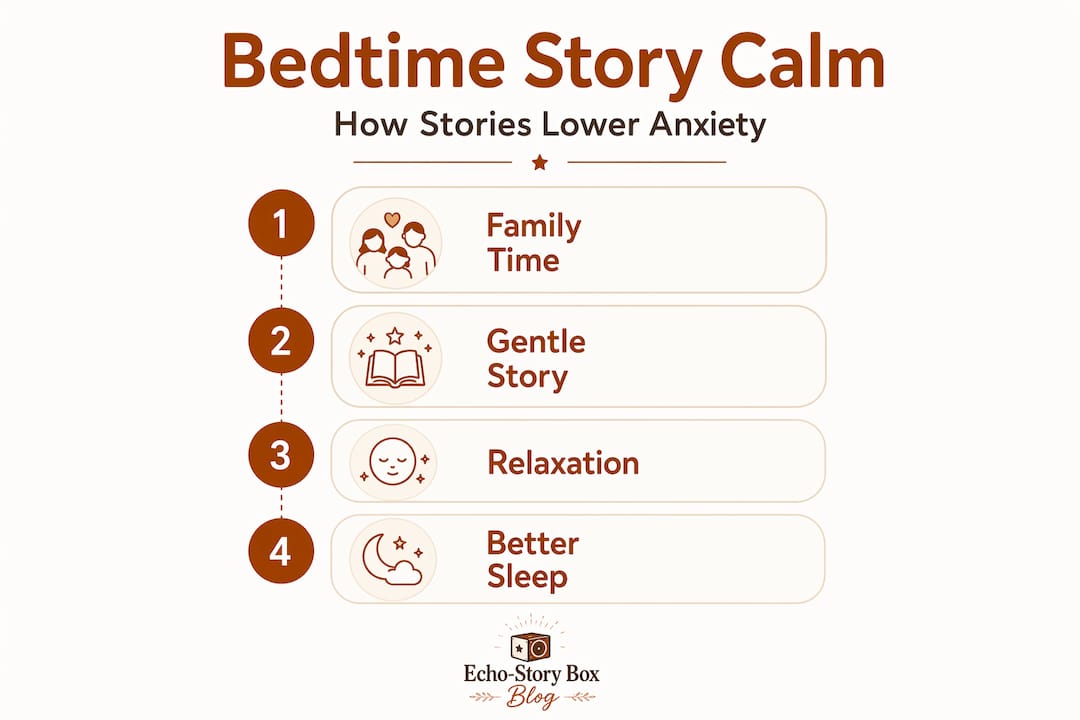
When you sit beside your child and begin telling a story, something real happens inside their body. Storytelling releases oxytocin, the bonding hormone, while simultaneously bringing cortisol levels down. Oxytocin signals safety. Cortisol signals threat. Shifting that balance at bedtime is not small. It is the difference between a child who lies awake replaying worries and one who feels genuinely settled.
The effect goes beyond hormones. Stories help children organize unprocessed emotions by embedding feelings into a narrative structure. When a child's mind is racing with anxiety, thoughts feel scattered and overwhelming. A story provides a beginning, middle, and end. It shows the brain how to give shape to chaos. That structure reduces rumination, which is one of the main drivers of nighttime anxiety in children aged 4 to 10.
There is also a physical dimension to how storytelling calms children. Slow-paced storytelling activates the parasympathetic nervous system, the part of the nervous system responsible for rest and recovery. Your child's breathing slows. Their heart rate drops. Their muscles relax. This is not something they have to try to do. The gentle rhythm of a well-told story does it automatically.
Clinical research backs this up clearly. A 2025 trial found that storytelling significantly reduces social anxiety in hospitalized children, with a p-value of 0.001. These were children in a genuinely stressful environment, and stories still moved the needle. For children at home who are managing more ordinary but still real anxieties, the potential is even greater.
- Oxytocin released during storytelling strengthens the parent-child bond while reducing fear responses
- Cortisol drops when children feel emotionally secure and heard through narrative
- Parasympathetic activation through slow pacing prepares the body for restful sleep
- Narrative structure gives anxious brains a model for organizing scattered worries
Pro Tip: Read at a slower pace than feels natural to you. A deliberate, unhurried voice is one of the most effective ways to cue your child's nervous system to relax.
How routines and rituals create security at bedtime
Predictability is one of the most underrated tools in managing child anxiety. Anxious children are often anxious precisely because the world feels unpredictable to them. A nightly story ritual changes that. When your child knows that bath is followed by pajamas, which is followed by a story in the same spot with the same lamp on, their brain stops bracing for the unknown. The routine itself becomes calming before the story even begins.
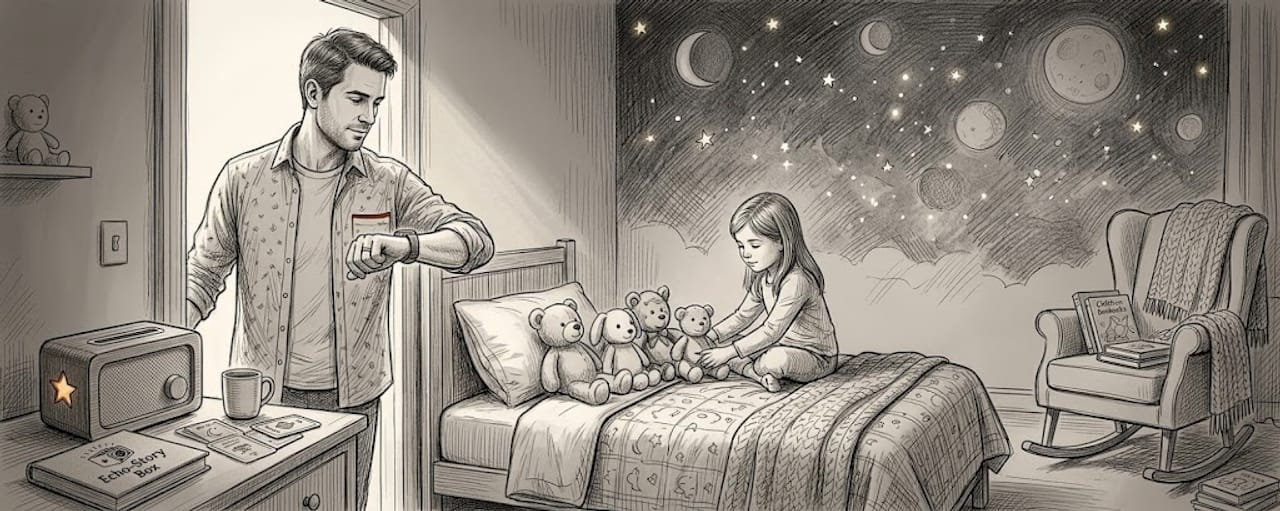
This is why the act of having a regular bedtime story ritual often matters more than which story you choose. The consistency is the signal. It tells your child's brain: this is a safe time, the day is done, nothing needs to be solved right now.
Research on family narratives adds another layer to this. Children who know more of their family stories show stronger emotional stability, along with a greater sense of control over their own lives. That work, led by researchers Robyn Fivush and Marshall Duke, shows that storytelling is not just entertainment. It is how children build an internal sense of where they belong and who they can rely on. That sense of belonging is a natural buffer against anxiety.
Despite all of this, fewer than 50% of young US children are read to every day. That gap represents a real opportunity. If your child's bedtime routine does not currently include a consistent story, starting one is one of the most practical steps you can take toward reducing their anxiety.
| Routine Element | Why It Reduces Anxiety |
|---|---|
| Same start time each night | Regulates the body's internal clock and reduces restlessness |
| Consistent pre-story steps | Creates a predictable sequence the brain learns to associate with calm |
| Regular story setting (chair, lamp, blanket) | Sensory cues signal safety and reinforce the wind-down message |
| Parent presence without devices | Undivided attention meets attachment needs, reducing separation anxiety |
Choosing stories that actually calm anxious children
Not every story helps an anxious child settle. High-action plots, scary villains, and cliffhanger endings can actually spike cortisol right before sleep. The story's pacing and setting directly impact your child's physiological state. A story set in a quiet meadow, told slowly, with a gentle resolution, does something different to a child's body than one packed with danger and urgency.
Therapeutic storytelling goes one step further. Stories that let children project fears onto characters give them emotional distance from their own worries. When a rabbit character feels nervous about starting at a new burrow, your child can engage with that fear safely. They are not being asked to talk about their own anxiety directly. They are watching a character navigate it. That distance is not avoidance. It is actually how children process difficult emotions most naturally.
Reading aloud also builds emotional vocabulary in children, giving them the words to name what they feel. A child who can say "I feel nervous, like how Theo felt before the storm" has a healthier relationship with their anxiety than one who can only say "my tummy hurts."
Here are some practical story choices and techniques that support reducing stress with bedtime tales:
- Choose stories with gentle, nature-based settings such as forests, meadows, or cozy homes
- Look for characters who face small, relatable challenges rather than dramatic danger
- Pick stories with clear, comforting resolutions where the character feels safe by the end
- Invite your child to suggest what happens next, making them an active emotional participant
- Avoid stories that end on unresolved tension, even if they are favorites
Pro Tip: When telling or reading a story, pause occasionally and ask your child: "How do you think the character feels right now?" This builds emotional intelligence and keeps your child engaged rather than letting anxious thoughts drift back in.
For more on how audio stories at bedtime can extend these benefits, especially for children who resist sitting still for a book, the format of the story matters less than the consistency and warmth behind it.
Combining worry time with bedtime stories
One of the most helpful shifts a parent can make is separating anxiety from bedtime entirely. When children know they can talk about worries, but not at 9 p.m. in the dark, bedtime becomes a calmer place. This is where the concept of structured worry time earlier in the day becomes genuinely useful.
Therapists recommend setting aside 10 to 20 minutes in the afternoon or early evening specifically for your child to voice their worries with your full attention. You listen, you acknowledge, and then worry time ends. When bedtime comes, you have a gentle response ready: "We already talked about that during worry time. Right now it's story time." It redirects without dismissing.
Here is how to set this up in a way that actually works:
- Choose a consistent time, ideally after school or before dinner, when your child is alert but not exhausted
- Sit together without distractions and let your child share what is on their mind without immediately trying to fix it
- Acknowledge what they said and write the worry down if that helps them feel heard
- Close worry time with a clear phrase like "Okay, worry time is done for today"
- At bedtime, gently redirect any anxiety talk back to story time using your closing phrase
This structure protects the calming bedtime routine you are building. Stories and worries belong in different parts of the day. Keeping them separate means storytelling stays associated with safety and calm, not with anxious conversation. Over time, your child's brain learns that bedtime means comfort, connection, and stories. That association is worth protecting.
My honest take on storytelling and anxious kids
I have seen a lot of advice about managing child anxiety. Most of it focuses on what to say or which breathing technique to teach. What gets overlooked far too often is the simple act of sitting with your child and telling them a story.
In my experience, parents tend to underestimate how much a child's anxiety is driven by feeling alone with their thoughts. A story solves that problem without making a big deal of it. You are not announcing "we are going to work on your anxiety now." You are just present, telling a story, and your child's nervous system responds accordingly.
The biggest mistake I see is parents trying to sneak therapeutic conversations into story time. They start with a story and then pivot to "so does that remind you of anything you're worried about?" That breaks the spell. The story's power is precisely that it does not demand anything of the child emotionally. It offers a space. When you start mining it for processing, you lose the safety it provides.
What actually works is letting storytelling support brain development quietly in the background. You tell the story. Your child absorbs it. The emotional work happens without a therapist in the room or a worksheet on the table. That simplicity is the whole point. And the creativity and bonding built through bedtime stories are benefits that compound quietly over time.
— Bob
A screen-free way to make story time work every night
If you want all the benefits described in this article but struggle to stay consistent, the right tools make a real difference. Echo-Story Box was built specifically for this purpose. It is a screen-free audio storytelling player designed for children aged 4 to 10. Children simply tap a story card onto the box and a calm, gentle story begins. No scrolling. No ads. No blue light.

The stories in the Echo-Story Box library are intentionally paced and set in gentle, imaginative worlds. They are the kind of stories that activate the parasympathetic nervous system rather than spike cortisol. For parents working to build consistent, calming bedtime routines, the tactile simplicity of tapping a card and hearing a story start is a ritual children naturally embrace. You can also record your own voice, so grandparents and parents become part of the story experience even when they cannot be there in person. Visit the Echo-Story Box shop to find story card packs, the audio player, and personalized story options that fit your family's needs.
FAQ
Why do bedtime stories help with child anxiety?
Bedtime stories lower cortisol and release oxytocin, reducing physiological stress while helping children organize their emotions through narrative structure. The consistency of a story routine also signals the brain that it is safe to relax.
What kind of stories are best for anxious children?
Gentle, slow-paced stories set in calm environments work best. Avoid plots with unresolved tension or scary characters, and choose stories where the main character finds comfort or safety by the end.
How often should I read bedtime stories to reduce anxiety?
Nightly is ideal. The predictability of a daily story routine is itself calming, regardless of the story content. Fewer than half of US children are read to every day, so even starting a few nights a week creates noticeable benefits.
Can I let my child help make up the story?
Yes, and it is actually encouraged. Inviting your child to shape what happens in the story makes them an active emotional participant and helps them externalize their worries through characters rather than holding them inward.
What is worry time and how does it work with bedtime stories?
Worry time is a structured 10 to 20 minute period earlier in the day when your child can voice anxieties with your full attention. By addressing worries before bedtime, you protect story time as a calm, connection-focused experience rather than an anxiety outlet.