
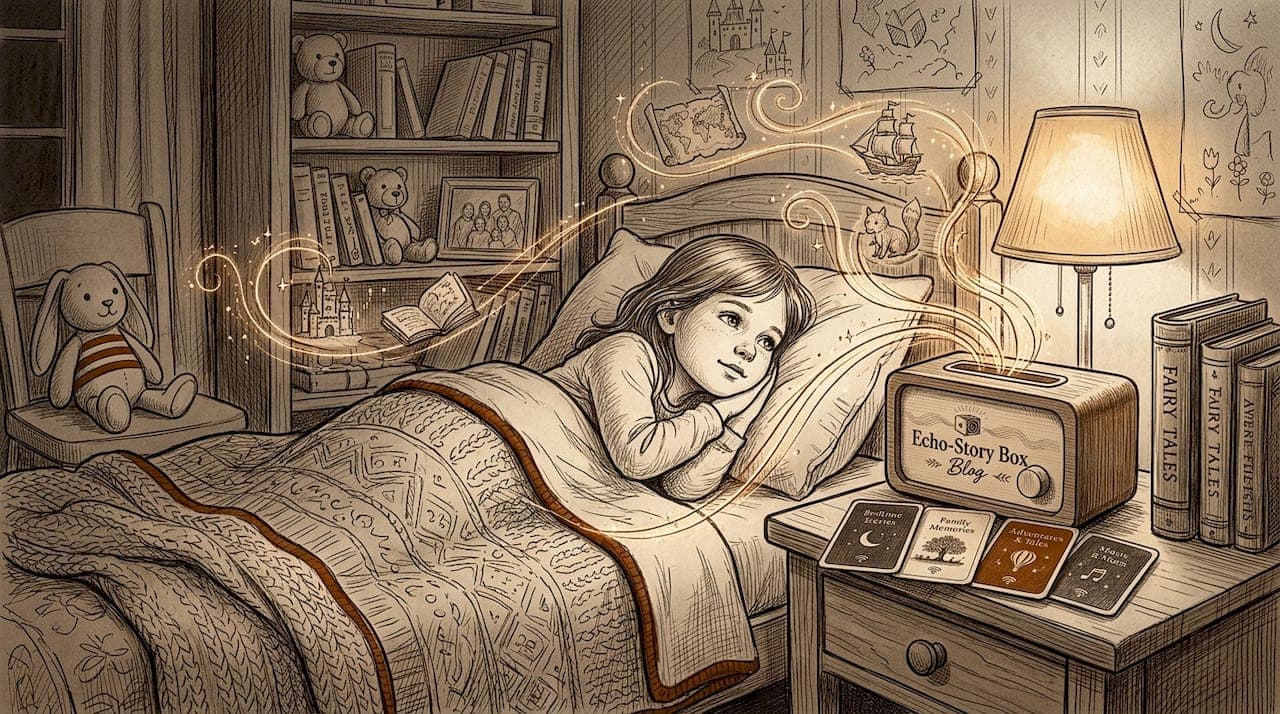
Bedtime can feel like a negotiation. You want calm. Your child wants one more episode. And somewhere between the screen glow and the "just five more minutes," the window for real rest quietly closes. The benefits of audio stories at bedtime offer a way out of that cycle. No blue light, no ads, no overstimulation. Just a voice, a story, and a child whose imagination does the rest. This article walks you through what the research actually says, how to build a simple routine around it, and why it works better than you might expect.
Table of Contents
- Why audio bedtime stories boost imagination and creativity
- How audio stories support language development and empathy at bedtime
- Audio stories as a calming bedtime ritual for better sleep
- Choosing and personalizing bedtime audio stories for family connection
- Comparison of audio stories versus other bedtime storytelling methods
- A fresh take on bedtime audio stories: Beyond passive listening
- Explore Echo-Story for enriching screen-free audio bedtime experiences
- Frequently asked questions
Key Takeaways
| Point | Details |
|---|---|
| Audio stories foster imagination | Listening to stories without visuals helps children create vivid mental images, boosting creativity and cognitive skills. |
| Enhance empathy and language | Bedtime audio stories, especially with parent interaction, improve children’s understanding of emotions and vocabulary. |
| Support relaxation and sleep | Audio stories provide a calm bedtime ritual that reduces stress and promotes longer, higher-quality sleep. |
| Personalize for connection | Choosing age-appropriate stories and adding simple reflection questions strengthens family bonding and engagement. |
| Audio offers flexible storytelling | Audio stories provide a screen-free, convenient option that combines benefits of live reading with busy family lifestyles. |
Why audio bedtime stories boost imagination and creativity
Unlike videos or picture books, audio stories hand your child a blank canvas. There are no images to follow. No animations to watch. Your child has to build the world themselves, one word at a time. That mental work is far more valuable than it sounds.
Research from Northwestern University confirms that imagination is more than sensory replay, activating higher-level brain regions that go well beyond simply recalling what we've seen or heard. Audio bedtime stories tap directly into that process, encouraging children to construct vivid mental scenes rather than passively receive them.
Over time, this nightly practice builds what educators call creative fluency. That is the ability to generate ideas quickly, make unexpected connections, and think from someone else's point of view. These are not small skills. They show up in problem-solving, in friendships, and in school.
Here are a few ways audio stories actively build imagination in children aged 4 to 10:
- Mental imagery: Children picture characters, settings, and action entirely from sound, strengthening visualization skills
- Narrative prediction: Without visual cues, children naturally anticipate what happens next
- Emotional interpretation: Tone of voice and pacing teach children to read emotional nuance
- Creative ownership: Every child's mental version of the story is uniquely their own
You can deepen this even further by pausing the story occasionally and asking, "What do you think the forest looks like?" or "How do you picture that character's face?" These small moments turn listening into active, creative thinking. You can explore more about audio story benefits research and how intentional listening supports child development.
"The imagination is not simply replaying what we've experienced. It draws on higher cognitive processes to build something new." This is exactly what audio stories invite children to do every single night.
How audio stories support language development and empathy at bedtime
Beyond imagination, audio stories also nurture critical emotional and language skills in young children.
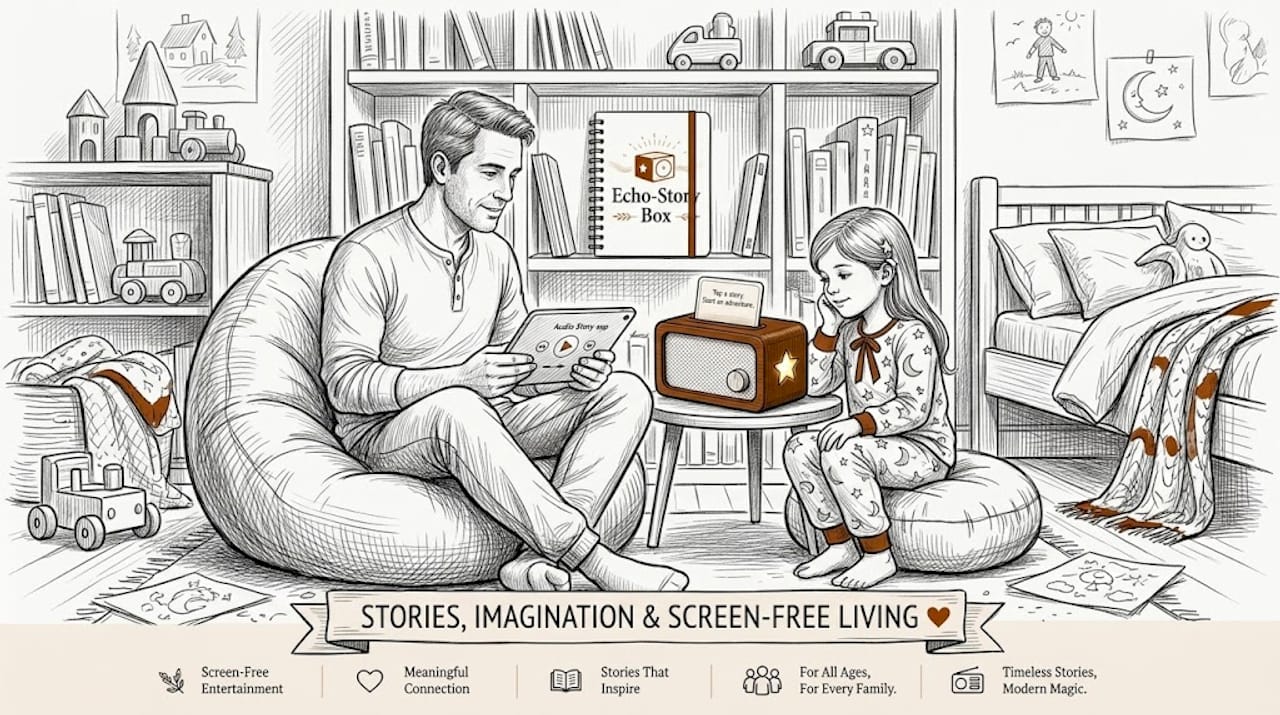
Children between ages 4 and 10 are in a rapid language growth phase. Every new word they hear in context, every sentence structure they absorb, every character motivation they try to understand adds to that foundation. Audio bedtime stories deliver rich language exposure in a relaxed, receptive state, which is one of the best conditions for learning.
A PLOS ONE study on bedtime reading found that consistent bedtime routines involving stories, including audio, improve children's cognitive empathy and creative thinking. Importantly, the study found that adding reflection questions boosted creative fluency even further. That is a meaningful finding for parents who want to do more than just press play.
Harvard researchers have also pushed back on the idea that listening is somehow lesser than reading. Audiobooks build genuine comprehension and vocabulary skills, and for emerging readers, they can actually motivate a stronger interest in print books over time.
Here is a simple four-step approach to getting the most language and empathy benefit from your bedtime audio routine:
- Choose stories with rich characters. Look for narratives where characters face real dilemmas, not just surface-level adventures.
- Listen together when you can. Even sitting nearby while your child listens signals that stories matter.
- Ask one question after the story ends. "How do you think she felt when that happened?" is enough.
- Let your child lead the conversation. Their answer matters more than the "right" answer.
Pro Tip: You do not need a long discussion. One genuine question and one honest answer from your child does more for empathy development than a ten-minute debrief. Keep it light and curious.
Explore bedtime story cognitive benefits for more on how intentional listening shapes young minds.
Audio stories as a calming bedtime ritual for better sleep
In addition to cognitive benefits, audio stories also serve as soothing rituals that improve your child's sleep quality.
Screens at bedtime are a real problem, not just a parenting preference. The blue light emitted by tablets and televisions suppresses melatonin, the hormone that signals to the body it is time to sleep. Audio stories sidestep this entirely. There is nothing to look at. The room can be dark. The body can begin to relax while the mind is still gently engaged.
Listening to calm audio can reduce stress by up to 68% in just a few minutes, making it one of the most effective tools for easing the transition from an active day to restful sleep. That is not a small number. For children who struggle to wind down, that kind of stress reduction can make the difference between a smooth bedtime and a difficult one.
There is also the power of routine itself. Children's brains respond strongly to predictable cues. When the same story time happens in the same place at the same time each night, the brain begins to associate that experience with sleep. Over time, simply pressing play becomes a signal that the day is done.
Children with language-based bedtime routines fall asleep faster and sleep longer, which in turn supports memory consolidation and the cognitive gains that come from the stories themselves. It is a reinforcing loop. Better sleep means better learning. Better learning means more from every story.
Key reasons audio stories support better sleep:
- No blue light means melatonin production stays on track
- Calm narration slows breathing and heart rate naturally
- Predictable routine cues the brain to shift into sleep mode
- No visual stimulation allows the body to settle without distraction
A quiet room, a familiar voice, and a good story. That is one of the simplest and most effective sleep environments you can create for a child.
Pro Tip: Set the audio story to end about ten minutes before you want your child fully asleep. That quiet window after the story ends gives their mind a gentle landing before sleep takes over. Try bedtime routine audio stories to find options that fit your family's rhythm.
Choosing and personalizing bedtime audio stories for family connection
Now that you understand the benefits, here is how to choose and personalize audio stories for your family's best experience.
The single biggest factor in whether your child stays engaged is whether the story feels relevant to them. A 5-year-old who loves animals will tune in completely differently to a story about a rabbit's adventure than to a generic fairy tale. A 9-year-old curious about history will lean in when a story features a real moment from the past. Interest drives attention, and attention drives benefit.
Simple caregiver questions during or after audio stories create what researchers call interactive loops, moments where the child processes the story actively rather than passively. These loops are what separate a meaningful bedtime experience from background noise.
Here is what to look for when selecting audio stories for children aged 4 to 10:
- Age-appropriate length: 10 to 15 minutes for ages 4 to 6; 15 to 25 minutes for ages 7 to 10
- Character-driven narratives: Stories with relatable characters facing real feelings and choices
- Calming narration style: Voices that are warm, measured, and free of jarring sound effects
- Values woven in naturally: Courage, kindness, curiosity, and honesty taught through story, not lecture
| Child's age | Recommended story length | Story complexity | Best themes |
|---|---|---|---|
| 4 to 5 years | 10 to 12 minutes | Simple, one main character | Friendship, animals, home |
| 6 to 7 years | 12 to 18 minutes | Two to three characters, mild conflict | Adventure, kindness, curiosity |
| 8 to 10 years | 18 to 25 minutes | Multiple characters, real dilemmas | History, courage, problem-solving |
Pro Tip: Let your child pick the story card or choose from two options. That small act of ownership increases their investment in listening and makes the routine feel like something they want, not something that happens to them. Learn more about how to customize audio storytelling for your family's unique needs.
Comparison of audio stories versus other bedtime storytelling methods
To wrap up the main content, here is how audio stories stack up against traditional and screen-based bedtime storytelling options.
Every family is different. Some nights you have the energy to read aloud for twenty minutes. Other nights, you are running on empty by 7:30 p.m. Understanding what each method offers helps you make the best choice for your family on any given night.
Both live reading and audio stories improve empathy and creativity. Audio offers flexible, stress-reducing advantages, while screens consistently disrupt sleep patterns and reduce the mental effort children put into imagining the story.
| Method | Sleep impact | Imagination boost | Parent energy required | Flexibility |
|---|---|---|---|---|
| Live reading | Positive | High | High | Low |
| Audio stories | Very positive | High | Low | High |
| Screen-based stories | Negative (blue light) | Low | Very low | High |
A few things worth noting from that comparison:
- Live reading wins on direct connection, but it requires you to be present, alert, and available every night
- Audio stories match live reading on imagination and empathy when paired with brief reflection conversations
- Screen-based storytelling is the easiest option in the short term but consistently works against the sleep and development goals you are trying to support
- Combining audio with a short parent-child conversation gets you most of the benefits of live reading without the same demand on your time and energy
The honest takeaway is that audio stories are not a lesser substitute for live reading. They are a genuinely strong option that fits real family life, and they are far better than the screen-based alternative most families default to. Explore the storytelling methods comparison to see how different approaches can work together in your home.
A fresh take on bedtime audio stories: Beyond passive listening
Here is something most articles on this topic miss entirely. The biggest factor in whether audio stories deliver their full benefit is not the story itself. It is what you do with it.
Most parents treat audio stories as a handoff. Press play, leave the room, done. And honestly, that is still better than a tablet. But the research points clearly to something more valuable: the brief, genuine conversation that happens around the story is where much of the developmental magic lives.
We call this the "pause and ponder" approach. You do not need to listen to the whole story with your child every night. But if you can sit for the first five minutes, ask one question at the end, or simply say "tell me your favorite part," you have created a shared meaning-making moment. That is what replicates the warmth and benefit of live reading, without requiring you to perform a nightly dramatic reading when you are exhausted.
The other thing worth saying plainly: audio stories work best when they feel like a gift, not a task. If your child senses that you chose this because it is good for them, they will resist it. If they feel like this is the special, calm, cozy part of the day that belongs to them, they will protect it. The routine itself becomes the reward.
That shift in framing, from "healthy habit" to "our story time," is small but powerful. And it starts with you enhancing bedtime story connection by showing up for even a few minutes of it.
Explore Echo-Story for enriching screen-free audio bedtime experiences
Ready to enhance your family's bedtime with expert-designed audio stories? Echo-Story is here to help you start tonight.
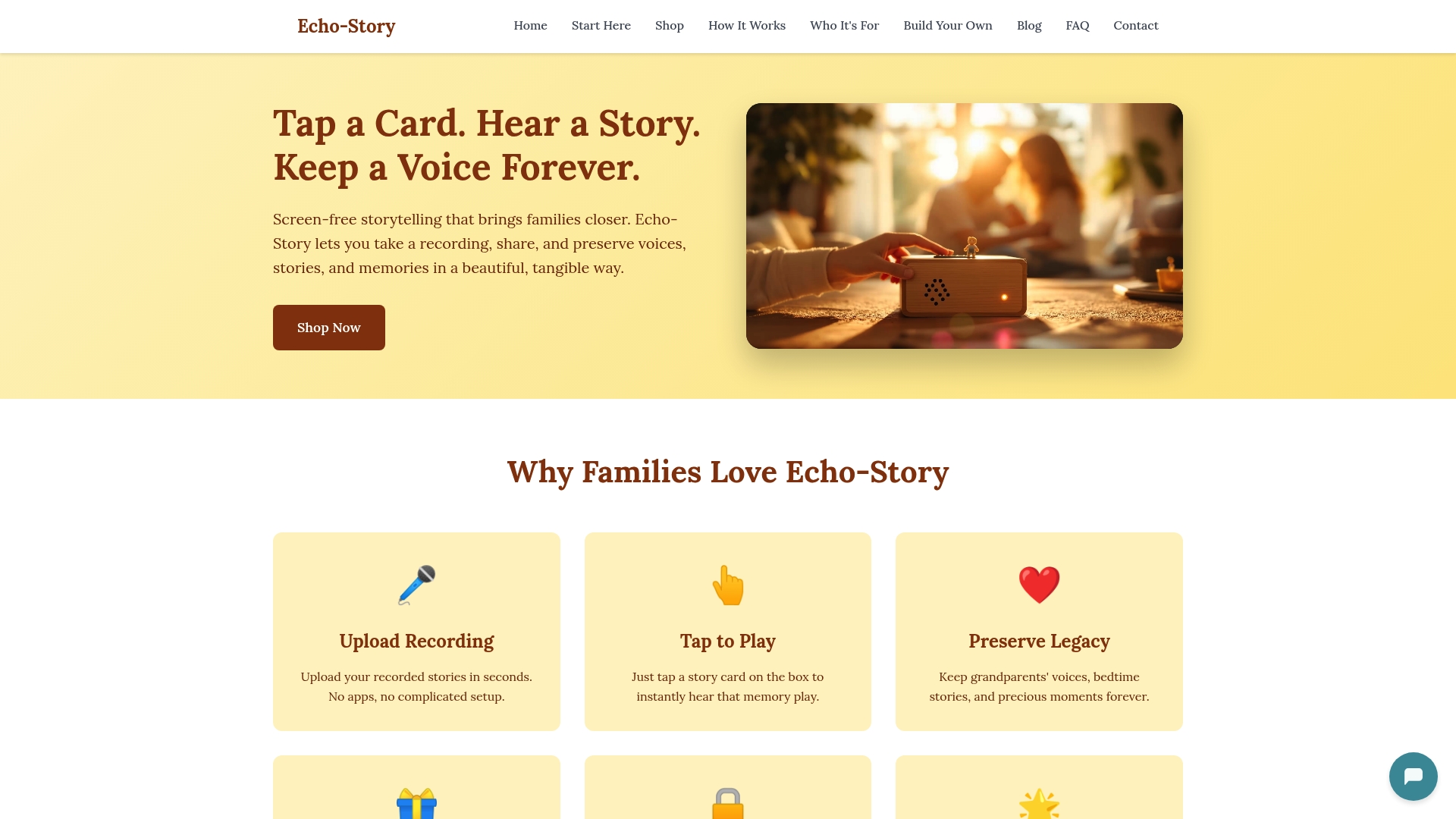
Echo-Story Box offers a warm library of Echo-Story family audio stories crafted specifically for children aged 4 to 10. Each story is designed to calm, engage, and spark the kind of conversation that brings families closer. There are no ads, no screens, no endless menus. Just tap a story card and listen. Whether your child loves animals, history, adventure, or faith-based tales, there is a story waiting for them. You can even record your own voice for a truly personal bedtime experience. Discover the full range of Echo-Story benefits and find the stories your family will return to night after night.
Frequently asked questions
Are audio stories as effective as live reading for my child's development?
Audio stories provide many of the same benefits as live reading, especially when combined with brief parent-child discussions. Bedtime reading with reflection prompts improves both empathy and creative thinking in children.
Can audio stories help my child fall asleep faster?
Yes. Calm audio stories reduce stress and signal to the brain that it is time to wind down. Audiobooks reduce stress by up to 68%, making them one of the most effective calming bedtime audio options available.
How should I choose audio stories suitable for my child's age?
Pick stories that match your child's interests and developmental level, and let them choose from a small selection to keep them motivated. Shorter, simpler stories work best for ages 4 to 6, while older children enjoy longer narratives with more complex characters.
Is it important to talk with my child about the audio story?
Yes, even one simple question makes a real difference. Asking how a character felt or what might happen next deepens empathy and encourages creative thinking. Reflection questions during stories measurably enhance creative fluency in children.
Can audio stories replace screen time at bedtime?
Audio stories are a strong screen-free alternative that avoids blue light exposure entirely. Screen time at bedtime disrupts sleep, but audio stories reduce that disruption while still engaging your child's imagination in a calm, healthy way.