
A consistent bedtime routine is the single most effective tool parents have for improving child sleep quality, reducing night wakings, and supporting emotional regulation the next day. Research confirms that routines practiced five or more nights per week produce measurable improvements in sleep consolidation and social-emotional outcomes, especially by 24 months. The bedtime routine benefits for child sleep quality extend well beyond the bedroom. Children who sleep better show stronger memory, calmer moods, and more cooperative behavior throughout the day. If your child is struggling to settle at night, a predictable nighttime ritual is the place to start.
1. What a consistent bedtime routine actually looks like
A consistent bedtime routine is a set of calming, predictable activities performed in the same order, at roughly the same time, every night. The key word is consistent. Clinical guidelines recommend routines that last 20 to 45 minutes, with screens turned off at least 60 minutes before sleep. That screen-free window allows the brain to produce melatonin naturally, which is the hormone that signals the body it is time to rest.
Effective routines typically include a combination of:
- A warm bath or gentle wash
- Brushing teeth
- Changing into pajamas
- Reading a book or listening to a calm audio story
- Quiet cuddling or a short conversation about the day
- A consistent "closing" phrase or song that signals sleep is next
The sequence matters as much as the activities themselves. Each step acts as a cue that tells your child's nervous system to shift from active to calm. Think of it as a series of gentle signals, each one bringing your child one step closer to sleep readiness.
Pro Tip: Start your routine at the same time each evening, even on weekends. Consistency across all seven nights builds the strongest sleep associations, though five or more nights weekly is the research-backed minimum for measurable benefit.

2. Earlier and easier sleep onset
One of the clearest bedtime schedule advantages is that children fall asleep faster. When the same sequence of activities happens night after night, the brain begins to anticipate sleep before the child even gets into bed. The bath, the story, the dim lights — each one lowers arousal and prepares the body for rest.
Between 20 and 30 percent of infants and toddlers experience sleep difficulties, and predictable routines are one of the most effective ways to reduce sleep latency. That means less time lying awake, less frustration for your child, and fewer exhausting negotiations for you.
3. Longer, deeper sleep through the night
A well-structured routine does not just help children fall asleep. It helps them stay asleep. Consistent nighttime rituals stabilize the circadian rhythm, which governs the body's internal sleep-wake clock. When that rhythm is steady, children cycle through sleep stages more smoothly and wake less often between cycles.
Stabilizing the circadian rhythm also supports hormone regulation, mood balance, and even metabolism. For young children, this means deeper, more restorative sleep that directly fuels growth and brain development. The effects of routine on sleep are cumulative. The longer you maintain the routine, the stronger the sleep associations become.
4. Reduced night wakings and fewer early mornings
Children who follow a consistent routine wake less frequently during the night. This is partly because the routine teaches self-soothing. When children learn to fall asleep independently at the start of the night, they are better equipped to return to sleep on their own when they naturally rouse between sleep cycles.
Participatory, developmentally tailored activities like reading and gentle stretching improve sustained sleep outcomes over time. This is not a short-term fix. Parents who maintain routines consistently report fewer night interruptions within weeks, and the improvement tends to hold as long as the routine stays in place.
5. Better emotional regulation and daytime behavior
Sleep and emotional regulation are tightly connected. Children who sleep well are better able to manage frustration, tolerate transitions, and respond calmly to challenges. The bedtime routine itself also contributes directly to emotional security. The predictability of the routine tells your child: this is safe, this is known, everything is okay.
Reading books as part of bedtime routines not only improves sleep quality but also enhances language skills and parent-child bonding. That combination of better sleep and stronger emotional connection produces children who are noticeably calmer and more cooperative during the day. Teachers and caregivers often notice the difference before parents do.
6. Stronger memory and cognitive focus
Sleep is when the brain consolidates learning. During deep sleep, the hippocampus transfers information from short-term to long-term memory. Children who get consistent, quality sleep retain more of what they learned during the day, whether that is a new word, a math concept, or a social skill practiced at preschool.
Improving child's sleep through a reliable routine is one of the most direct investments you can make in your child's cognitive development. The positive sleep habits you build now create a foundation that supports learning well into the school years. This is not abstract. It shows up in attention span, vocabulary growth, and problem-solving ability.
7. Reduced parental stress and a stronger parent-child bond
A predictable bedtime routine benefits the whole family, not just the child. When parents know what to expect each evening, bedtime becomes less of a battle and more of a shared ritual. That shift in tone matters. A calmer bedtime means less parental frustration, fewer power struggles, and more genuine connection.
"Engagement of child and caregiver is key to lasting benefits." — Bedtime Routine Engagement Strategies, MDPI
When you involve your child in the routine — letting them choose the story, pick their pajamas, or decide the order of steps — you increase their buy-in and reduce resistance. That participation also deepens the bond between you, turning a functional task into a meaningful nightly ritual.
8. How to build and maintain a routine that actually sticks
Building a routine is straightforward. Maintaining it through travel, illness, and developmental changes takes a bit more intention. Here is a practical framework to get started and keep going:
- Watch for drowsy signs, not the clock. Yawning, eye rubbing, and quieting down are signals that your child is entering the optimal sleep window. Starting the routine based on drowsy signs rather than a fixed time improves sleep success, especially in younger children.
- Keep the sequence short and calm. Aim for 20 to 45 minutes. Longer routines tend to drift into stimulating territory.
- Set firm, kind boundaries around stalling. Children use bedtime stalling as a social-emotional signal. Structured closing rituals reduce resistance without undermining your child's sense of security.
- Use a visual chart for younger children. A simple picture chart showing each step of the routine gives children a sense of control and makes transitions easier.
- Run booster sessions after disruptions. Travel, holidays, and illness break routines. Visual progress tracking and brief booster sessions help families re-establish habits quickly after a break.
Pro Tip: If your child resists the routine, try a wind-down routine guide to identify which calming activities work best for their temperament. Some children respond better to audio stories than to reading, especially if they are too tired to focus on a book.
9. Comparing popular bedtime activities by sleep benefit
Not all bedtime activities are equally effective. The table below compares common routine elements so you can choose what fits your child and your evenings.
| Activity | Sleep benefit | Additional benefit | Feasibility |
|---|---|---|---|
| Warm bath | Lowers core body temperature, triggering sleepiness | Sensory calming, transitions child from play mode | Easy, 10 minutes |
| Reading aloud | Reduces stimulation, builds sleep association | Language development, parent-child bonding | Easy, 10-15 minutes |
| Screen-free audio stories | Maintains calm without visual stimulation | Imagination, vocabulary, emotional processing | Very easy, no screen needed |
| Gentle yoga or stretching | Releases physical tension, slows breathing | Body awareness, self-regulation | Moderate, 5-10 minutes |
| Cuddling and quiet talk | Lowers cortisol, builds emotional security | Attachment, emotional regulation | Easy, 5 minutes |
| Soft music or lullabies | Slows heart rate, signals sleep time | Auditory soothing, cultural connection | Very easy, passive |
Screen-free audio stories stand out because they deliver the calming benefits of storytelling without the blue light exposure that disrupts melatonin. For children who love stories but are too wired for a read-aloud, audio is a practical and gentle alternative. You can explore slow bedtime routines that combine several of these activities in a sequence that works for your family.
Key takeaways
A consistent bedtime routine improves child sleep quality by reducing sleep latency, extending sleep duration, and building the emotional security children need to settle and stay asleep.
| Point | Details |
|---|---|
| Consistency is the foundation | Routines practiced five or more nights weekly produce the strongest sleep and emotional benefits. |
| Timing follows the child | Starting the routine at drowsy signs, not a fixed clock time, improves sleep onset success. |
| Screen-free activities work best | Turning off screens 60 minutes before bed supports natural melatonin production. |
| Participation sustains the habit | Involving children in routine choices increases engagement and reduces long-term resistance. |
| Benefits extend beyond sleep | Better sleep produces calmer moods, stronger memory, and improved daytime behavior. |
What I've learned from watching families build bedtime routines
I have seen a lot of families try to fix bedtime by adding more structure, more rules, and more enforcement. That rarely works on its own. What actually works is slowing down and paying attention to the child in front of you.
The most common mistake I see is starting the routine too late. By the time a child is overtired, fatigue is often confused with sleepiness, and the optimal drowsy window has already passed. The child becomes wired instead of calm, and the routine feels like a fight. Moving the routine 20 to 30 minutes earlier often solves what parents assume is a behavioral problem.
The second thing I have noticed is that routines work best when children feel like participants, not passengers. A child who helped choose the story, who knows what comes next, and who has a visual chart on the wall is a child who cooperates. That is not permissive parenting. That is smart design.
Finally, do not let perfect be the enemy of consistent. A five-minute routine on a hard night is better than skipping it entirely. The habit is the point. The non-pharmacological approaches that work for persistent sleep problems, like gradual sleep training and CBT-I, all share one thing: they build predictability and self-soothing over time. Your nightly routine does the same thing, one quiet evening at a time.
— Bob
A calmer bedtime starts with the right story

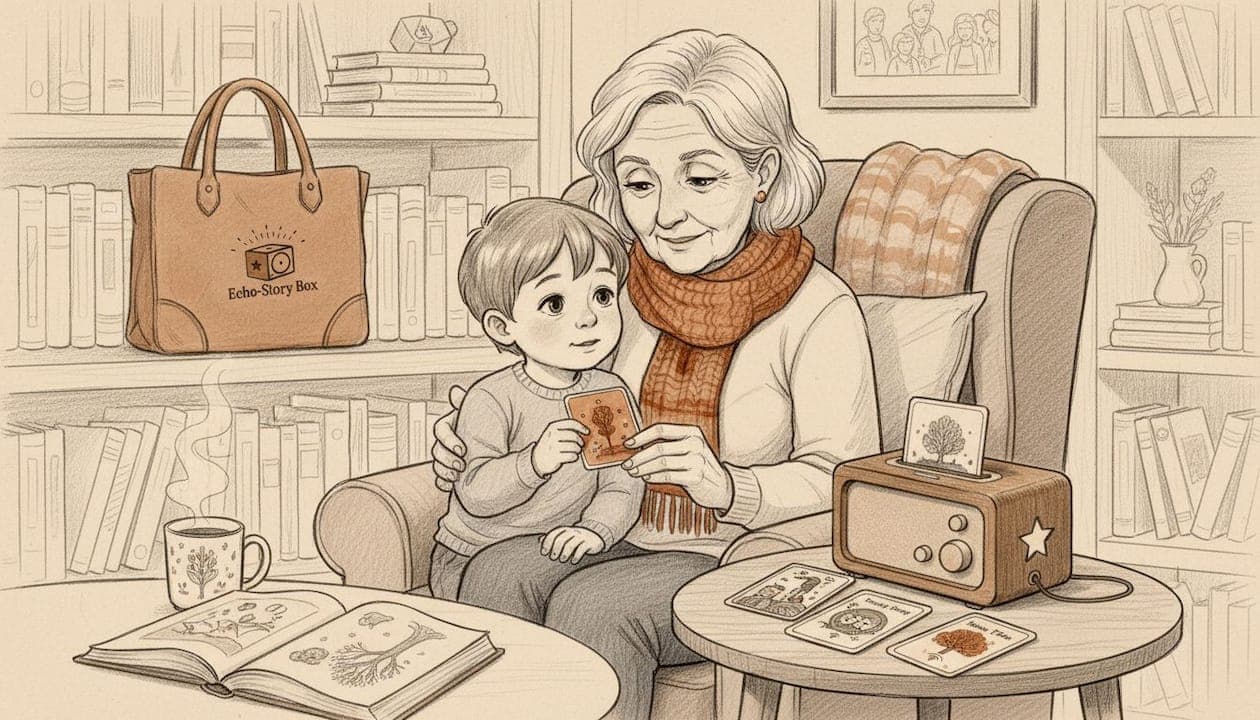
The activity that shows up most consistently in research-backed bedtime routines is storytelling. It calms the nervous system, builds language, and creates a moment of genuine connection between parent and child. Echostory-box makes that part of your routine simple and screen-free. Children tap a story card on the Echo-Story Box and a calm, imaginative audio story begins. No scrolling, no ads, no bright screens. Just a story and a child ready to drift off. If you want a gentle way to enhance sleep quality and make bedtime something your child looks forward to, explore Echo-Story Box and find the right fit for your family.
FAQ
How long should a child's bedtime routine be?
Clinical guidelines recommend a bedtime routine lasting 20 to 45 minutes. Shorter routines may not provide enough calming transition time, while longer ones can drift into stimulating activity.
What age should you start a bedtime routine?
You can begin a simple bedtime routine as early as six to eight weeks. Consistent routines show measurable sleep benefits by 15 to 24 months, but starting earlier builds the habit sooner.
Does screen time before bed really affect sleep?
Yes. Screens should be turned off at least 60 minutes before bedtime because blue light suppresses melatonin production, making it harder for children to fall asleep naturally.
What if my child keeps stalling at bedtime?
Stalling is a normal social-emotional behavior. A structured closing ritual, such as a final phrase or song that signals the end of the routine, reduces resistance without dismissing your child's need for connection.
How do audio stories compare to reading aloud at bedtime?
Both support sleep and language development. Audio stories at bedtime offer the added advantage of being screen-free and can be used independently by children, making them a practical option when parents need a hands-off wind-down tool.