

Tactile bedtime activities are sensory-based actions using touch and pressure to calm children before sleep, directly engaging the nervous system to reduce arousal and ease the transition to rest. Occupational therapists classify these as proprioceptive and deep-pressure techniques, and they work by activating the parasympathetic nervous system, the body's natural "rest and digest" state. Consistent sensory-based routines reduce sleep onset time and middle-of-the-night wake-ups within just 7 days. That is a meaningful result for any parent who has spent an hour coaxing a wired child to sleep.
What tactile bedtime activities calm children and why they work
The human nervous system processes several types of sensory input at once: visual, auditory, tactile, and proprioceptive. Not all of them calm a child down. Visual input from screens and bright lights raises alertness. Loud or unpredictable sounds do the same. Tactile and proprioceptive inputs, meaning touch, pressure, and joint feedback, work in the opposite direction.
Proprioceptive and deep-pressure inputs reduce cortisol and activate the parasympathetic nervous system to induce relaxation. Cortisol is the stress hormone that keeps children alert and reactive. When you apply firm, predictable pressure to a child's body, cortisol drops and the body shifts toward calm.
Here is why tactile input beats other sensory channels at bedtime:
- Tactile pressure is predictable and controllable, unlike sound or light.
- Proprioceptive feedback from joint compression gives the nervous system clear, organizing information.
- Repetitive gentle touch creates a rhythm the brain recognizes as safe.
- Deep pressure from weighted blankets or firm hugs mimics the sensation of being held.
- Light, unpredictable touch (tickling, fast strokes) has the opposite effect and should be avoided before sleep.
The key distinction is between organizing input and alerting input. Firm, slow, and repetitive touch organizes. Fast, light, and unpredictable touch alerts. Every tactile choice you make at bedtime either moves your child toward sleep or away from it.
How to set up a sensory bedtime routine that works
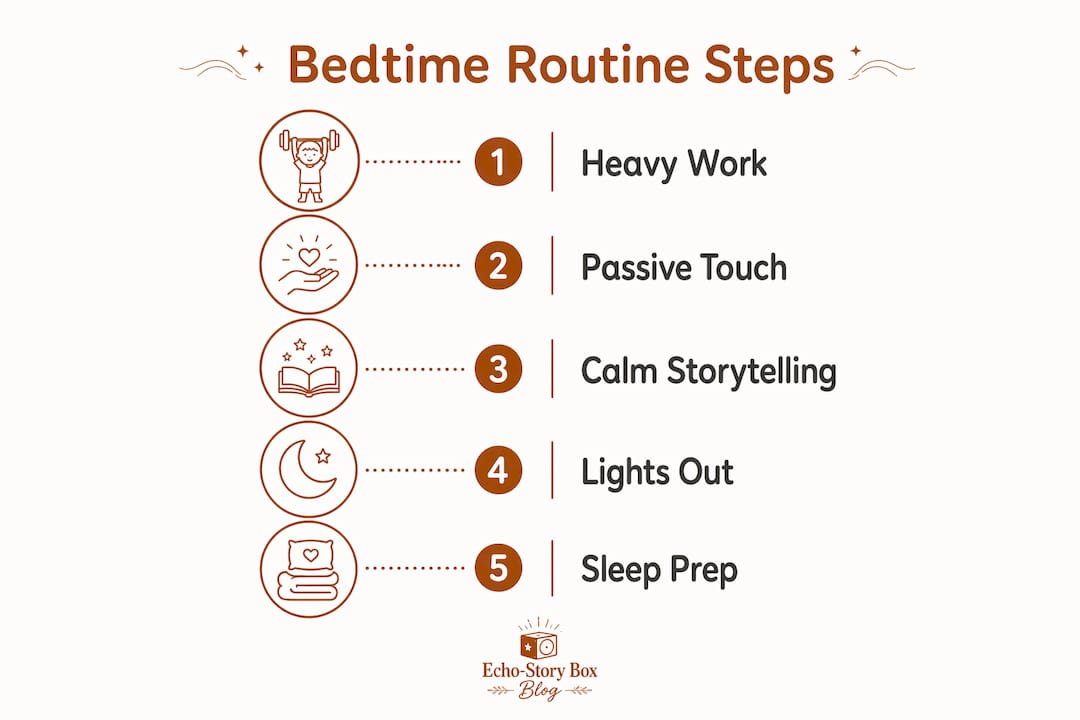
A well-structured sensory bedtime routine follows a clear two-phase sequence: active input first, passive input last. This order is not optional. It reflects how the nervous system shifts from high arousal to low arousal.
Effective bedtime routines begin 60 minutes before sleep with 10–15 minutes of heavy work, then 15 minutes of passive deep pressure and calming tactile input. Heavy work means activities that load the joints and muscles, giving the proprioceptive system a strong, satisfying signal.
- Minutes 60–45 before bed: Heavy work phase. Wall push-ups, carrying a laundry basket, animal walks (bear crawls, crab walks), or pushing a weighted cart. These activities burn off residual energy and begin regulating the nervous system.
- Minutes 45–20 before bed: Transition phase. Bath time with firm towel drying, putting on pajamas, brushing teeth. Keep the pace slow and predictable.
- Minutes 20–5 before bed: Passive tactile phase. Lotion massage, pillow presses, cuddling with a weighted blanket, or quiet tactile play with a soft toy.
- Final 5 minutes: Stillness. Lights low, voices quiet, child in bed with their comfort object.
Active sensory input must end 45–60 minutes before sleep. If heavy work runs too close to lights out, it re-energizes the child instead of calming them. The sequence matters as much as the activities themselves.
Pro Tip: Match the intensity of each phase to your child's sensory threshold. A child who seeks a lot of input may need a longer heavy work phase. A child who is easily overwhelmed may need shorter, gentler pressure in the passive phase.
Screens and novel, high-stimulation toys have no place in this window. They introduce visual and auditory alerting input that undoes the calming work of the tactile activities. A sensory bedtime environment with dim lighting and minimal noise supports every tactile activity you introduce.
What specific tactile activities calm children most effectively
The most reliable hands-on calming techniques share three qualities: firm pressure, slow rhythm, and predictability. Here are the activities that consistently deliver results.
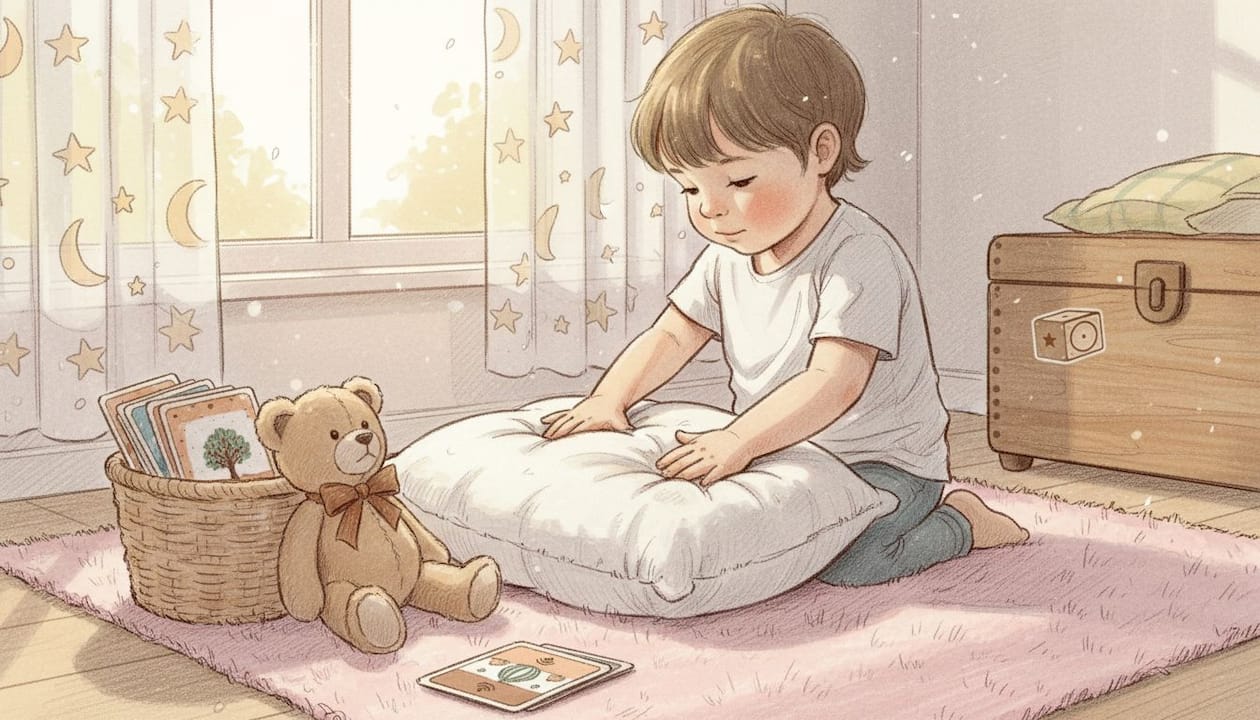
The pillow cloud press is one of the most effective quiet tactile activities for bedtime. The pillow cloud press calms children by stimulating the proprioceptive system with firm pressure on the tummy, arms, and legs. Apply firm pressure for 3 seconds per spot, twice per session. Use a soft pillow or your hands, press slowly, and move in a predictable pattern. Children often request this activity by name once they experience it.
Lotion massage delivers rhythmic deep pressure across large muscle groups. Use slow, firm strokes from the shoulders down to the feet. Avoid quick, light strokes. The rhythm is the point. A consistent massage pattern repeated nightly becomes a neurological trigger for sleep, not just a pleasant sensation.
Additional tactile activities that work well:
- Weighted blanket cuddle: Drape a child-appropriate weighted blanket over the legs and torso for 10–15 minutes before sleep.
- Soft fidget objects: Quiet, repetitive fidget tools aid winding down better than loud or high-energy toys. Choose objects that are soft, require slow repetitive movement, and make no sound.
- Hand and finger movements: Slow finger tracing on the child's palm or back of the hand is deeply calming. Keep the pressure firm enough to avoid tickling.
- Firm towel drying after bath: This is heavy work disguised as hygiene. Press firmly and move slowly from head to toe.
Pro Tip: Avoid light tickling or fast, unpredictable touch in the final 20 minutes before bed. These sensations activate the nervous system rather than calm it, even when children laugh and seem to enjoy them.
The goal is not to entertain your child. The goal is to give their nervous system a clear, repetitive signal that sleep is coming.
Troubleshooting common tactile bedtime routine challenges
Even a well-designed routine runs into problems. Knowing what to look for helps you adjust quickly.
"Routine success relies on boring, repetitive tactile activities in fixed order acting as neurological triggers rather than entertainment." — Occupational therapy practitioners
Signs that tactile input is too stimulating:
- Child becomes more active or silly during massage or pressing
- Giggling escalates rather than settling
- Child resists or pulls away from touch
Signs that tactile input is not enough:
- Child seems restless after the routine
- Frequent requests for "more" pressure or squeezing
- Difficulty settling even after a full routine
Matching the routine to the child's sensory threshold with "just right" input organizes the nervous system for sleep. Adjust pressure, duration, and activity type based on your child's response, not a fixed formula.
Common mistakes that undermine the routine:
- Switching tactile objects frequently. Consistency with one tactile object across naps and night sleep is more important than the texture of the object. Changing it disrupts the sleep association you have built.
- Allowing exciting play right before the passive phase. Even 5 minutes of rough-and-tumble play resets arousal levels.
- Skipping steps when you are tired or rushed. The predictable sequence is what makes the routine work neurologically.
If tactile strategies alone are not producing results after two weeks of consistent practice, consult a pediatric occupational therapist. Some children have sensory processing differences that require a personalized sensory diet beyond what a general routine provides.
How tactile routines reduce screen time and build better sleep
Screens delay sleep onset by suppressing melatonin and keeping the visual cortex active. Replacing screen time with soothing bedtime practices removes both problems at once. Tactile activities give children something engaging to do that moves them toward sleep rather than away from it.
Routine success depends on repetitive tactile activities in the same order each night, acting as neurological triggers rather than entertainment. That is the key insight most parents miss. The routine does not need to be exciting. It needs to be the same.
Here is how tactile routines compare to screen-based wind-down approaches:
| Factor | Screen-based wind-down | Tactile sensory routine |
|---|---|---|
| Effect on melatonin | Suppresses production | No interference |
| Nervous system impact | Alerting | Calming |
| Sleep association built | Device dependency | Body-based cue |
| Parental involvement | Minimal | High |
| Transferability | Requires device | Works anywhere |
Pairing tactile activities with calm audio storytelling adds another layer of sensory support. Bedtime listening habits that use gentle audio stories complement tactile input by giving the auditory system a quiet, predictable signal. The combination of firm touch and a familiar voice or story creates a powerful, multi-sensory sleep cue that children associate with safety and rest.
Key Takeaways
Tactile bedtime activities calm children by delivering firm, repetitive, proprioceptive input that lowers cortisol and activates the parasympathetic nervous system, making them the most effective screen-free tool for improving sleep onset.
| Point | Details |
|---|---|
| Sequence matters | Start with heavy work 60 minutes before bed, then shift to passive tactile input in the final 20 minutes. |
| Firm beats light | Deep, slow pressure calms the nervous system; light, unpredictable touch alerts it. |
| Repetition is the point | The same routine in the same order each night builds a neurological sleep trigger. |
| Consistency with objects | Use the same comfort object for naps and night sleep to protect the sleep association. |
| Replace screens with touch | Tactile routines remove melatonin-suppressing screen exposure and replace it with a calming, body-based cue. |
Why I think most parents underestimate the power of boring routines
Parents often come to tactile bedtime strategies looking for the perfect activity. They want the one thing that will finally make bedtime easy. What I have found, working with families over many years, is that the activity matters far less than the order and the repetition.
A simple lotion massage done in the same sequence every night will outperform a creative new sensory activity tried once. The nervous system does not respond to novelty at bedtime. It responds to familiarity. That is a hard sell for parents who feel like they should be doing something more interesting or elaborate.
The other thing I have learned is that parents need to watch their child, not follow a script. A child who is over-responsive to touch will tell you with their body. They will stiffen, giggle nervously, or pull away. A child who needs more input will keep asking for more squeezes. Slow bedtime routines that give parents room to observe and adjust are more effective than rigid programs.
Start simple. Pick two or three tactile activities. Do them in the same order every night for two weeks. Then assess. Most parents are surprised by how quickly children begin to settle when the routine becomes predictable enough to feel automatic.
— Bob
Echostory-box makes screen-free bedtime routines easier
Tactile routines work best when the whole environment supports calm. That means no screens, no notifications, and no unpredictable noise.

Echostory-box is a screen-free audio player designed for families who want a calming, tactile bedtime experience. Children tap a story card onto the box and a gentle audio story begins. There are no menus, no ads, and no glowing screens to undo the calming work of your tactile routine. The physical act of choosing and tapping a card is itself a quiet tactile cue that signals bedtime is here. Pair it with lotion massage or a weighted blanket and you have a complete, screen-free storytelling routine that children look forward to every night.
FAQ
What are tactile bedtime activities for children?
Tactile bedtime activities are sensory-based actions using firm touch, deep pressure, and repetitive movement to calm a child's nervous system before sleep. Examples include lotion massage, pillow presses, weighted blanket cuddles, and soft fidget objects.
How long should a tactile bedtime routine take?
A full sensory bedtime routine takes about 60 minutes. The first 10–15 minutes involve active heavy work, followed by a transition phase, and the final 15–20 minutes focus on passive tactile input like massage or gentle pressing.
Why do tactile activities calm children better than screens?
Tactile and proprioceptive inputs lower cortisol and activate the parasympathetic nervous system, which prepares the body for sleep. Screens suppress melatonin and keep the brain in an alert state, making sleep onset slower and harder.
How do I know if my child needs more or less tactile input?
If your child becomes more active or silly during tactile activities, reduce the intensity or duration. If they seem restless after the routine or keep asking for more pressure, increase the input or extend the heavy work phase.
Can I use the same tactile object every night?
Yes, and you should. Consistency with one comfort object, whether a blanket or soft toy, builds a strong sleep association. Using the same object for both naps and night sleep reinforces that cue more quickly.