

A sensory bedtime environment is a sleep space intentionally designed to regulate the sensory inputs a child experiences, including light, sound, temperature, touch, and smell, so their nervous system can shift from alert to calm. This is the recognized occupational therapy concept behind what many parents call "creating calming sleep spaces." Getting it right matters more than most caregivers realize. Children who struggle to fall asleep or stay asleep are often responding to unmanaged sensory signals in their bedroom, not simply being difficult. Stanford Lifestyle Medicine and occupational therapists consistently point to the physical environment as one of the most controllable factors in children's sleep quality and emotional regulation.
What is a sensory bedtime environment made of?
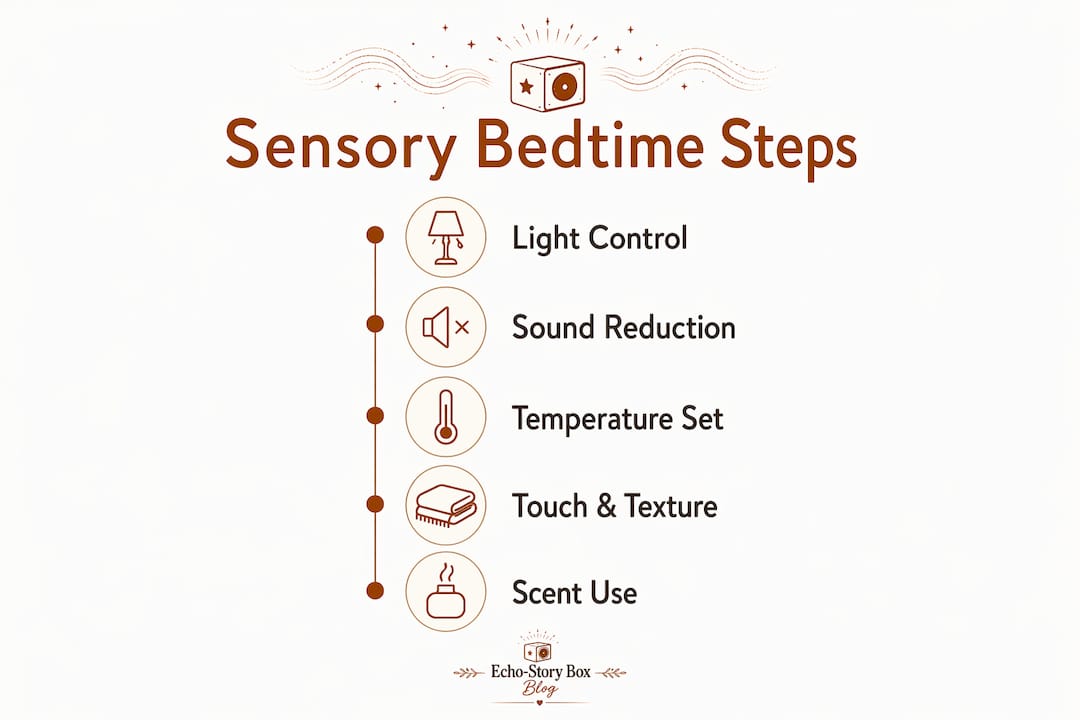
A sensory bedtime environment is built from five core inputs: light, sound, temperature, touch, and smell. Each one sends a direct signal to the brain, either telling it to power down or stay alert. Understanding each element gives you a clear starting point.
Light control
Light is the most powerful regulator of the body's sleep cycle. Blackout curtains block external light sources that keep the brain in a wakeful state. Pair them with a warm-toned, dim nightlight rather than overhead lighting during the wind-down period. Bright white or blue-toned light signals daytime to the brain, which delays sleep onset. Warm amber or red-toned light does the opposite.
Sound control
Unpredictable household sounds, a door slamming, a TV in another room, are among the most common causes of sleep fragmentation in children. White noise masks sudden sounds and lowers mental alertness by creating a consistent audio backdrop. A simple white noise machine, a fan, or a dedicated sound app all work. The goal is not silence but predictability.
Temperature regulation
The body drops its core temperature as part of the natural sleep process. A bedroom kept between 60–70°F supports that drop and helps children fall asleep faster. A room that is too warm works against the body's own sleep signals. This is one of the easiest bedtime environment elements to adjust and one of the most overlooked.

Touch and texture
Bedding texture matters more than most parents expect. Soft, breathable fabrics reduce tactile irritation that can keep a child restless. For children who need deeper input, weighted blankets at about 10% of the child's body weight provide safe deep pressure. Always consult a pediatrician or occupational therapist before introducing a weighted blanket, especially for younger children.
Smell
Scent is processed directly by the brain's limbic system, which governs emotion and memory. Lavender is the most studied calming scent for sleep. A light diffuser or a lavender-scented pillow spray can signal the brain that sleep is near. Avoid strong or unfamiliar odors in the bedroom, since novelty activates alertness rather than calm.
Pro Tip: Start with just one sensory change at a time. Adjusting light first is the easiest win. Once your child responds well, layer in sound and temperature changes over the following week.
How does sensory sensitivity affect children's sleep?
Not every child processes sensory input the same way. Occupational therapists describe two broad profiles: sensory-seeking children who crave more input, and sensory-avoidant children who are easily overwhelmed by it. Knowing which profile fits your child changes every decision you make about their sleep space.
A sensory-seeking child may need a weighted blanket, firm mattress pressure, or rhythmic sound to feel settled enough to sleep. A sensory-avoidant child may need the opposite: minimal tactile layers, near-silence, and very dim light. Using the wrong approach for the wrong profile can make sleep worse, not better.
Here are common signs to watch for:
- Sensory-seeking: Rolls in blankets, requests tight hugs before bed, asks for more stories or music, has trouble staying still
- Sensory-avoidant: Complains about clothing tags, reacts strongly to sudden sounds, prefers minimal bedding, becomes upset by changes in routine
One important nuance: absolute darkness increases anxiety in some sensory-sensitive children. A completely dark room is not automatically better. A dim, warm-toned nightlight gives spatial grounding without alerting the brain. This is a detail that generic sleep advice often misses.
A nighttime sensory diet is the occupational therapy term for a personalized plan of sensory inputs and removals designed to help a child transition to sleep. It is not about deprivation. It is about matching the environment to the child's specific nervous system needs. For children with sensory processing differences or neurodivergent profiles, working with a licensed occupational therapist is the most reliable path to a plan that actually works.
Pro Tip: Keep a simple sleep log for one week. Note what sensory conditions were present each night and how long it took your child to fall asleep. Patterns will emerge faster than you expect.
What does an effective sensory bedtime routine look like?
The physical environment is only half the picture. How a child arrives at bedtime matters just as much as what the room looks like. An effective sensory bedtime routine follows a specific sequence that moves the nervous system from active to regulated.
A 45–60 minute wind-down is the evidence-based standard. Here is how that sequence works in practice:
- Start with proprioceptive "heavy work" activities (30–40 minutes before bed). These are movements that give the body deep physical input: carrying laundry, doing wall push-ups, jumping on a small trampoline, or giving a firm back rub. This type of input tells the nervous system it has received enough stimulation and can begin to settle.
- Transition to low-stimulation activities (15–20 minutes before bed). This is where reading, gentle stretching, or listening to a calm audio story fits. The key is keeping light dim, voices soft, and screens completely off. Screens introduce blue light and unpredictable audio-visual stimulation that directly counteract the heavy work you just did.
- Enter the prepared bedroom environment. By this point, the room should already be set: temperature adjusted, nightlight on, white noise running, and bedding ready. Walking into a prepared space reinforces the sensory association between that environment and sleep.
- Final settling activity. A brief, consistent closing ritual, such as a short story, a quiet song, or a few slow breaths together, signals that the routine is complete. Consistency here is what builds the brain's sleep association over time.
Skipping the proprioceptive phase is the most common reason sensory bedtime routines fail. Parents often jump straight to the calm activities without first giving the body the physical input it needs to release tension. The result is a child who lies in bed restless and overstimulated. You can read more about structuring this sequence in this guide to bedtime wind-down routines.
How to set up a sensory-friendly bedroom for sleep
Setting up the physical space is a one-time investment that pays off every night. The goal is a room that feels predictable, calm, and free of stimuli associated with alertness.
A calm, organized bedroom removes visual noise that keeps the brain scanning for threats. Clutter signals chaos to the nervous system. Shelves with closed bins, minimal wall decorations, and a tidy floor all contribute to a space the brain reads as safe. This is not about perfection. It is about reducing the number of things competing for your child's attention when they should be winding down.
Consistent sensory tools matter more than perfect ones. Using the same white noise machine, the same blanket, and the same nightlight every night builds a powerful physical association. The brain learns: these signals mean sleep is coming. Changing tools frequently resets that learning. Sensory interventions show their full benefit only after consistent use over several weeks, so give any change real time before deciding it is not working.
Here is a quick comparison of common bedroom adjustments and their sensory purpose:
| Bedroom element | Sensory purpose | Best option |
|---|---|---|
| Window covering | Block alerting light | Blackout curtains |
| Sound management | Mask unpredictable noise | White noise machine or fan |
| Room temperature | Support body temperature drop | 60–70°F thermostat setting |
| Bedding texture | Reduce tactile irritation | Soft, breathable cotton or bamboo |
| Deep pressure | Calm the nervous system | Weighted blanket (10% body weight) |
| Ambient light | Reduce anxiety without alerting | Warm-toned dim nightlight |
Screens deserve a specific mention. Tablets, televisions, and phones in the bedroom introduce both blue light and unpredictable stimulation. Both work directly against the sensory environment you are building. Removing screens from the bedroom entirely is the single most impactful change most families can make. Replacing screen time with audio stories at bedtime gives children engaging content without the alerting effects of a screen.
Key takeaways
A sensory bedtime environment works because it removes alerting stimuli and replaces them with consistent, calming sensory signals that train the nervous system to associate the space with sleep.
| Point | Details |
|---|---|
| Five core sensory inputs | Light, sound, temperature, touch, and smell each send direct signals to the brain about whether to sleep or stay alert. |
| Match the child's profile | Sensory-seeking and sensory-avoidant children need different environments; using the wrong approach makes sleep harder. |
| Sequence the routine correctly | Start with proprioceptive heavy work, then transition to low-stimulation activities before entering the bedroom. |
| Consistency is the mechanism | The same tools, same room setup, and same sequence every night build the brain's sleep association over weeks. |
| Screens belong outside the bedroom | Blue light and unpredictable stimulation from devices directly undo the calming environment you create. |
What I have learned from building sensory bedtime routines
The hardest part of creating a sensory bedtime environment is not the setup. It is the patience required to let it work. Most parents I talk to make changes for three or four nights, see inconsistent results, and conclude the approach is not right for their child. In almost every case, the issue is not the strategy. It is the timeline.
The proprioceptive phase is the piece I see skipped most often, and it is the most important. Parents understandably want to get to the calm, cozy part of the routine. But a child who has not had enough physical input earlier in the evening will lie in bed with a body that still has energy to burn. The heavy work is not optional. It is the foundation everything else rests on.
I also want to push back gently on the idea that a sensory bedtime environment needs to be elaborate or expensive. Blackout curtains, a $20 white noise machine, and a consistent sequence of activities will outperform any high-end sleep gadget used inconsistently. The brain responds to pattern, not price tags.
If your child has significant sensory processing challenges, please do work with an occupational therapist. A professional can identify your child's specific sensory profile and build a personalized sensory plan that goes beyond general advice. General guidance gets most families 80% of the way there. The last 20% often requires someone who can observe your child directly.
Trust what you observe. You know your child better than any article does.
— Bob
How Echostory-box fits into your child's sensory bedtime

One of the simplest upgrades you can make to a sensory bedtime routine is replacing screen-based stories with audio stories. Echostory-box is a screen-free audio player designed exactly for this moment in the evening. Children tap a story card onto the box and a story begins. No scrolling, no ads, no blue light. Just a calm, engaging voice filling the room with imagination.
Audio storytelling fits naturally into the low-stimulation phase of the wind-down sequence. It gives children something to focus on without activating the alerting effects of a screen. Echostory-box also supports family voice recordings, so grandparents and parents can record their own bedtime stories as lasting keepsakes. Explore the full range of screen-free storytelling options and see how Echostory-box can become a gentle, consistent part of your nightly routine.
FAQ
What is the ideal bedroom temperature for children's sleep?
Stanford Lifestyle Medicine recommends keeping the bedroom between 60–70°F. This range supports the body's natural core temperature drop that signals readiness for sleep.
Do weighted blankets actually help children sleep?
Weighted blankets can help children who benefit from deep pressure input, but they should weigh approximately 10% of the child's body weight and be used with guidance from a pediatrician or occupational therapist.
Should a child's bedroom be completely dark at night?
Not necessarily. Some sensory-sensitive children experience increased anxiety in total darkness. A dim, warm-toned nightlight provides spatial comfort without sending alerting signals to the brain.
How long should a sensory bedtime routine take?
A well-structured sensory bedtime routine takes 45–60 minutes, starting with physical heavy-work activities and ending with 10–15 minutes of low-stimulation activities like listening to a calm story.
How soon will sensory bedtime changes improve my child's sleep?
Sensory tools and routines typically need several weeks of consistent use before showing their full benefit. Give any new approach at least two to three weeks before evaluating whether it is working.