
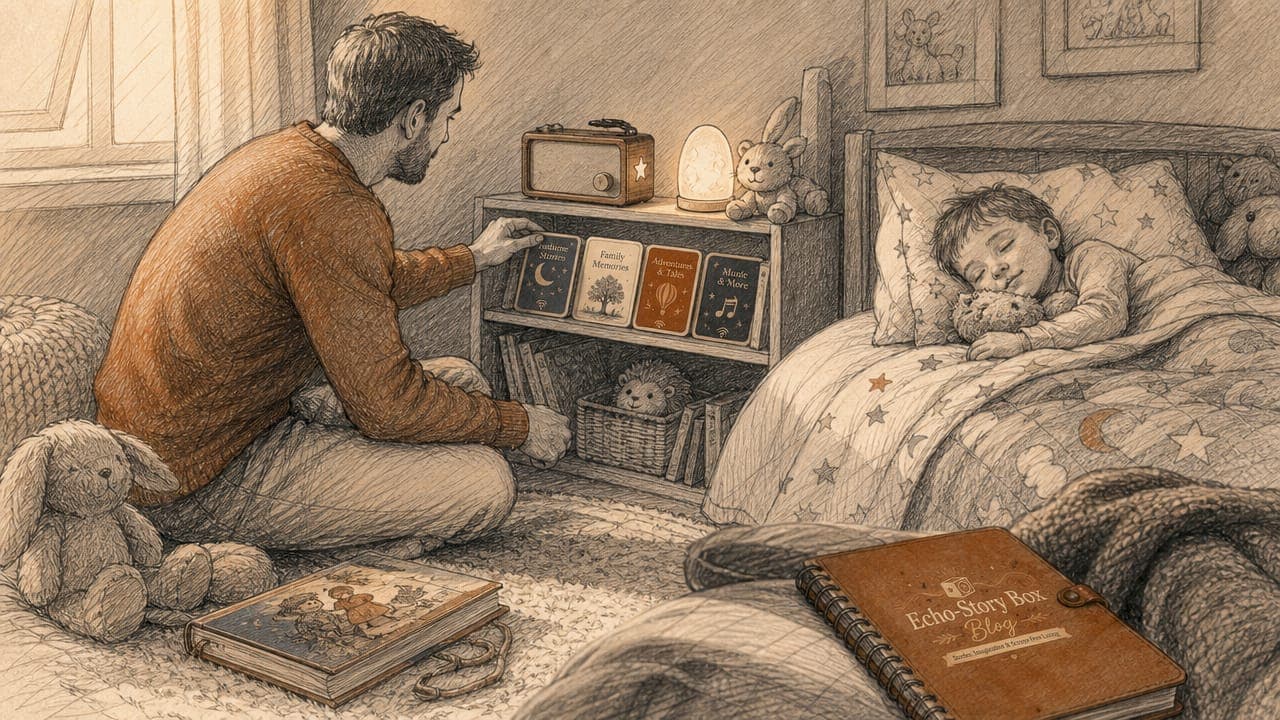
Bedtime listening habits improve child sleep by delivering slow, soothing audio cues that guide the nervous system from wakefulness into rest. The most effective formats are lyric-free instrumental music at 60–80 BPM or calm, narrated bedtime stories for children played at 40–50 decibels for 30–45 minutes before sleep. Research from BetterSleep confirms these parameters reduce sleep latency and improve overall sleep quality. Consistent audio routines work because they create predictable emotional rhythms, not entertainment. When your child hears the same gentle sounds every night, their brain begins to treat that audio as a signal that sleep is coming.
What bedtime listening habits improve child sleep most?
The most effective bedtime listening content is slow, lyric-free, and predictable. Instrumental music and calm narration lower muscle tension, reduce emotional arousal, and increase feelings of safety. That combination is exactly what a child's nervous system needs to shift from the stimulation of the day into genuine rest.

Lyrics are the biggest trap parents fall into. Words activate the language-processing centers of the brain, keeping children mentally engaged rather than winding down. Genres like ambient piano, soft orchestral music, and nature soundscapes avoid this problem entirely. Solfeggio frequencies, particularly 432 Hz recordings, are also widely used by parents for their calming effect, though the research on specific frequencies is still developing.
The other major mistake is choosing audio that is too exciting. A fast-paced adventure audiobook or an energetic podcast keeps a child's imagination running at full speed. The goal of calming sleep habits is to hold just enough attention to prevent restlessness without firing up active thinking. A gentle, familiar story narrated in a slow, warm voice threads that needle well.
Familiar content also matters more than parents expect. When a child has heard the same story or playlist many times, they stop anticipating what comes next. That predictability is calming, not boring. It removes the cognitive effort of following something new and lets the mind drift naturally toward sleep.
Pro Tip: Choose self-contained audio that ends cleanly. A story or playlist with a clear ending signals that the day is done. Autoplay keeps the brain alert waiting for the next sound, which disrupts sleep onset rather than supporting it.
How to build a calming bedtime listening routine
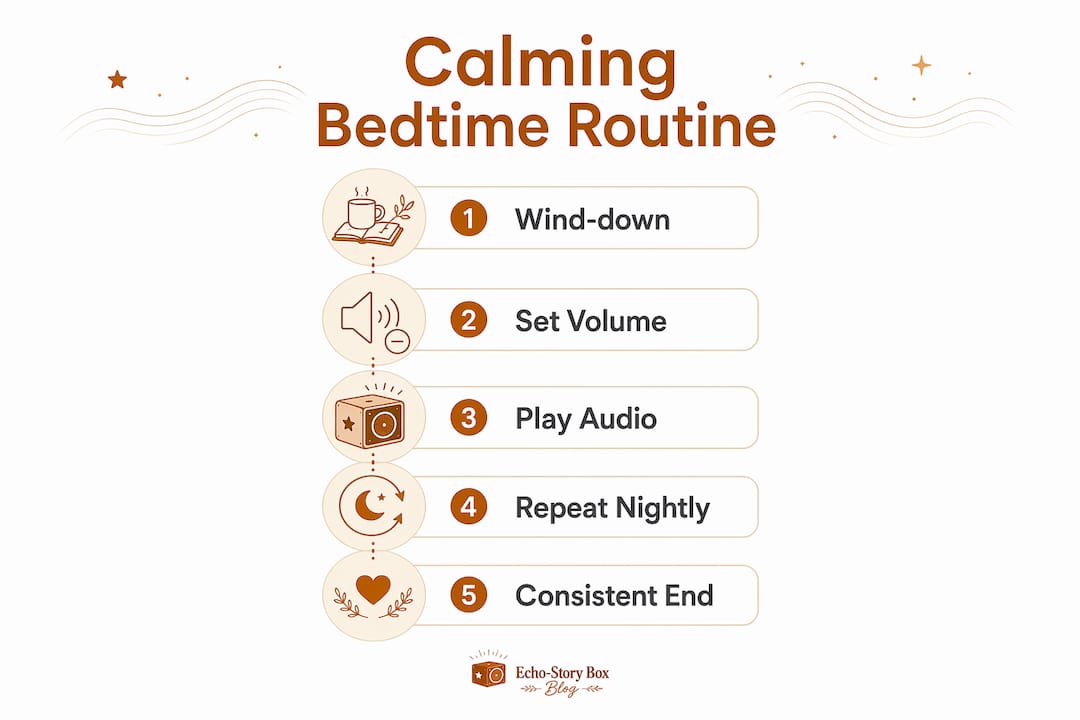
The foundation of any effective routine is a wind-down window of 30–60 minutes before sleep. Think of it as a dimmer switch, not a light switch. You are not flipping your child from full activity to sleep. You are gradually reducing every sensory input, including light, sound, and movement, until rest feels natural.
Volume is a detail most parents overlook. Set audio at 40–50 decibels, roughly the level of light rainfall. Louder than that and the sound becomes stimulating. Quieter than that and children strain to hear, which creates its own tension. The audio should feel ambient, present but not demanding.
The table below shows how common routine elements compare in their calming effect and where audio fits best.
| Routine element | Calming effect | Best timing |
|---|---|---|
| Warm bath | High. Lowers core body temperature, triggering sleepiness | 45–60 minutes before sleep |
| Dim lighting | High. Signals melatonin production | Throughout wind-down window |
| Bedtime story or audio | High. Reduces emotional arousal and muscle tension | 20–30 minutes before sleep |
| Gentle stretching | Moderate. Releases physical tension | 30–40 minutes before sleep |
| Screen time | Low to negative. Blue light and stimulation delay sleep | Avoid within 60 minutes of sleep |
Audio works best in the final 20–30 minutes of the routine, after the bath and lights are already dimmed. By that point, your child's body is already moving toward rest, and the audio becomes the final, gentle nudge. Pairing audio with a consistent physical anchor, like lying in bed with a favorite blanket, strengthens the association even further.
Pro Tip: Use the same audio content every night. Consistent nightly audio builds a conditioned relaxation response over time. The brain begins to associate that specific sound with sleep, making the transition faster and easier each week.
Common challenges with bedtime listening routines
The most common problem parents report is that audio stops working after a few weeks. This usually means the content has become too familiar in the wrong way. The child is no longer soothed; they are bored and restless. The fix is not to abandon the routine but to refresh the content while keeping the format the same. Switch to a new calm story or a slightly different playlist, but maintain the same volume, timing, and ending structure.
Here are the most frequent challenges and their practical solutions:
- Child gets out of bed during audio. Return them calmly and without extended conversation. Long explanations re-engage the brain. A brief, warm "it's time to rest" is enough.
- Audio causes overstimulation. The content is likely too engaging. Switch to purely instrumental music with no narrative. Brain.fm's sleep category and similar ambient platforms offer options designed specifically to avoid this.
- Child resists the routine entirely. Resistance often comes from the transition feeling abrupt. Start the wind-down window 10 minutes earlier and add one more low-stimulation step, like a short stretch or quiet drawing, before the audio begins.
- Autoplay disrupts sleep. This is one of the most underappreciated problems. Autoplay audio keeps the brain in a state of mild alertness, waiting for the next track. Use a single, self-contained story or a playlist set to stop after one cycle.
- Routine works at home but not while traveling. Pack a small portable speaker and the same audio content. The familiar sound recreates the sleep environment even in an unfamiliar room.
Age matters too. Children under five respond well to very simple, repetitive audio like lullabies or short stories with minimal plot. Children ages 6–10 can handle slightly longer, more structured narratives, provided the pacing stays slow and the ending is calm. Adjust content as your child grows, but keep the structure of the routine consistent.
What does research say about audio and child sleep?
Slow-tempo, lyric-free music before bed improves sleep quality measurably. Participants in sleep studies scored nearly three points better on the Pittsburgh Sleep Quality Index after adding calming music to their pre-sleep routine. That is a clinically meaningful improvement, not a marginal one.
The mechanism is straightforward. Slow, predictable audio activates the parasympathetic nervous system, the body's rest-and-digest mode. It also reduces cortisol, the primary stress hormone. Lower cortisol means less physical tension and less mental chatter, both of which are barriers to falling asleep quickly.
"The key function of bedtime listening is emotional regulation via predictable rhythms rather than entertainment." — The science behind bedtime stories
Bedtime stories for children add a layer beyond music alone. Narrated stories lower sensory stimulation compared to screens and also support language development and emotional connection. A child who feels emotionally safe falls asleep faster. That safety comes from the familiar voice, the predictable story arc, and the calm, unhurried pace of good bedtime narration.
The research also supports the importance of timing. Audio introduced too early in the evening loses its association with sleep. Audio that runs all night through autoplay prevents the brain from registering a clear "day is done" signal. The 30–45 minute window immediately before sleep is the sweet spot confirmed across multiple studies.
| Research finding | Practical implication |
|---|---|
| 60–80 BPM tempo reduces cognitive interference | Choose slow instrumental music, not pop or upbeat genres |
| 40–50 decibels is optimal volume | Set audio at a level comparable to quiet conversation |
| Self-contained audio outperforms autoplay | Use stories or playlists with a clear ending |
| Consistent nightly audio builds conditioned response | Repeat the same content for at least two weeks before switching |
| Bedtime stories reduce emotional arousal | Narrated stories are as effective as music for many children |
Key Takeaways
Consistent, slow-tempo audio played at 40–50 decibels for 30–45 minutes before sleep is the most research-supported method for improving child sleep quality through listening habits.
| Point | Details |
|---|---|
| Choose the right audio format | Lyric-free instrumental music or calm narration at 60–80 BPM works best for sleep. |
| Set volume carefully | Keep audio at 40–50 decibels, similar to light rainfall, to stay ambient without stimulating. |
| Use self-contained audio | Stories or playlists with a clear ending signal bedtime closure better than autoplay. |
| Build the routine gradually | Treat the wind-down as a 30–60 minute dimmer, not an abrupt switch to sleep mode. |
| Repeat the same content nightly | Consistent audio builds a conditioned relaxation response that strengthens over weeks. |
Why I think most parents underestimate the power of the ending
Most bedtime audio advice focuses on what to play. Very little focuses on how it ends. After years of watching families experiment with sleep routines, the single most overlooked detail is the moment the audio stops.
When a story ends cleanly, with a calm resolution and silence, the child's brain receives a clear signal. The day is finished. There is nothing left to wait for. That silence becomes part of the routine. It is as important as the audio itself. Parents who use autoplay playlists or streaming services that queue up the next track are accidentally teaching their child's brain to stay alert, not to rest.
The other thing I have noticed is that parental voice matters more than any app or playlist. A parent reading aloud, even briefly, before switching to recorded audio creates a layer of emotional safety that no technology can fully replicate. You do not have to choose between your voice and a good audio tool. Use both. Read two pages, then let the audio carry the rest of the wind-down. That combination is more effective than either alone.
Routines also need permission to evolve. A routine that worked beautifully at age four may need adjusting at age seven. The structure stays the same: dim lights, quiet room, calm audio, clear ending. But the content grows with the child. Treat the routine as a living habit, not a fixed script, and it will serve your family for years.
— Bob
Echostory-box: screen-free stories built for bedtime
Parents who want a simple, screen-free way to deliver calming bedtime audio will find Echostory-box worth a close look.

Echostory-box is a physical audio player that works with NFC story cards. Your child taps a card, and a self-contained story begins. No autoplay. No ads. No scrolling menus. Each story ends cleanly, which is exactly what sleep researchers recommend for effective bedtime audio. The library includes original adventures, personalized stories, faith-based content, and family voice recordings. If you are ready to give your child a calmer, more consistent bedtime ritual, Echostory-box is a practical place to start.
FAQ
What type of audio is best for child sleep?
Lyric-free instrumental music at 60–80 BPM or calm, narrated bedtime stories work best. Both formats reduce cognitive engagement and support the nervous system's shift into rest mode.
How long should bedtime audio play before sleep?
Research supports a listening window of 30–45 minutes before sleep. Audio that runs longer or plays through autoplay can keep the brain alert rather than helping it wind down.
What volume should bedtime audio be set to?
Set audio at 40–50 decibels, roughly the level of light rainfall. This volume is audible enough to be soothing but quiet enough to stay ambient and non-stimulating.
Does consistency in bedtime audio actually matter?
Yes. Using the same audio nightly builds a conditioned relaxation response. The brain begins to associate that specific sound with sleep, making the transition faster over time.
Are bedtime stories as effective as music for child sleep?
Bedtime stories for children are equally effective for many kids. Narrated stories lower emotional arousal and muscle tension while also supporting language development and feelings of safety.