
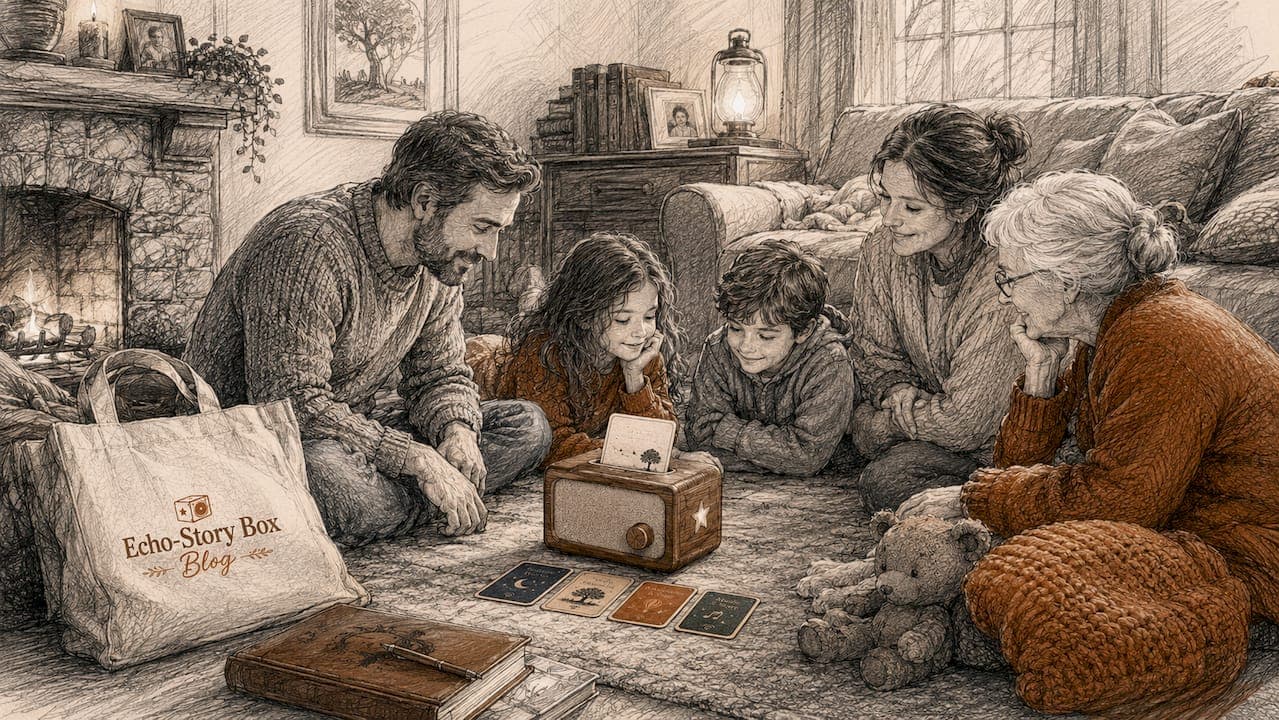
Bedtime audio stories are a clinically recognized sleep transition tool that calm a child's nervous system and signal the brain that sleep is near. Audio stories help children fall asleep by replacing screen stimulation with a steady, warm narrator voice and a slow, low-conflict plot. Child development research confirms that consistent auditory cues trigger the same predictable relaxation response night after night. The result is a calmer child, a shorter time to sleep, and a bedtime routine parents can actually count on.
What makes bedtime audio stories effective for children's sleep?
Effective sleep stories share a specific structure. They are not simply audiobooks or general narrated stories for kids. The difference lies in how they are built from the ground up to guide a child's body toward rest.
The most important factor is narrator quality. A warm, steady voice is the single biggest predictor of sleep success in bedtime audio. Dramatic performances, character voices, and sudden volume changes do the opposite of what you want. They pull a child's attention up instead of letting it drift down.
Story content matters just as much. Simple, low-conflict plots with repetition and slow, cozy descriptions soothe an overactive mind. Think a rabbit walking through a meadow, counting fireflies. Not a chase scene or a mystery to solve. The goal is gentle engagement, not excitement.
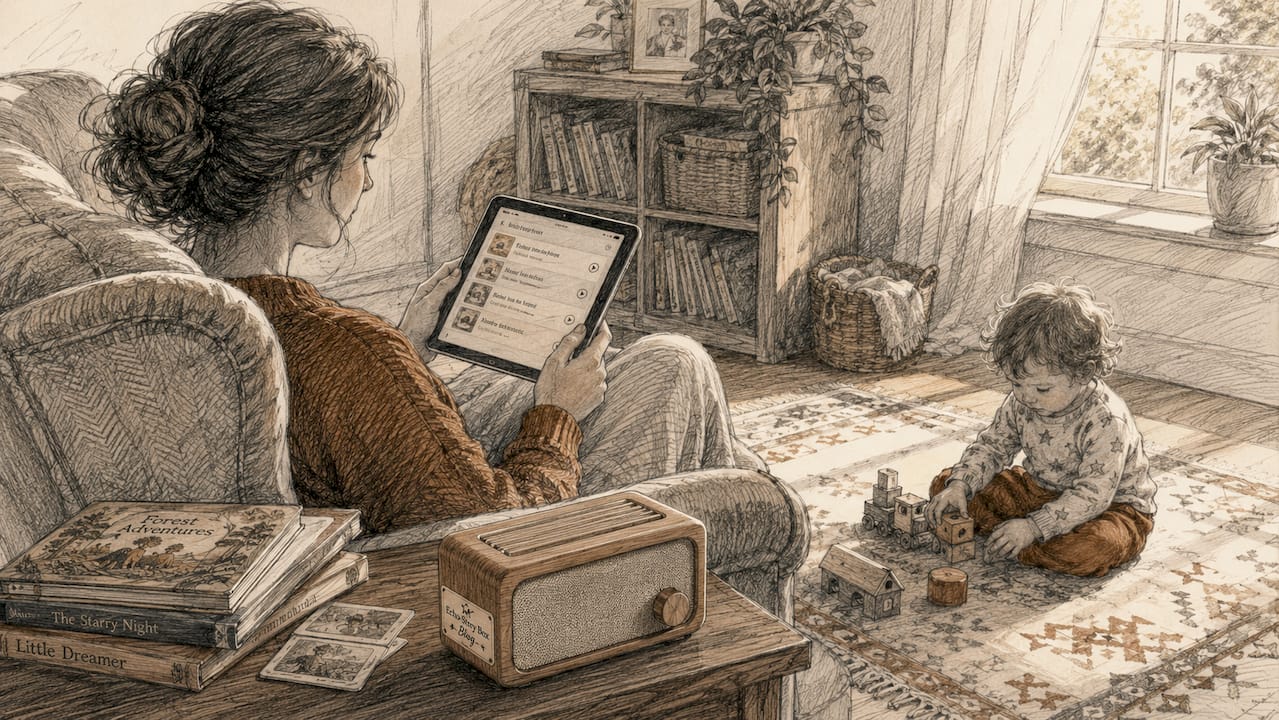
The best sleep stories also use a technique called the bedtime fade-out. This structure gradually slows narrative pace, vocal energy, and background soundscapes to guide a child's heart rate and breathing toward sleep. It is intentional and measurable. You can hear it happening if you listen closely.
Here is what to look for in a well-built sleep story:
- Relaxation intro: A 1–3 minute opening with guided breathing or a calming scene before the story begins
- Slow pacing: Sentences get shorter and quieter as the story progresses
- Gentle soundscapes: Soft background music or nature sounds that fade with the narration
- Low-stakes plot: No villains, no urgency, no cliffhangers
- Duration: 15–30 minutes is the proven window for a full sleep transition
Pro Tip: Listen to the first two minutes of any story before playing it for your child. If the narrator sounds like they are performing, keep looking. The voice should feel like a hand on the shoulder, not a spotlight.
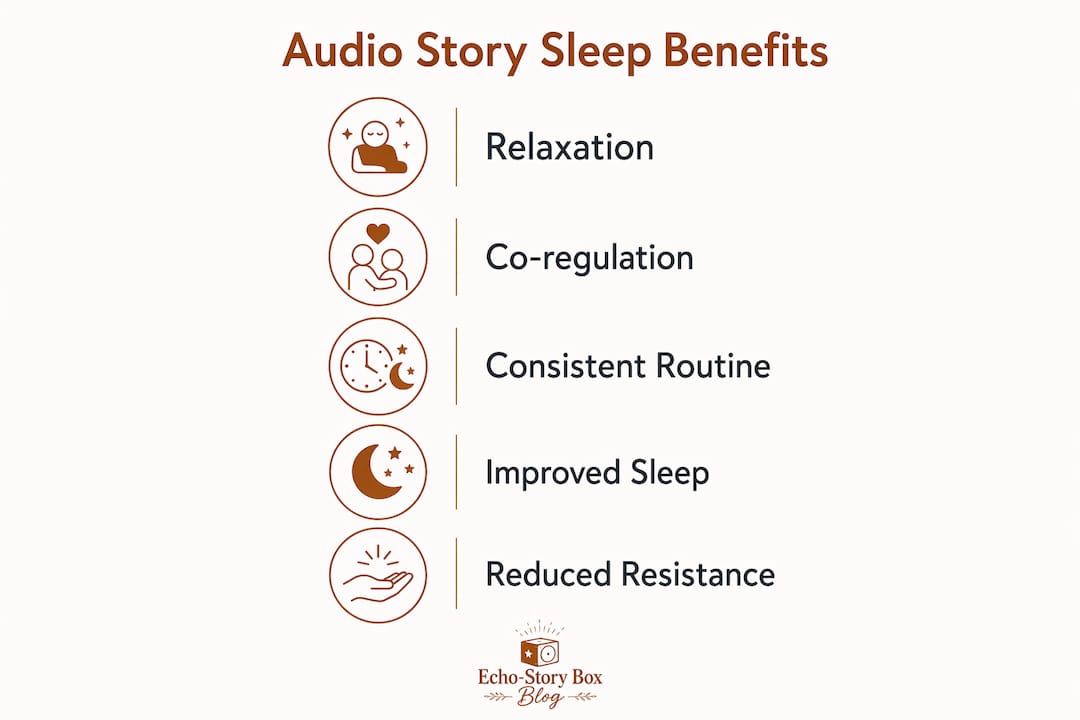
Sleep stories also work because of co-regulation. Audio stories act as a co-regulation tool, giving children a calm external anchor that helps them manage their own nervous system. This is especially helpful for children who feel anxious at night or are afraid of the dark. The narrator becomes a trusted, predictable presence.
How to select and prepare audio stories for your child's bedtime routine
Choosing the right sleep story is not the same as picking a good audiobook. You are selecting a sleep tool. That distinction shapes every decision.
Start by separating sleep-specific audio from general children's audio content. General audiobooks are designed to entertain and engage. Sleep stories are designed to bore a child gently into rest. The best ones feel almost too slow when you listen as an adult. That is exactly right.
Follow these steps when building your selection process:
- Choose stories built for sleep. Look for content labeled as sleep stories, bedtime stories, or relaxation audio. Avoid general adventure audiobooks at bedtime, even if your child loves them.
- Check for gentle music or soundscapes. Background audio adds a second layer of calming input. Rain, soft piano, or forest sounds work well. Avoid anything with a strong beat.
- Set up a consistent listening spot. Use the same location every night. A beanbag chair, a bed, or a reading nook all work. Consistency trains the brain to associate that spot with winding down.
- Time the audio correctly. Start the story 15–20 minutes before lights-out. This gives the audio time to work as a sleep cue before your child is expected to be asleep.
- Decide on free versus paid content. Many platforms offer free core stories with subscription-based premium content typically priced between $5 and $15 per month. Test free options first to find the narrator style your child responds to best.
Here is a quick comparison of what to look for when evaluating audio story options:
| Feature | What to look for | What to avoid |
|---|---|---|
| Narrator voice | Warm, steady, consistent | Dramatic, loud, or character-heavy |
| Plot complexity | Simple, repetitive, cozy | High drama, conflict, or cliffhangers |
| Story length | 15–30 minutes | Under 10 minutes or over 45 minutes |
| Background audio | Soft music or nature sounds | Strong beats or sudden sound effects |
| Content type | Sleep-specific audio | General audiobooks or adventure series |
Beyond content selection, the listening environment shapes results. Dim the lights before the story starts. Put away toys and screens. Keep the room cool and quiet. These physical cues reinforce the audio signal your child is receiving.
Pro Tip: If your child asks for a second story, that is a sign the first one was too stimulating. Swap it for something slower and simpler.
How to build a nightly audio story routine that actually works
A good routine is predictable. Children sleep better when they know exactly what comes next. Audio stories work best when they are a fixed step in a sequence, not an occasional treat.
Here is a practical nightly sequence:
- Start with a calm environment. Lower the lights 30 minutes before bed. Finish any active play well before the story begins.
- Begin the audio before your child is in bed. Starting stories before the child is in bed helps the brain prepare for sleep naturally. Use the story as the transition into the bedroom, not a reward for being in bed.
- Stay present for the first few minutes. Sit nearby during the relaxation intro. Your physical presence supports co-regulation. You do not need to talk. Just be there.
- Use a sleep timer or fade-out feature. Set the audio to stop automatically. You do not want the story looping or cutting off abruptly. A clean fade-out is the goal.
- Keep the sequence identical every night. Same time, same spot, same type of story. Consistent storytelling voices build a predictable bedtime environment that children learn to trust. That trust is what makes the routine work.
If your child resists at first, stay calm and consistent. Resistance usually fades within one to two weeks once the routine becomes familiar. Avoid negotiating or adding extra steps. The power of the routine comes from its predictability.
Common mistakes that reduce the effectiveness of sleep stories
Most parents who try audio stories and give up make the same small errors. These are easy to fix once you know what to look for.
- Starting too late. Playing a story after a child is already in bed and expected to sleep treats it as a distraction, not a routine cue. The audio needs to begin during the wind-down phase, not after it.
- Choosing the wrong content. High-drama stories, mystery plots, or fast-paced adventures stimulate the imagination rather than calm it. Stories with high drama and stimulating plots keep children mentally active at exactly the wrong time.
- Ignoring narrator quality. A flat, robotic voice or an overly theatrical performance both undermine the calming effect. The narrator's voice is the most important element in any sleep audio program.
- Using audio as a substitute for presence. Bedtime audio stories work best as a "calm connection" period that balances child independence with parental presence. Leaving the room immediately and relying entirely on the audio removes the co-regulation benefit.
- Not adjusting for your child's temperament. A highly sensitive child may need a shorter story with more breathing exercises. An older child may need a longer, more complex plot. One format does not fit every child.
The benefits of audio stories at bedtime are real, but they depend on consistent, thoughtful implementation. Small adjustments to timing and content selection make a significant difference.
Key Takeaways
Bedtime audio stories work best when they are sleep-specific, started before lights-out, and delivered through a warm, steady narrator voice as part of a consistent nightly routine.
| Point | Details |
|---|---|
| Story structure matters | Choose sleep-specific audio with a relaxation intro, slow pacing, and a 15–30 minute fade-out. |
| Timing is critical | Start the audio 15–20 minutes before lights-out to trigger a natural sleep cue. |
| Narrator voice drives results | A warm, steady voice calms the nervous system; dramatic performances do the opposite. |
| Routine builds the habit | The same sequence every night trains the brain to associate the audio with sleep. |
| Parental presence amplifies the effect | Staying nearby during the intro supports co-regulation and reduces nighttime anxiety. |
What I have learned from watching audio stories change bedtime
I have seen bedtime go from a 45-minute negotiation to a 10-minute wind-down in families who made one change: they stopped treating audio stories as entertainment and started treating them as a sleep tool.
The shift in thinking matters more than the specific story. When parents choose content intentionally, time it correctly, and stay present for the first few minutes, the results are consistent. Children stop fighting sleep because the routine tells them, reliably, that sleep is next.
The subtlest thing I have noticed is how much the narrator's voice does the heavy lifting. A calm, unhurried voice does something a parent's tired, end-of-day voice sometimes cannot. It carries no stress. It has no agenda. It just keeps going, slowly, until the child lets go.
The other thing worth saying plainly: audio stories are not a replacement for your presence. They are a tool that makes your presence more effective. You sit nearby, the story plays, and the child feels both the warmth of the narrator and the safety of you. That combination is hard to beat.
For families exploring slow bedtime routines, audio stories are one of the simplest and most reliable additions you can make.
— Bob
Echostory-box brings screen-free audio storytelling to your child's bedtime
Echostory-box is built for exactly this kind of bedtime. It is a screen-free audio player that uses simple NFC story cards. Your child taps a card, and the story begins. No menus, no ads, no scrolling.

The stories on Echostory-box are designed with sleep and calm in mind. Original adventures, personalized stories with your child's name, and gentle narration make it a natural fit for the wind-down routine described in this article. You can also record your own voice or a grandparent's message as a bedtime story your child can return to for years. For families ready to make bedtime calmer and more intentional, screen-free storytelling starts here.
FAQ
How long should a bedtime audio story be?
Sleep stories work best at 15–30 minutes. This window is long enough to guide a child into drowsiness but short enough to avoid re-engagement if the child wakes slightly.
At what age can children benefit from sleep audio stories?
Children as young as 3 years old respond well to narrated sleep stories. The format suits ages 3–10 most effectively, though older children with anxiety can also benefit.
Do audio stories replace reading aloud to my child?
Audio stories complement read-aloud time rather than replace it. Listening to stories improves vocabulary and reading comprehension in children aged 3–8, especially when paired with occasional follow-along reading.
Should I leave the room while the audio story plays?
Stay nearby for at least the first few minutes. Your presence supports co-regulation, which strengthens the calming effect of the audio. You can quietly leave once your child is settled and drowsy.
Why does my child ask for another story instead of falling asleep?
Requesting a second story usually means the first story was too stimulating. Switch to a slower, simpler story with less plot and more description. A story about a character walking through a quiet forest works better than one with a problem to solve.