

A bedtime transition object is defined as a physical item, such as a soft toy, blanket, or lovey, that helps children develop emotional independence by providing comfort and familiarity during sleep or separation from caregivers. In developmental psychology, these items are formally called transitional objects, a term introduced by British pediatrician and psychoanalyst Donald Winnicott. About 60% of children in the United States develop an attachment to such objects between 6 and 12 months of age. That number tells you something important: this is not a parenting quirk. It is a normal, healthy part of how children learn to feel safe on their own.
What is a bedtime transition object and why does it matter?
A transitional object acts as an emotional bridge between a child's dependence on a caregiver and their growing ability to self-soothe. According to Winnicott's theory, these objects help children shift from needing a parent present to managing comfort on their own. That shift is one of the most important emotional skills a young child can develop.
The reason these objects work comes down to sensory continuity. A beloved stuffed animal or soft blanket carries a consistent texture, weight, and even scent. That sensory steadiness anchors a child's nervous system when other things change, like the lights going off or a parent leaving the room. Without that anchor, small environmental shifts can feel overwhelming to a toddler.
Transitional objects also give children something a caregiver cannot: constant availability. A parent may leave the room, but a stuffed rabbit stays. This control over a comfort item empowers children to manage nighttime anxiety on their own terms. That sense of agency is a genuine developmental win.
"The transitional object is not a substitute for the parent. It is the child's first personal tool for managing the world." — Inspired by Winnicott's developmental framework
Pro Tip: If your child wakes frequently and struggles to resettle, check whether their comfort item is within easy reach. A stuffed animal that falls off the bed at 2 a.m. is not doing its job.
What are common bedtime object examples and how do you choose the right one?
The most widely used nighttime comfort items fall into a few clear categories. Each serves a slightly different sensory need, so the right choice depends on your child's preferences and age.
- Stuffed animals: The classic choice. Soft, huggable, and easy to personalize. Characters like a plush bunny or bear give children something to "talk to" and hold during the night.
- Security blankets: Thin, breathable, and easy to carry everywhere. Many children prefer a specific texture, like satin edging or waffle knit.
- Loveys: A hybrid item, typically a small stuffed animal attached to a soft blanket square. These are popular for infants transitioning out of swaddling.
- Pacifiers: Effective for infants as a sensory comfort tool, though most pediatricians recommend weaning by 12–18 months.
- Sensory tools: Weighted stuffed animals, smooth worry stones, and soft tactile fidgets serve children ages 4–10 who need extra input to regulate their nervous system before sleep. These are especially helpful for children with sensory processing differences.
When choosing a comfort item, consider three things: your child's sensory preferences (do they like soft, smooth, or weighted textures?), the object's safety for their age, and whether it is machine washable. A beloved item that cannot be cleaned is a problem waiting to happen.
Safety matters most for infants. The American Academy of Pediatrics recommends keeping soft objects out of the crib until 12 months to reduce suffocation risk. After that milestone, most soft items are appropriate.
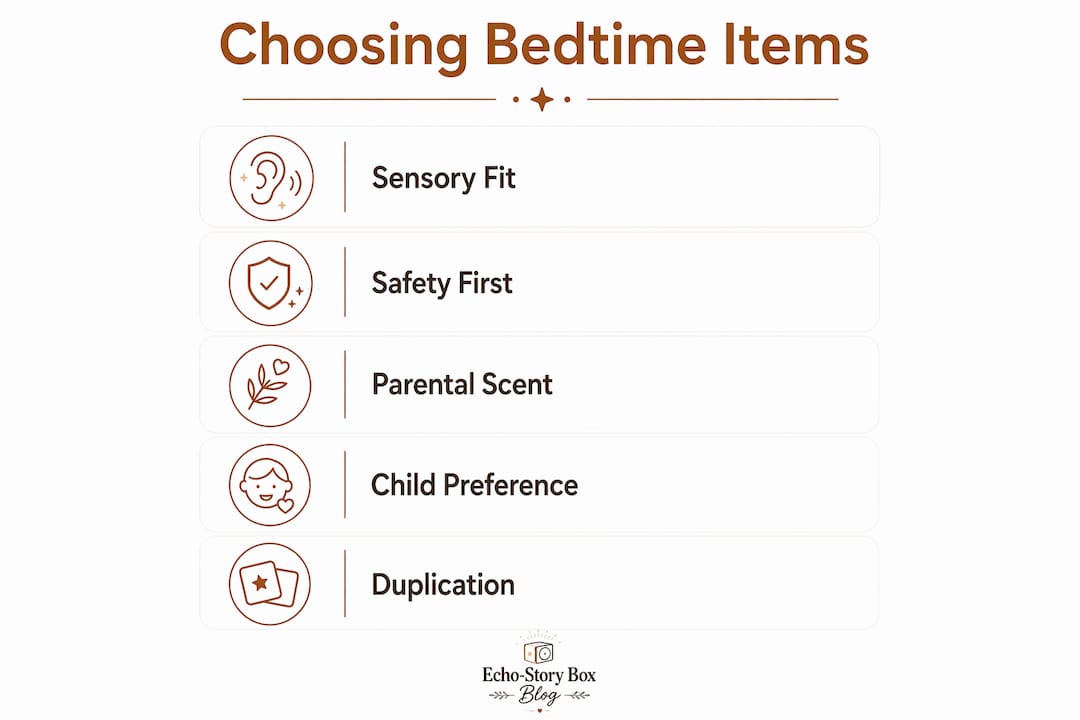
Pro Tip: Before introducing a new stuffed animal or lovey, sleep with it for a night or two. Transferring your scent to the object makes it feel familiar and comforting to your child much faster.
When and how should you introduce a transition object safely?
Timing matters when it comes to introducing a comfort item. Most developmental experts recommend starting around 6 months, when object permanence begins to develop. Before that stage, babies do not yet understand that objects continue to exist when out of sight, so a comfort item holds little meaning.
Here is a simple, step-by-step approach to introducing a transitional object:
- Choose the object with care. Pick something soft, safe, and sized appropriately for your child's age. Avoid items with small parts, loose buttons, or long strings for children under 3.
- Prime it with your scent. Keep the item close to you during feeding or cuddle time for a few days before the first official bedtime use. This step accelerates your child's attachment to the object.
- Bring it into the bedtime ritual. Include the object in your nightly wind-down. Hold it together during a story, tuck it in alongside your child, and name it consistently. Repetition builds the association.
- Let your child lead. Do not force the object into your child's hands or insist they hold it. Offer it gently and let them decide. Forced attachment rarely works and can create resistance.
- Stay consistent. Use the same object every night. Rotating between several items dilutes the emotional connection. One consistent item builds a stronger sleep cue.
For families navigating twin baby sleep routines, individual comfort items for each child are especially important. Shared objects can create conflict and reduce the personal emotional bond each child needs.
How do transition objects fit into a broader bedtime routine?
A comfort item works best as one piece of a larger, predictable bedtime routine. On its own, a stuffed animal is just a toy. Paired with a consistent wind-down sequence, it becomes a powerful sleep signal. Consistent bedtime routines that incorporate a transition object typically show sleep improvements within 3–7 nights. That is a fast return for a simple change.
A calm, repeatable sequence might look like this:
- A warm bath or quiet play to lower physical energy
- Pajamas and brushing teeth as physical cues that sleep is near
- A short story or audio tale with the comfort item present
- Lights dimmed and the object placed in the child's hands
- A consistent goodbye phrase from the caregiver before leaving the room
The bedtime story ritual is particularly effective here. Stories engage a child's imagination while gently slowing their mental pace. When the comfort item is present during story time every night, the child's brain begins to link the object with the calm, safe feeling of that moment.
| Routine element | Role in sleep readiness |
|---|---|
| Warm bath | Lowers body temperature and signals physical wind-down |
| Consistent story time | Engages imagination while slowing mental activity |
| Transition object present | Anchors emotional security as caregiver prepares to leave |
| Dim lighting | Triggers melatonin production and reinforces sleep cues |
| Consistent goodbye phrase | Reduces separation anxiety with predictability |
One practical issue every parent faces: what happens when the beloved item is lost or needs washing? The answer is duplicates. Keeping a backup object is one of the most practical strategies experienced parents use. Rotate both items regularly so they wear evenly and smell similar. If the original is ever lost, the duplicate will feel genuinely familiar rather than like an obvious substitute.
You can learn more about building a calming bedtime wind-down that works alongside comfort items to set your child up for restful sleep.
Key takeaways
A bedtime transition object is one of the most effective, low-cost tools available for helping children develop emotional independence and consistent sleep habits.
| Point | Details |
|---|---|
| Definition and purpose | A transitional object provides sensory comfort and emotional security during the shift from caregiver presence to independent sleep. |
| Developmental timing | Introduce comfort items around 6 months, and keep soft objects out of the crib until 12 months for safety. |
| Scent priming works | Sleeping with a new object before introducing it transfers your scent and speeds up your child's attachment. |
| Routine pairing matters | Pairing the object with a consistent bedtime sequence produces sleep improvements within 3–7 nights. |
| Always keep a duplicate | A backup item prevents distress if the original is lost or needs cleaning. |
Why I think parents worry too much about "outgrowing" the lovey
Here is something I have noticed: parents often feel social pressure to wean their child off a comfort item before the child is ready. A well-meaning relative says the child is "too old" for a stuffed animal, and suddenly a parent is second-guessing something that is working beautifully.
Allowing children to lead the process of outgrowing their transitional object is the right call, full stop. Premature removal or negative language about the item can create lasting anxiety. The object is not a crutch. It is a tool the child is actively using to practice emotional regulation.
I have also seen parents make the opposite mistake: attaching so much significance to the object that they create anxiety around it. If the lovey is forgotten at grandma's house, a calm parental response teaches the child that they can cope. Panic teaches them they cannot.
The most effective approach is quiet consistency. Offer the object, include it in the routine, and let your child decide how much they need it on any given night. Some nights they will clutch it tightly. Other nights it will sit untouched on the pillow. Both are fine. Your job is to make it available, not to manage how much they use it.
— Bob
How Echostory-box makes bedtime routines calmer and more connected
A comfort item and a good story are two of the most powerful tools in any bedtime routine. Echostory-box brings the story part to life in a screen-free, simple way that fits naturally alongside your child's favorite lovey or blanket.

Children tap a story card on the Echostory-box player and a calm, imaginative audio story begins. No scrolling, no ads, no bright screens competing with the wind-down you have worked hard to build. Original adventures featuring characters like Theo the Rabbit pair perfectly with the quiet, cozy feeling a transition object creates. You can even record your own voice telling a bedtime story, so your child hears you even after you leave the room. Explore screen-free storytelling for families and see how Echostory-box fits into your nightly routine.
FAQ
What is a transitional object in child development?
A transitional object is any physical item a child uses to self-soothe and manage separation from caregivers. The concept was introduced by Donald Winnicott and describes objects that act as emotional bridges between dependence and independence.
At what age can a baby safely have a comfort item in the crib?
Pediatric guidelines recommend keeping soft objects out of the crib until 12 months to reduce suffocation risk. After that milestone, a soft stuffed animal or small blanket is generally considered safe.
How do I get my child attached to a new comfort item?
Sleep with the new object for a night or two before introducing it. This transfers your scent to the item, making it feel familiar. Then include it in the bedtime routine consistently every night.
Should I be worried if my child is very attached to their lovey?
Strong attachment to a transitional object is normal and healthy. Allowing the child to lead the process of outgrowing it protects emotional security. Forcing separation before the child is ready can cause lasting anxiety.
What should I do if my child's comfort item is lost or damaged?
Keep a duplicate from the start and rotate both items regularly so they feel and smell similar. If the original is lost, the backup will feel genuinely familiar rather than like a replacement.