
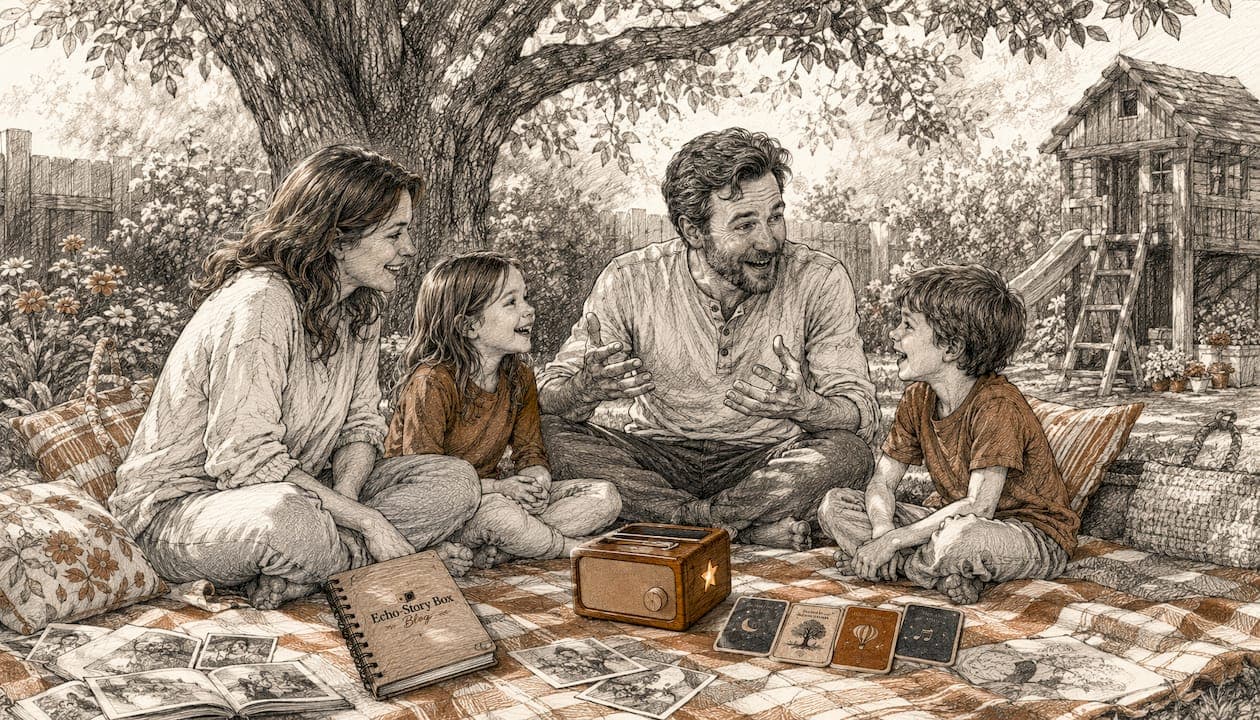
The fastest, most reliable way to teach biblical values to children is through short, screen-free audio stories that personalize Scripture through character-driven scenes and guided reflection. Grounded in narrative theology, this approach works because children internalize virtue by living through a character's struggle, not by memorizing rules. Start tonight with a 5–10 minute bedtime story built around a single virtue, or try a 1–3 minute car-ride mini-script using the prompts below. Echostory-box is designed to make exactly this kind of storytelling simple, repeatable, and screen-free for your family.
Quick stat: Audio-only storytelling strengthens executive function and imagination by requiring children to build mental images without visual cues, supporting planning, focus, and memory.
Table of Contents
- Why storytelling teaches biblical values better than rules
- Practical storytelling techniques you can use today
- How to adapt stories for each age group
- How to weave Scripture into a story without lecturing
- Screen-free audio best practices for family storytelling
- How Echo-Story Box fits into real family routines
- Ready-to-use mini-scripts for kindness, courage, and forgiveness
- How to turn one story into a lasting family habit
- Simple ways to tell whether your storytelling is working
- Key Takeaways
- Why personalized audio changed how our family tells stories
- Echostory-box brings these techniques home, simply
- Useful sources
Why storytelling teaches biblical values better than rules
Stories make abstract virtues concrete by placing children inside a character's emotional choices. When a child hears David trembling before Goliath, they feel courage before they can define it. That emotional experience is what narrative theology calls "living through" a story, and it produces internalized virtue rather than surface compliance.
Audio deepens this further. Without a screen filling in every detail, a child's mind does the work. Researchers describe this as the "theater of the mind": voice, pacing, and sound create a world the child actively assembles, which strengthens visualization, focus, and vocabulary. Children hearing audio Bible stories also gain pronunciation models and richer vocabulary that supports later reading comprehension. That is a meaningful developmental bonus on top of the faith formation.
Practical storytelling techniques you can use today
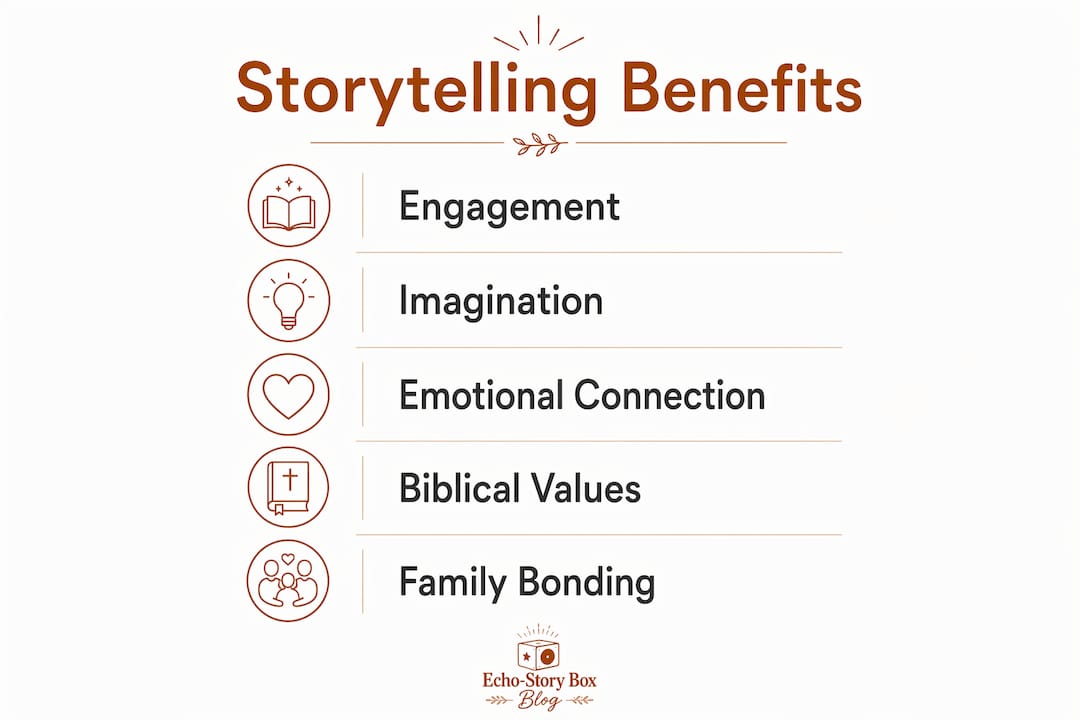
A handful of core techniques consistently produce engaged, attentive listeners. Use them whether you are telling a story live at bedtime or recording one for your child to replay.
- Open in the middle of the action. Drop your child into the scene immediately. "The boat was sinking. Peter looked down at the water and took one step out." Starting in medias res grabs attention and signals a fresh, personal telling rather than a recitation.
- Focus each story on a single virtue. One scene, one lesson. Kindness in the Good Samaritan. Courage in Esther. Clarity beats comprehensiveness every time.
- Use sound effects and varied voice. Expressive narration and sound cues make scenes feel real and strengthen retention. Lower your voice for tension, brighten it for joy.
- Preserve family voices. Record a grandparent reading a favorite passage. A familiar voice carries emotional weight no professional narrator can replicate.
- Close with guided reflection. End every story with one or two open questions, not a moral summary.
Reflection question bank (reuse freely):
- "What would you have done in that moment?"
- "How do you think the character felt when they chose to be kind?"
- "Has anything like that ever happened to you?"
- "What's one thing you could do this week that looks like what the character did?"
Pro Tip: Pause mid-story at a decision point and ask, "What do you think happens next?" Then continue. This keeps children active without breaking the narrative's momentum.
How to adapt stories for each age group
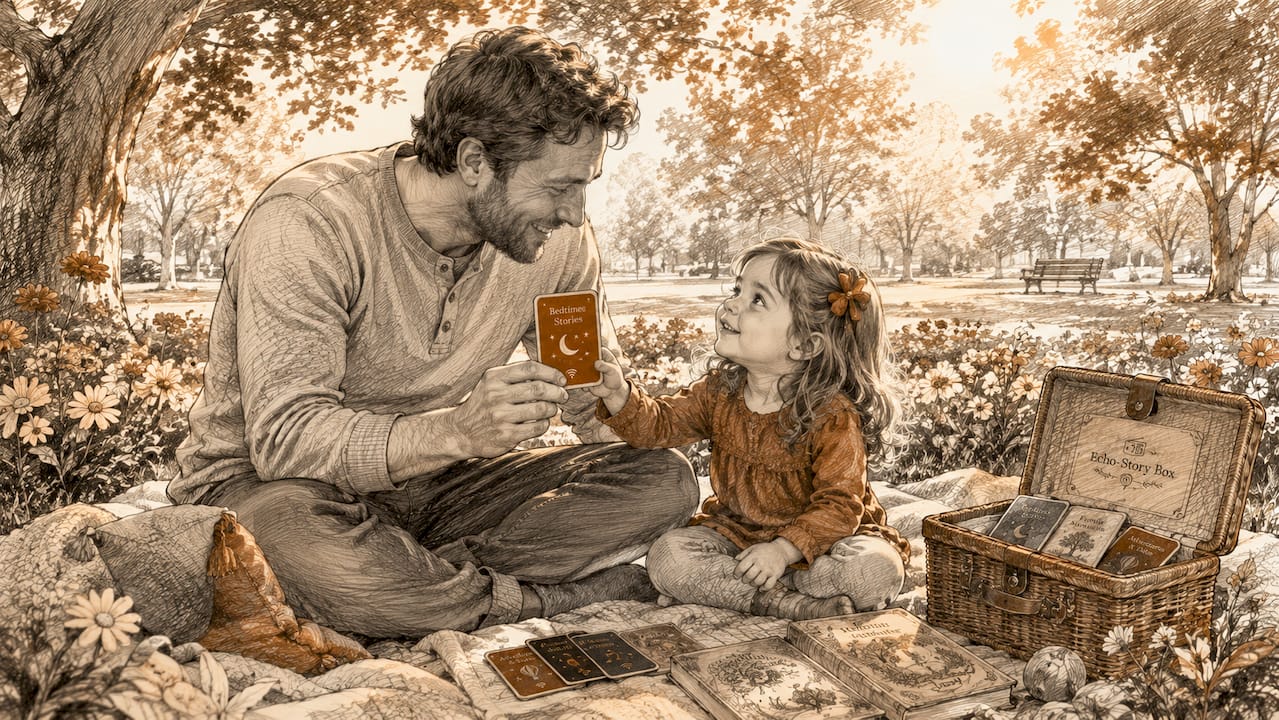
Match story length, focus, and follow-up to your child's attention span and moral reasoning stage.
Preschool (ages 3–5)
- Keep scenes to 3–5 minutes with vivid sensory cues ("the bread smelled warm and fresh").
- Use repeated refrains ("and God was with him") so small children can join in.
- Add a tactile prop: a smooth stone for David, a small boat for Noah. Physical objects anchor the story in their hands and their memory.
- Follow up with one concrete action: "Let's share our snack today like the boy shared his fish."
Early elementary (ages 6–8)
- Extend to 8–12 minutes with clearer cause-and-effect arcs.
- Introduce simple moral dilemmas: "Joseph could have been angry. What do you think he chose instead?"
- Use brief reflection prompts after the story and a draw-and-tell activity where children illustrate the moment they found most powerful.
- Connect to a faith-based curriculum for families who want structured follow-through.
Older elementary (ages 9–12)
- Multi-scene arcs of 12–20 minutes work well, with direct Scripture references woven in.
- Invite role-play: "You are Esther. What do you say to the king?"
- Prompt personal application: "Where in your life right now does this story speak to you?"
- Assign a short service task tied to the virtue, like writing a thank-you note or helping a neighbor.
How to weave Scripture into a story without lecturing
Use Scripture as the story's backbone, not its conclusion. Place the verse at the beginning as a seed, then let the narrative grow from it. Avoid reading the passage and then explaining it. Instead, paraphrase it into scene-driven language and let the story do the teaching.
Two practical approaches:
- Verse as dialogue or thought. Instead of quoting Philippians 4:13 at the end, have your character think it mid-struggle: "I can do this," she whispered. "God is with me." The child hears the truth inside the action.
- Paraphrase into the scene. Retell the parable of the Prodigal Son as a modern story about a kid who runs away to a big city, spends all his birthday money, and finally calls home. Keep the emotional beats identical. The biblical message transfers without a single "the moral of this story is."
Mini-script example (forgiveness, 90 seconds):
"Jake had said something mean to his little brother, and now the house was quiet. He sat on the porch and thought about the story Mom had told him, about the son who came home. He walked back inside. 'I'm sorry,' he said. His brother looked up. 'I know,' he said. And that was enough." Pause. Ask: "Why do you think saying sorry was so hard for Jake?"
Screen-free audio best practices for family storytelling
Device and content choices determine whether audio supports learning or becomes background noise. A few simple habits make all the difference.
- Keep stories short and purposeful. 5–15 minutes per session is plenty for most ages.
- Use pauses. Build in a natural stopping point for a reflection question before continuing or ending.
- Set listening sessions with clear start and end cues, like a specific story card or a "Radio Day" routine on Saturday mornings.
- Choose ad-free, curated audio with no algorithmic recommendations pulling children toward the next thing.
- Personalize. Insert your child's name, record a family-voice segment, and build recurring characters your child knows and loves.
Child psychologists recommend letting children operate their own audio players to satisfy developmental needs for independence while shielding them from screen-based algorithms. Simple, tactile controls give children agency without opening a door to endless content.
Pro Tip: Give your child one physical story card per session and let them choose which to tap. That small act of control builds independence and makes listening feel like their own ritual, not a parent-directed task.
Explore more ideas in our guide to storytelling tools for curious kids.
How Echo-Story Box fits into real family routines
Narrative-driven family practices like retelling, family recordings, and rituals turn episodic lessons into identity-shaping habits. Here are three routine templates that work well with a screen-free audio system.
-
Bedtime story session (10–15 minutes)
- Child taps a faith-based story card on the Echostory-box.
- Story plays with no ads, no menus, no distractions.
- Parent asks one reflection question from the bank above.
- Child draws or describes their favorite moment before sleep.
-
Mealtime or car-ride mini-story (3–5 minutes)
- Parent plays a short virtue-focused story card or tells a live 2-minute mini-script.
- One quick question: "What did the character do when things got hard?"
- No follow-up activity needed. The question plants the seed.
-
Weekend Radio Day (30–45 minutes)
- Children choose 2–3 story cards from a small curated collection.
- Family listens together, then discusses over a snack.
- One family-voice recording plays, such as a grandparent's faith story or a parent's memory.
- Children retell their favorite part in their own words.
The NFC story cards are tactile and simple. Children tap and listen. No scrolling, no recommendations, no screen glow at bedtime.
Ready-to-use mini-scripts for kindness, courage, and forgiveness
Short, repeatable mini-scripts build habit faster than longer lessons. Record these at home in your own voice, or speak them live.
Kindness (1 minute)
"Mia noticed the new girl sitting alone at lunch. Everyone else walked past. Mia picked up her tray and walked over. 'Can I sit here?' The girl looked up, surprised. 'Yes,' she said quietly. They talked the whole lunch. On the way home, Mia thought: that's what love looks like." Reflection: "Has someone ever done that for you? How did it feel?"
Courage (90 seconds)
"Eli knew the answer was wrong, but everyone else was agreeing. His heart beat fast. He thought of Esther, who was scared too, but spoke anyway. He raised his hand. 'I think it's different,' he said. The room went quiet. Then his teacher nodded. 'Tell us more.'" Reflection: "What made it hard for Eli to speak up? What made it worth it?"
Forgiveness (90 seconds) Reusable prompt bank:
- "What did the character want? What got in the way?"
- "What choice did they make, and why?"
- "What would you do differently?"
- "How does this story connect to something in your life right now?"
For more virtue-based story examples, the Echostory-box blog has ready-made scripts and templates your family can use tonight.
Recording tip: Speak slowly, smile while you record (it changes your tone), and leave a two-second pause before the reflection question. Your child's voice in the recording, even just saying "I'm ready," makes it feel personal and alive.
How to turn one story into a lasting family habit
Consistency and small rituals produce habit change. A single powerful story, told once, fades. The same story told three times, followed by a small action, becomes part of how your child sees themselves.
A five-stage model from educational research, the Faith Storytelling Model, moves children from encountering a story to forming spiritual habits through Encounter, Narrative, Reflection, Faith Response, and Habit Formation. You do not need to name the stages. You just need to follow the rhythm: story, question, action, repeat.
After-story discussion checklist:
- What happened in the story?
- What did the character choose, and why?
- How did that choice affect others?
- Where do you see that virtue needed in your life?
- What's one small thing you could do this week?
Simple ritual ideas:
- Place a story card on the bedside table as a visual cue for tomorrow's session.
- Designate one evening per week as "story night" with a candle or special snack.
- Tie each story to a micro-service task: after a kindness story, write a thank-you note; after a courage story, do one brave thing before Friday.
Invite your child to retell the story in their own words, or make up a new ending. When children create their own stories, they take ownership of the virtue, not just the narrative.
Simple ways to tell whether your storytelling is working
You do not need a formal assessment. Watch for these four signs that the stories are landing.
- Your child retells the story unprompted, even days later, to a sibling or friend.
- They apply the virtue in a real situation and name it: "I was being like Mia today."
- They ask reflective questions on their own: "Why did he do that?" or "Was that the right thing?"
- They sustain focused listening for longer sessions without fidgeting or asking to watch something.
Next-step checklist:
- Increase story complexity gradually as attention span grows.
- Invite your child to create a short story of their own using a virtue they want to practice.
- Add one small service project per month tied to a story theme.
- Explore a storytelling curriculum for early learners for structured progression.
Key Takeaways
The most effective way to teach biblical values through storytelling is short, screen-free audio stories built around a single virtue, followed by one guided reflection question and a small real-world action.
| Point | Details |
|---|---|
| Start with one virtue per story | Focus each session on kindness, courage, or forgiveness — one clear lesson sticks better than many. |
| Audio builds imagination | Screen-free listening requires children to visualize scenes, strengthening focus, memory, and vocabulary. |
| Reflection questions seal the lesson | Ask one open question after every story to move children from hearing to internalizing the value. |
| Rituals create habit | Consistent story nights, story cards, and small service tasks turn single lessons into lasting character. |
| Echostory-box makes it repeatable | NFC story cards, family-voice recording, and ad-free playback make faith-based audio storytelling simple to sustain at home. |
Why personalized audio changed how our family tells stories
Most parents already know that stories work better than lectures. What surprised me, working with the families and research behind Echostory-box, is how much the personalization matters. A story where the child hears their own name, or their grandmother's voice, does something a generic recording simply cannot. The child stops being an audience and becomes part of the story.
The research on narrative theology for kids and the developmental evidence on audio learning both point the same direction: keep it short, keep it personal, keep it screen-free, and follow it with a question. That is the whole method. Echostory-box was built to make that method easy enough to use every single night, not just on special occasions.
Echostory-box brings these techniques home, simply
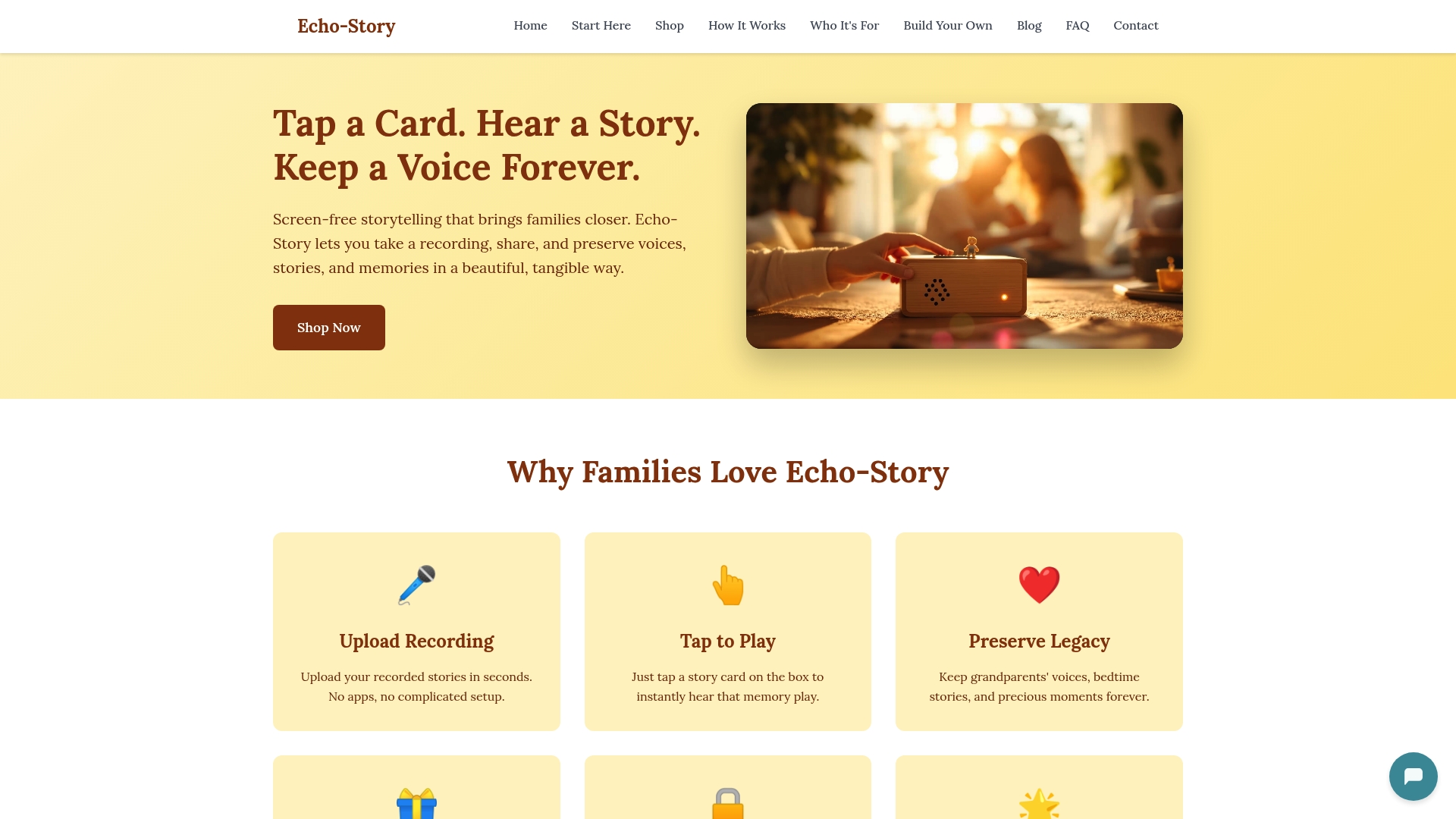
Echostory-box gives your family a screen-free, ad-free audio player built specifically for the kind of storytelling this guide describes. Children tap a physical NFC story card and a faith-based story begins. No menus, no recommendations, no glowing screen at bedtime. You can load family-voice recordings, personalized stories with your child's name, and curated faith-based story packs, all in one simple device.
The difference from a generic audio app is real: every story your child hears is one you chose, told in a voice they trust, with no algorithm pulling them somewhere else. That is what makes the habit stick.
Visit Echostory-box to explore story card packs, family-voice recording options, and ready-made faith-based content for children ages 3–10.
Useful sources
- Narrative Theology and Kids' Faith Formation — The Koala Mom. Explains how children internalize virtue through character-driven stories rather than rule memorization. Core evidence for the narrative-theology framing throughout this guide.
- Screen Time vs. Audio for Kids: What Research Says for Ages 2–5 — Cucutime. Developmental research on audio's advantages for executive function, imagination, and focus. Used to support screen-free audio recommendations.
- Bible Stories for Kids That Stick — The Kids Bible Stories. Practical techniques including in medias res openings, interactive questions, and expressive narration. Directly supports the core-techniques section.
- Storytelling as a Method of Early Childhood Faith Formation — Global Education Journal. Academic synthesis of theology and child development; source for the five-stage Faith Storytelling Model.
- Audio Players Keep Kids Off Screens — HuffPost UK. Child psychologist perspectives on supervised audio autonomy and screen reduction. Supports the audio-practices section.
- Children's Bible Stories Audio and Language Development — Giggle Academy. Evidence for vocabulary growth and listening-skill development through repeated audio story exposure.
- Echostory-box: Screen-Free Storytelling for Families — Echostory-box. Product overview and family-voice preservation features referenced in the routines and promo sections.