
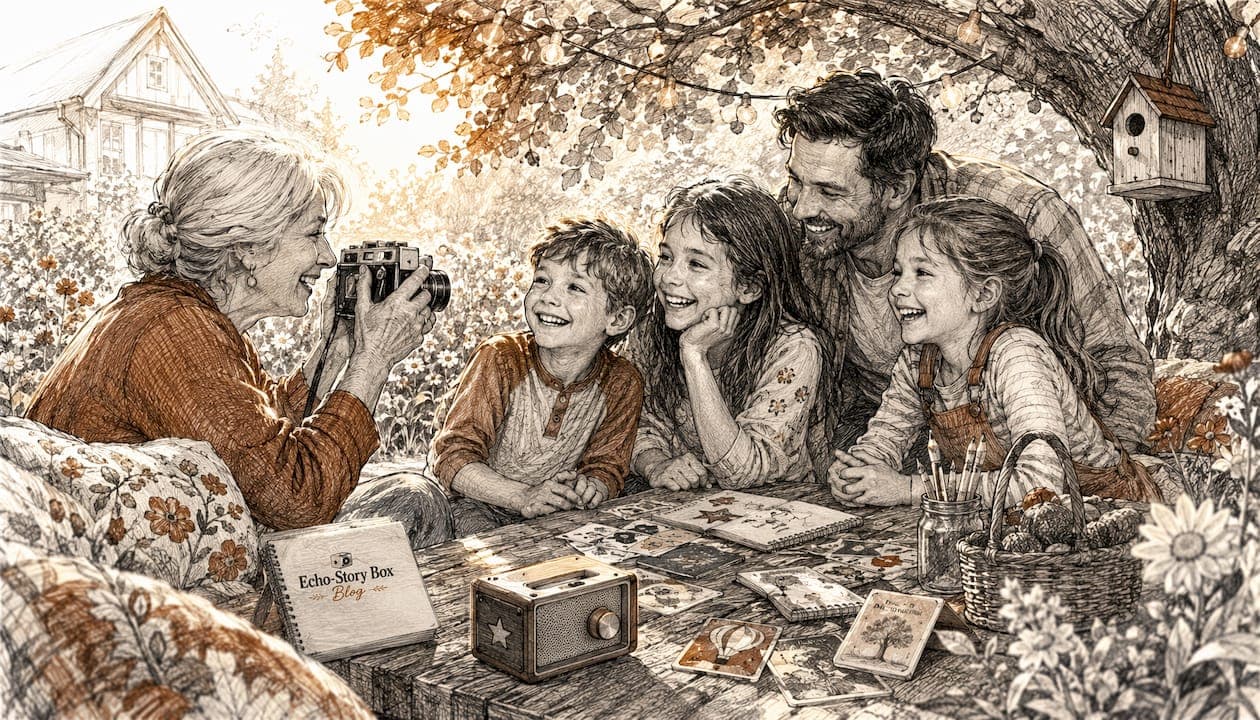
What a family heritage project really is
A family heritage project is a structured effort to preserve your family's history, stories, voices, and artifacts for future generations. Think of it as a living archive, one that captures not just facts and dates, but the warmth, humor, and personality behind them.
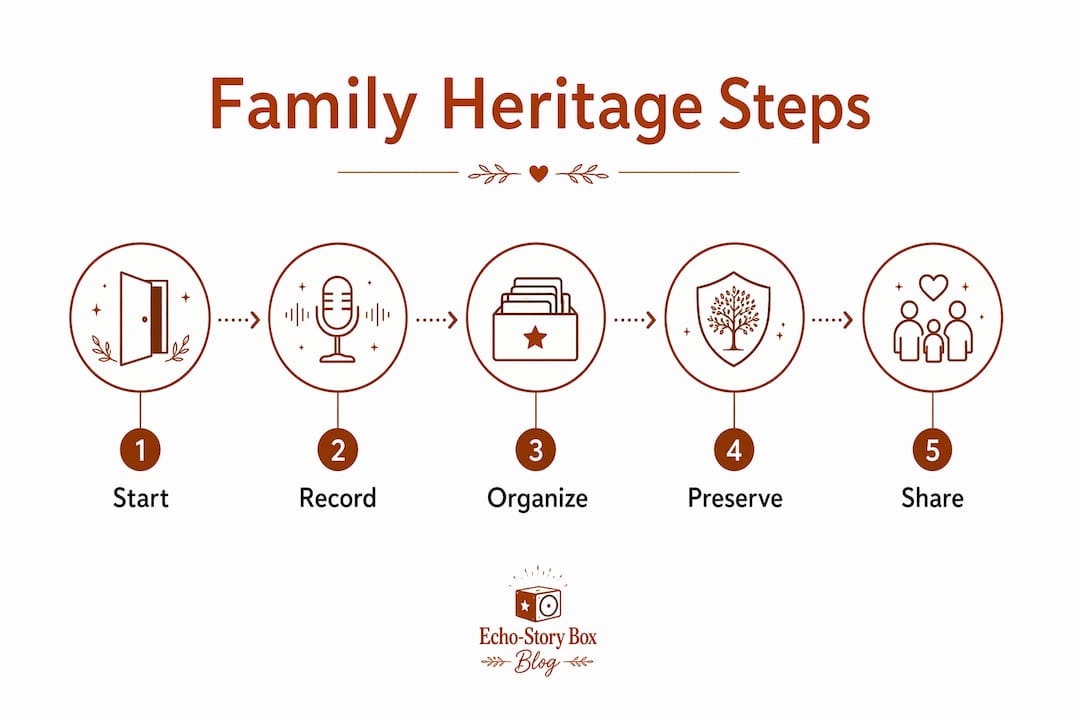
Most successful projects share five core components, as explained in this guide to ELA and history study habits for high school success, which includes strategies for preserving family heritage materials:
- Setting clear goals — deciding what you want to capture and who you want to reach
- Gathering artifacts and sensory anchors — photos, letters, heirlooms, and objects that spark memories
- Conducting cross-generational interviews — gentle conversations that draw out real stories
- Documenting practices — recipes, holiday rituals, faith traditions, and everyday habits
- Archiving and sharing — organizing everything so your family can actually find and enjoy it
Audio storytelling has become one of the most meaningful ways to carry out this kind of project, especially for young children. A grandparent's voice reading a bedtime story carries something a written transcript simply cannot: the pauses, the laughter, the accent, the love. For young children, hearing a familiar voice is calming, engaging, and deeply personal. Screen-free audio formats make that experience even richer, removing distractions and letting imagination do the work.
Table of Contents
- Why preserving family voices matters more than you think
- How to start your family heritage project
- Best practices for capturing authentic family audio
- How to preserve and share your family audio memories
- How Echostory-box supports your family heritage project
- Echostory-box makes family heritage simple and lasting
- Key Takeaways
Why preserving family voices matters more than you think
Families lose around 90% of their oral stories within three generations without deliberate preservation. That is not a distant risk. It is happening quietly in most households right now.
The reasons to act go beyond nostalgia:
- Identity and values — family stories pass down who you are and what you believe, giving children a sense of belonging
- Emotional depth — voice recordings capture emotional tones, timing, and personality that photos or written records cannot
- Child development — hearing authentic family voices supports language growth, empathy, and imagination
- Intergenerational bonds — the act of recording together strengthens relationships across age gaps
Less than 10% of adults have ever recorded a parent or grandparent telling a life story. That means most families are one generation away from losing voices they can never get back. You can explore the benefits of family oral history in more depth, but the short version is this: the voices you preserve today become the stories your grandchildren treasure.
For young children especially, screen-free audio storytelling creates a calm, focused listening environment. No ads, no notifications, no competing visuals. Just a voice they love, telling a story that is theirs.
How to start your family heritage project
Starting feels harder than it is. Here is a simple path forward:
- Set your goals first. Decide whether you want to capture one grandparent's life story, preserve holiday traditions, or build a full family audio library. A focused goal keeps the project moving.
- Gather memory anchors. Pull out old photos, letters, or a favorite family object before your first recording session. Prompts focused on objects ease storytelling far more naturally than "tell me your life story" ever will.
- Keep sessions short. Sessions of 15–20 minutes work better than one long sitting, especially with older family members whose energy and memory both benefit from a relaxed pace.
- Organize by theme. Group recordings by life stage (childhood, young adulthood, parenthood) or topic (faith, work, family traditions) so they are easy to revisit later.
- Choose beginner-friendly tools. A smartphone voice memo app works well to start. For elders less comfortable with technology, a phone-based recording service that requires no apps is a gentle entry point.
Pro Tip: Skip the formal interview setup. Sit at the kitchen table, make a cup of tea, and let the conversation wander. The best stories come out sideways, not in response to a direct question.
For more ideas on keeping stories age-appropriate and engaging, the guide on preserving family stories for grandkids offers practical, child-friendly approaches.
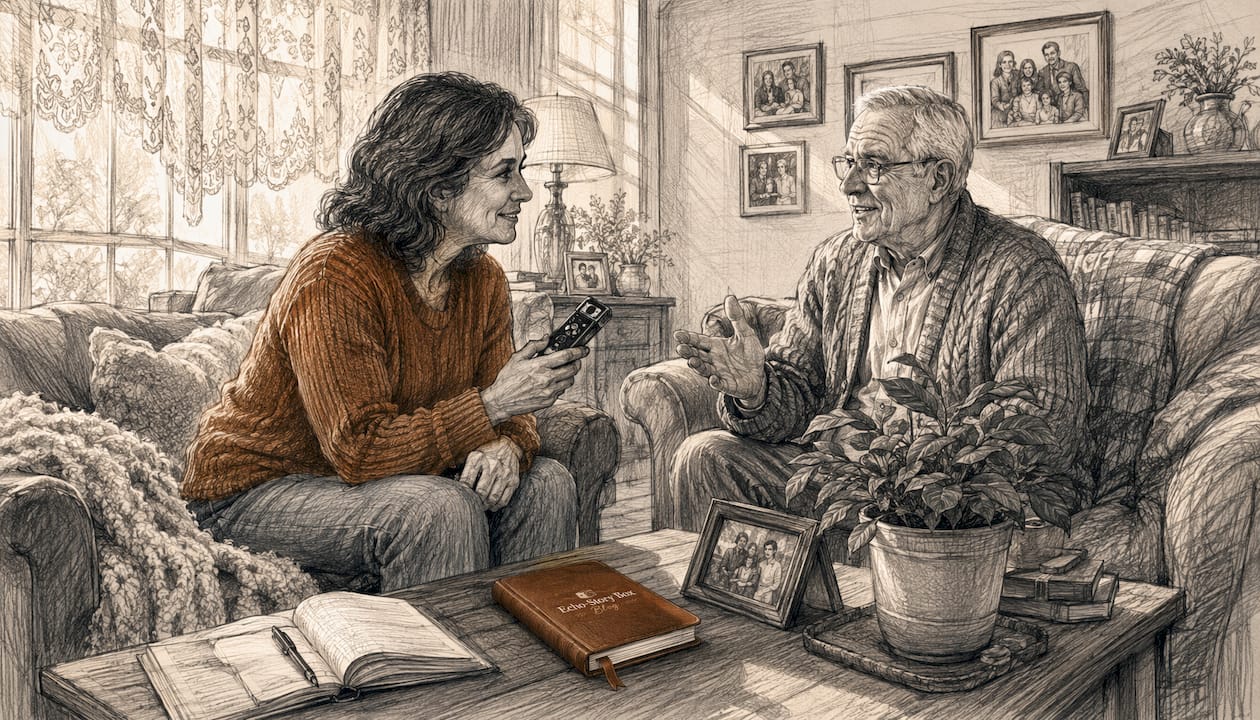
Best practices for capturing authentic family audio
The goal is not a polished podcast. It is a real voice, telling a real story.
Authentic voice — including phrasing, accents, and natural pauses — is more valuable to descendants than any cleaned-up narration. Oral history advocates are consistent on this point: imperfection is the point.
A few practices make a real difference:
- Avoid formal interview formats. When people feel like they are being interviewed, they self-censor. Conversation feels safer and produces richer material.
- Wait after each answer. Pausing for at least 10 seconds after a response often draws out the most genuine details. Silence is a gentle invitation.
- Keep it age-appropriate. When recordings are meant for young children, shorter stories with clear beginnings and endings work best. Warmth and humor land better than long historical explanations.
- Handle reluctant participants gently. Some family members feel shy or think their stories are not interesting. Remind them that everyday details, what they ate for breakfast as a child, how they got to school, are exactly what future generations will treasure.
- Address technology barriers early. If a grandparent is nervous about recording, let them practice with a simple test recording first. Hearing their own voice played back often relaxes them.
Pro Tip: Set up in a familiar, comfortable space. The living room chair they always sit in, the kitchen where they cook. Familiar surroundings bring out familiar stories.
How to preserve and share your family audio memories
Recording is only half the work. The harder question is: where do these files actually go?
A voice memo buried in a phone folder is not an archive. A centralized family hub — a shared digital drive, a private cloud folder, or a physical USB in a keepsake box — gives your recordings a real home that the next generation can find without your help.
Follow the 3-2-1 backup rule: keep 3 copies on 2 types of media, with 1 copy stored off-site in cloud storage. It sounds technical, but it simply means: do not keep your only copy in one place.
A few more steps that protect your work long-term:
- Add metadata to every file. Label recordings with the speaker's name, date, and topic. Future family members will not know who is speaking without it.
- Share in child-friendly ways. Physical audio boxes with tap-to-play cards make recordings accessible to young children without screens or complicated menus.
- Create a simple family index. A shared document listing every recording, its topic, and where it is stored takes 30 minutes to build and saves hours of searching later.
Pro Tip: Pick one person in the family to be the "keeper" of the archive. Not the only person with access, but the one responsible for keeping it organized and backed up. Shared responsibility often means no one does it.
How Echostory-box supports your family heritage project
Echostory-box was built for exactly this kind of project. It is a screen-free, tactile audio storytelling platform designed for children ages 4–10, and it makes the gap between "we recorded grandma's stories" and "the kids actually listen to them" much smaller.
Here is what makes it a natural fit for family heritage work:
- No screens, no distractions. Echostory-box removes ads, endless recommendations, and complicated menus, leaving only the story. Children tap an NFC story card and listen. That is the whole experience.
- Personalized storytelling. Stories can include a child's name, family members, pets, and favorite places, creating a connection that generic audio platforms cannot match.
- Family voice recordings. Parents and grandparents can record bedtime stories, life lessons, faith testimonies, holiday traditions, and encouragement messages directly onto story cards.
- Legacy audio and grandparent messages. These recordings become keepsakes children can return to for years, long after the people who made them are gone.
- DIY and ready-made options. Families can purchase a fully assembled box or build their own using step-by-step guides, making it accessible whether you are tech-comfortable or just starting out.
Echostory-box connects the intergenerational storytelling traditions that have always mattered to families with a simple, modern format children genuinely love.
Echostory-box makes family heritage simple and lasting
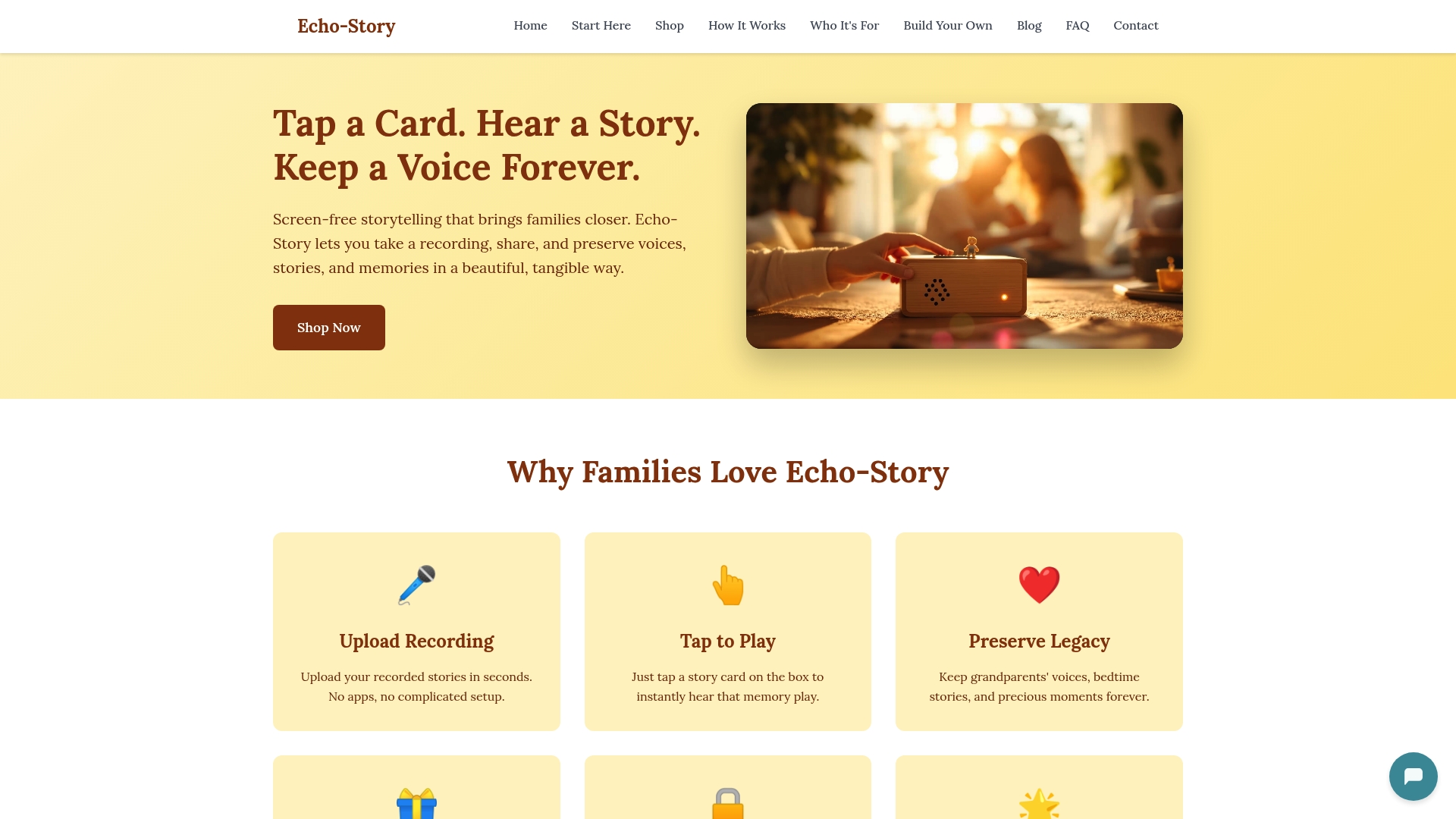
You have the stories. Echostory-box gives them a home children can hold in their hands. While other approaches leave audio files scattered across phones and forgotten folders, Echostory-box puts family voices directly into a child's daily routine through a calm, screen-free tap-to-play experience.
Grandparents record a bedtime story or a memory from childhood. Parents load it onto a story card. A child taps the card and hears the voice they love. No setup, no scrolling, no ads. Just the story.
Whether you are just beginning your family heritage project or you already have recordings waiting for a better home, Echostory-box is designed to make those voices last. Visit echostory-box.com to see how it works and find the right option for your family.
Key Takeaways
A family heritage project is most valuable when it captures authentic voices early, organizes them carefully, and delivers them to children in a format they can actually use.
| Point | Details |
|---|---|
| Start with a clear goal | Decide what to capture first — one person's life story or a specific tradition — before recording anything. |
| Preserve the authentic voice | Natural phrasing, accents, and pauses matter more to descendants than polished narration. |
| Use the 3-2-1 backup rule | Keep 3 copies on 2 types of media, with 1 copy off-site, so recordings survive device failures. |
| Short sessions work better | Sessions of 15–20 minutes produce richer stories than one long sitting, especially with older family members. |
| Echostory-box delivers voices to children | Its screen-free, tap-to-play format puts family recordings directly into a child's daily listening routine. |