
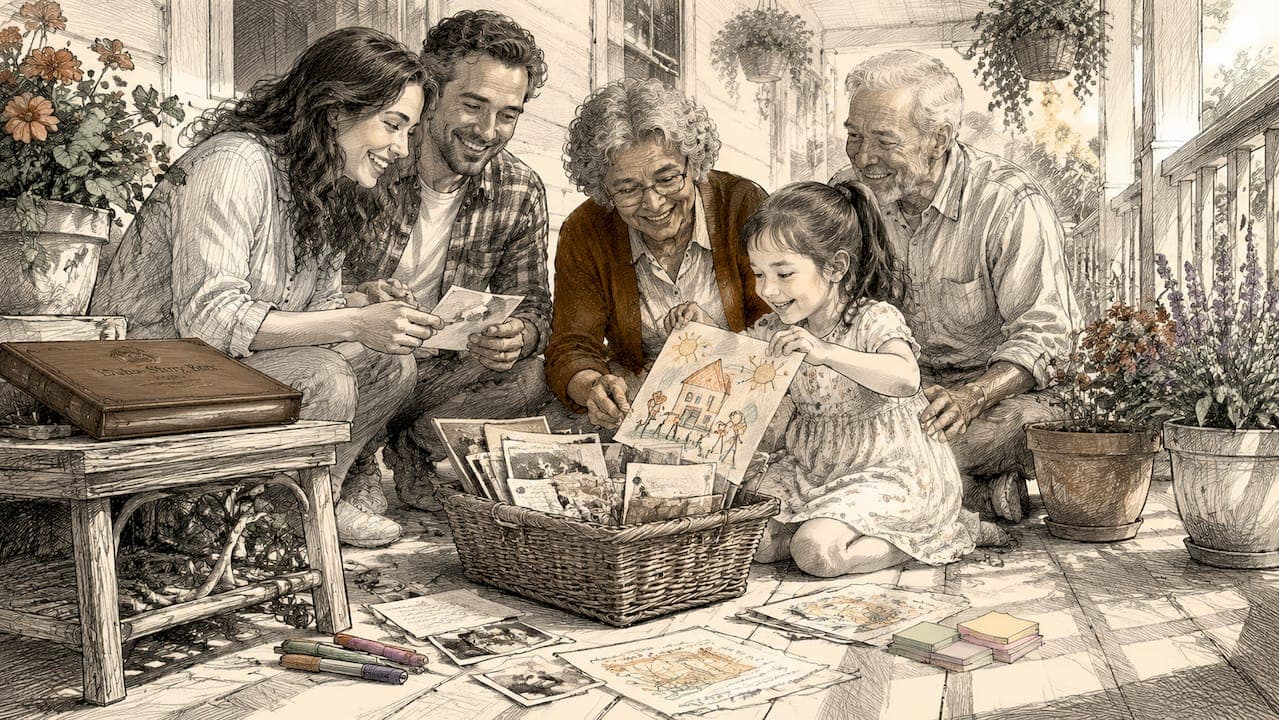
Archiving family memories for children means creating shared experiences and stories they can connect with emotionally, not merely storing artifacts in a box. Family stories are lost at a striking rate: approximately 90% disappear within three generations. That statistic means most of what your grandparents knew about their own grandparents is already gone. The good news is that child-centered memory preservation, built on collaborative rituals and vivid storytelling, gives families a practical way to break that cycle. This guide shows you exactly how to do it.
What tools help you archive family memories children understand?
The right materials make the difference between a collection that gathers dust and one that children actually return to. Start simple. Physical keepsakes like printed photos, original artwork, handwritten letters, and small mementos give children something tangible to hold and examine. Tangible objects activate curiosity in ways that digital files alone rarely do.
Digital tools add a second layer. A basic voice recorder or smartphone captures grandparent stories in minutes. Short recording sessions of about 15 minutes produce rich, detailed content efficiently. That is because natural conversation flows best in short bursts, and 15 minutes of relaxed talking yields more than 2,000 words of usable material.
For storage, combine physical and digital approaches:
- Memory boxes: Label each item with a date, a name, and one sentence of context. "Grandma's first job, 1972, bakery in Ohio" tells a child far more than a bare photograph.
- Digital albums: Use cloud storage like Google Photos or Apple iCloud to organize images by year and event. Add captions immediately, before the details fade.
- Audio folders: Store voice recordings in clearly named folders. "Dad's camping story, summer 2019" is findable. "Voice memo 47" is not.
- Printed photo books: Services like Shutterfly or Artifact Uprising produce physical books children can flip through without a screen.
| Format | Best for | Child-friendly feature |
|---|---|---|
| Memory box | Small mementos, letters, artwork | Tactile, hands-on exploration |
| Digital photo album | Large photo collections | Easy search by date or name |
| Audio recording | Grandparent voices, bedtime stories | Replayable, personal connection |
| Printed photo book | Curated family highlights | Screen-free, durable for young hands |
Pro Tip: Label every item the same day you add it to the archive. Memory fades fast. A single sentence of context written now saves hours of guesswork later.
How can parents create storytelling rituals that make archives come alive?
Static storage boxes are often invisible to children who perceive memories through interaction and routine, not passive collections. The shift from storage to encounter is the most important move you can make. Children need to do something with memories, not just look at them.
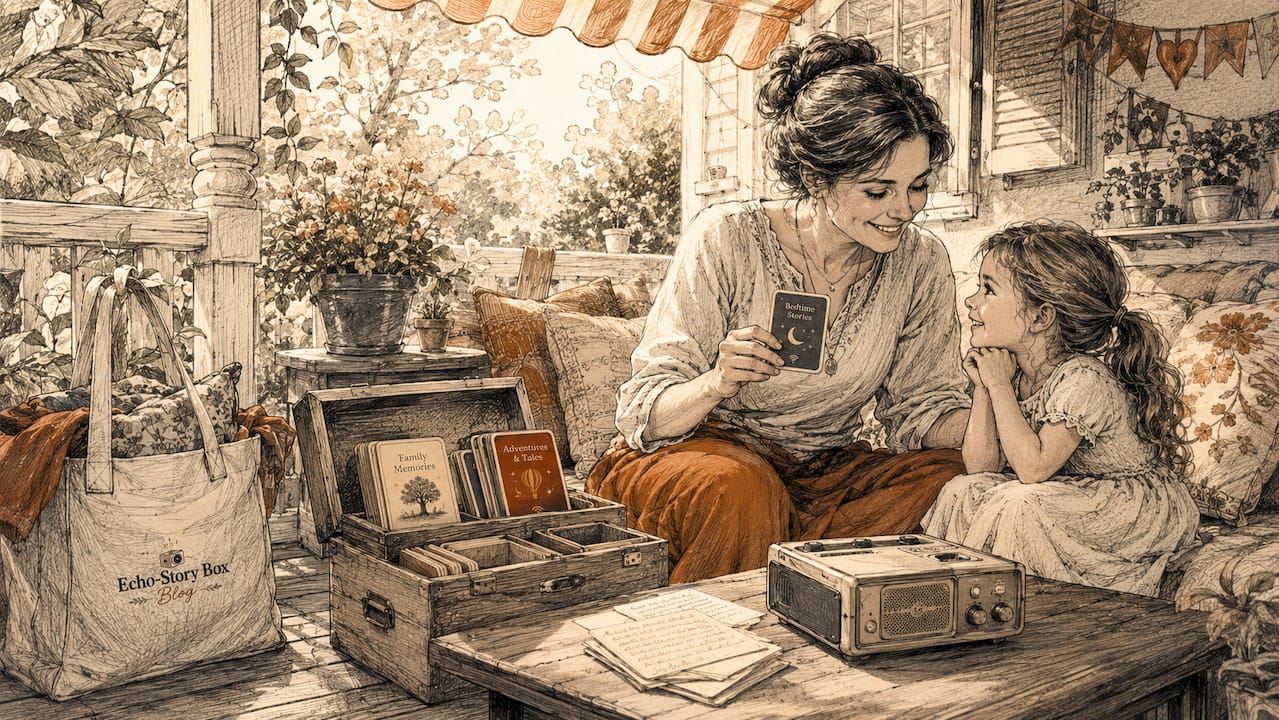
Elaborative reminiscing is the research-backed technique that makes this work. It means revisiting shared experiences in emotional detail during everyday moments. Elaborative reminiscing supports both memory formation and identity development in children. You do not need a special occasion. A car ride, a bedtime routine, or a walk around the block all work perfectly.
Here are five rituals that turn archives into active encounters:
- The weekly story pick. Let your child choose one photo or object from the memory box each week. You tell the story behind it. They ask questions. Keep it to ten minutes.
- The bedtime voice replay. Record a grandparent telling a short story. Play it at bedtime on a simple audio device. Repetition builds familiarity and emotional connection.
- The "what would you keep?" game. Spread out a small collection of items. Ask your child which three they would save if you had to move tomorrow. Their choices reveal what matters to them.
- The memory meal. Cook a dish connected to a family story. Tell the story while you cook. Food and narrative together create strong, lasting memories.
- The drawing response. After hearing a family story, ask your child to draw one scene from it. Display the drawing next to the original photo or object.
"Children do not need perfect scrapbooks. They need emotional security through shared storytelling." — Family storytelling research on elaborative reminiscing
Humor and warmth matter more than accuracy. A story about the time great-grandpa got lost on a fishing trip lands better than a factual biography. Include feelings, small details, and the moment things went wrong. Those are the parts children remember and retell.
Pro Tip: Write a set of three simple prompts on an index card and keep it in your memory box. "What were you feeling?" "What happened next?" and "What did you learn?" work for almost any story and keep conversations going naturally.
What storytelling formats help children connect with family memories?
Children rarely connect with factual histories or timelines. They understand memory through scenes, repetition, and contextual notes. A story that opens with "It was a cold morning in january 1965, and your great-grandmother was late for her first day of school" pulls a child in immediately. A list of dates and names does not.
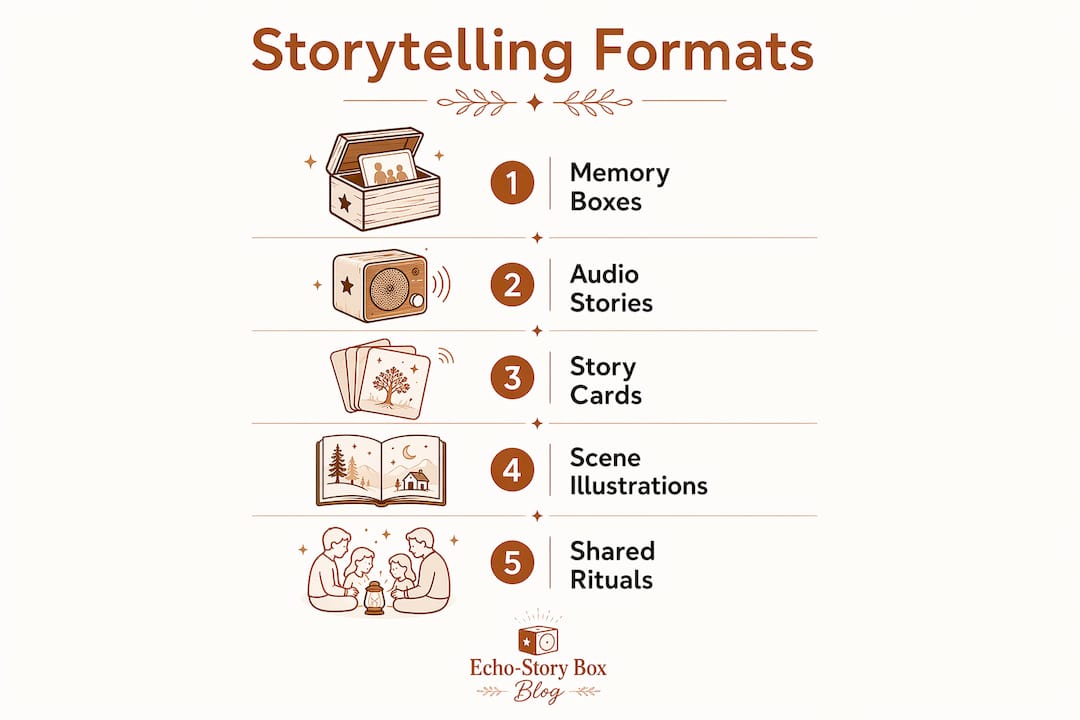
Scene-based storytelling follows a simple structure: character, setting, conflict, and feeling. Every family memory has all four elements. You just have to find them. "Your grandfather was twelve years old. He was standing in the kitchen. He had just broken his mother's favorite dish. He was terrified." That is a story. That is something a child can picture and feel.
The best formats for children combine multiple types of media:
- Photo plus audio: Pair a printed photo with a short voice recording that tells the story behind it. Children can look and listen at the same time.
- Story cards: Write or print a short story on a card and attach it to a photo or object. Keep each story under 150 words for children under eight.
- Video memory clips: Short video clips of one to two minutes, featuring a grandparent speaking directly to the camera, feel personal and warm. Longer videos lose young children quickly.
- Child-narrated recordings: Let your child record their own version of a family story after hearing it. Their retelling reveals what they understood and what moved them.
Context and scene-based presentation improve children's connection with memories significantly. Dates, names, and one-sentence descriptions give children the anchors they need to navigate an archive on their own as they grow older. You can learn more about educational storytelling formats that work well for families of all ages.
| Format | Works best for ages | Why it connects |
|---|---|---|
| Scene-based story card | 4–8 | Short, visual, easy to revisit |
| Photo plus audio recording | 5–10 | Combines sight and sound |
| Child-narrated retelling | 6–10 | Builds ownership and recall |
| Short video clip (1–2 min) | 4–10 | Personal, warm, replayable |
How do you grow a living family archive children keep returning to?
A living archive grows with your family. It is not a finished project. Child participation in curation reduces family conflict and makes archives shared, living entities rather than one parent's solo project. When children help decide what goes in, they feel ownership. Ownership creates the habit of returning.
Here is a practical approach to keeping your archive active across years:
- Set a seasonal review date. Pick one day each season to open the archive together. Add three new items. Retire one that no longer feels relevant. Keep the collection from becoming overwhelming.
- Create a "this year" section. Reserve one folder or box section for the current year. At the end of the year, move the best items into the main archive. This gives children a clear sense of time passing.
- Use family events as archive moments. Birthdays, holidays, and reunions are natural opportunities. Take one photo, record one short story, and add one object. Small additions compound into a rich collection over years.
- Let children add their own memories. Give each child a dedicated section of the archive. Their drawings, notes, and small treasures belong there. Recorded stories become treasures when children have a hand in creating them.
- Rotate what is on display. Keep three to five items visible in your home at any time. Rotate them monthly. Visible memories prompt spontaneous conversations far more often than hidden archives do.
Pro Tip: Avoid the urge to keep everything. A curated archive of 50 meaningful items is more powerful than a box of 500 unlabeled ones. Teach children that choosing what to keep is itself an act of honoring a memory.
The goal is not a perfect archive. It is a living one. Family lore shapes future generations most powerfully when it stays in active circulation, told and retold in the rhythms of daily life.
Key takeaways
The most effective way to archive family memories children understand is through collaborative rituals, scene-based storytelling, and a living archive that grows with the child.
| Point | Details |
|---|---|
| Start with simple tools | Use labeled memory boxes, audio recordings, and printed photo books as your foundation. |
| Use elaborative reminiscing | Revisit memories in emotional detail during everyday routines like car rides and bedtime. |
| Tell stories in scenes | Open with a character, setting, conflict, and feeling rather than dates and facts. |
| Give children curation power | Let children choose, add, and organize items to build ownership and lasting connection. |
| Keep the archive alive | Rotate displayed items, add memories seasonally, and review the collection together as a family. |
Why I think most family archives fail children before they even start
Most parents build archives for themselves, not for their children. They organize by year, label by event, and store everything neatly away. Then they wonder why their kids show no interest. The archive was never designed for a child's mind.
What I have seen work, again and again, is the opposite approach. You start with the child's curiosity, not the parent's organizational system. You ask what they want to know about grandpa, not what year he was born. You let them hold the old photograph and ask the first question. That question tells you everything about how to tell the story.
The hardest part for most parents is accepting imperfection. A crinkled drawing your child made at age five is worth more in a living archive than a perfectly preserved document they never touched. Intergenerational storytelling traditions survive not because someone organized them perfectly, but because someone kept telling the stories out loud.
Give yourself permission to start messy. Add the label later. Tell the story now. The archive will grow into something meaningful precisely because it was built in the middle of real life, not around it.
— Bob
How Echostory-box supports family memory preservation
Families who want a screen-free way to bring recorded stories into daily life will find Echostory-box worth exploring. The device is a simple audio player that uses NFC story cards. Children tap a card, and a story plays instantly. No menus, no ads, no scrolling.

Parents and grandparents can record bedtime stories, family history, encouragement messages, and holiday traditions directly onto story cards. Children can replay those recordings whenever they want, building the kind of repetition and familiarity that makes memories stick. Echostory-box is designed to make screen-free family storytelling a daily habit rather than a special occasion. If you want to see how the experience works in practice, the how it works page walks through the full setup clearly.
FAQ
What does it mean to archive family memories for children?
Archiving family memories for children means organizing stories, photos, recordings, and objects in ways children can understand and emotionally connect with, not just storing them. The focus is on active encounters and collaborative rituals rather than passive collections.
How often should families revisit their memory archive?
A seasonal review, roughly four times per year, keeps the archive fresh without becoming a burden. Brief, consistent engagement works better than one large annual session.
What age can children start participating in family history projects?
Children as young as four can participate in simple curation activities like choosing a favorite photo or drawing a scene from a story. Participation grows naturally with age and confidence.
Why do children connect better with stories than timelines?
Children understand memory through scenes, repetition, and emotion rather than dates and facts. A story with a character, a conflict, and a feeling gives children something to picture and feel, which is how memory forms.
How long should recorded family stories be for young children?
Five sessions of 15 minutes produce richer oral histories than one long interview. For children listening, keep individual recordings under two minutes to hold attention and encourage replaying.