
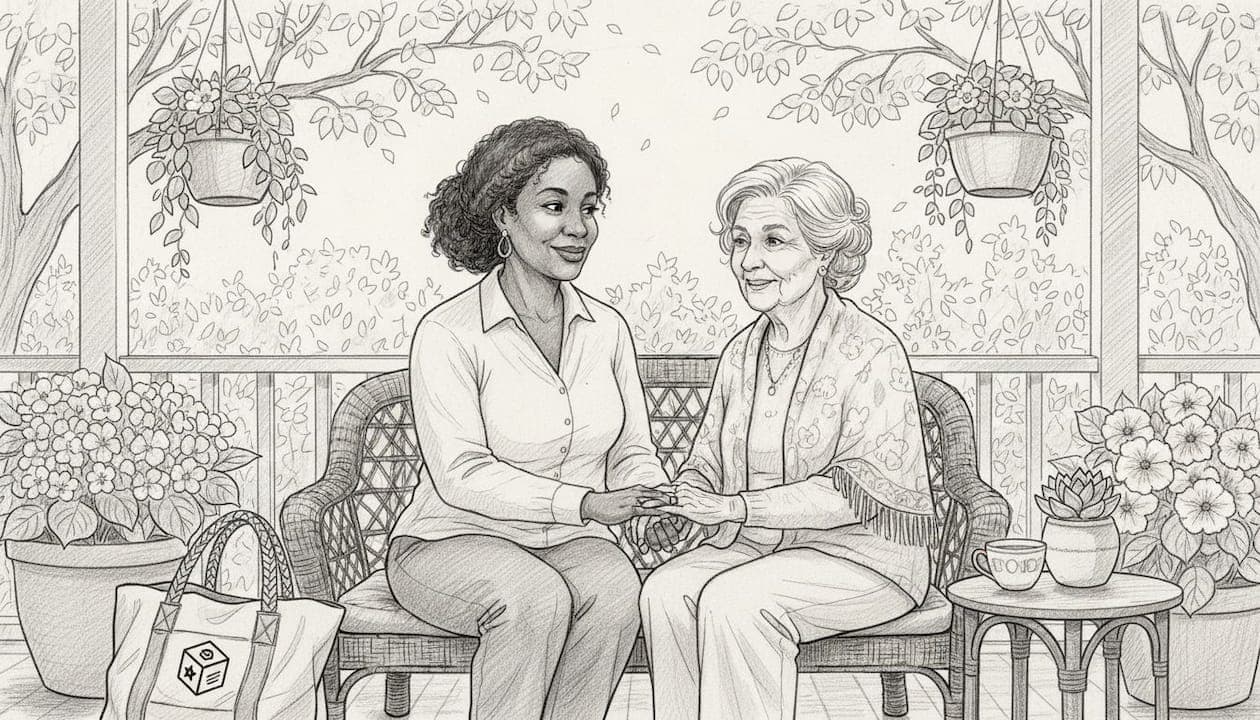
Family voices in memory care are defined as the recorded or live speech of loved ones used to provide emotional comfort, reduce anxiety, and activate long-term memory in seniors living with dementia. This is the clinical concept behind simulated presence therapy, a recognized approach in dementia care that uses familiar auditory cues to reach patients when other forms of communication fail. Research confirms that familiar voices deliver emotional safety that bypasses cognitive decline, offering reassurance even when a person can no longer recognize faces or recall recent events. For family caregivers, this means your voice is not just comforting. It is one of the most effective tools available in daily memory care.
How family voices reduce anxiety and agitation in dementia care
Familiar voices provide what dementia care specialists call a "felt sense of safety." This feeling does not depend on short-term memory. A person with Alzheimer's may not remember a phone call from an hour ago, yet still feel calmer and more settled because of it. That emotional residue is real, and it matters.
The science behind this is straightforward. Auditory cues engage preserved long-term memory and emotional centers in the brain, explaining why family voices evoke responses when photos or written reminders fail. The brain's emotional memory, stored in the amygdala and hippocampus, often remains partially intact even in moderate to severe dementia. A familiar voice reaches those preserved pathways directly.
Recent research strengthens this case. A 2025 randomized controlled trial found that familiar family voice responses to repetitive calls reduced agitation, anxiety, and caregiver burden compared to routine care. A 2026 pilot study reported that AI-based familiar voice programs reduced expressions of anxiety and distress in dementia patients by 70%. That figure reflects a meaningful shift in daily quality of life, not just a clinical metric.
Caregiver stress is also part of this picture. Approximately 31% of families of dementia patients report depressive symptoms linked to stress from repeated phone calls. When voice-based tools reduce the frequency and intensity of distress calls, caregivers benefit too.
Pro Tip: Keep voice interactions short and emotionally warm. A calm, loving tone matters far more than the content of what you say. Even a 60-second message can reset a difficult moment.
Why family voices outperform other memory care stimuli
Photos, objects, and music all play a role in memory care. But auditory stimuli like family voices carry emotional weight and trigger long-term memories more effectively than photos alone. Voice activates deeper brain areas tied to emotion and memory simultaneously. A photograph requires visual processing and recognition. A voice bypasses that step entirely.
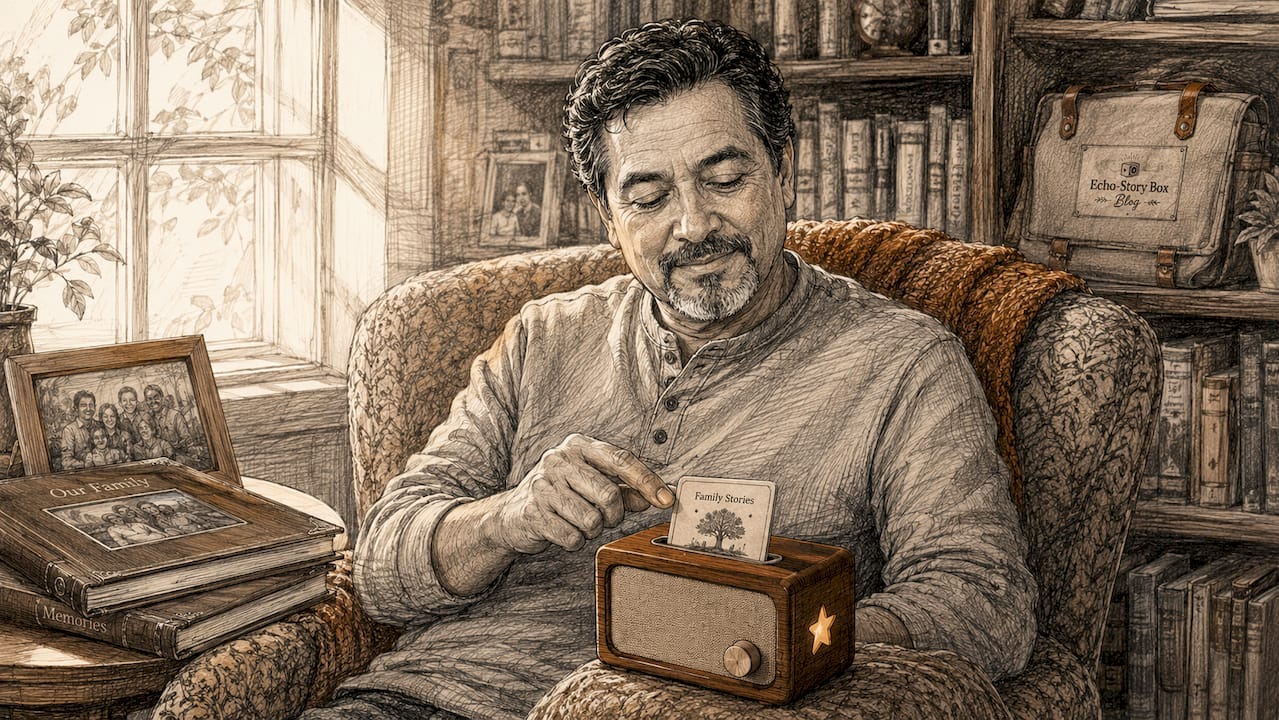
Music therapy offers a useful comparison. Music therapists find that familiar voices and music support "personhood" by accessing preserved neural pathways that enable non-verbal engagement. The collaborative model used in music therapy, which involves both families and care staff, builds confidence in using personalized auditory tools to reduce patient distress. Family voices work through the same mechanism, but with an added layer: they carry the specific emotional signature of a person the patient loves.
| Stimulus type | Memory activation | Emotional response | Ease of use |
|---|---|---|---|
| Family voice recordings | Strong, accesses long-term memory | High, triggers felt sense of safety | Simple to record and replay |
| Family photographs | Moderate, requires visual recognition | Moderate, depends on recognition | Readily available |
| Music (familiar songs) | Strong, accesses procedural and emotional memory | High, reduces distress | Requires curated playlist |
| Generic audio (radio, TV) | Low, little personal connection | Low to moderate | Passive, minimal engagement |
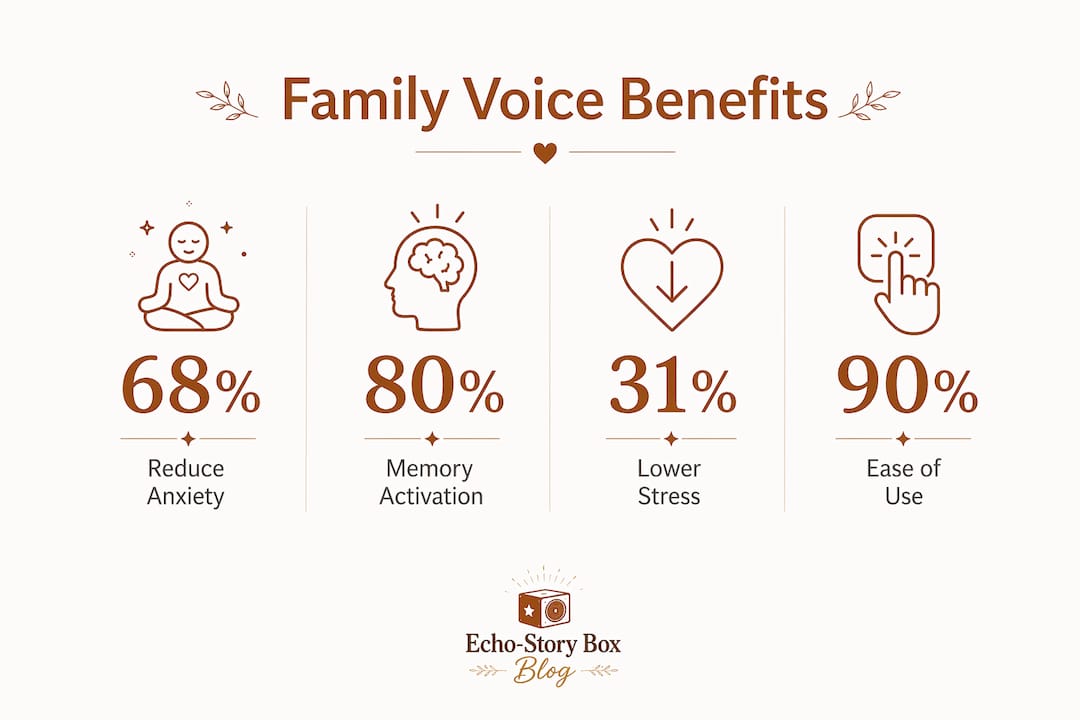
The table above shows why recorded family voices sit at the top of the auditory memory care toolkit. They combine strong memory activation with a personal emotional connection that no generic stimulus can replicate.
Pro Tip: When recording a message, capture natural speech patterns. Include laughter, pauses, and familiar phrases your loved one has always associated with you. Those specific qualities are what make the recording feel real.
Echostory-box recognizes this principle directly. Its legacy recording features are built around the idea that the unique patterns of speech, laughter, and pauses in a family member's voice carry irreplaceable connection beyond any factual content.
Best practices for using family voices in daily care
Short recordings work best. Recordings of 1–3 minutes focused on emotional connection outperform longer messages that attempt to orient the person to facts like the date or location. A message that says "I love you, I'm thinking of you, and you are safe" does more good than one that explains where you are or when you will visit.
For live phone calls, the approach shifts slightly. Shifting focus to emotional validation rather than orientation interrupts anxiety and repetitive questioning. This is called validation therapy, and dementia care professionals widely recommend it. You are not correcting or redirecting. You are meeting your loved one where they are emotionally.
Here is a practical guide for phone and in-person voice communication:
Do:
- Use a calm, warm, and unhurried tone
- Repeat "I love you" and reassuring phrases freely
- Acknowledge feelings before responding to questions
- Use the person's name gently at the start of a message
- Keep messages short and emotionally focused
Don't:
- Correct factual errors or argue about reality
- Speak quickly or with tension in your voice
- Ask questions that require recent memory to answer
- Try to explain complex situations or logistics
- Assume silence means the message is not working
Pro Tip: Record several short messages for different times of day. A morning message, an afternoon reassurance, and a calming bedtime recording give care staff or family members a ready library to use when distress arises.
The emotional regulation benefits of storytelling extend naturally into this practice. Familiar stories told in a loved one's voice carry the same calming power as direct reassurance messages.
How memory care environments integrate family voices
Care facilities and home environments are increasingly building family voices into daily routines. Touchscreen memory displays that combine family photos with recorded voice messages create a simple, repeatable source of comfort. A resident can tap a photo and hear a grandchild's voice. That interaction takes seconds and can shift the emotional tone of an entire afternoon.
AI-driven voice cloning represents the next step. This technology creates a responsive audio version of a family member's voice that can answer simple questions or offer reassurance on demand. The 2026 pilot study data showing a 70% reduction in anxiety and distress came directly from programs using this approach. The technology is still developing, but its early results are significant.
| Technology | Key feature | Primary caregiver benefit |
|---|---|---|
| Pre-recorded voice messages | Simple audio playback triggered by caregiver or patient | Available anytime, no live call required |
| Touchscreen memory displays | Combines photos and voice in one interface | Supports reminiscence and reduces confusion |
| AI voice cloning | Generates responsive voice interactions | Provides comfort when family cannot be present |
| Audio story players (screen-free) | Plays familiar voices and stories without screens | Calm, distraction-free emotional connection |
Screen-free audio players deserve special attention in this context. Devices that play family voice recordings without requiring a screen, app, or complicated menu reduce the cognitive load on both the patient and the caregiver. The connection between familiar stories and aging parents runs deep, and simple playback tools make that connection accessible every day.
Caregivers making decisions about technology should prioritize ease of use over feature count. A device that a care staff member can operate in under 30 seconds will get used. A complex system will not.
Key Takeaways
Family voices are the most direct and effective auditory tool available to caregivers supporting a loved one with dementia, and consistent use reduces both patient distress and caregiver stress.
| Point | Details |
|---|---|
| Voices reach preserved memory | Auditory cues activate emotional brain centers that remain intact even in advanced dementia. |
| Short recordings outperform long ones | Recordings of 1–3 minutes focused on love and safety work better than orientation-based messages. |
| Validation beats correction | Emotional validation during calls reduces repetitive questioning and anxiety more effectively than factual responses. |
| Technology extends availability | AI voice tools and screen-free audio players make family voices accessible around the clock. |
| Caregiver wellbeing improves too | Reducing distress calls and using voice tools lowers depression risk among family caregivers. |
What I've learned about family voices that most guides miss
I've spent years watching families navigate dementia care, and the most common mistake I see is underestimating the power of an ordinary voice. Caregivers often assume they need a professional tool, a structured program, or a clinical setting to make a difference. They don't. A grandmother's voice recorded on a phone, played back during a difficult afternoon, can do what medication sometimes cannot.
The second thing most guides miss is the caregiver's own emotional state during recordings. A tense or rushed voice communicates anxiety even when the words are kind. The person with dementia may not process the words clearly, but they read the emotional tone with surprising accuracy. Recording when you feel calm and unhurried produces a message that actually works.
I also think the field underestimates how much dignity matters here. Using a loved one's voice is not a trick or a workaround. It is a recognition that the person still responds to love, still feels connection, and still deserves to hear from the people who matter most to them. That framing changes how caregivers approach the practice. It stops feeling like a task and starts feeling like a gift.
My honest recommendation: start simple. Record a two-minute message this week. Say "I love you" more than once. Use their name. Don't explain anything. Just be present in your voice. That is enough to begin.
— Bob
Echostory-box: preserving the voices that matter most
Echostory-box was built on the belief that a family member's voice is one of the most meaningful things you can preserve. For caregivers supporting a loved one with dementia, that belief has real, practical weight.
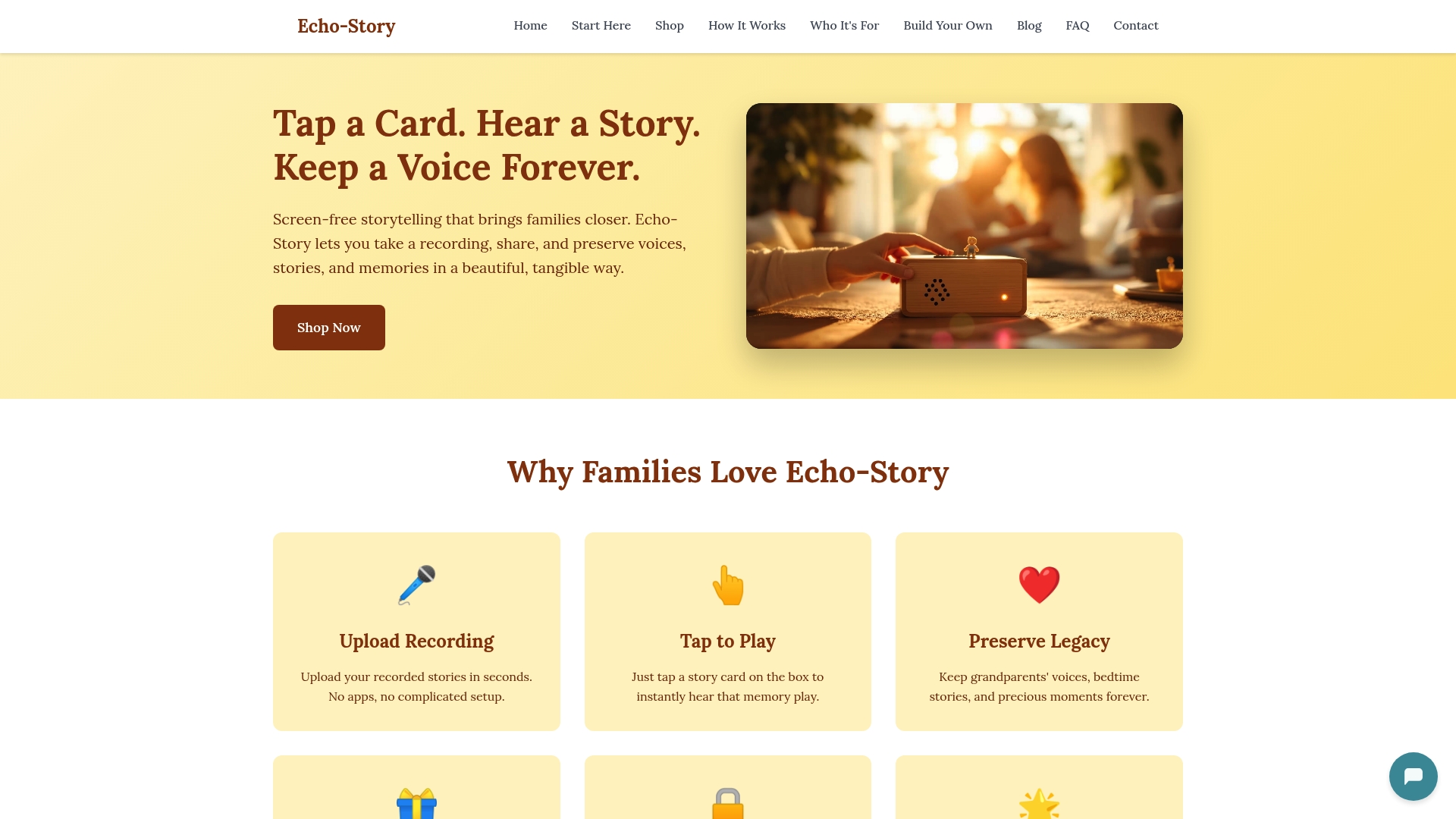
The Echostory-box platform lets families record grandparent messages, bedtime stories, life lessons, and words of encouragement, then play them back through a simple, screen-free audio player. There are no complicated menus, no apps to manage, and no screens to navigate. A caregiver or resident simply taps a card and hears a familiar voice. For families looking for a gentle, lasting way to stay present in a loved one's daily life, Echostory-box screen-free storytelling offers a practical and meaningful place to start.
FAQ
What is the role of family voices in memory care?
Family voices provide emotional comfort and activate preserved long-term memory pathways in people with dementia. Simulated presence therapy uses recorded family voices to reduce agitation, anxiety, and distress without requiring the person to recall recent events.
How long should a voice recording be for a dementia patient?
Recordings of 1–3 minutes focused on emotional reassurance work best. Short messages centered on love and safety outperform longer messages that try to orient the person to facts or current events.
Can family voices reduce caregiver stress?
Yes. Research shows that using voice-based tools to respond to repetitive calls reduces both patient distress and caregiver burden. A 2025 randomized controlled trial confirmed reductions in anxiety and caregiver stress compared to routine care.
Why do voices work better than photos for memory activation?
Auditory stimuli activate deeper emotional brain centers more directly than visual cues. A familiar voice reaches preserved neural pathways tied to emotion and long-term memory, even when visual recognition has declined.
What should you say in a voice recording for a loved one with dementia?
Focus on emotional connection rather than facts. Say "I love you," use their name, and offer simple reassurance like "You are safe and cared for." Avoid explanations, corrections, or questions that require recent memory to answer.