
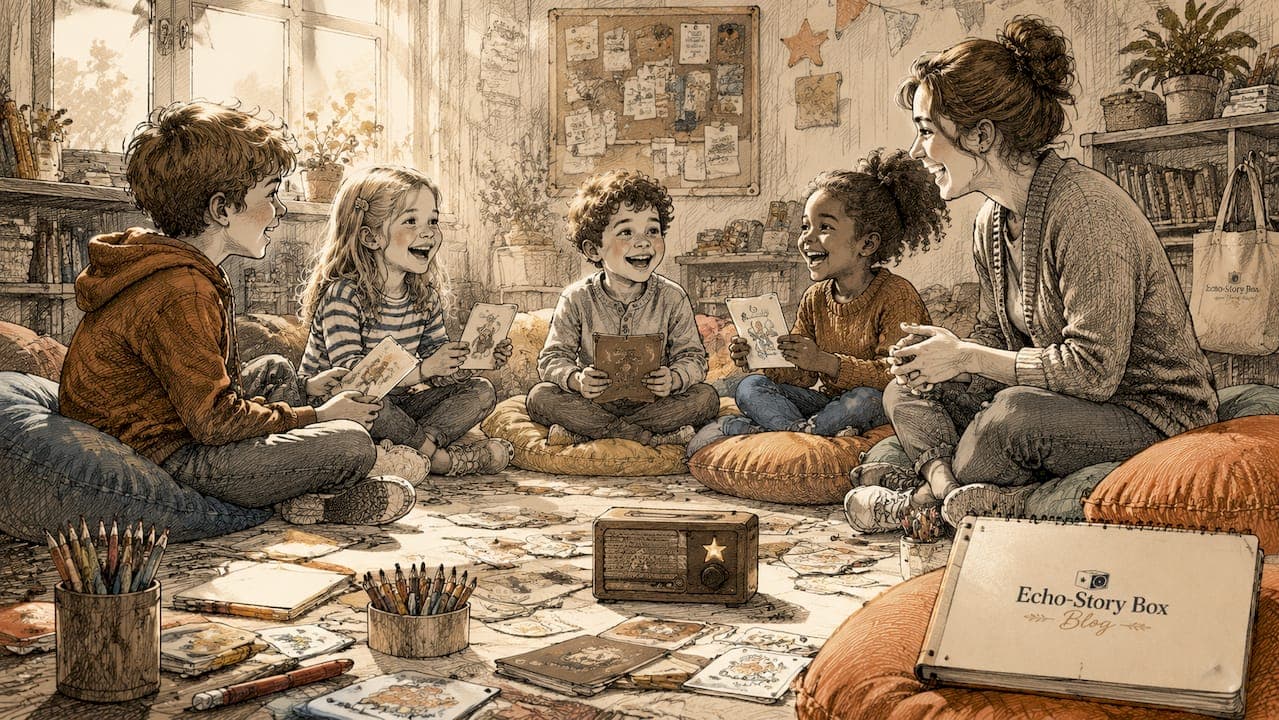
A story circle learning method is a structured, facilitated group process where participants share personal or imaginative stories in turn while others listen without interruption. Pioneered in educational and community settings by practitioners like John O'Neal, this technique builds empathy, trust, and collective understanding through the simple act of taking turns with a story. The method is distinct from individual narrative frameworks like the Dan Harmon Story Circle, which structures plot arcs rather than group dialogue. For educators, parents, and community leaders, understanding how story circles work opens a practical path to deeper engagement, richer creativity, and stronger social bonds in children.
What is the structure and process of a story circle learning method?
A story circle is defined as a facilitated group process where participants share personal experience stories in turn, with listeners giving full attention and the facilitator holding space without steering toward any conclusion. That definition matters because it separates this method from a classroom discussion or a debate. No one argues. No one interrupts. Everyone gets a turn.
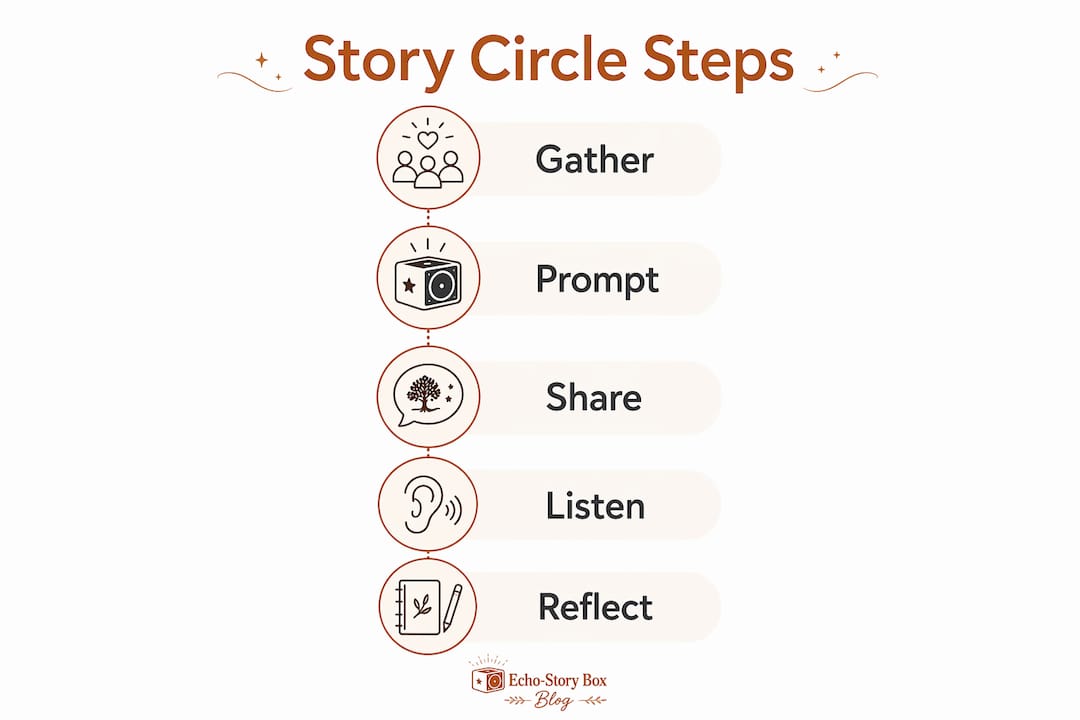
A typical session follows a clear sequence:
- Set up the physical space. Arrange chairs in a circle with no tables in between. Every seat carries equal weight. No one sits at the head.
- Open with a facilitator introduction. The facilitator explains the purpose, sets agreements, and reminds participants that listening is as important as speaking.
- Introduce a shared prompt. The prompt is a simple, open question tied to personal experience. For children, this might be: "Tell us about a time you felt brave."
- Take turns sharing. Each participant speaks in sequence around the circle. Responses are personal stories, not opinions or arguments.
- Practice deep listening. Listeners stay quiet and attentive. No reactions, no side conversations.
- Close with collective reflection. After all stories are shared, the group notices themes together. The facilitator asks what patterns emerged, not what the "right" answer is.
Pro Tip: Design your prompt around a concrete moment, not an abstract idea. "Tell me about a time you helped someone" produces richer stories than "What does kindness mean to you?"
The facilitator's role is to protect the process, not to teach. This is a critical distinction. A facilitator who editorializes or evaluates stories breaks the psychological safety the circle depends on. Experienced facilitators use facilitation agreements and focused prompts to maintain rhythm without steering outcomes, preserving space for emergent collective meaning.
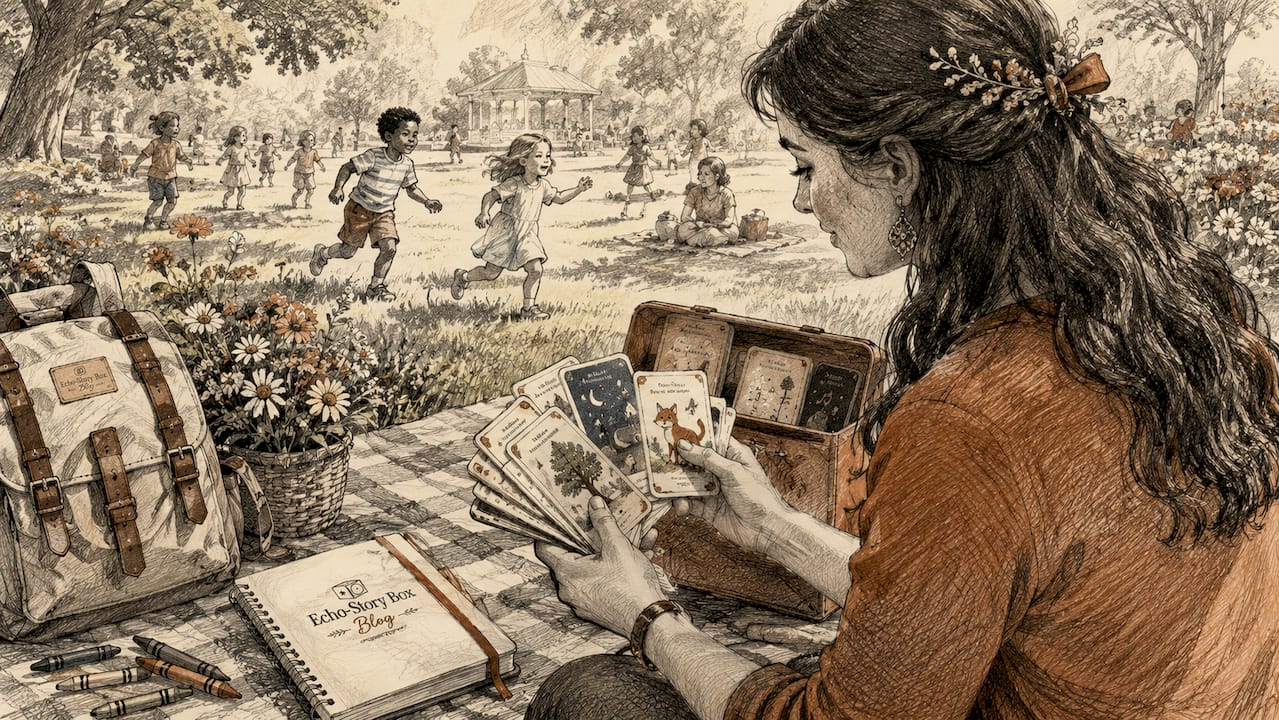
How does the story circle technique benefit children's learning and creativity?
Story circles do more than build community. They produce measurable gains in the skills children need to learn and communicate. Research shows that active storytelling with scaffolding improves listening comprehension and engagement. That finding points to something educators already sense: children learn more when they are participants in a story, not just an audience.
The specific benefits include:
- Language development. Children hear varied vocabulary and sentence structures from peers. Exposure to multiple storytelling styles builds their own narrative range.
- Empathy and social awareness. Listening to a classmate's story about fear or excitement creates genuine emotional connection. Story circles build community and help participants listen with care, a skill that transfers directly to conflict resolution and collaboration.
- Narrative structure awareness. Children who tell stories regularly begin to understand beginnings, middles, and ends intuitively. This supports reading comprehension and writing skills.
- Confidence and voice. A child who knows their turn is protected and their story will be heard without judgment speaks more freely. That confidence grows with each session.
- Collaborative sense-making. When the group reflects on shared themes at the end of a session, children practice higher-order thinking. They connect individual experiences to larger ideas.
Judy Pryor-Ramirez emphasizes that storytelling reveals collective truths that debate and persuasion cannot reach. That insight applies directly to classrooms. A child who would never raise their hand to argue a point will often share a personal story when the space feels safe. Story circles make that space possible.
Research on learning through storytelling consistently shows that narrative engagement outperforms passive instruction for retention and motivation. Story circles take that principle and make it social, which compounds the effect.
How does the community story circle differ from the Dan Harmon Story Circle?
This is the most common point of confusion for educators and parents who search for story circle resources. The two frameworks share a name but serve entirely different purposes.
| Feature | Community story circle | Dan Harmon Story Circle |
|---|---|---|
| Purpose | Group sharing and dialogue | Individual narrative plot structure |
| Format | Facilitated conversation | 8-step story arc framework |
| Participants | Multiple voices, equal turns | Single character's journey |
| Outcome | Collective empathy and insight | Structured, compelling story arc |
| Best used for | Classrooms, community groups, SEL | Writing, screenwriting, creative projects |
The Dan Harmon Story Circle is an 8-step narrative framework that maps a character's journey through comfort, challenge, and transformation. It condenses Joseph Campbell's Hero's Journey into a structure useful for any genre, from short films to novels. It is a writing tool, not a facilitation method.
Confusing the two is a common beginner mistake that undermines effectiveness in both directions. Trying to impose the rigid 8-step Dan Harmon plot structure onto a community story circle disrupts its natural flow and limits authentic collective storytelling. Conversely, using a community circle format when a child needs help structuring a written story leaves them without the plot guidance they actually need.
Pro Tip: Use the community story circle for social-emotional learning and group reflection. Use the Dan Harmon framework when a child is writing or planning a story and needs help with plot structure. Keep them separate and both become more powerful.
The Dan Harmon circle does have one crossover value in education. Its circular nature reflects universal human experience of growth through challenge and return, making it a simple language for teaching children to recognize patterns in their own stories. But that is a writing lesson, not a facilitation session.
How can educators and community leaders facilitate story circles for children?
Effective facilitation is the difference between a story circle that transforms a classroom and one that fizzles after two sessions. The physical and relational setup matters as much as the prompt itself.
Physical seating arrangement is non-negotiable. A true circle, with no tables blocking sightlines, reinforces equality and builds trust. Even in virtual settings, recreating circle dynamics by ensuring every participant is equally visible preserves the psychological space essential for genuine sharing. If you are running a session on a video call, ask every child to turn their camera on and position themselves centered in the frame.
Strong facilitation also depends on:
- Prompt design. The best prompts are specific, personal, and low-stakes. "Tell us about your favorite place to be quiet" works better than "Tell us about your feelings." Specificity reduces anxiety and opens memory.
- Clear agreements. Before the first story, establish three simple rules: one person speaks at a time, listeners stay quiet, and all stories stay in the room. Children respect agreements they help create.
- Managing dominant voices. Some children will want to speak again before others have had a turn. A gentle "Let's hear from everyone first" is enough. The circle structure itself does most of this work.
- Encouraging quiet participants. Never force a child to share. Offer a simple alternative: "You can pass and we'll come back to you, or you can just listen today." Most children choose to share when they feel no pressure.
- Connecting to curriculum. Story circles pair naturally with history lessons, literature discussions, and science units. A prompt like "Tell us about a time something surprised you" fits a science unit on discovery without feeling forced.
Pro Tip: End every session with a one-sentence reflection from each child: "One thing I noticed from our stories today is..." This closes the loop and reinforces collective learning without requiring the facilitator to summarize or evaluate.
Small group storytelling works best with groups of 6–12 children. Larger groups lose the intimacy that makes deep listening possible. If your class is bigger, split into two circles and run them simultaneously with a co-facilitator or a trusted student leader.
Key takeaways
A story circle learning method works because it combines structured turn-taking, deep listening, and shared reflection to build empathy, language skills, and community in children.
| Point | Details |
|---|---|
| Core definition | A story circle is a facilitated group process where participants share stories in turn without interruption. |
| Community vs. Dan Harmon | Community story circles build dialogue; the Dan Harmon framework structures individual plot arcs for writing. |
| Children's learning benefits | Story circles build empathy, vocabulary, narrative skill, and confidence through protected sharing. |
| Facilitation essentials | Circle seating, clear agreements, and specific prompts are the three non-negotiable setup elements. |
| Prompt design matters | Concrete, personal prompts produce richer stories and reduce anxiety for young participants. |
Why story circles reveal more than you expect
Story circles are grounded interventions designed to explore complex ideas by uniting individual lived experience with communal knowledge. That framing, borrowed from practitioners who use them in community research, is exactly right. But what I have seen in educational settings goes further than the theory suggests.
The children who surprise you most in a story circle are rarely the ones who dominate class discussions. The quiet child who never volunteers an answer will often tell a vivid, detailed story when the circle protects their turn. That moment is not a small thing. It shifts how their peers see them and how they see themselves.
The challenge facilitators underestimate is the discomfort of silence. When a child pauses mid-story, the instinct is to fill the gap. Resist it. That pause is often where the most honest part of the story lives. Experienced facilitators learn to treat silence as part of the process, not a problem to fix.
Story circles remain just as relevant in digital classrooms as in physical ones. The format adapts to video calls without losing its core power, as long as the circle dynamic is preserved visually. The method's ongoing value is not tied to a specific setting. It is tied to the human need to be heard and to hear others. That need does not change with the medium.
— Bob
Screen-free storytelling that extends the circle at home
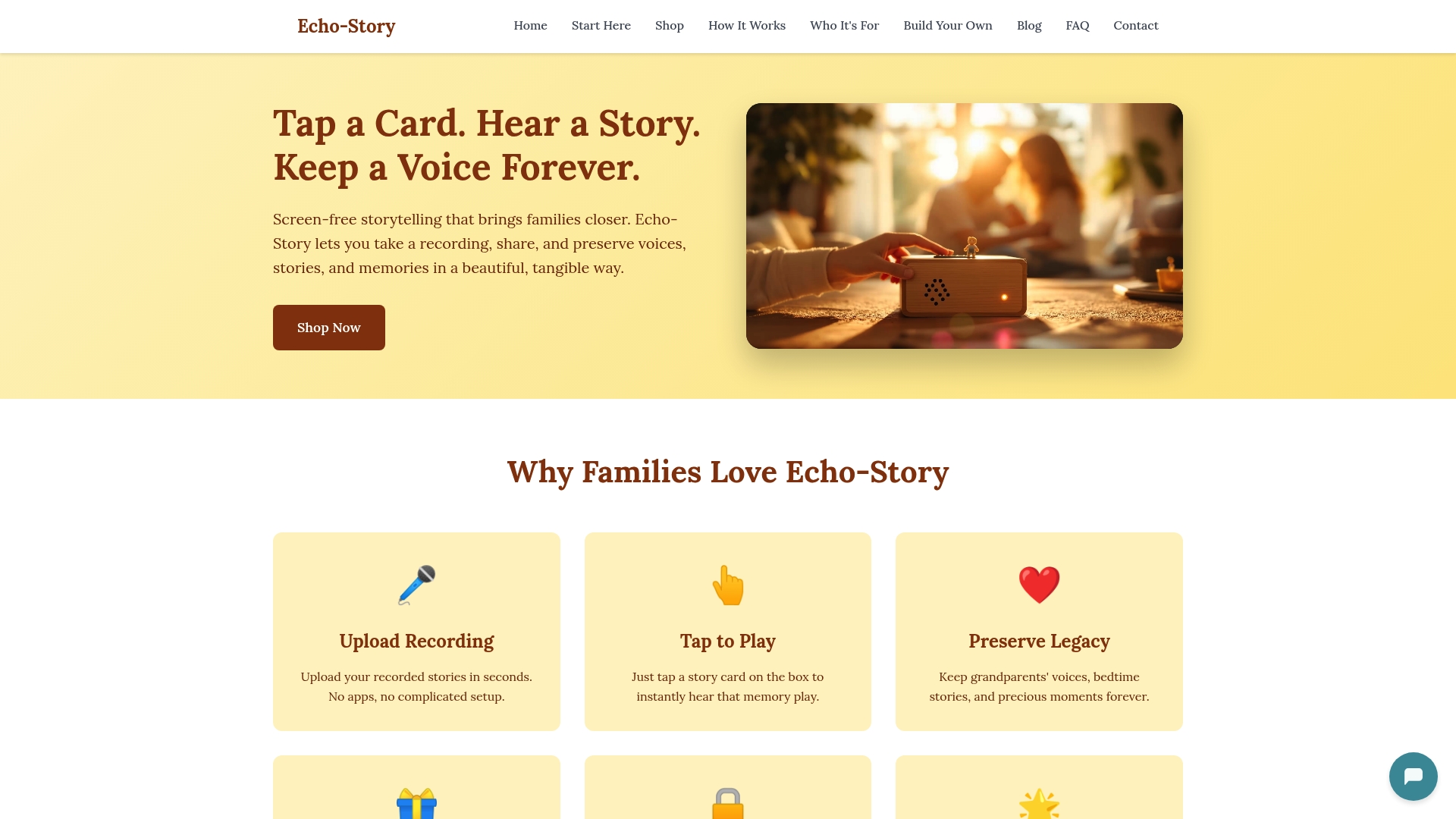
Story circles work beautifully in classrooms and community groups. The challenge is keeping that storytelling energy alive when children go home. Echostory-box is built for exactly that gap. It is a screen-free audio player that lets children tap a story card and hear a story begin, no menus, no ads, no scrolling. Characters like Theo the Rabbit, Eileen, and Eisley carry children through adventures that build the same vocabulary and narrative awareness that story circles develop in groups. Parents and grandparents can also record their own voices directly onto the device, turning family stories into keepsakes children return to again and again. If you want a calm, simple way to bring screen-free storytelling into your home or classroom, Echostory-box is worth a close look.
FAQ
What is a story circle learning method?
A story circle learning method is a facilitated group process where participants share personal or imaginative stories in turn while others listen without interruption. It builds empathy, community, and narrative skills through structured, equal participation.
Who created the story circle technique for education?
John O'Neal is widely credited with pioneering story circles as an educational and community tool. His approach uses shared prompts and turn-taking to slow conversation and build genuine trust among participants.
How is a story circle different from a class discussion?
A class discussion allows interruption, debate, and teacher-led evaluation. A story circle requires uninterrupted turn-taking, deep listening, and no judgment, which creates a fundamentally different level of psychological safety.
How many children work best in a story circle?
Groups of 6–12 children produce the best results. Smaller groups maintain the intimacy needed for genuine sharing, while larger groups can be split into two simultaneous circles with separate facilitators.
Can story circles be used in virtual classrooms?
Story circles adapt well to virtual settings when every participant keeps their camera on and is equally visible on screen. The circle dynamic is preserved visually, and the same prompt and turn-taking rules apply.