

Therapeutic storytelling for adults is defined as the deliberate use of narrative to process emotions, reframe personal experiences, and promote psychological healing. The formal clinical term for this practice is narrative therapy, developed by Michael White and David Epston in the 1980s, though therapeutic storytelling extends well beyond the therapist's office into journaling, creative writing, and community sharing. Research confirms that structuring chaotic experiences into narratives lowers cortisol and raises oxytocin, producing measurable physiological changes that support stress regulation and social bonding. Whether you work with a licensed counselor or simply write in a notebook before bed, the healing mechanism is the same: you give shape to experience, and that shape gives you back a sense of control.
What is therapeutic storytelling for adults, exactly?
Therapeutic storytelling is the process of turning lived experience into a structured narrative so the mind can make meaning from it. The industry term, narrative therapy, treats the person as separate from their problem and positions them as the author of their own life story. This distinction matters because it shifts the relationship between you and your difficulties from one of identity to one of perspective. You are not your anxiety. You are a person with a story that includes anxiety, and that story can be rewritten.
Narrative therapy shifts people from passive symptom reporters to active narrators holding authority over their life story. That shift is the core of what makes storytelling therapeutic rather than simply expressive. When you narrate an experience rather than just feel it, you create distance, structure, and the possibility of a different ending.
How does storytelling heal? The psychology and physiology
The brain processes stories differently than it processes raw information. Narrative information is up to 22 times more likely to be remembered than facts alone. That retention advantage exists because stories activate multiple brain regions simultaneously, including those tied to emotion, sensory experience, and memory consolidation. For healing, this means a narrative account of a difficult event is processed more deeply and more completely than a clinical recounting of symptoms.

Emotional selves process meaning rather than raw facts, and storytelling delivers meaning directly to consciousness while bypassing rational resistance. This is why a person who cannot talk about grief in direct terms can often write about it through a character or metaphor. The right brain engages with story as experience, not as data. That engagement is where emotional processing actually happens.
Psychological distance through metaphor prevents retraumatization and supports emotional regulation in trauma-informed storytelling. Telling a painful story as if it happened to a character named "the traveler" rather than to yourself creates enough separation to examine the experience without being overwhelmed by it. Therapists trained in trauma-informed care use this technique deliberately, but you can apply it in personal writing as well.
Pro Tip: When a memory feels too raw to write about directly, shift to third person. Write "she felt" instead of "I felt." That small grammatical change creates real psychological distance and makes the story safer to explore.
Types and techniques of therapeutic storytelling for adults
Adult storytelling techniques span a wide range of formats, from spoken word to written narrative to collaborative group work. The right format depends on your comfort level, your goals, and whether you are working independently or with a professional. Here are the most widely used approaches:
- Oral storytelling. Speaking your story aloud, whether to a therapist, a trusted friend, or even a voice recorder, activates different processing than silent thought. The act of forming words externalizes the experience.
- Journaling and free writing. Writing without editing or judgment allows the subconscious to surface material that structured thinking suppresses. Morning pages, as described by Julia Cameron in The Artist's Way, follow this principle.
- Creative writing and fiction. Writing characters who face situations similar to your own creates the metaphorical distance that protects against retraumatization. Many writers describe their fiction as the most honest thing they have ever written.
- Bibliotherapy. Reading curated literature to discover emotional connections and insights is a recognized therapeutic process. A skilled counselor may assign specific novels or memoirs as part of treatment.
- Collaborative storytelling. Working with a therapist or group to co-construct a narrative around a shared theme. This is common in grief groups and trauma-informed programs.
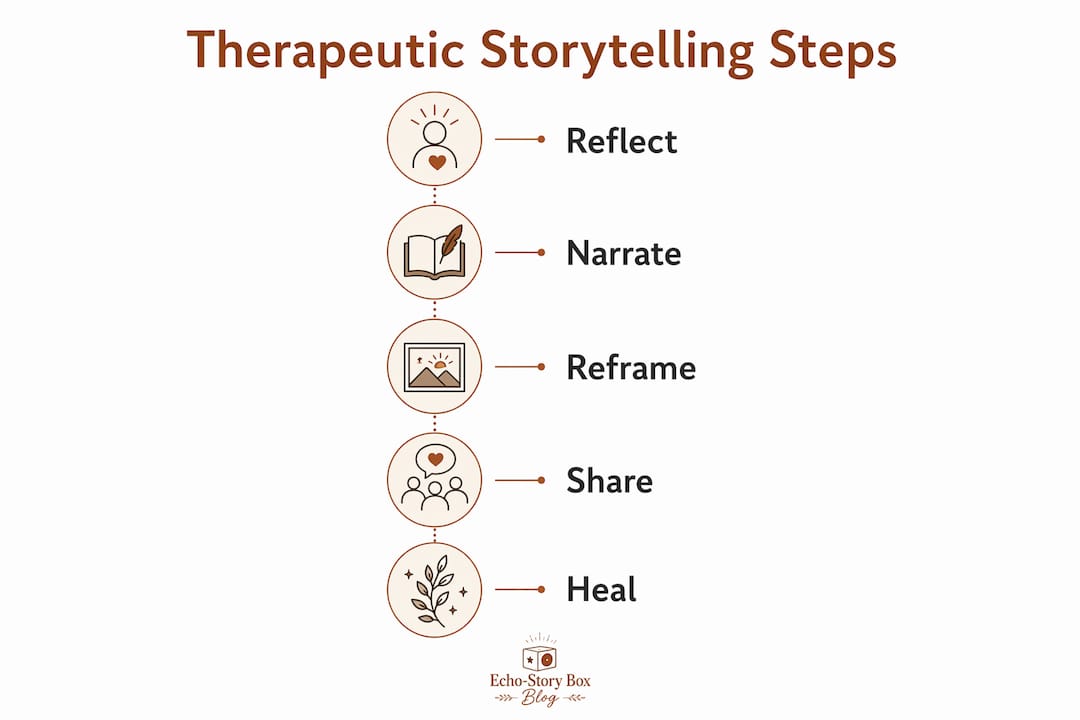
- Re-authoring and externalization. These are specific narrative therapy techniques. Externalization means naming the problem as something outside yourself ("the depression" rather than "my depression"). Re-authoring means identifying moments in your history that contradict the problem story and building a new narrative around those moments.
The value of therapeutic storytelling lies not in the quality of narrative prose but in re-authoring life experience and externalizing problems. You do not need to write well. You need to write honestly. Explore educational storytelling formats to see how different narrative structures serve different emotional purposes.
Pro Tip: If you are new to therapeutic writing, start with a structured prompt rather than a blank page. Try: "Tell the story of a time you surprised yourself with your own strength." Structure reduces the intimidation of beginning.
What are the benefits of therapeutic storytelling for adults?
The benefits of storytelling for adults go well beyond emotional release. Research and clinical practice point to a specific set of outcomes that make narrative work genuinely transformative.
- Improved life satisfaction. Group-based storytelling interventions significantly improved life satisfaction in adults with mental health disorders over a four-month period. The improvement was not marginal. It was statistically significant, which means storytelling produced measurable changes in how participants experienced their own lives.
- Resilience building. Constructing a coherent narrative around hardship activates the same cognitive processes that build resilience. When you can tell the story of how you survived something, you reinforce the identity of a person who survives.
- Empowerment and identity development. Reclaiming authorship of your own story is one of the most direct paths to a stronger sense of self. Narrative therapy empowers individuals by reframing their life story to foster identity and agency.
- Empathy and social bonding. Shared storytelling builds connection. When you hear someone else's story and recognize your own experience in it, oxytocin rises and social trust deepens. This is why support groups work.
- Meaning and mental health. Storytelling workshops help cultivate a "why mindset" that promotes meaning, mental health, and longevity. Knowing why your experiences matter is a trainable cognitive skill, not a fixed personality trait.
"The story you tell about your life shapes the life you are able to live. Changing the story is not denial. It is authorship."
Explore how life stories become teachable moments to see this principle applied in family and personal contexts.
Common challenges and best practices for adult storytelling
Therapeutic storytelling is powerful, and that power requires some care. Adults who approach this work without preparation sometimes encounter emotional material they are not ready to process alone. These are the most common challenges and how to handle them.
- Emotional flooding. Going too deep too fast can overwhelm your nervous system. Pacing matters. Start with stories that carry moderate emotional weight before approaching the most difficult material.
- Skipping professional support for trauma. Storytelling is a genuine therapeutic tool, but deep trauma processing benefits from a trained counselor or therapist. Narrative therapy practiced with a licensed professional provides structure and safety that self-directed work cannot always replicate.
- Believing you need to write well. This is the most common misconception. Re-authoring and externalizing the problem is more impactful than narrative quality. Grammar and style are irrelevant. Honesty is the only skill required.
- Staying in problem-saturated stories. Some people write the same painful story repeatedly without moving toward a new perspective. The goal of therapeutic storytelling is not to rehearse suffering but to find the threads of strength, choice, and meaning within it.
- Isolation. Storytelling in community amplifies its benefits. Whether that means a writing group, a therapy group, or simply sharing a story with one trusted person, connection multiplies the healing effect.
Pro Tip: Use a consistent, calm environment for your storytelling practice. The same chair, the same time of day, and a brief grounding ritual before you begin all signal to your nervous system that this is a safe space for honest reflection.
Key takeaways
Therapeutic storytelling heals adults by converting raw experience into structured narrative, which lowers cortisol, raises oxytocin, and restores a sense of personal agency over one's own life story.
| Point | Details |
|---|---|
| Core definition | Therapeutic storytelling uses narrative to process emotions and reframe personal experience. |
| Physiological impact | Structured narratives lower cortisol and raise oxytocin, supporting stress regulation and bonding. |
| Technique variety | Oral storytelling, journaling, bibliotherapy, and re-authoring each serve different healing purposes. |
| No writing skill required | The therapeutic value comes from honesty and re-authoring, not from prose quality. |
| Professional support matters | Deep trauma work benefits from a trained narrative therapist, not just self-directed writing. |
Why storytelling is the most underused self-care tool for adults
I have spent years watching adults dismiss storytelling as something for children or for people with literary ambitions. That assumption costs people a genuinely effective tool. The research on cortisol reduction and oxytocin release is not soft science. It is physiology. When you put a difficult experience into words and give it a beginning, middle, and a direction forward, your body responds as if the threat has been contained. That is not metaphor. That is biology.
What I find most meaningful about narrative therapy and therapeutic storytelling is the emphasis on authorship. You are not a passive recipient of your history. You are the person who decides what your history means. That reframe alone has helped people I know move through grief, career loss, and relationship breakdown in ways that years of rumination never achieved.
My honest recommendation is to start small and stay consistent. Ten minutes of honest writing three times a week produces more change than a single cathartic session once a month. The "why mindset" that Scientific American describes is built through repetition, not intensity. Give your story regular attention, and it will give you back clarity.
— Bob
Start your storytelling practice with Echostory-box

Echostory-box was built on the belief that stories are how human beings make sense of their lives. While the platform centers on screen-free audio storytelling for families, the core principle applies equally to adults: intentional, calm, narrative-based reflection creates connection and meaning. Echostory-box offers screen-free storytelling tools designed to bring families and individuals back to the simple, grounding act of sharing stories. Whether you want to record your own voice, preserve family memories, or create a regular storytelling ritual, Echostory-box gives you a gentle, purposeful place to begin.
FAQ
What is the difference between therapeutic storytelling and narrative therapy?
Therapeutic storytelling is the broader practice of using narrative for emotional healing, while narrative therapy is a specific clinical approach developed by Michael White and David Epston. Narrative therapy is practiced by trained therapists; therapeutic storytelling can be self-directed through journaling, creative writing, or group sharing.
Do you need a therapist to benefit from therapeutic storytelling?
No. Many adults benefit from self-directed practices like journaling, oral storytelling, and bibliotherapy without clinical support. However, processing deep trauma through storytelling is safer and more effective with a trained narrative therapist guiding the work.
How does storytelling reduce stress physically?
Structuring personal experiences into coherent narratives lowers cortisol and raises oxytocin. These hormonal shifts reduce the physiological stress response and increase feelings of social connection and calm.
What if I am not a good writer?
Writing quality is irrelevant to therapeutic storytelling. The healing comes from re-authoring your experience and externalizing problems, not from producing polished prose. Honest, unedited writing is more therapeutically effective than carefully crafted sentences.
How long does it take to see benefits from therapeutic storytelling?
Research on group storytelling interventions shows significant improvements in life satisfaction within four months of regular practice. Consistent short sessions produce more lasting change than infrequent intensive ones.