
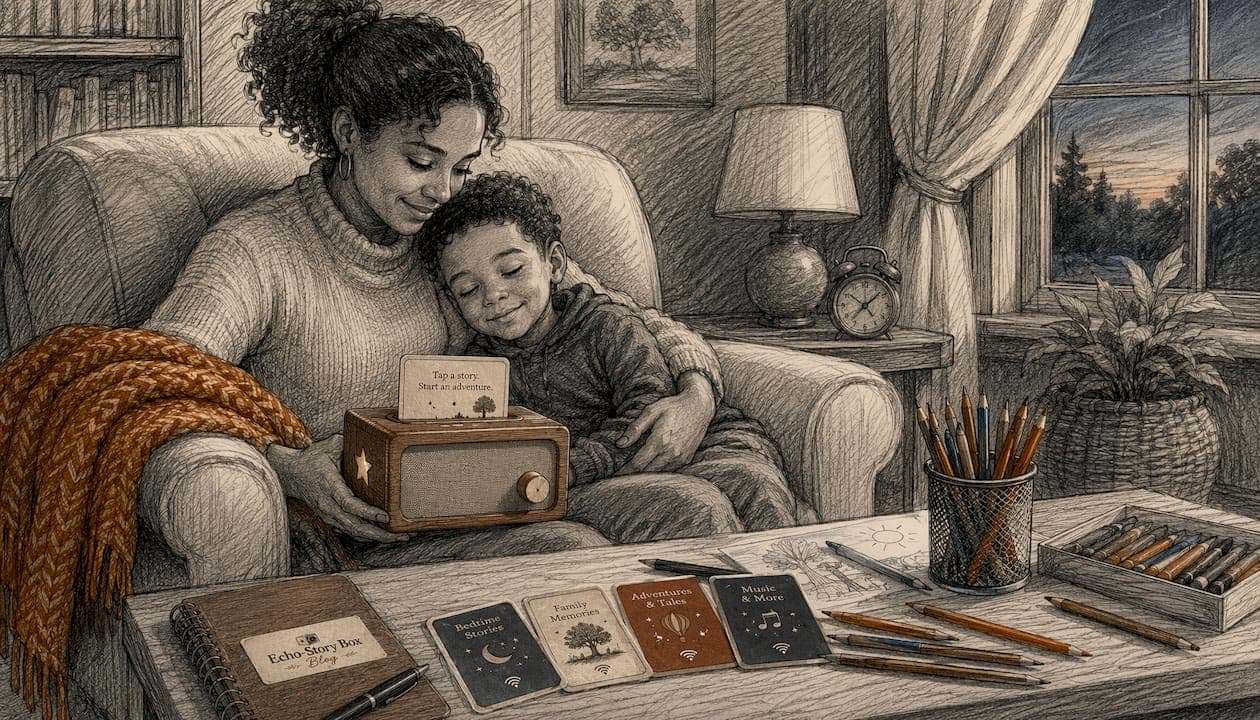
Replacing screen time with bedtime listening is one of the most effective things you can do for your child's sleep, imagination, and sense of security. Audio stories, lullabies, and calm narration give children something screens simply cannot: a quiet space to picture the world in their own minds. fMRI research shows that parental storytelling activates stronger neural networks for attention and sensory integration than machine narration or stranger voices. The benefits are real, and they start the very first night.
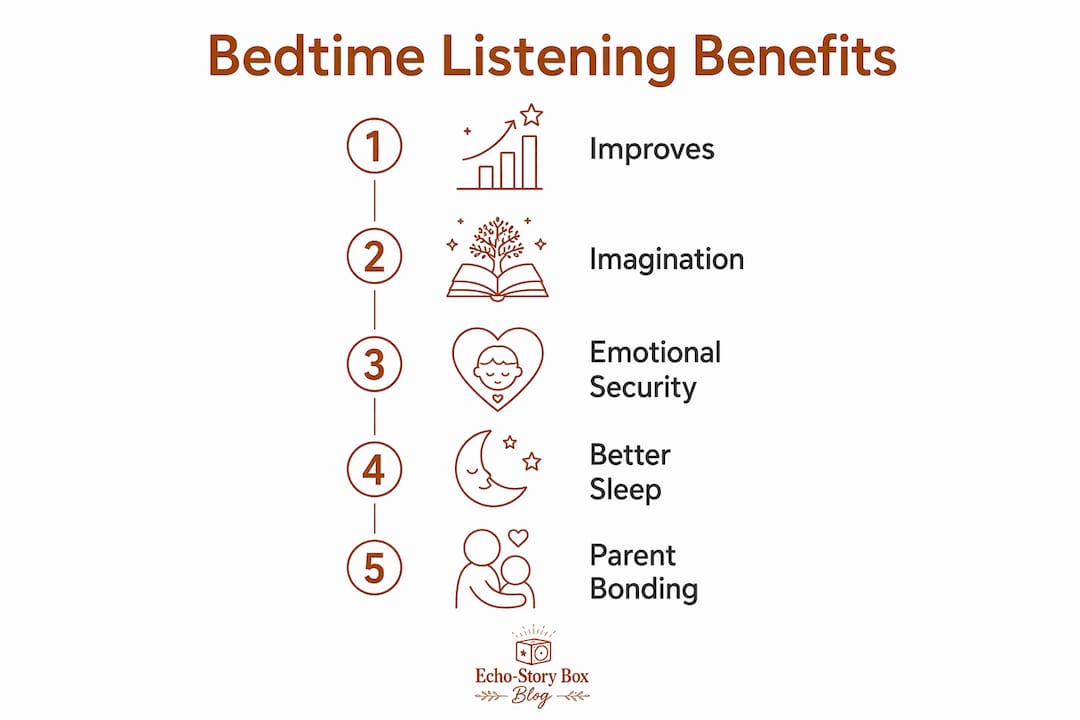
Here is what bedtime listening does for your child:
- Better sleep onset. Audio content reduces visual overstimulation and the dopamine crash that follows screen use, making the transition to sleep smoother.
- Stronger imagination. Listening without visuals forces the brain to build its own pictures, exercising a cognitive skill screens never develop.
- Deeper parent-child connection. Shared listening creates warmth and security that independent screen time cannot replicate.
- Calmer emotional regulation. Predictable audio rituals help children process the day and settle their nervous systems before sleep.
Table of Contents
- Why bedtime listening matters for child development
- How to build a bedtime listening ritual that sticks
- How Echostory-box supports screen-free family storytelling
- Echostory-box brings calm and connection to your nights
- Key Takeaways
Why bedtime listening matters for child development
The case for audio at bedtime goes well beyond "screens are bad." The science points to something more specific and more encouraging.
Newman's insight reflects what pediatric researchers have been finding in brain scans. When a parent tells or reads a story, the child's brain lights up differently than when a stranger or a device narrates. Functional connectivity between executive function and sensory networks is measurably stronger during parent-led storytelling, and that connectivity correlates with better literacy outcomes later in life.
Imagination works like a muscle. Audio-only stories force children to visualize characters, settings, and action without any visual prompts. That mental effort builds attention, vocabulary, and the kind of narrative comprehension that supports reading readiness long before a child can decode a single word on a page.

There is also an emotional dimension that research calls co-regulation. When you sit beside your child and listen together, your calm presence literally helps regulate their nervous system. Andrew Newman describes bedtime as the moment children need to "let go of the day," and shared listening creates exactly that space. The story content matters, but the emotional environment you create around it matters just as much.
Pro Tip: You do not need to be a gifted storyteller. A slow, calm voice reading any age-appropriate story activates the same neural benefits as a polished performance. Consistency and presence count far more than technique.
How to build a bedtime listening ritual that sticks
Transitioning from screens to audio does not have to be a battle. A few deliberate steps make the shift feel natural rather than like a punishment.
- Set the scene first. Dim the lights, put away toys, and lower your own voice before the story begins. The environment signals to your child's brain that rest is coming.
- Choose the right content for your child's age. Toddlers (ages 2–4) respond well to simple lullabies and short, repetitive stories. Children ages 4–7 love character-driven adventures with recurring heroes. Older kids (ages 8–10) often enjoy longer audio adventures, historical stories, or gentle guided meditations designed for children.
- Start the transition gradually. Research suggests dedicating 70% of digital leisure time to audio and limiting video to the remaining 30%, preferably in short blocks. Establish the 20 minutes before bed as a screen-free zone from day one.
- Expect an adjustment period. Children accustomed to screens may call audio stories "boring" at first. Parents report an adjustment window of roughly 10–15 minutes before children settle into the listening experience. Stay patient and stay present.
- Co-listen whenever possible. Sit with your child rather than pressing play and leaving the room. Your presence amplifies every developmental benefit the audio provides.
- Use a dedicated listening device. Tablets and smartphones carry too many distractions: notifications, blue light, and the temptation to switch apps. Devices designed specifically for bedtime listening support calmer environments and healthier sleep onset. A simple, screen-free audio player keeps the focus on the story.
- Keep the routine under 30–40 minutes. Pediatric research finds that bedtime routines lasting no more than 30–40 minutes with positive parent-child interactions yield measurable sleep improvements. Longer routines can delay sleep and create stress.
- Build in a small ritual around the listening. Let your child choose the story card, fluff the pillow, or pick a stuffed animal to "listen along." Small tactile choices give children a sense of ownership over the routine, which reduces resistance. You can find slow bedtime routine ideas that pair naturally with audio listening.
- Talk about the story afterward. A brief, low-key conversation ("What was your favorite part?") deepens comprehension and strengthens your connection. Keep it short so it does not re-energize your child before sleep.
Pro Tip: If your child resists audio on night one, do not announce a rule change. Simply change the environment quietly. Put on a playlist of stories or songs and let curiosity do the work.
How Echostory-box supports screen-free family storytelling
Echostory-box was built around one simple belief: technology should support human connection, not replace it. The device itself is a tactile audio player that uses NFC story cards. Your child places a card on the box, and the story begins. No menus, no ads, no notifications, no scrolling.
That simplicity is intentional. Here is what makes Echostory-box different from a generic audio device or a streaming app:
- Personalized stories. Stories can include your child's name, family members, pets, and favorite places, creating an emotional connection that generic content cannot match.
- Family voice recordings. Parents and grandparents can record bedtime stories, life lessons, and holiday traditions directly onto the box. These become keepsakes children return to for years.
- Educational adventures. Original characters like Theo the Rabbit, Eileen, and Eisley guide children through historical moments and character-building themes in ways that feel like play, not school.
- Faith-based and values-driven content. Families who want stories grounded in specific values can find that here, without sorting through unrelated content.
- No ads, no recommendations, no distractions. Children tap a card and listen. That is the entire experience.
Shared bedtime listening into the school years continues to support emotional bonding and opens conversations around story themes that independent reading misses, a concept explored in how personalized tutoring benefits your student's success. Echostory-box is designed to grow with your family through all of those years. You can learn more about how audio players replace bedtime screens and why the shift matters developmentally.
Echostory-box brings calm and connection to your nights
Screens at bedtime raise heart rates, delay melatonin production, and leave children wired when they should be winding down. The American Academy of Pediatrics recommends avoiding screens at least one hour before bed and keeping devices out of children's bedrooms entirely. Echostory-box fits that guidance naturally because it was designed with exactly that goal in mind.

Families who want a gentle, ready-to-use way to replace screens at bedtime will find everything they need at Echostory-box. Choose a fully assembled box, browse story card packs, or explore personalized story options for your child. The first night you press play together, you will feel the difference.
Key Takeaways
Replacing screen time with bedtime listening strengthens children's sleep, imagination, and emotional security when parents listen alongside them consistently.
| Point | Details |
|---|---|
| Parental presence amplifies benefits | fMRI research shows stronger neural connectivity when parents narrate, compared to machine or stranger voices. |
| Keep routines under 30–40 minutes | Pediatric research finds that bedtime routines lasting no more than 30–40 minutes with positive parent-child interactions yield measurable sleep improvements and developmental benefits. |
| Expect a 10–15 minute adjustment | Children used to screens may resist audio at first; parents report this window passes with patience and consistency. |
| Gradual transition works best | Research suggests dedicating 70% of digital leisure time to audio and limiting video to the remaining 30%, preferably in short blocks, to reduce screen dependency with minimal friction. |
| Echostory-box offers a screen-free path | Its NFC tap-to-play design, personalized stories, and family voice recordings make it a practical bedtime listening solution. |