
Long distance grandparenting tools are the methods and technologies that enable meaningful emotional bonding between grandparents and grandchildren across any distance. Research published in 2026 confirms that regular intergenerational contact reduces depression risk and cognitive decline in older adults while helping grandchildren build emotional regulation and a strong sense of identity. The good news is that you do not need to be tech-savvy to make this work. The most effective approach combines simple technology with physical, low-tech gestures. This guide covers every major category of tool, explains what the research actually says about communication patterns, and helps you choose the right mix for your family.
What are the main types of long distance grandparenting tools?
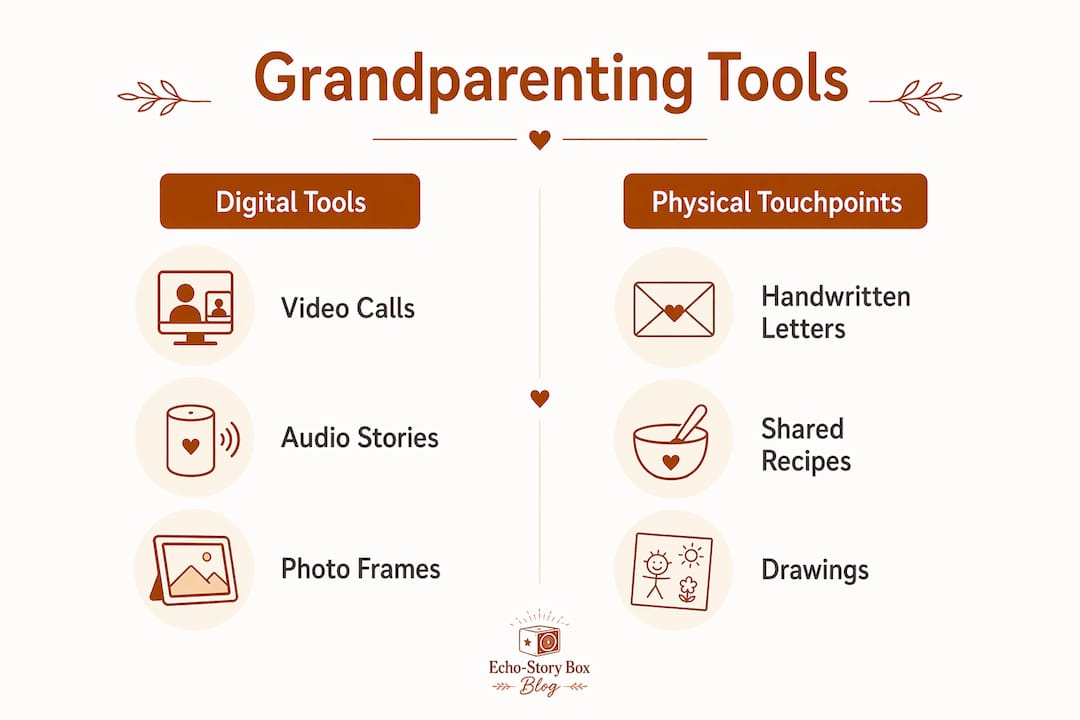
Long distance grandparenting tools fall into two broad categories: digital tools and physical touchpoints. The most effective grandparents use both, layering them together rather than relying on any single method.
Digital tools for remote grandparents
The most widely used digital tools include:
- Video calling apps such as FaceTime, WhatsApp, and Google Meet. These work on smartphones, tablets, and smart displays. A fixed weekly time turns calls from a chore into a ritual.
- Smart displays like Amazon Echo Show, which allow hands-free video calls. This is especially helpful for grandparents who find holding a phone awkward.
- Digital photo frames with Wi-Fi connectivity. Family members can push new photos directly to the frame, so grandchildren appear in the living room every day without any action required from you.
- Messaging apps for quick, low-pressure contact. A short voice note or a funny photo sent between calls keeps the connection alive without scheduling pressure.
Frequent, short video sessions of 15–20 minutes each week strengthen memory and mood more effectively than infrequent long calls. That finding matters because it removes the pressure to fill an hour with conversation.
Pro Tip: Start with the simplest technology that already works in your home. A plain phone call beats a complicated video setup that frustrates everyone.
Physical and low-tech tools
Physical touchpoints carry emotional weight that screens cannot fully replicate. Letters, postcards, hand-drawn pictures, and shared recipe cards create something a child can hold, smell, and keep. A memory book that grandparent and grandchild build together over months becomes a family artifact. Shared activities, such as baking the same recipe on the same afternoon while on a call, create a sense of being together even across hundreds of miles.
Layering small touches like letters, shared recipes, and periodic video calls builds a consistent, low-pressure presence over time. Each small gesture adds to an emotional loop that grows stronger with repetition.
Why do short, frequent calls work better than long ones?
The most common mistake in long distance family communication is scheduling long, formal video calls and then wondering why they feel awkward. Children, especially those under ten, have short attention spans and limited patience for sitting still. Grandparents can feel the pressure to fill silence, which leads to rapid-fire questions that put children on the defensive.
Avoiding "grilling" sessions in favor of sharing stories and listening actively builds rapport far more naturally. A grandparent who says "Let me tell you about the time I got lost on my first day of school" invites a child into a conversation rather than an interview.
The psychological benefits of consistent, brief contact are well documented:
- Reduced loneliness and lower depression risk for grandparents
- Stronger emotional regulation in grandchildren
- Clearer sense of family identity and personal history
- Neurological benefits from sustained social engagement across both generations
"Regular weekly intergenerational social contact acts as a potent biological intervention with documented neurological benefits for both generations. It reduces risks of depression and cognitive decline in older adults while helping grandchildren build emotional regulation and narrative identity." Psychology Diary, 2026
The takeaway is simple. Fifteen minutes every week beats ninety minutes once a month. Consistency creates familiarity, and familiarity creates comfort.
How do you choose the right tools for your family's needs?
Choosing tools for remote grandparents starts with one conversation: talk to the parents first. Collaborating with parents to set mutual expectations early prevents misunderstandings and keeps communication smooth for everyone. Ask what devices the child already uses, what times work best, and whether the parents have any preferences about screen time.
From there, match the tool to the child's age and personality:
- Ages 2–5: Short video calls with a simple activity, such as reading a picture book together or singing a song. Keep it under ten minutes.
- Ages 6–10: Shared games, craft projects done simultaneously, or listening to an audio story together. This age group responds well to doing rather than just talking.
- Ages 11 and up: Shared playlists, photo sharing, or text-based messaging. Teens often prefer low-pressure, asynchronous contact over scheduled calls.
Keeping a grandparent notebook with small details about each grandchild, such as their current favorite subject, a recent sports result, or a new friend's name, gives you natural conversation material. It also signals to the child that you pay attention, which builds trust faster than any technology can.
Pro Tip: Write down one specific thing each grandchild mentions during every call. Reference it next time. Children notice when you remember, and it means everything to them.
The goal is not to replicate face-to-face visits. Digital connections do not need to mimic in-person interaction. They work best when they are simple, consistent, and child-led.
How does storytelling strengthen remote bonds with grandchildren?
Storytelling is the most underused tool in long distance grandparenting. Narrative identity, a concept from developmental psychology, refers to the personal story a child builds about who they are and where they come from. Grandparents are uniquely positioned to shape that identity through the stories they share.
Children with strong family narratives show higher emotional resilience and self-esteem. That connection runs directly through the stories grandparents tell. A grandchild who knows their grandmother overcame hardship, made mistakes, and kept going carries that story as a personal resource.
The most effective stories are not polished or perfect. Sharing personal, imperfect stories about recovering from failure models resilience and builds human connection without sounding preachy. A story about getting a bad grade, losing a job, or making a wrong turn in life teaches far more than advice ever could.
| Storytelling approach | Best format | Key benefit |
|---|---|---|
| Personal life stories | Voice call or audio recording | Builds narrative identity and emotional closeness |
| Shared picture book reading | Video call | Supports language development and calm bonding |
| Screen-free audio stories | Dedicated audio player | Reduces screen fatigue, encourages imagination |
| Family history narratives | Letters or recorded messages | Preserves legacy and cultural memory |
Screen-free audio tools, such as the Echostory-box, let grandparents record their own voice telling a story. The child can replay that recording anytime, making the grandparent's presence a daily comfort rather than a weekly event. You can learn more about narrative identity in families and why it matters so deeply for children's development.
Key Takeaways
The most effective long distance grandparenting combines frequent short contact, personal storytelling, and a mix of digital and physical tools tailored to the child's age.
| Point | Details |
|---|---|
| Short calls beat long ones | Weekly 15–20 minute sessions build stronger bonds than infrequent hour-long calls. |
| Layer your tools | Combine video calls, letters, and audio stories to create a consistent daily presence. |
| Stories outperform advice | Sharing personal, imperfect stories builds trust and emotional resilience in grandchildren. |
| Match tools to the child's age | Young children need activity-based calls; teens prefer low-pressure, asynchronous contact. |
| Keep a grandparent notebook | Recording small details about each grandchild fuels natural, warm conversations every time. |
What I've learned about grandparenting from afar
I have watched grandparents pour enormous energy into long video calls that leave everyone exhausted, and I have seen a simple weekly voice note become the highlight of a six-year-old's week. The difference is almost never the technology. It is the intention behind it.
The grandparents who connect most deeply are the ones who stopped trying to be advice-givers and started being storytellers. They share the embarrassing moments, the wrong turns, the small victories. They ask one good question and then actually listen to the answer. They send a postcard with a terrible joke on the back. These small, consistent gestures do more for a child's sense of belonging than any perfectly planned video call.
The hardest part of grandparenting from afar is accepting that you cannot control the relationship's pace. Some weeks a grandchild will be chatty and warm. Other weeks they will be distracted and brief. That is normal. Your job is to show up consistently and keep the door open, not to manufacture connection on a schedule.
Combine technology with physical tokens whenever you can. A letter that arrives in the mail after a video call turns one moment of connection into two. A recipe card tucked into an envelope with a note saying "make this and think of me" creates a shared experience that lasts long after the paper fades.
The research backs this up, but honestly, you already know it. You remember what it felt like when someone you loved took time to really see you. That is exactly what you are doing for your grandchildren, one small gesture at a time.
— Bob
A screen-free way to share your voice every day
Echostory-box was built for exactly this situation. It is a simple, screen-free audio player that lets grandparents record their own voice telling a story, sharing a memory, or reading a favorite book. Children tap a story card on the box and hear Grandma or Grandpa's voice instantly, no screens, no apps, no setup required.

That recorded voice becomes a daily presence in the child's life, not just a weekly call. Echostory-box aligns with everything the research shows about consistent, low-pressure contact and the power of personal storytelling. It is especially well-suited for grandchildren ages 4–10 who are still building their sense of family identity. Visit the Echostory-box home page to see how it works and find the right option for your family.
FAQ
What are the best tools for long distance grandparenting?
The best tools combine video calling apps like FaceTime or WhatsApp for face-to-face contact, digital photo frames for daily visual presence, and physical items like letters or audio recordings for lasting emotional impact. No single tool works alone; layering several creates the strongest bond.
How long should video calls with grandchildren be?
Short sessions of 15–20 minutes each week are more effective than long, infrequent calls. Brief, consistent contact builds familiarity and keeps children engaged without creating pressure on either side.
How can grandparents connect with grandchildren who are not talkative?
Share a short personal story rather than asking questions. Grandparents who act as wisdom-keepers by telling imperfect, honest stories create connection far more naturally than structured question-and-answer sessions.
What is the best approach for grandparents who are not comfortable with technology?
Start with a plain phone call and build from there only if the family wants to. A consistent weekly call at a fixed time is more valuable than a complicated video setup that causes frustration. Simplicity always wins.
How does storytelling help grandchildren emotionally?
Children who grow up hearing personal family stories show higher emotional resilience and self-esteem. Grandparents serve as family historians, and those stories give grandchildren a stable sense of identity and belonging that supports them through difficult moments.