
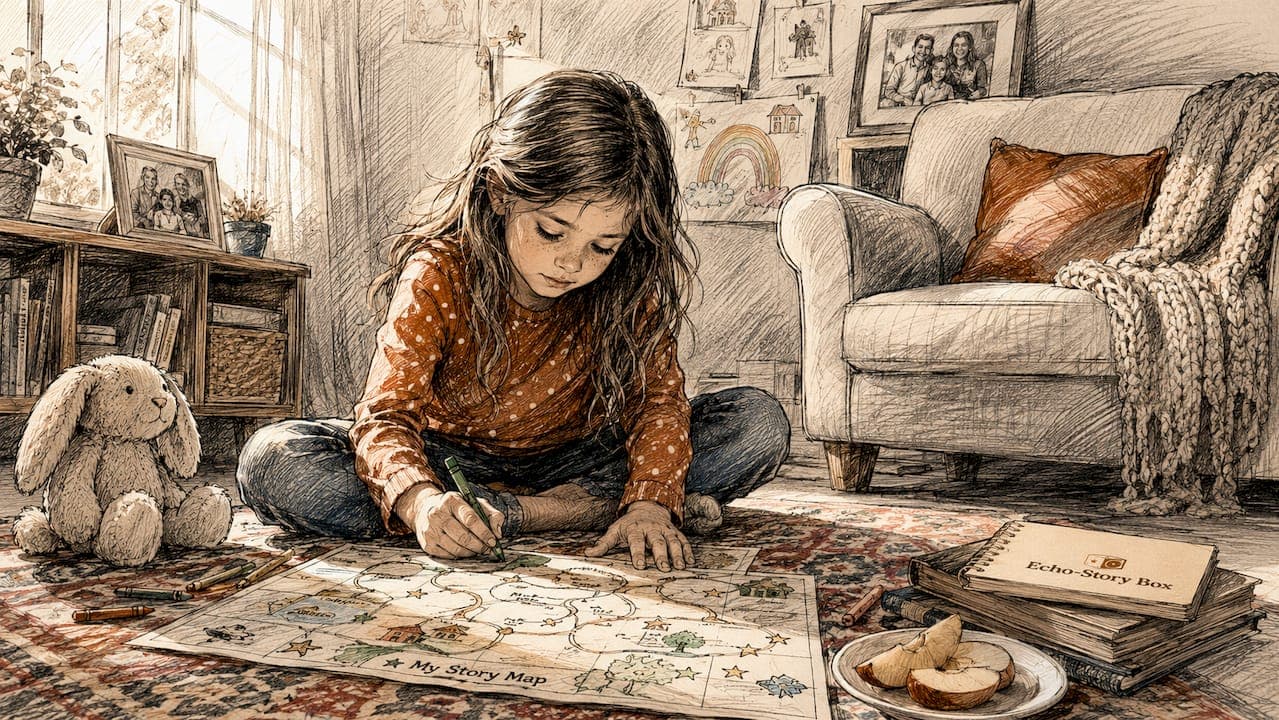
Story maps are defined as graphic organizers that break a story into its core elements, including characters, setting, problem, and resolution, to build reading comprehension in children. Research confirms that first graders using story maps scored significantly higher on comprehension tests than peers who did not use the method, in a study covering 69 students and 26 narrative texts. That result is not a small classroom experiment. It reflects a pattern seen across grade levels and learning styles. For parents and educators, understanding how story maps support reading skills means having a concrete, research-backed tool that works from the very first years of reading instruction.
How do story maps improve children's reading comprehension?
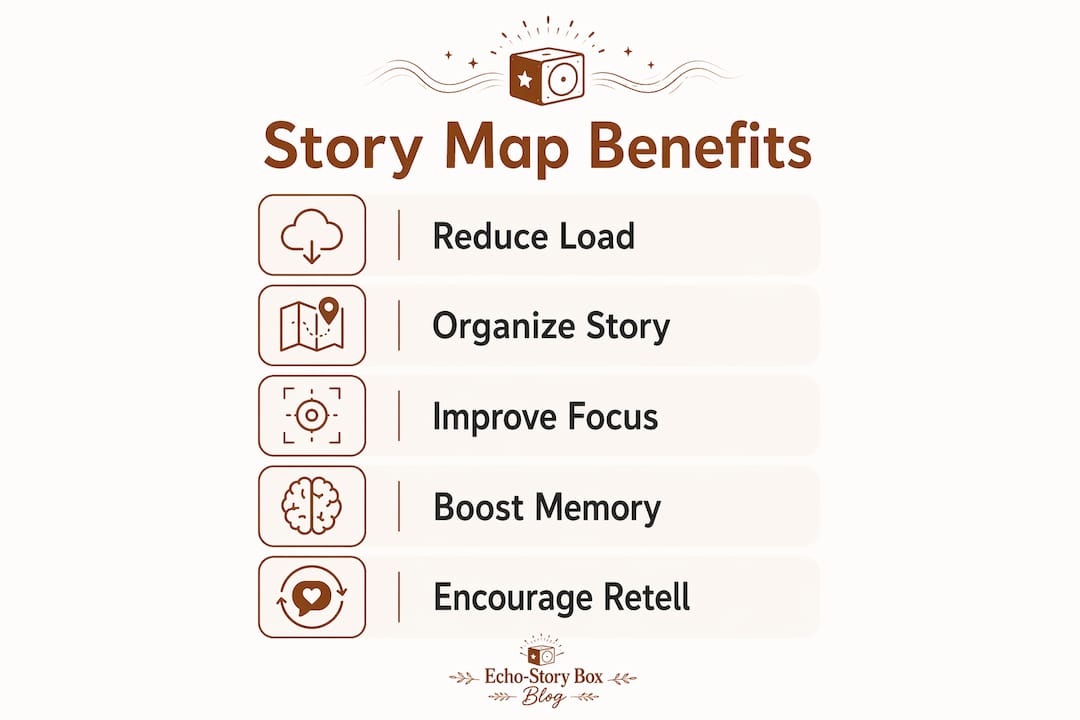
Story maps reduce cognitive load, which is the mental effort required to process information while reading. When a child reads a story without any structure, the brain must simultaneously decode words, track characters, follow the plot, and hold the setting in mind. That is a heavy lift for a developing reader. Story maps ease working memory demands by giving each story element its own visual space, so children can focus on meaning rather than juggling every detail at once.
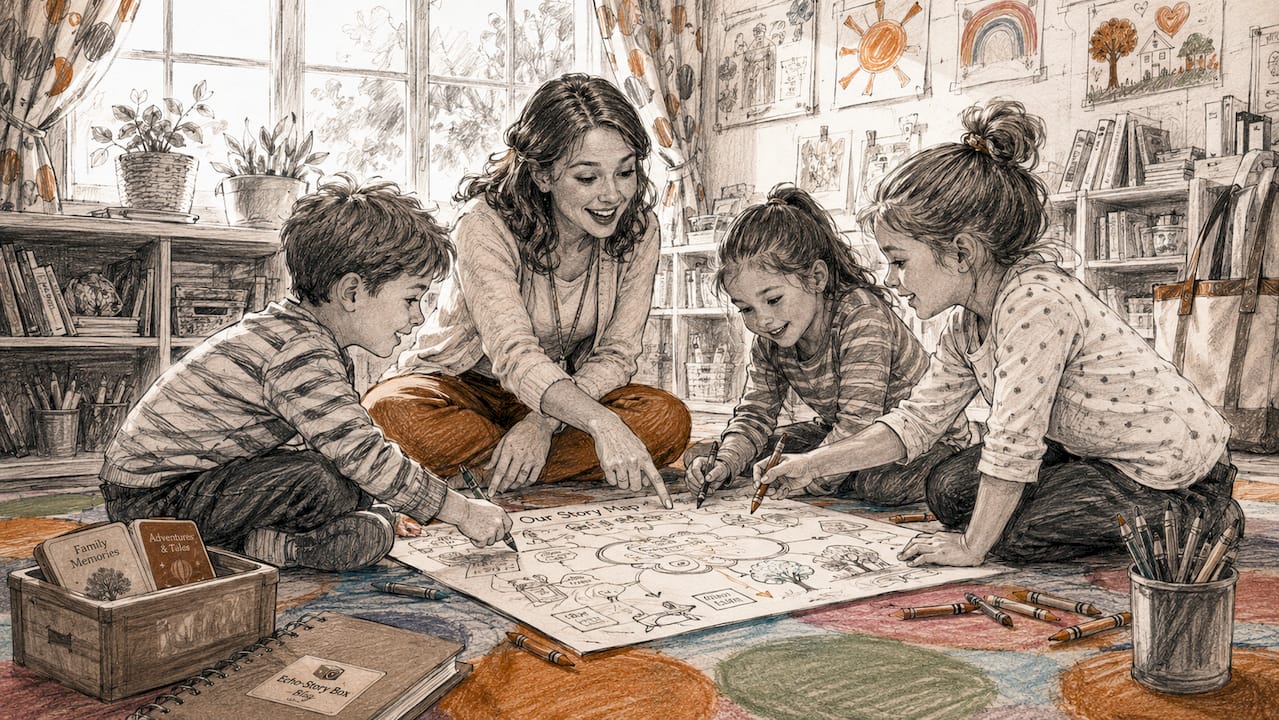
The effect on engagement is measurable. A 7-week intervention with grade 5 students found that the group using story maps scored a mean of 111.67 on comprehension assessments, compared to 85.57 for the group that did not use them. That effect size, measured at Cohen's d = 2.97, is considered large by research standards. It means story mapping produced a meaningful, not marginal, difference in how well children understood what they read.
Story maps also move children beyond basic recall. Mapping character development helps children shift from simply remembering facts to analyzing why characters made certain choices and what those choices reveal about the story's theme. That progression from decoding to meaning-making is exactly what reading instruction aims for.
- Story maps give each narrative element a dedicated visual space
- Children track characters, setting, and plot without holding everything in working memory
- Comprehension improves because mental effort shifts from decoding to understanding
- Engagement increases when children see the story's structure clearly laid out
Pro Tip: Use a story map after the first read-through, not during it. Let children experience the story freely first, then return to the map together. This approach separates the pleasure of reading from the work of analysis, which keeps both activities enjoyable.
What are the core components of story maps?
A standard story map includes six elements: characters, setting, problem or goal, plot events, resolution, and theme. Each element serves a specific purpose. Characters anchor the reader's emotional investment. Setting grounds the story in time and place. The problem drives the narrative forward. Plot events show how the problem unfolds. The resolution reveals how it ends. Theme asks the bigger question: what does this story mean?
Common story map formats
Not every story map looks the same, and that flexibility is one of its greatest strengths. The table below summarizes the most widely used formats and their best applications.
| Story map type | Best use |
|---|---|
| Basic narrative map | First introduction to story structure for early readers |
| Character profile map | Deep analysis of one character's traits, motivations, and growth |
| Sequencing worksheet | Ordering plot events chronologically to build retelling skills |
| Compare and contrast map | Examining two characters, settings, or story versions side by side |
| Problem and solution map | Isolating the central conflict and how it resolves |
Adaptations for different learners
Children who are pre-literate or who struggle with writing can still use story maps effectively. Multisensory supports such as props, puppets, and physical actions give young children a way to engage with narrative structure before writing skills develop. Icons and picture symbols replace written labels for children who need visual cues. Sentence starters like "The character wanted to..." reduce the blank-page anxiety that stops many children from beginning.
- Use simple drawings or stickers instead of written words for pre-literate children
- Add icons next to each label so children recognize sections at a glance
- Offer sentence starters to reduce hesitation and support written responses
- Allow oral responses recorded by a parent or educator for children who find writing difficult
How can parents and educators implement story maps effectively?
The gradual-release model, often called "I Do, We Do, You Do," is the most effective structure for introducing story maps. It works in three clear stages.
- I Do: The parent or educator reads a short story aloud and fills in the story map while thinking out loud. Narrate every choice: "I'm writing 'forest' in the setting box because that's where the story takes place." This makes the invisible thinking process visible.
- We Do: Read another story together and fill in the map as a shared activity. Ask the child for input at each step. Accept their answers and build on them rather than correcting immediately.
- You Do: The child completes a story map independently after reading or listening to a story. Offer the map as a tool, not a test. The goal is understanding, not a perfect document.
One of the most important things a parent or educator can do is model imperfect maps. Draw rough sketches. Cross things out. Say "I'm not sure, let me reread that part." Children who see adults working through uncertainty feel far less pressure to produce a polished result. That reduced pressure directly increases willingness to try.
Pair story maps with oral storytelling for the strongest results. After completing a map, ask the child to retell the story using only the map as a guide. This builds both comprehension and verbal fluency. Multisensory storytelling approaches, such as acting out the plot events or using puppets to represent characters, deepen narrative ownership before writing skills are fully developed.
Start with books the child already loves. A familiar story removes the barrier of new vocabulary and lets the child focus entirely on the mapping process. Once they feel confident with a known story, introduce new texts gradually and increase the map's complexity to match.
Pro Tip: For reluctant readers, frame the story map as a game rather than a worksheet. Ask "Can you catch the problem the character has?" instead of "Fill in the problem box." That small shift in language makes the activity feel like detective work, not homework.
What are the broader benefits of story maps for young readers?
Story maps build critical thinking, not just comprehension. Using maps moves learners from recognizing story structure to debating meaning, discussing alternate endings, and questioning character choices. These are higher-order thinking skills that matter well beyond the reading classroom.
The emotional benefits are equally significant. Visual mapping makes stories accessible without overwhelming decoding demands. Children who previously felt frustrated by reading begin to see themselves as capable readers when the structure is laid out clearly in front of them. That shift in self-perception changes how a child approaches every future reading experience.
Group story mapping adds a social dimension. When children complete maps together and then compare their answers, they practice listening, respectful disagreement, and collaborative thinking. These conversations often produce richer insights than any child would reach alone.
- Story maps spark discussion about themes, character choices, and story endings
- Children develop a positive reading identity when comprehension feels achievable
- Group mapping builds communication and collaborative thinking skills
- Motivation increases when children see their own understanding grow visibly on the page
"Treating story maps as creative play rather than formal tasks encourages reluctant children to engage meaningfully and safely. When the pressure of performance is removed, children show what they actually understand."
The storytelling tools that foster curiosity in children consistently share one quality: they invite participation rather than demand it. Story maps, at their best, do exactly that.
Key Takeaways
Story maps are the most research-supported visual tool for building reading comprehension in children, working by reducing cognitive load and making narrative structure visible and manageable.
| Point | Details |
|---|---|
| Cognitive load reduction | Story maps free up mental effort so children focus on meaning, not just decoding words. |
| Measurable comprehension gains | Grade 5 students using story maps scored significantly higher than peers in a 7-week study. |
| Flexible formats for all learners | Character maps, sequencing sheets, and compare-contrast maps each serve different reading goals. |
| Gradual-release implementation | The "I Do, We Do, You Do" model builds confidence before children map independently. |
| Emotional and motivational benefits | Visual structure reduces frustration and helps children see themselves as capable readers. |
Story maps work best when they feel like an invitation
I have watched parents hand a child a blank story map worksheet and wonder why the child shuts down. The map itself is not the problem. The framing is. When story mapping feels like an assignment, children approach it with the same dread they bring to any test. When it feels like a conversation, something shifts.
The most effective story mapping I have seen happens when the adult is genuinely curious alongside the child. Not performing curiosity. Actually wondering out loud: "Why do you think the character did that?" That question, asked over a completed map, produces the kind of thinking that no worksheet can manufacture.
My honest caution is this: do not over-structure the process. A story map with too many boxes, too many required fields, and too little room for a child's own interpretation becomes a barrier rather than a tool. Start simple. One or two elements at a time. Let the child's natural questions guide which elements to add next.
Story maps work best when they are paired with rich, oral storytelling. A child who listens to a well-told story and then maps it out is doing something genuinely powerful. They are connecting the emotional experience of narrative with the analytical skill of structure. That combination, more than any single technique, is what builds a confident, lifelong reader. You can read more about building a storytelling curriculum that supports this kind of layered learning.
— Bob
Screen-free storytelling that brings story maps to life
Story maps work best when children have rich stories to map. Echostory-box gives families a simple, screen-free way to fill that need.
With the Echostory-box audio player, children tap a story card and a story begins. No scrolling, no ads, no distractions. The audio stories feature characters like Theo the Rabbit, Eileen, and Eisley, whose adventures are full of the narrative elements that make story mapping natural and rewarding. After listening, children can map the characters, setting, and problem they just heard, turning every listening session into a literacy activity. Echostory-box supports the same principles that make story mapping effective: focused attention, narrative structure, and the calm that comes from a good story told well.
FAQ
What is a story map in reading instruction?
A story map is a graphic organizer that breaks a story into its key elements, including characters, setting, problem, and resolution. It gives children a visual structure for understanding and retelling what they read.
How do story maps help struggling readers?
Story maps reduce the mental effort of tracking multiple story elements at once, making comprehension more manageable. Visual mapping also reduces frustration and helps children build confidence as readers.
At what age can children start using story maps?
Children can begin using simplified story maps as early as kindergarten, using pictures and icons instead of written words. Pre-literate children benefit from multisensory story map approaches that use props and actions alongside the visual structure.
Do story maps work for all types of stories?
Story maps work best with narrative texts, including fiction, folktales, and picture books. Variations like compare-and-contrast maps and problem-and-solution maps extend the approach to different story structures and reading levels.
How often should children use story maps?
Regular use builds the most benefit. Applying a story map to two or three stories per week, across different formats and complexity levels, helps children internalize narrative structure so they begin to recognize it automatically during independent reading.