
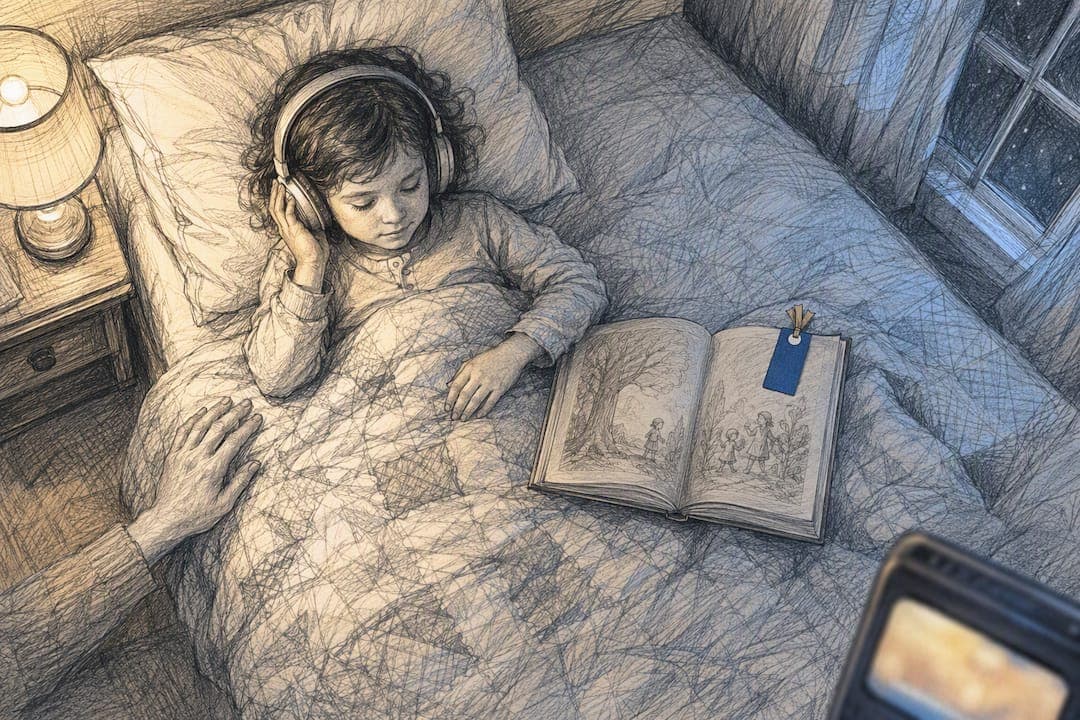
Start with Frog and Toad collections for ages 4 to 7, E.B. White's own recording of Charlotte's Web for ages 8 to 10, and Jim Dale's Harry Potter narration for ages 11 to 12. For a family pick that works across ages, try a full-cast recording of The Chronicles of Narnia. These classic children's audiobooks earn their spot because of strong narration and the kind of rich, unhurried language that builds vocabulary and imagination in ways newer stories often don't match.
TL;DR:
- Narrator quality is the most crucial factor in whether a child completes a classic audiobook, with author-read and full-cast versions often preferred.
- For ages 4 to 7, short episodic collections like Frog and Toad or Winnie-the-Pooh work best for repeat listening and building listening stamina.
- Ages 8 to 10 benefit from longer chapter books such as Charlotte's Web and The Chronicles of Narnia, ideally with warm narration suitable for bedtime or road trips.
- Preteens aged 11 to 12 can handle unabridged classics like Harry Potter and The Hobbit, especially with narrators capable of voicing a variety of characters.
- Adding light caregiver scaffolding, matching runtime to attention span, and using screen-free, tactile story devices enhance engagement and vocabulary development.
Table of Contents
- Classic Children's Audiobooks Worth Starting With
- Why Classic Audiobooks Actually Help Kids Learn
- How to Choose the Right Audiobook in Under Five Minutes
- Building Listening Habits That Actually Stick
- What Screen-Free Listening Adds to the Classics
- What Actually Matters When You're Choosing These Stories
- A Screen-Free Way to Keep the Classics Going at Home
- Sources
- FAQ
Classic Children's Audiobooks Worth Starting With
Picking the right title matters less than picking the right fit. A brilliant audiobook mismatched to a child's attention span or listening situation gets abandoned halfway through. Here's a shortlist organized by age band, with notes on narrator quality and runtime so you can match the story to the moment.
Ages 4 to 7: short, episodic, and endlessly re-listenable
Young children build listening stamina the same way they build reading stamina: gradually. Short story collections work better than long single narratives at this age, because kids can finish one and feel a sense of completion.
- Frog and Toad collections (Arnold Lobel): Gentle, funny episodes about friendship, each one runs about 10 minutes, ideal for car rides or wind-down time before dinner.
- Jim Weiss story collections: Weiss narrates folk tales and classic stories himself, and his calm, theatrical voice is a favorite for homeschool families choosing audiobooks by age.
- Winnie-the-Pooh (A.A. Milne): Full-cast and solo-narrator versions both exist; look for one with a warm, unhurried pace since Milne's sentences reward slow reading.
These titles work well for repeated listening. Children this age often want the same story a dozen times, and a well-narrated episodic collection tolerates that far better than a single long novel.
Ages 8 to 10: chapter books with staying power
This is the age where a child can follow a longer plot across multiple sittings but still benefits from a narrator who brings warmth rather than pure performance.
- Charlotte's Web (E.B. White): White recorded the audiobook himself, and his own voice reading his own words gives the story an intimacy no other narrator can quite replicate. Runtime is around 3 hours, best split into 20 to 30 minute chapters at bedtime.
- The Chronicles of Narnia (C.S. Lewis): The full-cast BBC-style productions work well for family road trips, since different voices help distinguish characters when several kids are listening at once.
- The Wonderful Wizard of Oz (L. Frank Baum): Good for kids who've outgrown picture books but aren't quite ready for dense chapter novels.
Ages 11 to 12: unabridged classics and longer arcs
By this age, many kids can handle unabridged editions and longer single-narrator performances, especially if the narrator has real range.
- Harry Potter (J.K. Rowling), narrated by Jim Dale in the US editions: Dale voices over 100 distinct characters, and that range is a big part of why these recordings remain a benchmark for narrator-first listening, according to lists like TheCultureMom's narrator-ranked audiobook guide.
- The Hobbit (J.R.R. Tolkien), narrated by Rob Inglis or Andy Serkis: Inglis sings the songs in character, which sounds like a small thing until you hear it. Serkis brings a moodier, more cinematic read.
- A Wrinkle in Time (Madeleine L'Engle): Runtime around 6 hours, good for kids ready for a story that moves between science and emotion without slowing down.
| Age band | Sample title | Narrator note | Approximate runtime | Best use |
|---|---|---|---|---|
| 4–7 | Frog and Toad | Multiple narrators, gentle pacing | 1–2 hours (episodic) | Car rides, repeat listening |
| 8–10 | Charlotte's Web | Author-read (E.B. White) | ~3 hours | Bedtime, split by chapter |
| 8–10 | The Chronicles of Narnia | Full cast | 30+ hours (series) | Family road trips |
| 11–12 | Harry Potter | Jim Dale (US edition) | 8 hours per book | Solo listening, long trips |
| 11–12 | The Hobbit | Rob Inglis or Andy Serkis | ~11 hours | Independent unabridged listening |
For a family pick that spans ages, a full-cast Narnia recording or a Jim Weiss folk tale collection tends to hold attention across a wider range of kids at once, which matters more than most parents expect when siblings are listening together.
Why Classic Audiobooks Actually Help Kids Learn
The research on audiobooks isn't vague goodwill. It points to specific, measurable benefits, and classic texts amplify most of them because of how they're written.
The American Academy of Pediatrics reports that 37.5% of children aged 8 to 18 said listening to audio sparked interest in reading print books, and 46.5% said audio helped them learn new words and understand viewpoints different from their own.
Classic authors largely resisted the urge to simplify their language for children. What survives on library shelves after a century tends to be work with real vocabulary depth and complex sentence structure, exactly the kind of exposure that builds a child's word bank.
That's not just a stylistic observation. An MIT-reported study tracked 314 third and fourth graders over eight weeks and found that audiobooks paired with brief, periodic one-on-one scaffolding produced significantly larger vocabulary gains than audiobooks alone. Struggling readers in particular only showed real gains when an adult checked in with them occasionally during listening, not when they listened unsupported.
Quick finds: Many kids say audio sparks reading interest, helps them learn new words, and use it to relax.
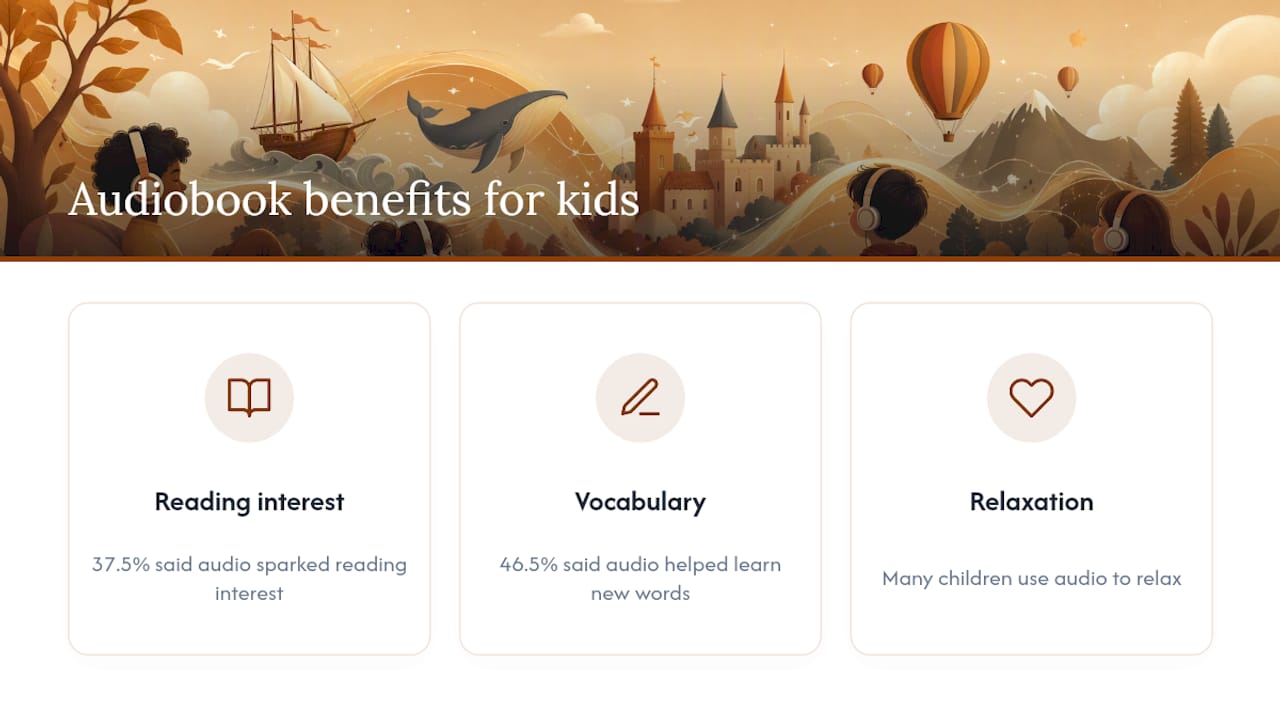
Put those two findings together and the case for classics gets stronger, not weaker. Richer source material plus a few minutes of caregiver check-in per week outperforms passive listening on its own.
How to Choose the Right Audiobook in Under Five Minutes
You don't need a research degree to pick well. A few quick checks will get you most of the way there.
- Sample the narrator first. Play 60 seconds before committing. A flat or overly dramatic narrator will lose a young listener faster than a boring plot ever could, and research on story engagement consistently shows narrator quality drives whether kids stick with a title.
- Match runtime to attention span. Keep chapters under 30 minutes for ages 4 to 7. Older kids can usually handle 45 minutes or more per sitting.
- Decide between full cast and solo narrator. Full cast works well for multi-perspective stories and group listening; a strong solo narrator (especially an author-read edition) creates more intimacy for one-on-one or bedtime listening.
- Add light scaffolding for struggling readers. A quick two-minute check-in after a chapter, asking what happened or what a tricky word meant, mirrors the approach that produced real vocabulary gains in the MIT study.
- Choose episodic collections for repeat listening. If your child wants to hear something five times in a row, pick a format built for that instead of a single long novel.
Pro Tip: Most library apps let you preview the first chapter free before borrowing. Use that preview specifically to judge the narrator, not the plot, since the narrator is what determines whether your child finishes the book.
Building Listening Habits That Actually Stick
A great audiobook picked poorly still fails if the listening routine doesn't fit your family's rhythm. A few small habits make a bigger difference than the title itself.
- For family listening: Set a quick pre-listening cue ("story time in five minutes") so kids transition mentally, then spend five minutes afterward asking what surprised them or which character they'd want to be.
- For solo listening: Use headphones with a volume cap for younger kids, and lean toward narrator-first picks since a child listening alone has no one else to keep them engaged if the narration falls flat.
- For bedtime: Keep pacing calm, skip anything with screens in the room, and reach for author-read editions like Charlotte's Web when you want that quiet, intimate feeling that helps kids wind down.
- For learning reinforcement: Keep a simple vocabulary journal nearby and jot down one new word per chapter, then do a one-minute recap after key plot points, the same light-touch scaffolding MIT's research found effective. A vocabulary-building activity guide offers more structured versions of this if you want to go further, and classroom-tested strategies from Wordbyword on teaching tier-two vocabulary words apply just as well at home.
What Screen-Free Listening Adds to the Classics
Classic stories were built for the ear long before they were built for a screen, and that's worth remembering when you're setting up a listening routine at home. A screen-free audio player like Echo-Story Box works on the same principle behind every recommendation above: a child taps a card, a story begins, and there's no scrolling, no ads, and no menu to get lost in.
The best classic audiobooks work because they demand imagination instead of visuals. A device that removes the screen entirely, and just plays the story, protects that exact experience instead of competing with it.
Beyond classics, the same tactile format supports personalized stories and family-voice recordings, which means a grandparent's own recorded voice can sit right alongside Charlotte's Web on the same shelf of story cards. That pairing, timeless texts and personal family recordings, supports the same outcomes this article has focused on throughout: richer vocabulary, calmer bedtime routines, and real family connection.
What Actually Matters When You're Choosing These Stories
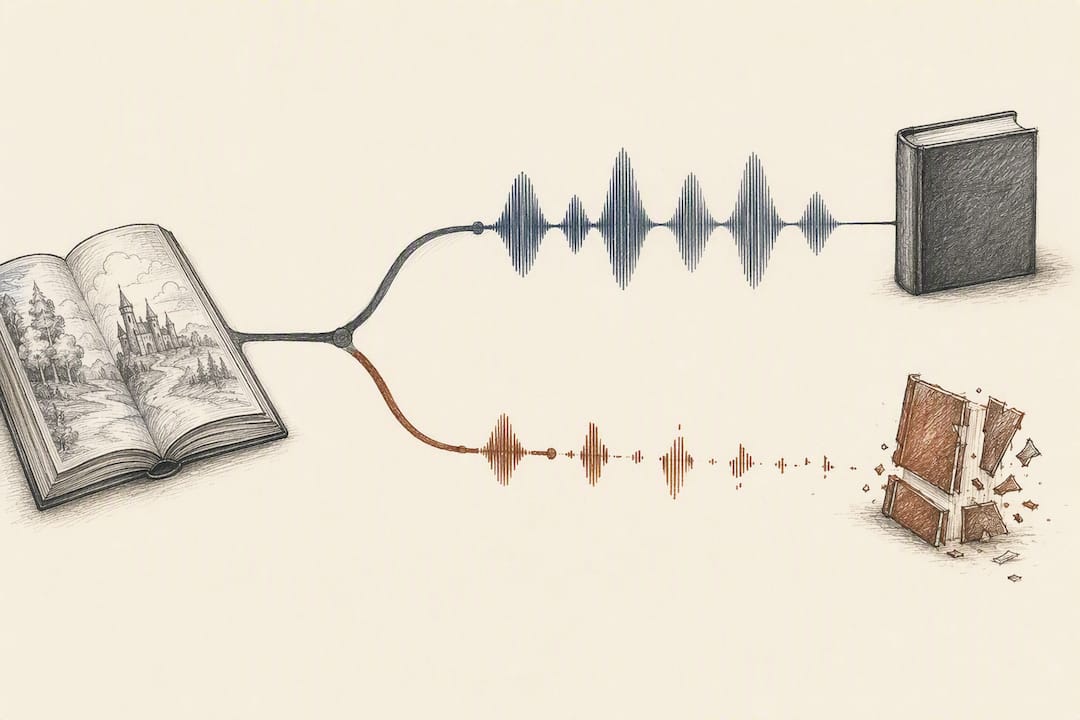
The instinct to reach for the "best of all time" list is understandable, but it leads a lot of parents astray. A universally beloved title with a mediocre narrator will lose your child faster than a lesser-known story read by someone genuinely good at the craft. Narrator quality isn't a nice detail. It's the single biggest variable in whether a classic audiobook gets finished or abandoned.
The conventional advice, "just pick a classic, any classic," undersells how much format and listening context matter. A brilliant book in the wrong runtime or wrong narrator voice will fail with a 5-year-old just as easily as a mediocre book. What the research actually supports is smaller and more useful: sample the narrator, match the runtime to the child, and add a few minutes of conversation afterward if the child struggles with reading.
If you take one thing from all of this, let it be that the scaffolding matters as much as the story. A few minutes of your attention turns a good audiobook into a real vocabulary tool.
— Bob
A Screen-Free Way to Keep the Classics Going at Home
You can enjoy these stories and preserve your own without adding another screen to your child's day using a simple tap-and-play device powered by NFC story cards, with no scrolling, ads, or algorithm deciding what plays next.
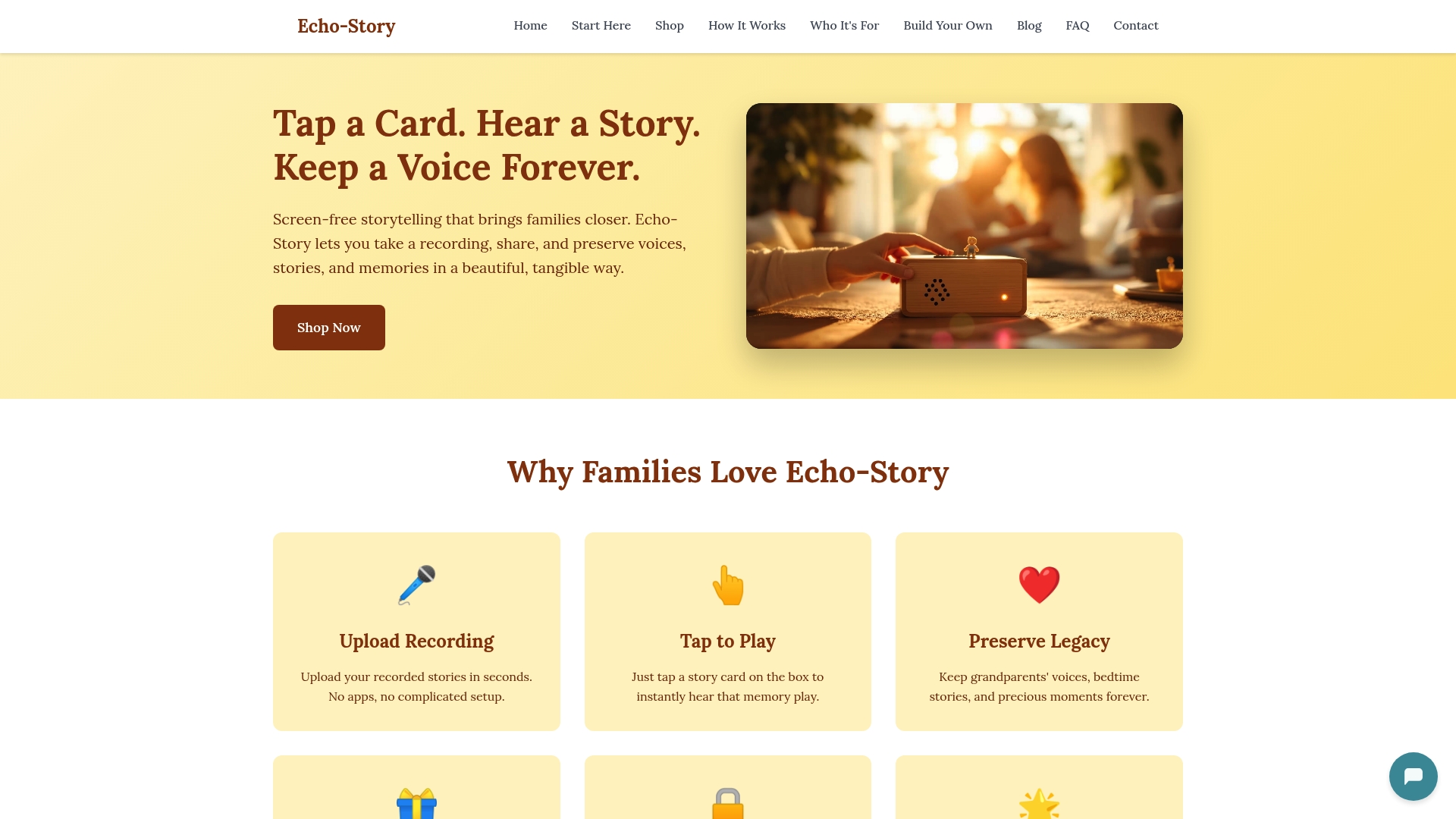
Options include buying a fully assembled box, building your own with step-by-step guides, or subscribing to receive new story cards by mail each month. Personalization options let you record your own voice reading a favorite story or capture a grandparent's voice for a family legacy recording. This combination of tactile cards, narrator control, and family-voice preservation aligns with the guide's focus on narrator quality and calm bedtime routines. If you want to see how the starter packs and story card options work, visit the Echo-Story Box page and find the setup that fits your family.
Sources
- Audiobooks, Audio Players, and Child Development — AAP
- Learning from audiobooks: scaffolding improves vocabulary — MIT News
- Narrative and educational benefits of stories — PMC/NCBI
- The best audiobooks for homeschool families, by age (2026) — EveryHomeschool
FAQ
What are the best classic children's books to start with?
Strong starting points include Frog and Toad for younger kids, Charlotte's Web for elementary-age listeners, and The Hobbit or Harry Potter for preteens, all of which hold up equally well as classic children's audiobooks.
What are the most popular kids audiobook series?
Harry Potter narrated by Jim Dale and The Chronicles of Narnia full-cast productions are consistently among the most requested series, largely because of their narrator quality and long-running story arcs.
What are some classic children's books good for reading aloud or listening together?
Charlotte's Web, Winnie-the-Pooh, and The Chronicles of Narnia all work well for shared listening since their pacing and humor hold up for both kids and adults in the room.
What makes an audiobook good for children specifically?
A strong narrator, a runtime matched to the child's attention span, and language rich enough to build vocabulary all matter more than the title's fame, and screen-free formats like Echo-Story Box add a calmer way to access those same stories.