
Consistent ministry routines give children predictable safety, clearer behavior expectations, and stronger access to spiritual learning. That single claim is worth repeating to every volunteer on your team before Sunday morning. Here is why it holds up:
- Safety and trust: When children know what comes next, they feel secure. That security is the foundation for everything else you are trying to do.
- Reduced cognitive load and better behavior: Familiar routines free children's working memory from figuring out "what happens now" so they can actually listen.
- Scaffolded spiritual learning: Repeated, predictable structures create the calm space where stories, prayer, and reflection can land.
The sections below give you the evidence, the practical routines, and a one-week plan to put all of this into action.
Key Takeaways
Consistent ministry routines deliver safety, better behavior, and deeper spiritual engagement because they reduce cognitive load, build trust, and create the calm conditions children need to learn.
| Point | Details |
|---|---|
| Routines build safety and trust | Predictable cues help children feel secure, which is the foundation for spiritual receptivity. |
| Structure improves engagement | A 2023 meta-analysis found structured environments produced an engagement effect of g = 0.46, an academic achievement effect of g = 0.33, and reduced disengagement by g = -0.34. |
| Sustained routines reduce behavior problems | Children in stable-high routine groups showed significantly lower attentional and externalizing problems. |
| Volunteers need scripts and roles | Assign four clear roles and run a 15-minute pre-service huddle to keep routines consistent across your team. |
| Start small and build | Pilot three routines this week; add more after your first debrief. |
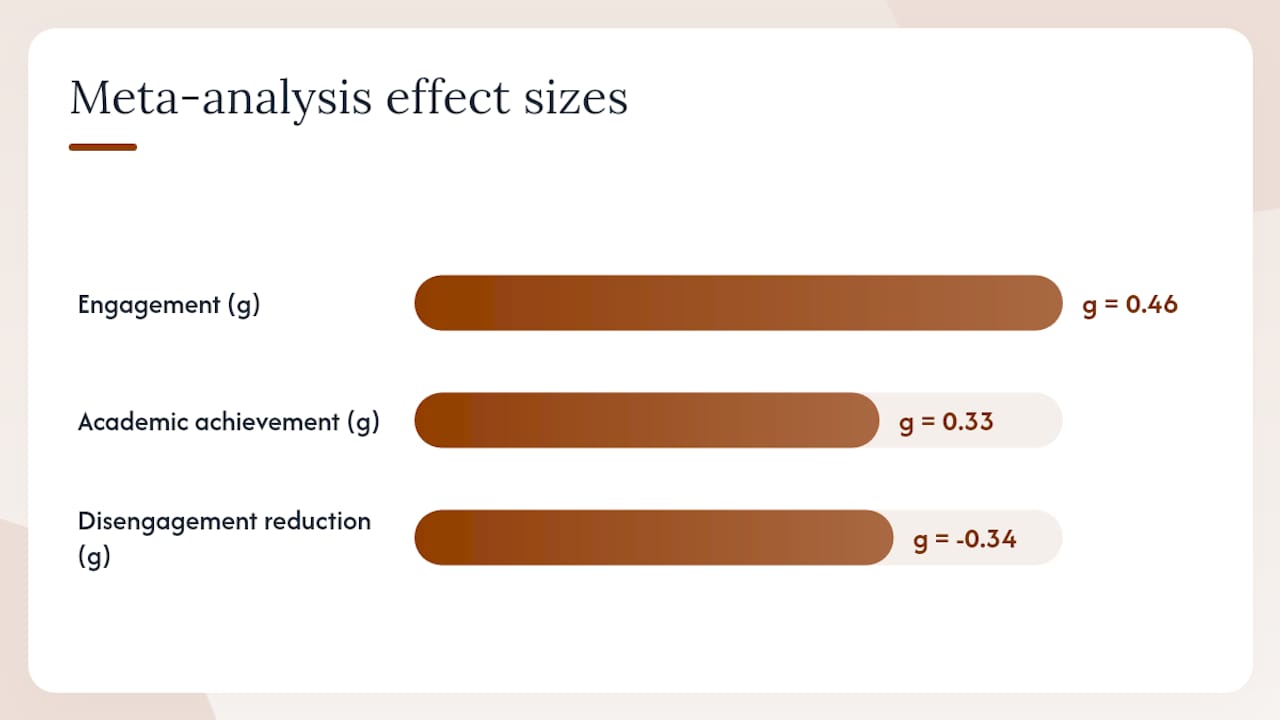
Table of Contents
- Why consistent ministry routines matter for kids' safety and growth
- How routines reduce behavior problems through cognitive science
- Concrete routines every children's ministry should use
- How to keep routines consistent across your volunteer team
- Adapting routines for different ages and neurodevelopmental needs
- Consistency doesn't mean rigidity: handling changes gracefully
- What the research says about routines and children's development
- Your one-week action plan to start or tighten ministry routines
- A note from a children's ministry leader
- Sources
Why consistent ministry routines matter for kids' safety and growth
Children's ministry carries a real responsibility: keeping children physically safe, emotionally settled, and spiritually open. Consistent routines serve all three goals at once.
Safety and trust come first. When a child walks into your room and sees the same greeter, hears the same welcome song, and knows where to put her backpack, her nervous system relaxes. Head Start guidance confirms that predictable schedules help children feel safe and know what comes next, which directly increases engagement. For families dropping off a child who struggles with transitions, that predictability is the reason they come back.
Behavior management gets easier. Unpredictable environments produce anxious, reactive children. Predictable ones produce children who can wait, listen, and participate. The American Academy of Pediatrics notes that routines reduce chaos and support behavior across settings. In ministry, that translates to fewer meltdowns at transitions, less redirection during story time, and more time actually teaching.
Spiritual engagement deepens. A child who is worried about what happens next cannot absorb a lesson about grace. Routines clear that worry. The Harvard Center on the Developing Child describes consistent routines as a protective factor that provides the emotional stability children need for regulation and learning. Spiritual formation is a form of learning, and it needs the same conditions.
Research also links routines to school readiness: one study found that consistent child routines mediated the connection between family functioning and school readiness, supporting social skills and early academic outcomes. The same principle applies in ministry. Routines are not just crowd control. They are discipleship infrastructure.
Pro Tip: Post a simple visual schedule at child's-eye level near the entrance. Families see it on the way in, children reference it during the hour, and volunteers use it as a shared anchor.
How routines reduce behavior problems through cognitive science
Every time a child has to figure out what comes next, that question takes up mental space. Psychologists call this cognitive load, and it competes directly with learning. Well-practiced routines make transitions automatic, which frees working memory for the content that actually matters.
A 2023 meta-analysis published in Educational Psychologist found that classroom-structure interventions produced a moderate positive effect on engagement, a positive effect on achievement, and a reduction in disengagement across preschool through high school samples. That is a meaningful signal across a wide age range.
Stat to share with your leadership team: A 2023 meta-analysis across multiple intervention samples found that structured classroom environments produced a moderate positive effect on engagement and reduced disengagement.
The Australian Education Research Organisation explains that explicitly taught routines make student behavior more automatic and reduce the time adults spend correcting behavior. The key word is taught. Routines that are assumed rather than practiced rarely stick. Children need to see a routine modeled, practice it with guidance, and repeat it until it feels natural.
Anticipatory cues help too. A short verbal warning ("In two minutes we move to story time"), a consistent transition song, or a simple hand signal gives children a moment to mentally shift gears before the physical transition happens. That small buffer prevents most of the friction that leads to behavior incidents.
- Use a consistent auditory cue (a bell, a clap pattern, a song) to signal every transition.
- Give a 60-second verbal warning before any change in activity.
- Rehearse the transition itself at the start of a new ministry season, not just the content.
Concrete routines every children's ministry should use
Good routines are specific, repeatable, and short enough that any volunteer can run them. Here are eight to build your hour around.

1. Arrival and check-in (5 minutes) Purpose: Greet every child by name and establish safety accountability. Script: "Good morning, [Name]! We're so glad you're here. Your name tag is right here, and you can head to the activity table." Troubleshooting: If the line backs up, assign a second greeter to the activity table to keep children moving.
2. Opening welcome and song (3–4 minutes) Purpose: Signal that the hour has officially started and build group identity. Script: "Everyone find your spot! When you hear our song, that means we're starting together." Troubleshooting: Use the same song every week for at least a full ministry season. Familiarity is the point.
3. Transition to story time (2 minutes) Purpose: Move children from active play or arrival energy into a listening posture. Script: "Okay, friends. Hands in your lap, eyes on me. We're about to go on an adventure together. Ready?" Troubleshooting: If children are still unsettled, slow down rather than rush. A 10-second pause with calm eye contact works better than raising your voice.
4. Story time (8–12 minutes) Purpose: Deliver the core spiritual lesson through narrative. Script opening: "Last week we heard about [recap]. Today's story takes us somewhere new." Troubleshooting: Keep the story arc predictable (setup, problem, resolution, lesson) even when the content changes. Children follow the shape before they follow the words. For faith-based story ideas that connect storytelling to community, consistent narrative structure is the anchor.
5. Response and reflection (3–5 minutes) Purpose: Give children a moment to process and respond to the lesson. Script: "What's one thing from today's story that surprised you? Turn and tell the person next to you." Troubleshooting: Pair children intentionally. Shy children do better with a trusted peer than with an open-group question.
6. Activity centers (10–15 minutes) Purpose: Reinforce the lesson through hands-on engagement. Script: "Centers are open. Remember our three rules at centers: kind hands, quiet voices, stay in your spot." Troubleshooting: Assign a volunteer to each center, not to the room generally. Specific roles reduce gaps.
7. Cleanup transition (2 minutes) Purpose: Practice responsibility and signal the hour is winding down. Script: "You have 60 seconds to finish up and put materials away. I'm going to count down." Troubleshooting: A countdown timer projected on the wall removes the need for repeated verbal reminders.
8. Dismissal (3–4 minutes) Purpose: Close safely and send children home with a clear takeaway. Script: "Before you go, can anyone tell me one thing God showed us today? Great. See you next week!" Troubleshooting: Never release a child without a verified adult pickup. Make this non-negotiable and script it for every volunteer.
Pro Tip: Screen-free audio stories work especially well during arrival and transition windows. A story playing softly as children arrive sets a calm tone without requiring volunteer attention.
How to keep routines consistent across your volunteer team
Routines only work when every volunteer runs them the same way. One greeter who skips the name tag step or one storyteller who improvises the transition breaks the predictability children depend on.
Assign roles, not just tasks. Four roles cover most children's ministry hours:
- Greeter: Owns arrival, check-in, and name tags.
- Transition lead: Calls transitions, runs the countdown, manages the cue signal.
- Storyteller: Leads story time and the reflection question.
- Safety monitor: Tracks attendance, manages pickup, and watches for distress.
Run a 15-minute pre-service huddle. This is the single highest-return investment you can make in consistency. Here is a simple agenda:
- Review today's schedule out loud (2 minutes).
- Each volunteer states their role and one thing they will do at their first transition (3 minutes).
- Walk through any changes from last week (2 minutes).
- Quick Q&A and prayer (3 minutes).
- Positions (5 minutes before doors open).
Scheduling tip: Assign volunteers to the same role for at least four consecutive weeks before rotating. Research on explicitly taught routines shows that repetition builds automaticity, and that applies to adult volunteers as much as to children. When you do rotate, overlap the outgoing and incoming volunteer for one service.
Pro Tip: Keep a one-page "routine card" at each station with the script, timing, and one troubleshooting note. New volunteers can run a station confidently on their first day.
Adapting routines for different ages and neurodevelopmental needs
A routine that works beautifully for a seven-year-old may overwhelm a three-year-old or frustrate a child with ADHD. Adaptation is not optional; it is part of ministering to children effectively.
By age group:
- Toddlers (ages 2–3): Keep each segment under 3 minutes. Use songs and physical movement as transitions. Repeat the same song every single week.
- Preschoolers (ages 4–5): Visual schedules with pictures work better than verbal-only instructions. Limit choices to two options at any decision point.
- Early elementary (ages 6–8): Children this age can handle 8–12 minute story segments and benefit from a brief verbal preview of the schedule at the start of the hour.
For children with neurodevelopmental differences (autism, ADHD, sensory processing differences):
Research shows that higher routine frequency is associated with lower externalizing behavior, with effects particularly notable in children with neurodevelopmental differences. Practical adaptations include:
- Visual schedule cards: Post a picture-based schedule at child's-eye level and point to each step as you move through it.
- Transition warnings: Give a 5-minute and a 1-minute warning before every change. A visual timer (like a Time Timer) makes the countdown concrete.
- Quiet corner: Designate a low-stimulation space with a beanbag or soft mat where a child can regulate without leaving the room.
- Shorter segments: Break a 10-minute story into two 5-minute parts with a movement break between them.
A longitudinal study found that children in a stable-high routines group had significantly lower attentional, externalizing, and internalizing problems compared with children whose routines decreased. Sustained consistency over time matters as much as the quality of any single session.
Pro Tip: Talk with parents of children with NDDs before the ministry year begins. Ask what cues work at home and mirror them in your room. That continuity between home and ministry is one of the most calming things you can offer.
Consistency doesn't mean rigidity: handling changes gracefully
Routines are not a rigid script. They are a set of predictable cues and expectations. The difference matters, especially when a special event, a guest speaker, or a field trip disrupts the usual flow.
Vanderbilt's CSEFEL guidance notes that predictable routines reduce tantrums and aggression while increasing engagement, but also recommends balancing structure with flexibility. The goal is that children feel safe, not that the clock runs perfectly.
When a change is coming, prepare children and volunteers in advance:
- For children: "Next week is going to be a little different. We'll still start with our welcome song, but then we're going to do something special instead of our usual story time. You'll still know what to do."
- For volunteers: Send a one-paragraph email or text the day before: "This Sunday we're flipping the schedule for our Christmas event. Arrival and welcome stay the same. Story time moves to the end. I'll walk everyone through it at our pre-service huddle."
- For families: A brief note in the weekly communication: "This Sunday's schedule is a little different for our special event. Drop-off and pickup times stay the same."
The American Academy of Pediatrics recommends balancing predictability with flexibility, and that principle applies directly here. Anchor the change to something familiar (the welcome song, the same greeter, the same dismissal script) and children will handle the rest.
Pro Tip: Pre-announce changes at least one week ahead when possible. A child who heard "next week will be different" handles the difference far better than one who walks in and finds a surprise.
What the research says about routines and children's development
The evidence base for routines is consistent across early childhood, classroom, and family settings. Here is a brief summary leaders can use when making the case to staff or parents.
Research snapshot: A 2023 meta-analysis across 71 intervention samples found structured environments produced engagement effects of g = 0.46, academic achievement effects of g = 0.33, and reduced disengagement by g = -0.34. A separate longitudinal study (N = 2,353) found children in stable-high routine groups showed significantly lower attentional, externalizing, and internalizing problems, based on regression analyses showing meaningful effects on these outcomes.
Key takeaways from the broader literature:
- Head Start frames predictable schedules as a core tool for increasing engagement and helping children feel safe. Use the Head Start guide for practical schedule templates you can adapt directly.
- Harvard's Center on the Developing Child identifies stable routines as a protective factor for emotional regulation. Use this resource when presenting to church leadership or parents who want the developmental rationale.
- Vanderbilt's CSEFEL brief defines the difference between schedules and routines, recommends visual supports, and reports that predictable routines reduce tantrums and aggression. Use this brief for volunteer training.
- The PubMed longitudinal study links stable-high routine profiles to lower behavioral and emotional problems over time. Use this when parents ask whether routines have lasting effects.
Consistent routines also support skill learning in activity-based programs beyond the classroom, reinforcing that the principle generalizes across structured learning environments.
Your one-week action plan to start or tighten ministry routines
You do not need a perfect system. You need three routines running consistently by next Sunday.
Day 1 (Monday): Select three routines to pilot. Arrival, story-time transition, and dismissal are the highest-impact starting points. Write a one-sentence purpose and a two-line script for each.
Day 2 (Tuesday): Share the scripts with your volunteer team by text or email. Ask each person to read them once and reply with any questions.
Day 3 (Wednesday): Assign roles for Sunday. Confirm who is greeting, who is leading transitions, and who is handling dismissal.
Day 4 (Thursday): Prepare any visual supports (a printed schedule, a visual timer, name tags ready to go).
Day 5 (Friday): Send a one-paragraph note to families: "This Sunday we're starting a consistent arrival routine. Here's what your child will experience when they walk in."
Sunday, Service 1: Run the three routines. After service, ask each volunteer one question: "What worked? What felt awkward?"
Sunday, Service 2 (if applicable): Apply one small adjustment from the feedback. Keep the scripts the same.
Measurement ideas:
- Count behavior incidents during transitions (aim for fewer by week 3).
- Time your story-time transition (aim for under 90 seconds).
- Ask two parents at pickup: "Did your child seem settled today?"
After the pilot: Hold a 10-minute debrief with volunteers. Keep what worked, adjust one thing, and add a fourth routine in week two. Repeat the pre-service huddle every week.
A note from a children's ministry leader
The first time I ran a consistent arrival routine, I expected the kids to notice. They didn't. What I noticed was that the room felt different by the time story time started. Quieter. More ready. The greeter knew exactly what to say, the children knew exactly where to go, and nobody was still figuring out the room when the lesson began.
That is the quiet gift of a good routine. It does its work before you even start teaching.
Start with one routine this week. Just one. Run it the same way twice. Watch what happens to the energy in the room. You will want to add another one the following week.
Routines are not about control. They are about creating the conditions where children feel safe enough to hear something that matters. That is the whole point of children's ministry, and a simple, consistent structure is one of the most practical ways to get there. Try the one-week action plan above and see for yourself.
Sources
- A meta-analysis of teachers’ provision of structure in the classroom and students’ academic competence beliefs, engagement, and achievement: Educational Psychologist
- Headstart
- Importance of stability in the developmental environment — Center on the Developing Child, Harvard University
- Child routines across preschool and associations with socioemotional adjustment (PubMed record)
- Family routine frequency, child externalizing behaviors, and parental stress (PMC article)
- What Are Schedules and Routines? | CSEFEL (Vanderbilt)
- Healthychildren
Looking for screen-free story resources to support your ministry's story-time routine? Echostory-box offers faith-based audio stories, personalized content, and family voice recordings that fit naturally into a consistent, calm ministry hour. See how it works and find resources your volunteers can use this Sunday.