
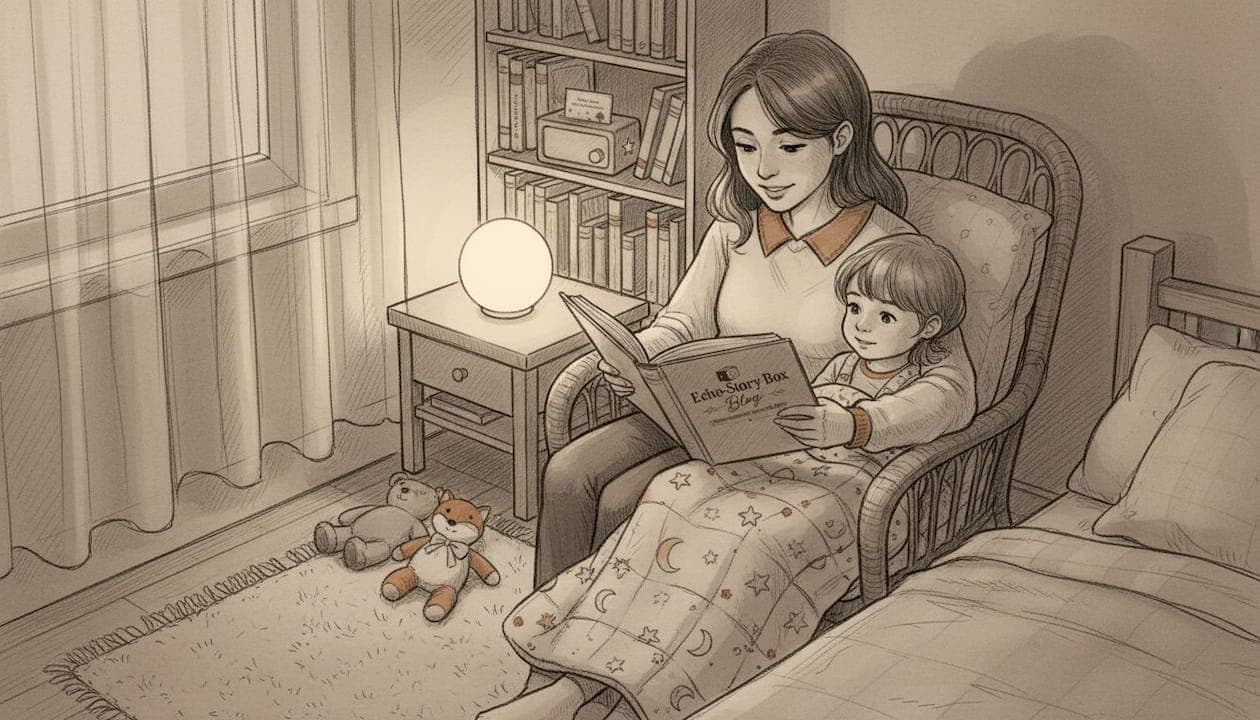
What elevated bedtime cortisol means for children's sleep
Cortisol is your child's primary stress hormone, produced by the adrenal glands and released in response to physical or emotional demands. Under healthy conditions, cortisol levels in children drop naturally as bedtime approaches, creating the calm, low-arousal state the body needs to fall asleep. When those levels stay elevated instead of falling, children struggle to settle. Their brains remain on alert, their bodies resist sleep, and the whole bedtime experience becomes harder for everyone.
Parents often describe this as their child getting a "second wind" right when they should be winding down. That burst of energy, the sudden silliness, the emotional meltdowns, the refusal to lie still — these are not simply behavioral problems. They are physical signs that cortisol is doing the opposite of what it should at that hour.
Here is what elevated bedtime cortisol typically looks like in children:
- Difficulty falling asleep even when visibly tired
- Frequent night wakings or restless sleep
- A sudden surge of energy or hyperactivity near bedtime
- Emotional outbursts, crying, or irritability at sleep time
- Resistance to the bedtime routine despite being overtired
- Trouble calming down after stimulating activities
- Waking up tired even after a full night in bed
Understanding what cortisol at bedtime means for children is the first step toward changing it. The good news is that parents have real, research-backed tools to help.

How cortisol follows a daily rhythm in children
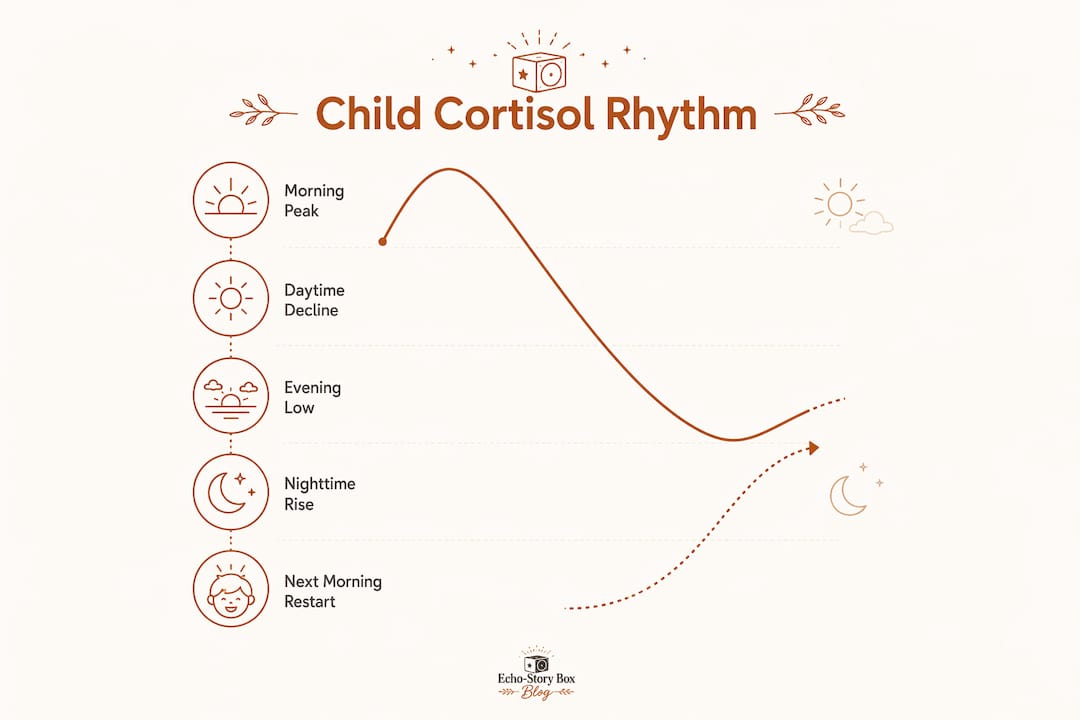
Cortisol does not stay at one level all day. It follows a predictable arc called the diurnal cortisol pattern, and that arc is central to understanding why bedtime matters so much.
In healthy children, cortisol peaks in the early morning, typically within 30 minutes of waking. This morning surge helps the body shift from sleep to wakefulness, sharpens alertness, and prepares children for the demands of the day. From that peak, cortisol gradually tapers across the afternoon and reaches its lowest point around bedtime. That low point is not incidental. It is the physiological signal that allows melatonin, the sleep-promoting hormone, to rise and take over.
A flatter diurnal cortisol slope, meaning less decline toward evening, is associated with shorter and more disturbed sleep in young children. When cortisol does not drop steeply enough by bedtime, melatonin cannot rise properly, and sleep initiation is delayed or disrupted.
This relationship between cortisol and melatonin is one of the most important things parents can understand about children's sleep hormones. The two hormones work in opposition. When one is high, the other tends to be low. A child whose cortisol stays elevated at bedtime is, in effect, blocking their own melatonin from doing its job.
The cortisol rhythm is regulated by a system called the hypothalamic-pituitary-adrenal axis, or HPA axis. Think of the HPA axis as the body's stress management headquarters. It receives signals from the brain about perceived threats or demands, then instructs the adrenal glands to release cortisol accordingly. In children, this system is still maturing, which makes it more sensitive to disruptions from stress, irregular routines, or overstimulation.
Pro Tip: Salivary cortisol tests can measure a child's bedtime cortisol level at home. A bedtime salivary cortisol level above 2.4 nmol/L in children is the validated clinical cutoff for abnormal elevation and warrants medical review.
A simplified look at how cortisol moves across a child's day:
| Time of Day | Cortisol Level | Effect on Child |
|---|---|---|
| Early morning (waking) | Highest | Alertness, energy, readiness |
| Mid-morning | Moderate | Sustained focus and activity |
| Afternoon | Declining | Gradual calming |
| Evening (pre-bedtime) | Low | Melatonin rises, sleep readiness |
| Bedtime (elevated) | Abnormally high | Sleep resistance, hyperarousal |
Research from the Generation R Study found that children with a flatter cortisol slope were more likely to have shorter nighttime sleep duration across early childhood. The slope itself, not just the absolute level, predicts sleep outcomes.
How elevated bedtime cortisol affects your child's sleep and behavior
The effects of high cortisol at bedtime reach well beyond a difficult bedtime routine. They shape sleep architecture, emotional regulation, and how your child functions the next day.

Research on school-aged children found that those with insomnia symptoms and short sleep duration showed significantly elevated evening cortisol levels compared to children without sleep difficulties. This pattern mirrors what researchers see in adult insomnia, where physiological hyperarousal keeps the stress system activated around the clock. In children, the same mechanism appears to operate, with elevated cortisol at night feeding into poorer sleep quality, which then sustains elevated cortisol the following day.
| Sleep Outcome | Associated Cortisol Pattern |
|---|---|
| Difficulty falling asleep | Elevated evening cortisol, suppressed melatonin |
| Frequent night wakings | Dysregulated HPA axis, shallow sleep stages |
| Short total sleep time | Higher daily cortisol across the full day |
| Daytime fatigue with hyperactivity | Cortisol-driven arousal compensating for poor sleep |
The behavioral effects are just as real as the sleep effects. Children with elevated bedtime cortisol often show:
- Increased irritability and emotional sensitivity in the evening
- Difficulty transitioning between activities near bedtime
- Meltdowns that seem disproportionate to the trigger
- Hyperactivity that looks like a second burst of energy
- Trouble self-soothing when upset
Children with lower sleep efficiency show higher daily cortisol levels overall, suggesting that poor sleep and elevated cortisol reinforce each other in a cycle that is hard to break without deliberate intervention.
Pro Tip: If your child regularly melts down between 6:00 PM and 8:00 PM, consider whether they are overtired rather than overstimulated. The meltdown may be a cortisol spike from a missed sleep window, not a behavior problem.
Chronic elevation of bedtime cortisol carries longer-term implications as well. Sustained HPA axis dysregulation in childhood has been linked to difficulties with attention, emotional regulation, and stress resilience as children grow. Addressing it early, through consistent routines and a calm sleep environment, protects more than just tonight's sleep.
What causes elevated cortisol at bedtime in children
Elevated bedtime cortisol rarely has a single cause. It usually reflects a combination of factors, some behavioral, some environmental, and occasionally medical.
Common contributing factors:
- Emotional stress: School pressures, family conflict, transitions, or social worries all activate the HPA axis. A child who has had a stressful day arrives at bedtime with cortisol already elevated.
- Overstimulation: Screens, loud environments, fast-paced play, or exciting activities close to bedtime keep the nervous system in a high-alert state, preventing the natural cortisol decline.
- Irregular sleep schedules: When bedtimes shift significantly from night to night, the body's cortisol rhythm loses its anchor. Consistency is what trains the HPA axis to begin its evening decline at the right time.
- Overtiredness: This one surprises many parents. When a child misses their natural sleep window, the body responds by releasing cortisol to maintain alertness. The result is a child who appears wired and energetic precisely because they are too tired.
- Environmental factors: Bright lights, noise, and a warm room all signal wakefulness to the brain, slowing the cortisol drop and melatonin rise.
- Caregiver stress: Children are sensitive to the emotional state of the adults around them. A parent who is anxious or rushed at bedtime can inadvertently elevate a child's cortisol through that shared stress.
How age and development shape bedtime cortisol patterns
Cortisol patterns shift across childhood in ways that matter for how you interpret your child's bedtime behavior.
- Infants (0–12 months): The diurnal cortisol rhythm is not yet established. Cortisol levels are relatively flat across the day and do not follow the adult pattern until around 3 months of age, with more consistent patterns emerging by 6 months.
- Toddlers (1–3 years): The HPA axis becomes more reactive during this period. Toddlers are highly sensitive to routine disruptions, and their cortisol can spike sharply in response to separation, transitions, or overstimulation at bedtime.
- Preschoolers (3–5 years): Research specifically highlights this group as vulnerable to flatter cortisol slopes and associated sleep problems. The Generation R Study found that preschoolers with less steep evening cortisol declines had consistently shorter sleep durations.
- School-age children (6–12 years): Academic stress, social pressures, and after-school activities become more prominent cortisol drivers. Screen use in the evening is a particular concern for this age group.
- Adolescents: Puberty shifts the cortisol rhythm later, contributing to the well-known tendency toward later bedtimes. This is partly biological, not simply a preference.
Understanding where your child falls developmentally helps you set realistic expectations and choose the right strategies for their age.
Practical strategies to support healthy cortisol levels at bedtime
Parents have more influence over their child's bedtime cortisol than most realize. Research consistently shows that parental presence and calm, quiet engagement at bedtime are not just comforting. They are physiologically effective.
A study of 3- to 6-year-old children found that greater parental presence at bedtime was linked to lower evening cortisol levels, more nighttime sleep minutes, and higher sleep efficiency. Physical contact and quiet activities were the specific behaviors that made the difference. Sitting nearby, gentle touch, and calm conversation all help the child's HPA axis downregulate.
Pro Tip: You do not need an elaborate routine. A consistent wind-down sequence of 20–30 minutes with the same steps each night trains your child's body to begin its cortisol decline on cue.
Here is a step-by-step approach to building a cortisol-friendly bedtime routine:
- Start early enough. Watch for your child's natural sleep cues, eye rubbing, quieter play, slowed movement, and begin the routine before overtiredness sets in. Missing the sleep window triggers the cortisol spike that causes second wind.
- Dim the lights 30–45 minutes before bed. Bright light suppresses melatonin and keeps cortisol elevated. Switching to warm, low lighting signals the brain that the day is ending.
- Turn off screens at least an hour before sleep. Screen content is stimulating, and the blue light from devices delays melatonin release. Replacing screen time with quiet play or listening to a calm audio story gives the nervous system time to settle.
- Add physical closeness. A bath, a gentle back rub, or simply sitting together on the bed while your child winds down provides the tactile input that helps lower arousal. Research supports physical contact at bedtime as a direct cortisol-lowering behavior.
- Use a predictable sequence. Bath, pajamas, teeth, story, lights out. The sequence itself becomes a cue. After a few weeks of consistency, your child's body begins preparing for sleep before the routine even ends.
- Choose calming content for the story portion. Quiet audio stories, gentle music, or a parent's recorded voice are far less arousing than picture books with exciting plots or interactive apps. Listening to a calm story keeps the body still and the mind gently occupied without stimulating the stress response.
- Stay calm yourself. Your emotional state transfers. A rushed, stressed parent at bedtime raises a child's cortisol. Slow your pace, lower your voice, and treat the routine as a transition for both of you.
For families managing twins or multiple children with different sleep needs, coordinating these calm routines across schedules takes extra planning. Practical guidance on managing sibling sleep schedules can help you apply these principles without the routine falling apart under the pressure of competing bedtimes.
Avoiding common bedtime routine mistakes is equally worth your attention, since some well-intentioned habits, like allowing one more show or skipping the wind-down on busy nights, can quietly undermine the cortisol rhythm you are trying to build.
Medical conditions linked to abnormal cortisol patterns in children
Most elevated bedtime cortisol in children is stress-related or routine-related. But in a small number of cases, persistently abnormal cortisol patterns point to an underlying medical condition that needs clinical attention.
Cushing Syndrome is the most clinically significant condition associated with chronically elevated cortisol in children. It occurs when the body produces too much cortisol over a prolonged period, usually due to a tumor on the pituitary gland or adrenal glands, or as a side effect of long-term corticosteroid medication. Pediatricians use bedtime salivary cortisol above 2.4 nmol/L as a validated cutoff when screening for abnormally elevated cortisol in children. The condition is rare, but when present, it causes weight gain concentrated around the abdomen and face, slowed growth, fatigue, and mood changes alongside sleep disruption.
Adrenal insufficiency sits at the opposite end of the spectrum, where the adrenal glands produce too little cortisol. Children with this condition may show unusual fatigue, low blood pressure, and poor stress tolerance rather than sleep resistance.
Anxiety disorders are far more common than either adrenal condition and are a well-established driver of HPA axis dysregulation in children. Generalized anxiety, separation anxiety, and post-traumatic stress all produce chronically elevated cortisol that disrupts the evening decline. Children with anxiety often show the most pronounced bedtime cortisol elevation because the anticipation of sleep itself becomes a source of stress.
Williams Syndrome is a genetic condition in which children show shallower drops in cortisol and less pronounced melatonin rises at bedtime compared to typically developing children, contributing to the high rate of sleep disturbances seen in this population.
Attention-deficit/hyperactivity disorder (ADHD) is associated with HPA axis irregularities in some children, with research suggesting that the hyperarousal underlying ADHD symptoms may overlap with the cortisol dysregulation that disrupts sleep.
When to seek medical advice:
- Bedtime cortisol problems persist despite consistent, calm routines for several weeks
- Your child shows unexplained weight changes, growth slowdown, or extreme fatigue
- Sleep disruption is severe and affects daytime functioning at school
- Your child's pediatrician identifies signs that warrant hormonal screening
- You notice mood or behavior changes that go beyond typical developmental challenges
A pediatric endocrinologist or sleep specialist can order salivary cortisol testing and interpret results in the context of your child's full clinical picture. Most children will not need this level of evaluation, but knowing when to ask for it gives you confidence that you are not missing something important.
Key Takeaways
Elevated bedtime cortisol in children means the stress hormone that should be at its lowest point of the day is instead keeping the brain and body on high alert, disrupting sleep onset, sleep quality, and emotional regulation.
| Point | Details |
|---|---|
| Cortisol should be lowest at bedtime | A healthy diurnal rhythm means cortisol drops steeply by evening, allowing melatonin to rise and sleep to begin. |
| Elevated levels cause real sleep problems | Children with insomnia symptoms and short sleep show significantly higher evening cortisol, reflecting sustained HPA axis hyperarousal. |
| Parental presence lowers cortisol | Physical contact and quiet parental presence at bedtime directly reduce children's evening cortisol and improve sleep duration and efficiency. |
| The 2.4 nmol/L threshold matters | Bedtime salivary cortisol above 2.4 nmol/L is the validated clinical cutoff for assessing abnormal cortisol elevation in children. |
| Consistent routines train the rhythm | A predictable, calm wind-down sequence teaches the HPA axis to begin its evening decline on cue, night after night. |
How Echostory-box supports calmer bedtimes

One of the simplest swaps you can make in your child's bedtime routine is replacing screen time with calm audio listening. Echostory-box was built exactly for this moment in the evening. Children tap a story card onto the player, and a gentle audio story begins. No scrolling, no bright screen, no ads, and no overstimulating content that keeps cortisol elevated when it should be falling.
The tactile, simple experience of choosing a story card and listening quietly is the kind of low-arousal activity that supports the cortisol decline your child's body needs. Whether it is an original adventure, a grandparent's recorded voice, or a faith-based story, the content stays calm and the experience stays screen-free.
Explore screen-free bedtime stories from Echostory-box and give your child's evenings the quiet they deserve.