

Audio storytelling for seniors is defined as the practice of using recorded or live voice narratives to stimulate memory, emotion, and connection in older adults. When you engage your elderly parent with audio stories, you give them a sensory experience that screens cannot replicate. The voice of a loved one, a familiar song, or a well-chosen story from their past can reach parts of the mind that conversation alone often misses. Structured storytelling programs with personalized goals over three months help preserve cognitive function and increase a senior's sense of purpose. Echostory-box was built on exactly this idea: that technology should carry human voices, not replace them.
What tools and environment do you need to engage elderly parents with audio stories?
The right setup makes the difference between a session your parent enjoys and one they resist. Start with the simplest device they can operate without frustration. A dedicated audio player with large buttons, a tablet with a single-app interface, or a smartphone placed in a docking stand all work well. The goal is zero barriers between your parent and the story.
Sound quality matters more than most caregivers expect. Moderate audio volumes and clear, undistorted sound prevent agitation in seniors with dementia, because loud or distorted audio can register as a threat rather than comfort. Set the volume before your parent enters the room, and test it with a short clip first.

The environment shapes the experience just as much as the content. Choose a quiet room with soft lighting and a comfortable chair. Remove background noise sources like televisions or busy kitchen sounds. A calm physical space signals to your parent that this time is for listening, not for tasks.
Here is a quick comparison of device types by ease of use:
| Device type | Ease of use | Best for |
|---|---|---|
| Dedicated audio player | Very easy | Parents with limited tech comfort |
| Tablet with single app | Moderate | Parents who already use a tablet |
| Smart speaker with voice commands | Moderate | Parents comfortable with voice prompts |
| Smartphone in a dock | Easy with setup | Caregivers who manage the device remotely |
- Keep the device charged and ready before each session.
- Use a Bluetooth speaker with clear mid-range sound for group listening.
- Label physical buttons with simple stickers if needed.
- Store favorite stories in a short, named playlist your parent can recognize.
Pro Tip: Test every audio clip yourself through the same speaker your parent will use. What sounds clear through earbuds can sound muffled through a small speaker at low volume.
How do you create and select meaningful audio stories for elderly parents?
The most effective audio stories for elderly parents draw from their own lives. Psychologists call the period between ages 15 and 30 the "reminiscence bump." Stories and music from the reminiscence bump period yield the strongest emotional and long-term memory responses in seniors. This means a story about your parent's first job, their wedding, or a childhood neighborhood will land far deeper than a generic audiobook.
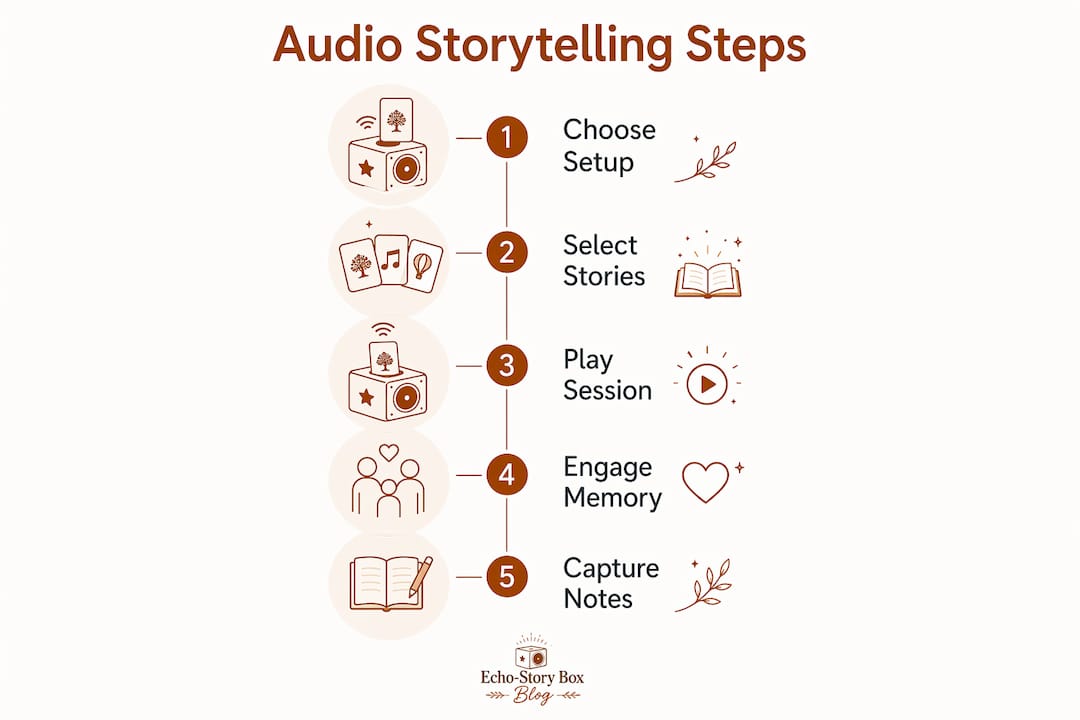
Sensory prompts unlock memories that abstract questions cannot. Guided prompts focusing on sensory and concrete memories evoke better engagement and reduce cognitive overload compared to open-ended questions. Instead of asking "What was your childhood like?" try "What did your grandmother's kitchen smell like on Sunday mornings?" The specific detail gives your parent something to hold onto.
Recording family voices adds a layer of comfort that no professional narrator can match. Simple, unedited voice memos recorded during natural conversations are more valuable than polished oral history projects that never get started. Use your phone's built-in voice memo app, press record, and just talk with your parent. You can organize the recordings later.
Follow these steps to build a meaningful story library:
- List five to ten significant periods in your parent's life: school years, early career, raising children, favorite vacations.
- For each period, write two or three sensory prompts. Focus on sights, sounds, smells, and textures.
- Record yourself reading those prompts aloud, then leave a pause for your parent to respond.
- Record your parent's responses whenever they are willing. Even short clips are worth keeping.
- Add familiar songs from their reminiscence bump years between story segments to sustain mood.
- Vet every piece of content for potential grief triggers. Avoid songs or stories associated with trauma, as these can cause intense emotional responses that are hard to resolve in the moment.
One principle that clinical experts stress: never correct your parent's misremembered details. Correcting factual inaccuracies breaks emotional connection and causes frustration. The goal is the feeling of the story, not its accuracy. If your parent remembers a detail differently, follow their version.
Pro Tip: Record a short "hello" message from each grandchild and weave those clips into the playlist. Hearing a grandchild's voice mid-session often produces the strongest emotional response of all.
What is the best approach to structuring audio storytelling sessions?
Session length is the most overlooked variable in senior audio engagement. Audio-based engagement sessions for older adults with mild cognitive impairment should be limited to 5–15 minutes to avoid cognitive fatigue. Longer sessions do not produce better results. They produce withdrawal, agitation, or sleep.
Structure each session with a clear beginning, middle, and end. Open with a familiar song or a short family voice clip to signal that something pleasant is starting. Move into the main story content in the middle. Close with a calming piece of music or a gentle recorded message. This pattern gives your parent a sense of completion without confusion.
The "playlist sandwich" technique applies this structure to care tasks as well. Starting with an upbeat song, then a care task, then calming music reduces tension during difficult caregiving moments like bathing or medication time. The audio creates a psychological buffer that shifts your parent's focus away from the task itself.
Key practices for every session:
- Sit beside your parent rather than across from them. Physical closeness reinforces the audio connection.
- Use concrete prompts, not open questions. "Do you remember the sound of the school bell?" works better than "Tell me about school."
- Pause after each prompt. Give your parent 20–30 seconds to respond before moving on.
- Follow their memory flow. If they drift to a different story, go with them.
- End on a calm note every time. Consistency helps your parent feel safe returning to the next session.
Pro Tip: Keep a simple notebook nearby and jot down any names, places, or stories your parent mentions. These become the seeds for your next session's prompts.
How do you troubleshoot common challenges with audio stories for elderly parents?
Technology frustration is the most common barrier caregivers face. The fix is almost always simplification. If your parent struggles with a device, remove one step from the process. A dedicated player that plays a single playlist when switched on requires no navigation at all. The less your parent has to think about the technology, the more attention they give to the story.
Headphones provide immersive personalized audio experiences that improve focus and reduce distraction in seniors with dementia. Over-ear headphones with padded cups and a simple volume dial work best. Avoid earbuds, which can feel uncomfortable and fall out easily.
Watch for signs that the content is not working:
- Restlessness or attempts to leave the room
- Repeated questions about what is playing
- Visible distress, tears, or agitation
- Flat affect with no response to familiar material
When you see these signs, stop the session calmly and switch to a neutral piece of music. Do not push through. Review the playlist afterward and remove any content that may have triggered the response.
Updating playlists regularly with new recordings from familiar voices or songs from familiar artists maintains engagement over time. Repetition of the same content week after week leads to disengagement, even when the original material was well-received. Treat your story library as a living collection that grows with your parent's responses.
The intergenerational audio connection between grandchildren and grandparents is one of the most reliable sources of fresh content. Ask grandchildren to record short updates, jokes, or simple stories every few weeks. These clips refresh the playlist without requiring any effort from your parent.
Key Takeaways
Audio storytelling for seniors works best when sessions are short, content is personal, and the technology stays simple.
| Point | Details |
|---|---|
| Keep sessions short | Limit audio sessions to 5–15 minutes to prevent cognitive fatigue and maintain engagement. |
| Target the reminiscence bump | Choose stories and music from your parent's ages 15–30 for the strongest emotional response. |
| Use sensory prompts | Ask about smells, sounds, and textures rather than open-ended questions to reduce cognitive overload. |
| Never correct misremembered details | Follow your parent's version of events to preserve emotional connection and avoid frustration. |
| Simplify the technology | Use the fewest possible steps between your parent and the audio to remove barriers to engagement. |
What I have learned about audio stories and real connection
I spent a long time thinking that the quality of the recording was what mattered most. Clear audio, good microphone, organized files. Those things help, but they are not the point.
The moment that changed my thinking was hearing a caregiver describe playing a scratchy, imperfect voice memo of a grandmother reading a recipe aloud. Her elderly mother, who had not spoken clearly in weeks, mouthed the words along with the recording. The connection was not in the production. It was in the voice.
That is the insight most guides miss. Audio storytelling for seniors is not a media project. It is a relationship practice. The familiar stories that comfort aging parents most deeply are rarely the polished ones. They are the ones that sound like home.
Start with whatever you have. A phone, a quiet room, and five minutes. Record your own voice reading a memory prompt. Play it back. Watch your parent's face. That response tells you everything you need to know about whether you are on the right track.
The caregivers who build the strongest audio connections with their parents are not the ones with the best equipment. They are the ones who show up consistently, keep sessions short, and stay curious about what their parent responds to. Technical perfection is optional. Presence is not.
— Bob
How Echostory-box helps families preserve and share audio stories
Echostory-box was built for exactly the kind of storytelling this article describes: personal, screen-free, and centered on real family voices.

The platform lets adult children record grandparent messages, family history, and legacy audio that can be played back simply and reliably. There are no complicated menus, no ads, and no screens competing for attention. You record the story once, and your parent can hear it whenever they need it. Echostory-box also supports recorded stories as family treasures, giving you a place to store and organize everything you create. Visit Echostory-box to see how the platform supports families at every stage of this process.
FAQ
How long should an audio story session be for an elderly parent?
Sessions should run 5–15 minutes. Longer sessions cause cognitive fatigue in older adults, especially those with mild cognitive impairment.
What types of stories work best for elderly parents?
Stories drawn from your parent's ages 15–30 produce the strongest emotional responses. Personal memories, family voices, and familiar songs from that period are the most effective content.
How do I record audio stories without special equipment?
Your smartphone's built-in voice memo app is enough to start. Simple, unedited recordings made during natural conversation are more valuable than complex productions that never get finished.
What should I do if my parent becomes distressed during a session?
Stop the session calmly and switch to neutral music. Review the playlist afterward and remove any content that may have triggered the response, particularly songs or stories linked to grief or trauma.
Can headphones improve my parent's audio story experience?
Yes. Over-ear headphones with padded cups reduce distraction and create a more focused listening experience, which improves mood and engagement in seniors with dementia.