

The best bedtime story playlist runs about 20 to 30 minutes, uses a calm narrator with steady pacing, and plays the same way every night. Delivering it screen-free matters as much as the content itself, which is why a tactile, ad-free player like Echo-Story Box works so well for this job. Done consistently, this simple habit may help your child fall asleep faster and wake less during the night.
TL;DR:
- Using a consistent, familiar narration style and predictable storytelling pattern enhances the calming effect of the bedtime playlist over unfamiliar or variable stories.
- Playing a 20 to 30-minute story playlist every night, with a soft fade-out and steady volume, aligns with sleep research and helps signal sleep time better.
- Dedicated screen-free audio devices with offline access and ad-free playback provide the most reliable and calming experience for nightly routines.
- Incorporating stories from a child's cultural background and family members' voices fosters comfort, identity, and emotional connection during bedtime.
- Maintaining routine elements, such as handling hygiene first and using transition cues, amplifies the effectiveness of the audio story habit in establishing sleep cues.
Table of Contents
- What Makes an Effective Bedtime Story Playlist
- Where to Find or Build a Bedtime Story Playlist
- How to Use a Bedtime Story Playlist in a 20 to 30 Minute Routine
- What the Research Says About Audio Bedtime Stories
- Choosing Stories Across Cultures and Languages
- A Note From Bob at Echo-Story Box
- Try Echo-Story Box for Tonight's Bedtime Routine
- Sources
What Makes an Effective Bedtime Story Playlist
A good bedtime story playlist isn't just a random stack of stories. It has a shape, a rhythm, and a job to do: calm your child down, not wind them up.
Start with length. A total runtime of 20 to 30 minutes lines up with what the Sleep Foundation recommends for a full bedtime routine, story included. Anything longer starts stealing from actual sleep time. Anything shorter can feel rushed and skip the settling-down effect you're after.
Narration style matters just as much as length. Look for these traits when you're picking or building a playlist:
- A low-to-mid pitch voice with slow, steady pacing, not a bright, high-energy read
- A predictable structure, so your child can guess what happens next
- Gentle themes with comforting, resolved endings, never a cliffhanger
- Recurring characters or a familiar format, which builds trust over time
- Steady volume throughout, with a soft fade-out instead of an abrupt stop
Sound engineering is the part parents overlook most. A story with sudden loud noises, jarring sound effects, or an ad that cuts in mid-scene undoes the calming work in seconds. The goal is a listening experience that never surprises your child.
Pro Tip: Play the same playlist, in the same order, with the same narrator every night for at least two weeks before you introduce anything new. Familiarity is what turns a story into a sleep cue.
One detail that's easy to miss: predictability tends to matter more than variety for young children. A new story every night sounds fun, but a familiar voice and a familiar pattern do more of the actual work of signaling "it's time to sleep."
Where to Find or Build a Bedtime Story Playlist
You have four realistic source categories to choose from, and each comes with its own trade-off between variety, predictability, and ad interruptions.
- Streaming music or story apps. These offer huge libraries and easy search, but most rely on autoplay and algorithmic queuing that can hand your child an unfamiliar, poorly paced story at 8:45 p.m. with no warning.
- Podcasts. Many are genuinely well produced for calm listening, but episode length varies wildly and some insert ads mid-episode, which breaks the exact predictability you're trying to build.
- Audiobooks. Chapter-based audiobooks give you consistent narration and no ads, though a single chapter can run long or end on a plot hook rather than a calm resolution.
- Dedicated screen-free audio devices. These are built specifically for repeat, ad-free playback, which makes them the most reliable option for a nightly routine that needs to stay exactly the same.
Before you commit to any source, test it for two or three nights running. Listen for ads, check whether autoplay pulls in something unrelated after the story ends, and pay attention to whether the narrator's tone actually settles your child or perks them up.
Prioritize sources that let you download stories for offline playback. Offline access removes buffering interruptions and, more importantly, removes the temptation for an app to auto-suggest something new right when your child should be drifting off.
How to Use a Bedtime Story Playlist in a 20 to 30 Minute Routine
A screen-free bedtime routine works best when it follows the same sequence every night. Here's a simple version you can start tonight.
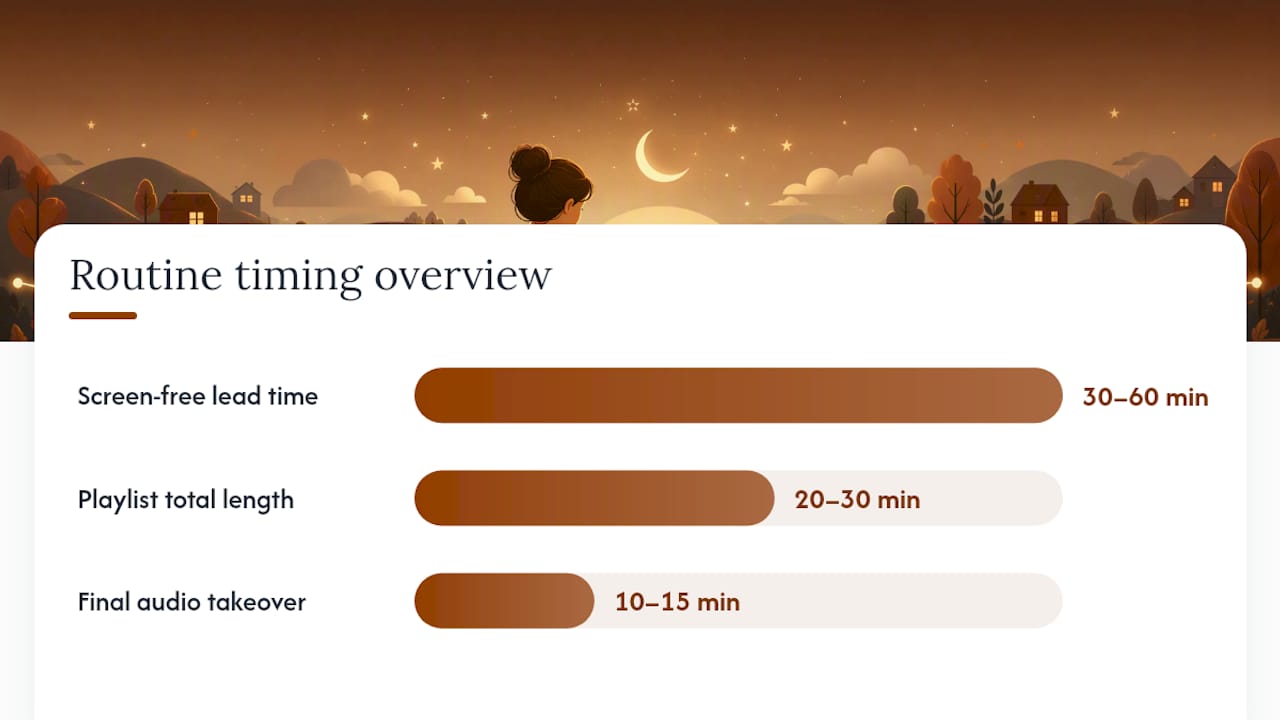
- Finish screens 30 to 60 minutes before bed. This gives your child's brain time to settle before the routine even starts, a window the Sleep Foundation specifically flags as important for reducing pre-sleep stimulation.
- Handle the basics first. Bath, teeth, pajamas, in that order every night, so your child's body learns what's coming next.
- Use a transition cue. A dimmed light, a specific phrase, or tucking into bed signals that the active part of the evening is over.
- Start the playlist. Keep the total length matched to your remaining routine time, roughly 20 to 30 minutes start to finish.
- Offer a brief settling ritual, then step back. A short cuddle or a hand on the shoulder while the first story plays, then quietly exit once your child seems calm.
- Let lights-out follow the final story's fade. The sign-off becomes the cue that it's really time to sleep.
Set the device volume once and leave it there, disable autoplay completely, and download the playlist ahead of time so nothing depends on a signal or a loading screen at bedtime.
If your child resists the new routine, shorten the playlist for the first week and lean on a familiar narrator rather than switching things up. Parents dealing with real bedtime resistance often find that a consistent narrator can gradually take over the final 10 to 15 minutes of the routine, letting a caregiver step back over one to two weeks while the audio ritual itself stays exactly the same. A recorded family voice can also ease this transition, since a child already trusts that voice.
Pro Tip: If your child depends heavily on you sitting in the room, try playing the playlist for a few nights while you sit quietly nearby doing something unrelated, like folding laundry. It signals your presence without recreating full bedtime attention every night.
For more on the mechanics behind why this works, see how audio stories help children fall asleep.
What the Research Says About Audio Bedtime Stories
The evidence behind language-based bedtime routines is stronger than most parents realize.
- Frequent shared reading around age 3 is linked to roughly a 5.5-point increase in communication scores on the ASQ-3 developmental scale, a meaningful jump for a habit that costs nothing but time.
- Parent-reported data on consistent 30-minute bedtime storytelling shows improved sleep quality scores compared to baseline routines without a story component.
- A parent survey on a storytelling podcast found caregivers noticed faster sleep onset, fewer night wakings, and better morning alertness with regular use.
- fMRI research shows parental storytelling produces stronger activity in attention and language networks than a stranger's narration, which supports recording family voices when you can.
None of this means audio replaces you. Pediatric literacy guidance is clear that caregiver-child interaction remains the core value of bedtime storytelling, with audio functioning best as a supplement, not a substitute, for the nights you can't sit and read yourself.
The practical takeaway is simple: audio stories work as a real adjunct to your presence, not a replacement for it, and the sleep benefits show up most reliably when the routine stays consistent night after night.
Choosing Stories Across Cultures and Languages
A bedtime story playlist doesn't have to sound like everyone else's. Folk tales, family sayings, and lullabies from your own background carry a kind of comfort that generic content can't replicate, and mixing in stories from your family's culture gives your child a sense of identity alongside the calming routine.
If your household speaks more than one language, consider building a playlist that rotates between them rather than sticking to just one. Bilingual children benefit from hearing both languages in low-pressure, enjoyable contexts, and bedtime is about as low-pressure as listening gets. You don't need perfect balance every night. Even one story a week in a heritage language keeps that connection alive.
Watch for stories that lean on stereotypes or oversimplified versions of other cultures, especially in mass-market collections built for broad appeal. A story rooted in real family tradition, told by a familiar voice, almost always lands better than a generic tale dressed up with surface-level cultural details.
This is also where recorded messages from grandparents or extended family add something a streaming library never can. A grandmother's voice telling a story from her own childhood does double duty: it calms your child and quietly preserves a piece of family history they'll likely want to hear again as adults.

A Note From Bob at Echo-Story Box
We built Echo-Story Box screen-free on purpose. Tapping a card feels more like opening a book than opening an app, and that simplicity is the point. Families usually notice two things early: bedtime gets calmer within a week or two, and parents feel less drained by the nightly back-and-forth. For more on building your own routine, check the Echo-Story Box blog.
— Bob
Try Echo-Story Box for Tonight's Bedtime Routine
This type of story box is built around the criteria that make a bedtime story playlist work: no ads, no autoplay, steady narration, and a routine that stays the same every time your child taps a card. It also allows you to record your own voice, a grandparent's voice, or a family memory onto a card your child can replay for years.
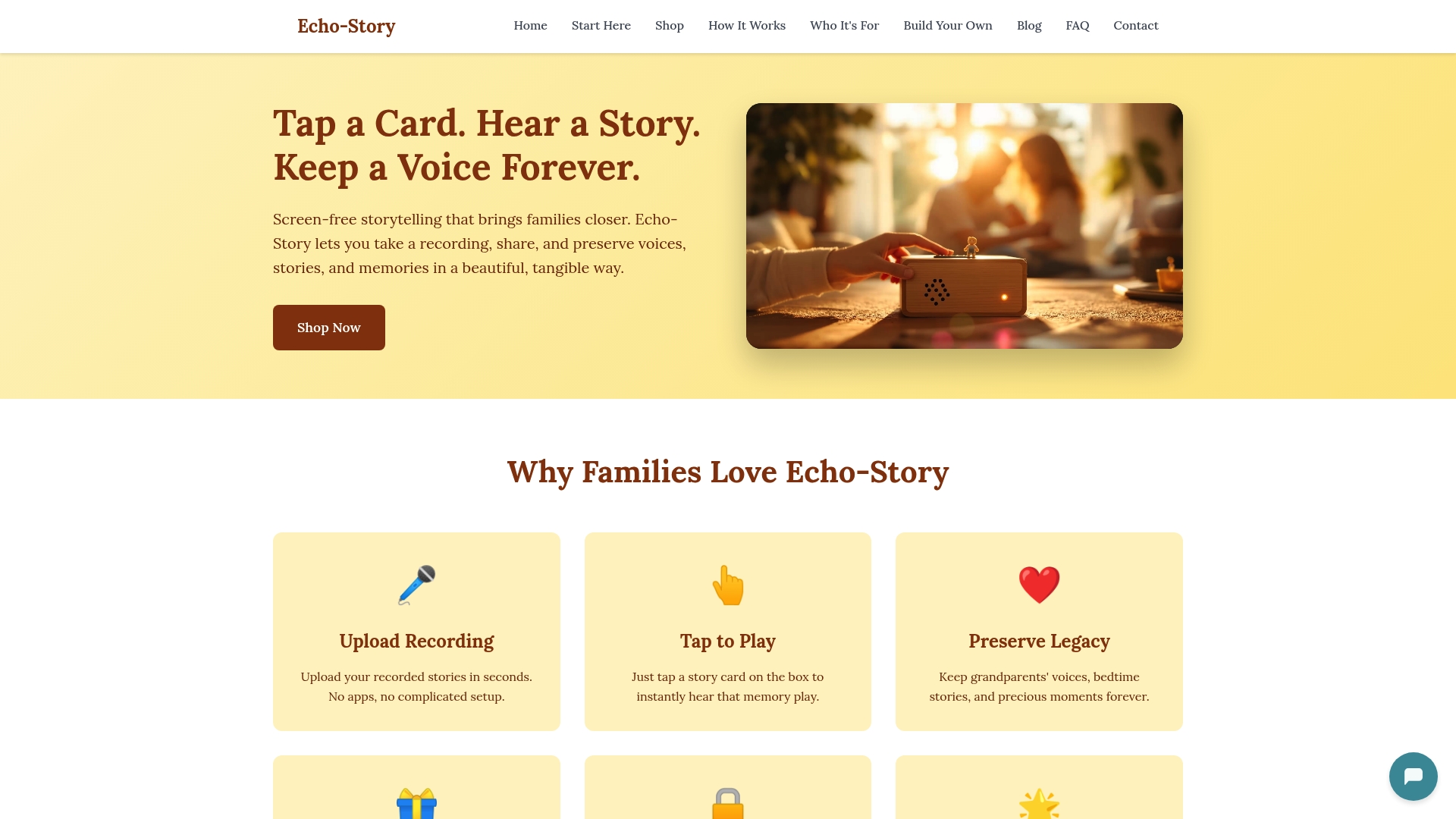
A starter pack typically includes the player and a set of story cards; additional subscriptions may be available for fresh stories without hunting for a new source every week. If you'd rather build your own, some companies also offer DIY guides for families who want a hands-on setup. For extra ideas on pairing music with your wind-down routine, this practical bedtime music guide is worth a look too.
Visit the Echo-Story Box starter page to see the current starter pack, the subscription option, and what a family-voice recording actually sounds like once it's on a card.
Sources
- Shared reading frequency and child development (Nature)
- Audio storytelling and child sleep outcomes (Sleep conference abstract)
- Perfecting your child’s bedtime routine | Sleep Foundation
- Cozy Critters at Bedtime: Parent-Reported Impact of a Storytelling Podcast (conference abstract / parent survey)
- Practice: Policy statement on literacy promotion (ReadingRockets/AAP summary)