
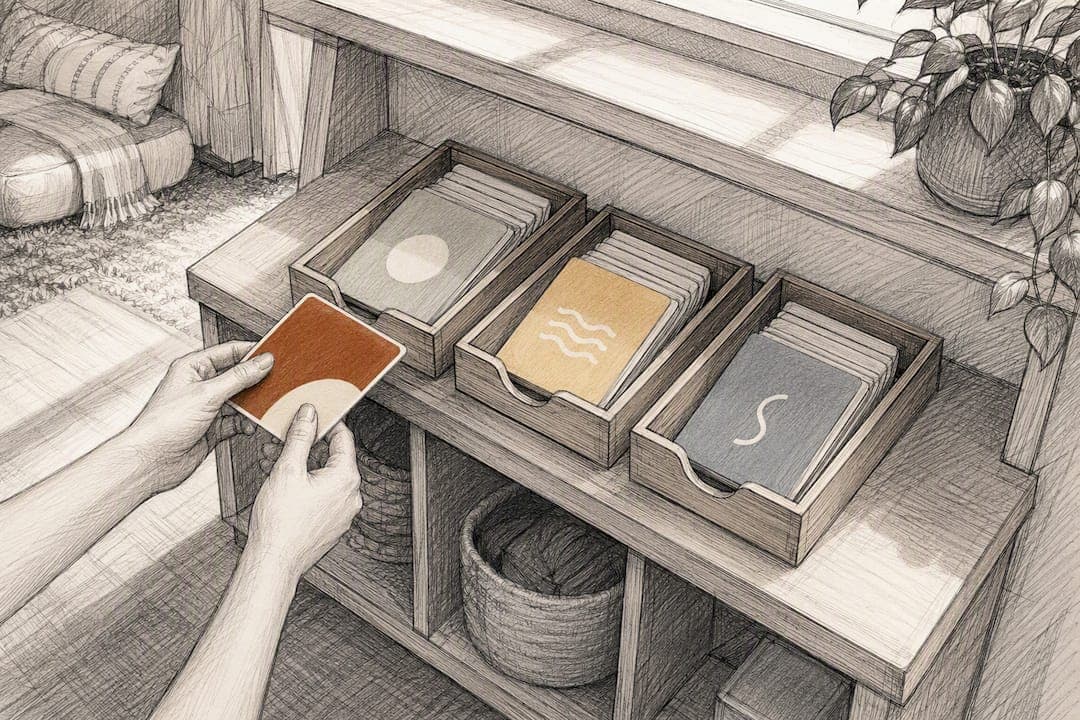
The simplest way to organize story cards is a two-tier system: a small, low, face-out bin your child can reach alone, plus an archive for the rest of the collection. Protect each card's chip, rotate the active bin every week or two, and pair it with a gentle return ritual. Many families use exactly this setup to keep NFC story cards independent, durable, and fun to rediscover.
TL;DR:
- Keeping the active story card set between six and twelve options prevents overwhelm for children aged three to seven.
- Protect NFC chips with lamination or encasing in a small housing, and always test the card's readability after any protective step.
- Use consistent, simple icons or color-coded bands in the same position on each card to help non-reading children identify stories quickly.
- Rotate the active collection weekly or biweekly and track usage with a low-tech checklist to maintain variety and engagement.
- A face-out, sloped shelf made from recycled cardboard or wood is an inexpensive, effective way to display all story covers and support independence.
Table of Contents
- Your 30-Minute Story Card Organization Checklist
- Choosing Between Active Bins, Magazine Files, and Archive Boxes
- How Do You Label Story Cards for Kids Who Can't Read?
- Protecting and Maintaining NFC Story Cards
- Build a Simple Face-Out Shelf for Story Cards
- How Many Story Cards Should Kids See at Once?
- Preserving Family Recordings and Personalized Story Cards
- Bob's Practical Habits for Keeping the System Working
- Let Echo-Story Box Handle the Hard Parts
- Sources
- FAQ
Your 30-Minute Story Card Organization Checklist
You don't need a weekend project to get started. Gather what you already have around the house, and work through these steps in order.
- Collect materials: an open bin or basket, cardstock dividers, stickers or a marker, and clear tape or a laminator.
- Sort your full collection and choose 6 to 12 cards for the "active" set your child sees first.
- Label each active card with a simple icon or color band, then protect the NFC chip with tape or laminate.
- Set the active bin at your child's eye or hip level, within easy reach.
- Pick a rotation day (Sunday night works for many families) and a return spot near the Echo-Story Box.
That last step matters more than it sounds. A consistent "cards go back here" spot prevents the scavenger hunt that usually happens right before bedtime.
Choosing Between Active Bins, Magazine Files, and Archive Boxes
Effective story card layout comes down to one principle: keep choices small and keep everything else out of sight but easy to find. A hybrid model, a small open bin for daily use plus a partitioned box or binder for the rest of the collection, prevents both loss and the kind of choice overload that turns "pick a story" into a meltdown.
Each storage style has a different job:
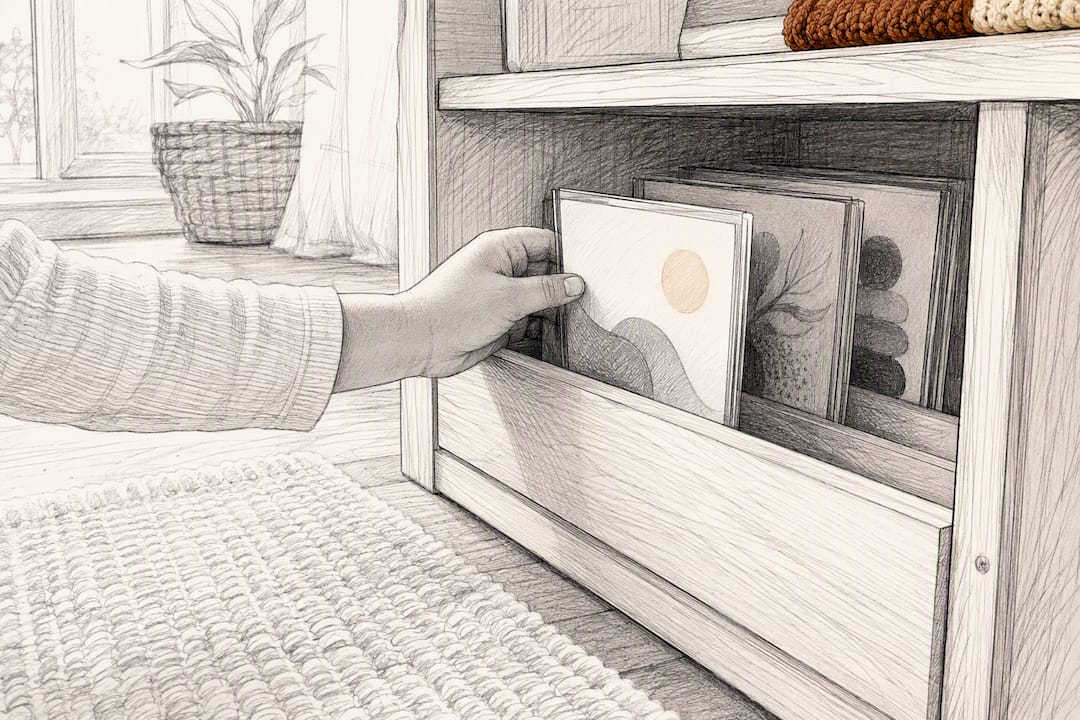
- Open face-out bins work best for the active rotation. Covers face forward, so your child recognizes a favorite instantly instead of flipping through a stack.
- Repurposed magazine files are cheap, sturdy, and good for grouping cards by series or theme once your collection grows past a dozen titles.
- Binder pockets or partitioned boxes suit the archive. They keep cards flat, protected, and sorted by category without taking up shelf space you actually use.
Montessori classrooms lean on this same logic: displaying materials face-out in low, reachable bins builds independence because children can see, choose, and return items without asking for help.
Pro Tip: Test the reach yourself. Kneel down to your child's height and see if they can grab a card without pulling the bin off the shelf. If you have to guess, it's probably too high.
How Do You Label Story Cards for Kids Who Can't Read?
Icons beat words every time for children under six. A small picture, a color dot, or a shape sticker tells a nonreader exactly what to expect from a card faster than any label with text on it.
A few labeling habits make the biggest difference in daily use:
- Use durable vinyl stickers or a permanent marker on laminate, since paper labels peel after repeated handling.
- Assign one color band per theme (blue for adventure stories, yellow for family recordings, green for bedtime stories) and stay consistent across the whole set.
- Put every label in the same spot, like the upper left corner, so your child learns the pattern instead of hunting for the marker each time.
- Let your child help draw or choose the icons. Montessori-style organizing works best when children build ownership of the system, not just the shelf.
That last point is worth taking seriously. A child who picked the "rocket ship means space stories" icon remembers it without being told twice.
Protecting and Maintaining NFC Story Cards
NFC chips are thin and can crack or peel if a card gets bent, chewed, or left in a diaper bag for a month. Open-source builders behind projects like Favolotto rely on physical tokens or labeled cards mapped to specific audio files, and durability is exactly why many of them encase the tag rather than leave it exposed.
Keep these habits in rotation:
- Laminate paper cards or add a layer of adhesive vinyl before a chip ever meets a toddler's grip.
- For heavy daily use, encase the tag in a small wooden block or a 3D-printed token instead of relying on lamination alone.
- After any protective step, tap the card on the Echo-Story Box to confirm it still reads before putting it into rotation.
- If a card stops working, re-encode a fresh tag rather than tossing the whole card. Most failures are the chip, not the story.
Pro Tip: Keep protected tags flat and centered when you build a housing. A tag that shifts even a few millimeters off-center is the most common reason a "fixed" card still won't scan.
Build a Simple Face-Out Shelf for Story Cards
A sloped, face-out shelf costs almost nothing and solves the biggest organization problem at once: kids can see every cover without flipping through a pile. A DIY Montessori bookshelf built from recycled cardboard and dividers works just as well for story cards as it does for picture books.
- Cut a sturdy cardboard box or shipping flat into a sloped back panel and a flat front lip that catches the cards.
- Cut cardstock or thin cardboard dividers and slot them in every 4 to 6 inches to separate themes.
- Add a small paper tab to each divider so your child can find "adventure" or "bedtime" without reading.
- Sand or tape any rough cardboard edges, since small hands and small fingers meet this shelf daily.
- Size each slot around 3 to 4 inches wide so a single card slides out easily and lays flat enough to tap on the Echo-Story Box without fumbling.
| Material | Approximate cost | Best for |
|---|---|---|
| Recycled cardboard box | Free to $5 | Budget builds, quick weekend projects |
| Precut wood display shelf | $30 | Longer-lasting, sturdier daily use |
| Magazine file (repurposed) | $5 | Growing collections, theme sorting |
| Laminating sheets or pouches | $15 | Protecting chips on any shelf style |
How Many Story Cards Should Kids See at Once?
Fewer choices, not more, is what keeps story time calm. For children ages 3 to 4, six to eight active cards is plenty. Ages 5 to 7 can usually handle eight to twelve without feeling overwhelmed by options.
- Swap the active set weekly or every other week to keep favorites feeling fresh instead of forgotten.
- Track engagement with something low tech, like a checklist on an index card or a calendar sticker each time a story gets played.
- Build seasonal or themed bundles (fall adventures, holiday recordings, homeschool history sets) so rotation ties naturally into what's already happening at home.
If a card hasn't been touched in two rotations, it's a strong candidate to swap out and revisit later.
Preserving Family Recordings and Personalized Story Cards
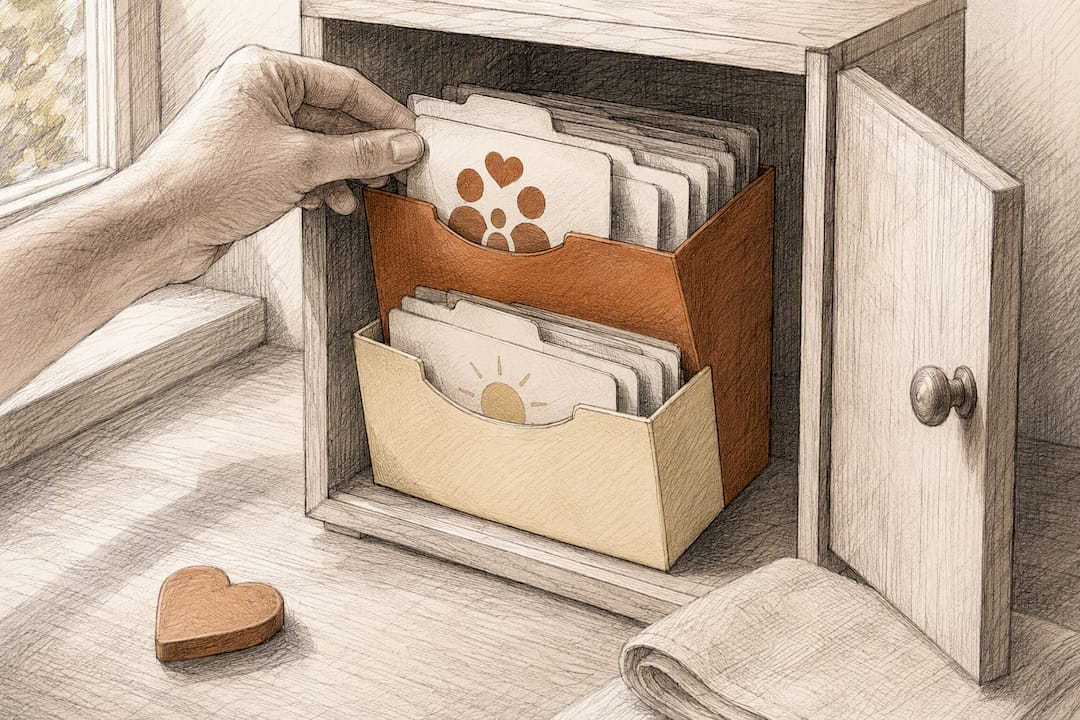
Grandparent messages and personal recordings deserve their own visual language, separate from commercial story packs. A distinct border color, a small heart or star icon, or a dedicated "keepsake" section in the archive tells your child instantly that a card holds something different, a voice, not just a story.
A workable pattern many families use: group grandparent recordings together, keep holiday or milestone messages in a labeled pocket folder like the ones used for Montessori 3-part card sets, and store keepsake cards in the archive rather than the daily rotation so they stay special. Echo-Story Box supports this kind of personalized recording, letting families preserve voices that matter for years, not just a season.
Bob's Practical Habits for Keeping the System Working
The habit that saves most families isn't a bin or a label. It's a one-card return ritual at bedtime: the card goes back to its spot before lights out, every night, no exceptions. Pair that with a simple rule, one new card a night from the archive if your child asks, and the system runs itself without you managing it daily. Calm beats variety here. A shelf with eight visible choices will get used far more happily than one with forty.
— Bob
Let Echo-Story Box Handle the Hard Parts
Once your shelf and labels are in place, the last piece is durability, and that's where this type of audio story system can help. Some NFC story cards are built to withstand daily tapping, and personalization workflows may let you record a grandparent's voice or a bedtime story once and protect it the same way you'd protect any commercial card.
Some starter packs come with a curated active set sized for small hands, helping reduce guesswork on how many cards to leave out on day one. Families who want more control can follow DIY build guides to create their own face-out shelf sized for NFC story cards, or add a quiet reading nook using ideas like these prayer corner setups for a dedicated, screen-free listening spot. If you're ready to set up your own system, visit the Echo-Story Box starter pack page and get your first active bin running this week.
Sources
- Montessori classroom organization: how order builds independence
- favolotto - NFC-triggered kids audio player (GitHub)
- DIY Montessori 3-Part Cards organizer tutorial and printable
FAQ
How Many Story Cards Should Be Active at Once?
Six to eight cards works well for ages 3 to 4, while ages 5 to 7 can typically manage eight to twelve without feeling overwhelmed.
What's the Best Way to Protect NFC Story Cards?
Laminate the card or add adhesive vinyl over the chip, and for heavy daily use, encase the tag in a wooden block or 3D-printed token, then test that it still reads before adding it back to rotation.
How Do I Label Cards for a Child Who Can't Read Yet?
Use consistent color bands or simple icons placed in the same spot on every card, such as the upper left corner, so your child learns the visual pattern.
How Often Should I Rotate the Active Story Card Set?
Weekly or every other week keeps the collection feeling fresh, and a simple checklist or calendar sticker system helps track which cards have gone unused.
Does Echo-Story Box Work Well With a Face-Out Storage System?
Yes. Echo-Story Box's NFC story cards are sized for easy tapping and pair naturally with a face-out bin or DIY shelf, and the personalization feature lets families label keepsake recordings separately from the standard collection.