
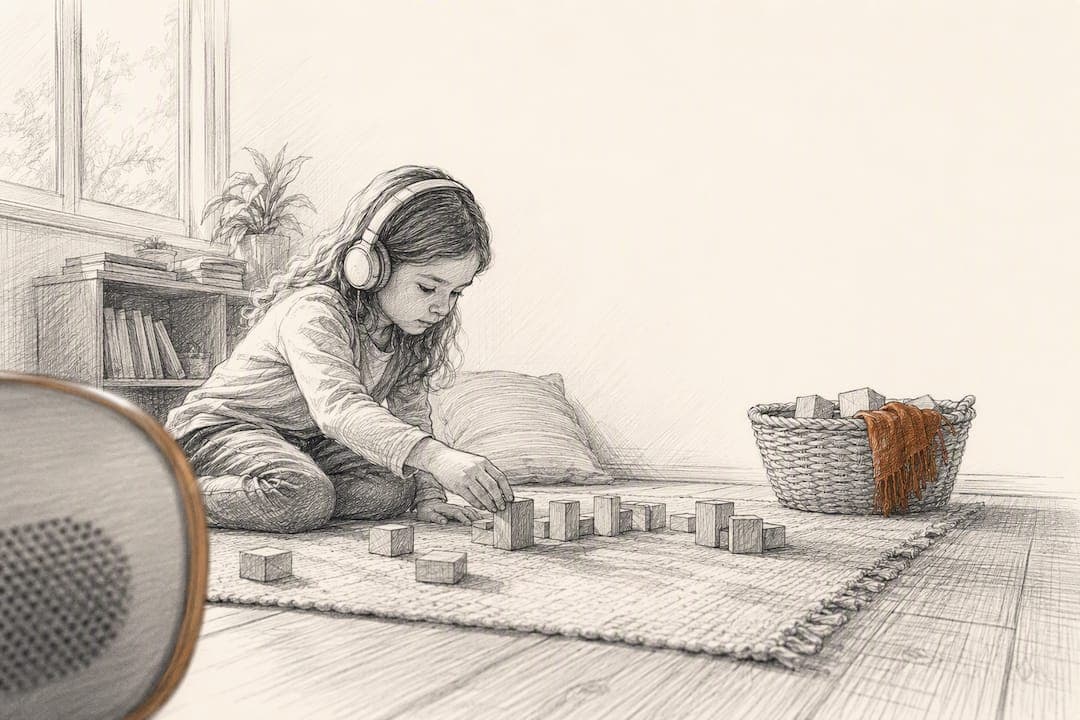
Start with your library app: Libby or Hoopla puts thousands of free audiobooks in your hands today. Fill the gaps with public-domain collections like LibriVox and Lit2Go, add a family podcast for car rides, and consider a screen-free player for bedtime and legacy stories. That combination covers nearly every homeschool audio need without costing a dime.
TL;DR:
- Using text-supplemented audiobooks with brief, regular adult coaching maximizes vocabulary gains, especially for children reading below grade level.
- An old smartphone or basic MP3 player with notifications off and pre-downloaded audiobooks is sufficient, but screen-free story players with NFC cards provide distraction-free storytelling.
- Repeating the same book for a week and following along with print or digital text enhances vocabulary and comprehension more than passive listening alone.
- Public library apps like Libby and Hoopla offer free, extensive access to audiobooks, with options to add dedicated audiobook devices for quieter, more focused listening.
- For struggling readers, brief scaffolding sessions paired with audio significantly improve language skills, while passive listening alone has limited impact.
Table of Contents
- How to Turn Listening Time Into Real Learning
- Setting Up Devices and Apps for Distraction-Free Listening
- What the Research Actually Shows About Audiobook Learning
- Why Screen-Free Listening Belongs in Every Homeschool
- A Screen-Free Option Worth Adding to Your Rotation
- Where to Find Audiobooks and Read the Research
- Sources
- FAQ
How to Turn Listening Time Into Real Learning
Audiobooks teach more when a child's eyes and ears work together. Researchers call this reading-while-listening, or RWL, and a 2026 randomized controlled trial of 314 third and fourth graders found it produced measurable vocabulary gains after just eight weeks. The setup is simple: hand your child the printed or digital text while the audio plays, so they see each word as they hear it.
Here's how to build that into a normal homeschool day:
- Pick one book and stick with it for the week. Repetition with the same text builds vocabulary faster than jumping between titles.
- Follow along with print or e-text whenever it's available, especially for anything above your child's independent reading level.
- Stop and narrate. Pause every chapter or two and have your child retell what happened in their own words.
- Add a hands-on response. Notebooking pages, quick sketches, or acting out a scene all deepen recall without feeling like a quiz.
- Check in briefly with struggling readers. The same RCT found that children who read below grade level only gained vocabulary when paired with short one-on-one scaffolding, roughly ten to fifteen minutes, twice a week, focused on one or two new words and a comprehension strategy. Skip the scaffolding and passive listening alone won't move the needle for these readers.
Audio fits naturally into a morning basket, a car commute, or quiet time before naps, and it slots directly into unit studies when the story matches your history or science theme.
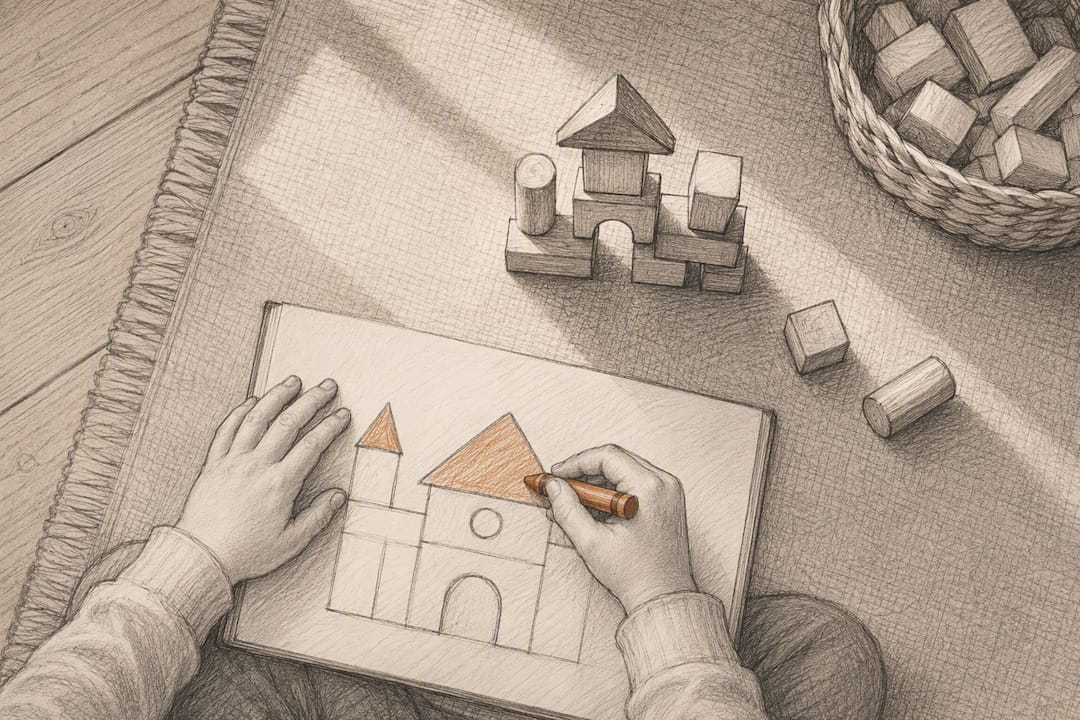
Pro Tip: If your child has trouble sitting still for audio, don't fight it. Pairing the story with a small hands-on task like coloring or building blocks often keeps attention better than requiring stillness, and it doesn't hurt comprehension.
Setting Up Devices and Apps for Distraction-Free Listening
You don't need new equipment to start. An old smartphone with notifications turned off, a basic tablet, or a $20 dedicated MP3 player all work fine, and a Bluetooth speaker turns any device into a room-filling storyteller. Smart speakers add voice control but bring their own always-listening trade-offs worth considering for younger kids.
A few setup habits make a real difference:
- Download audiobooks before car trips or outings so playback never depends on a signal.
- Set up separate family profiles in Libby or Hoopla so holds and history don't get mixed up between siblings.
- Use playback speed controls to slow down dense material or speed up a familiar favorite.
- Turn off notifications and app recommendations on any shared device before handing it to a child.
- Look for sources offering highlighted text or large print alongside audio if you're supporting a reader who needs extra visual support.
What the Research Actually Shows About Audiobook Learning
The 2026 RCT mentioned earlier found that children using text-supplemented audiobooks made significant vocabulary gains over eight weeks, but the scaffolded group saw the biggest jump, and children who started as poor readers only improved when an adult sat with them regularly.
Passive listening alone rarely builds vocabulary for struggling readers. Pairing audio with printed text and brief, regular one-on-one coaching produced the strongest gains in the study, particularly for children who started behind grade level.
That distinction matters for how you plan your week. Save narrated audio dramas for pure enjoyment and family bonding, but reach for read-along audiobooks when the goal is vocabulary or comprehension growth. Classroom research backs the same conclusion: audiobooks work best as an active teaching tool, not background noise.
Why Screen-Free Listening Belongs in Every Homeschool
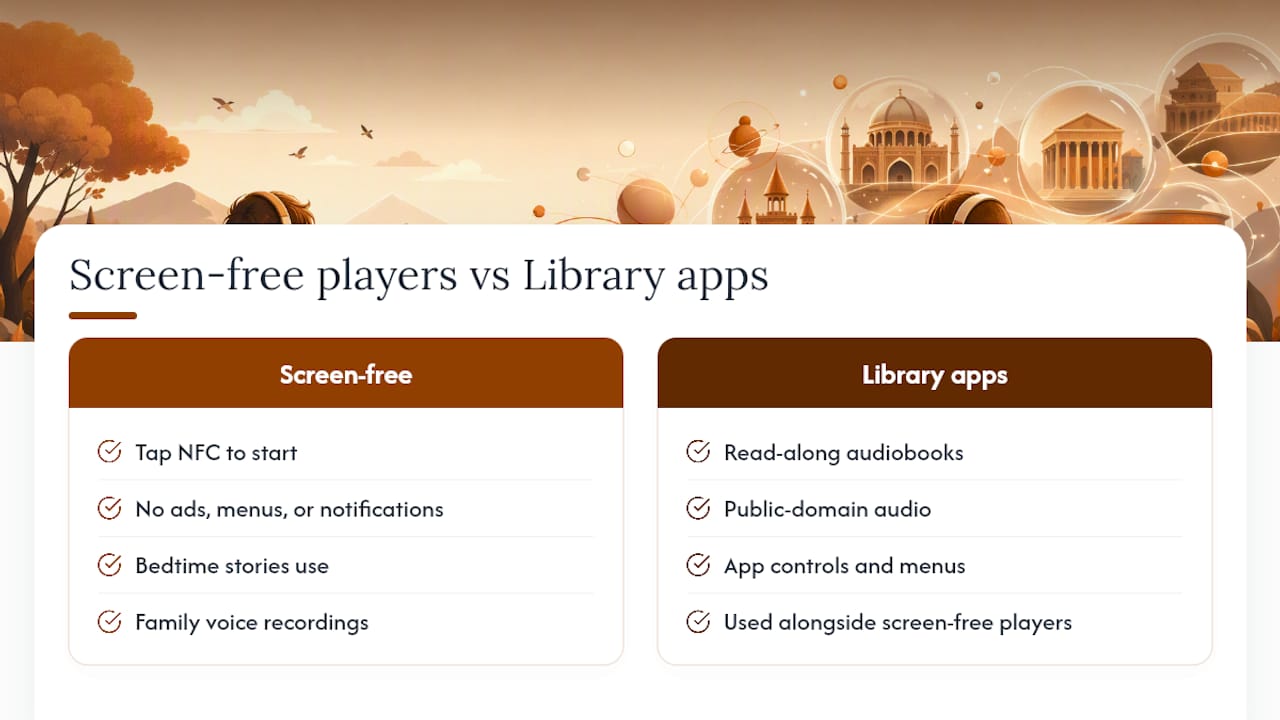
Some companies have built story players because families needed a way to listen without opening another screen. Tapping an NFC story card can start a story, often with no ads, menus, or notifications competing for attention. Families may use such devices for bedtime stories, recorded messages from grandparents, and personalized adventures that include a child as part of the plot.
This type of player can work well alongside library apps and public-domain audio, rather than instead of them. A homeschool day might mix a library audiobook for read-along practice with a screen-free story card for bedtime or a legacy recording from a relative preserving family history in their own voice.
— Bob
A Screen-Free Option Worth Adding to Your Rotation
Library apps and public-domain sites give you the volume. Screen-free story players provide moments that stick, without a screen glowing in a dark bedroom or an algorithm deciding what plays next. These players use simple NFC story cards, so a child taps a card and the story begins, with no menus to navigate and nothing to scroll.
Families may pair such devices with everything in this guide: a library audiobook for the car, a screen-free story card for bedtime, and a family voice recording preserving a grandparent's stories for good. It also supports personalized and faith-based storytelling, plus original educational adventures that fit naturally into a history or character-education unit, an approach explored further in our piece on character education through storytelling. If you want a listening option that feels calm rather than competitive with a tablet, visit the Echo-Story Box product page to see the starter sets and current story card packs.
Where to Find Audiobooks and Read the Research
- LibriVox for free, volunteer-narrated classics.
- Lit2Go for audio paired with downloadable text.
- Internet Archive's audio collection for radio dramas and historical recordings.
- The full RCT on text-supplemented audiobooks for the vocabulary research cited above.
- Eduventurely's budget listening plan for a practical platform comparison.
Sources
Your public library card is the single best homeschool audio resource you already own. Libby and OverDrive both run on the same Overdrive network and let you borrow audiobooks the way you'd borrow a paperback, with a hold list for popular titles. Hoopla works differently: it has no wait list, so if your library subscribes, you get instant access, though usually with a monthly borrow cap per household. Libraries also take purchase requests, so if your unit study calls for a specific title, ask your branch to buy it.
When the library doesn't have what you need, public-domain repositories fill the gap for free, permanently. Three deserve a permanent bookmark:
- Remote text‑supplemented audiobook intervention supports children’s explicit and incidental vocabulary learning
- Lit2Go
- LibriVox
- Internet Archive — audio & poetry collection
- Audiobooks for Homeschooling Families: Budget Listening Plan
Narration quality on volunteer sites varies by chapter, since different readers often record different sections of the same book. That's a fair trade for free access to nearly every classic your literature plan will ever call for.
Podcasts and audio dramas round out the mix, especially for family listening time when nobody wants a worksheet. Serialized history dramas and story-based science podcasts tie naturally into unit studies, and many are produced specifically with kids in mind. If you're building a rotation, a family podcast can double as a discussion starter over dinner, and book podcasts built around reading communities can help you and your children discover new titles together.
Paid subscriptions make sense once you outgrow the free tier. Audible's free trial and its lower-cost Plus tier both unlock large catalogs; Scribd bundles audiobooks with ebooks and articles for one flat monthly price; Chirp sells deeply discounted audiobooks you own outright instead of renting. None of these are essential to start, but they're worth knowing about once your family has a listening habit and wants more control over the catalog.
Finally, check whether your curriculum publisher already offers audiobook companions. Many literature-based and unit-study programs sell narrated versions of their core texts, which saves you the hunt entirely and keeps the recording matched to the reading level the curriculum expects.
FAQ
What are some good audiobooks for homeschoolers?
Classic literature from LibriVox, history titles from the Internet Archive, and curriculum-matched audiobooks from your literature program all work well; pick titles that pair with a printed text when the goal is vocabulary building.
What is the best free homeschool resource for audio learning?
Your public library's Libby or Hoopla app is typically the strongest free option, since it gives instant or hold-based access to a huge, regularly updated catalog at no cost.
What is the best device to use for homeschooling audio?
Any device that plays audio reliably works, from an old smartphone to a dedicated MP3 player; families who want a distraction-free option often choose a screen-free player like the Echo-Story Box instead of a tablet.
How can my child listen to audiobooks for free?
Borrow through your library's Libby or Hoopla app, or stream directly from public-domain sites like LibriVox, Lit2Go, and the Internet Archive, all of which require no subscription or payment.